Thailand
Krabi
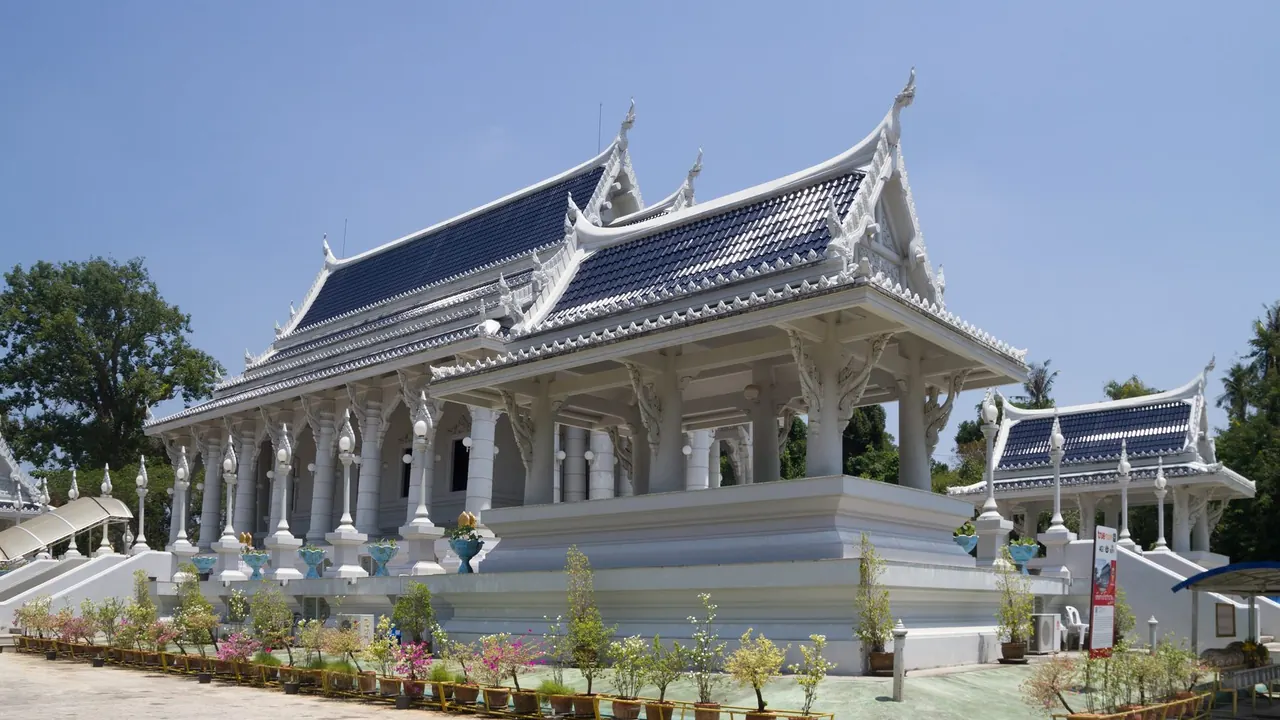
The white temple of Wat Kaew Korawaram in Krabi Town
- Beaches87
- Nature & outdoors85
- Affordable cities78
Photo: Maksym Kozlenko, CC BY-SA 4.0, cropped
Match
49
Every category weighted equally
- Beach & sun59
- Culture & arts38
- Food & nightlife40
- Family trip56
- Outdoors58
- Relax & unwind58
- Shopping & style40
- On a budget52
Krabi in twelve categories
Our verdict on each, scored 0 to 100 against the same fixed benchmark cities, so a score means the same thing on every page.
Beaches & swimming. Scores 87 out of 100.
Food & drink. Scores 50 out of 100.
Culture & sights. Scores 20 out of 100.
Nightlife. Scores 33 out of 100.
Nature & outdoors. Scores 85 out of 100.
Day trips. Scores 40 out of 100.
Good for families. Scores 55 out of 100.
Getting around. Scores 30 out of 100.
Shopping & style. Scores 20 out of 100.
Affordability. Scores 78 out of 100.
Live music & performing arts. Scores 12 out of 100.
Wellness & relaxation. Scores 72 out of 100.
Krabi category by category
Beaches & swimming
87Beaches are why most people come. The Andaman Sea sits around 29°C all year, and the best sand is a short longtail ride from Ao Nang: Railay West and Phra Nang, ringed by limestone cliffs, are among the most photographed beaches in Asia. Ao Nang's own beach is long and handy but plain, while Klong Muang and Tubkaek to the north are quieter and backed by resorts.
Island hops add Poda, Chicken Island and the Hong islands, and Phi Phi is about an hour and a half by ferry. The dry season from roughly November to April brings calm, clear water. In the southwest monsoon the sea turns rough, some boat routes stop, and swimming is best judged day by day.
Food & drink
50The food is southern Thai, which means fiery curries, turmeric-yellow fish soups, khao mok gai and roti for breakfast, much of it shaped by the region's Muslim communities. The best eating is in Krabi Town, where the evening walking-street market and riverside stalls feed locals rather than tour groups.
In Ao Nang the restaurant strip mixes Thai seafood grilled on the beachfront with pizzas, burgers and toned-down curries for visitors. Fresh fish and prawns are the highlight. There is little fine dining outside the larger resorts, and wine and coffee are an afterthought, so this is a place for good, simple eating rather than a food destination in itself.
Culture & sights
20Sightseeing is a short list. The Tiger Cave Temple, a forest monastery with a long climb of more than 1,200 steps to a hilltop Buddha and wide views over the karst, is the one landmark most visitors make time for. Krabi Town has a riverside promenade, a few Chinese shophouses and the twin limestone peaks of Khao Khanab Nam across the estuary, where caves once held prehistoric finds. Beyond that there are small temples and village mosques, and anyone wanting museums or historic architecture will find very little.
Nightlife
33Evenings are easygoing. Ao Nang has a short run of bars along the beach road and in a small alley of late spots, with cocktails, sports screens and the odd dancefloor, and Railay's beach bars bring hammocks, reggae and fire-spinning on the sand. It is lively enough for a few drinks after sunset, but there are no proper clubs and most of the area is quiet by midnight. Travellers after a full party night take the ferry to Phi Phi.
Nature & outdoors
85The landscape is the real draw: sheer limestone towers rising out of the sea and the jungle, with caves, lagoons and mangrove channels between them. Railay and Tonsai are among the world's best-known sport-climbing spots, with hundreds of bolted routes on the cliffs above the beaches. Sea kayaking through the mangroves of Ao Thalane and around the Hong islands is outstanding, and Phang Nga Bay's karst islands are within reach by boat.
Inland, the Emerald Pool and Thung Teao forest, waterfalls and the hike up Dragon Crest at Khao Ngon Nak give a taste of rainforest. Snorkelling and diving around the outer islands are good. The heat makes midday hiking hard, and rough seas in the monsoon cut boat trips.
Day trips
40Most outings are by boat, and many are about scenery rather than places. As towns and islands to visit, Phi Phi Don's village is about an hour and a half by ferry, Koh Lanta, with its stilted Old Town and Sea Gypsy and Chinese heritage, is a little further, and the quiet fishing villages of Koh Yao Noi sit across the bay. Phuket's Sino-Portuguese Old Town is a long but possible day by road or ferry. Inland towns such as Trang add little for a short trip, and there are no major heritage sites within easy reach.
Good for families
55Families come here for the beaches, and in the dry season the shallow, warm water at Klong Muang, Phra Nang and the island coves suits small children well. Thai staff and locals are openly fond of kids, and the large resorts north of Ao Nang have pools and kids' clubs. What is missing is anything built for children: there are no zoos, aquariums or theme parks, and days revolve around the sea, gentle boat trips and the Emerald Pool. Strong sun, longtail boats with no shelter and rough monsoon seas call for planning with very young children.
Getting around
30Getting around is informal. Ao Nang's beachfront strip is walkable, and white songthaew pickups run between it, the beaches to the north and Krabi Town, about 30 minutes apart. Railay has no road at all, so every trip there is by longtail boat from Ao Nang or Krabi Town, which stops in heavy seas. Further afield, visitors rely on taxis, ride-hailing, hired scooters or the hotel pick-ups included in tours. Pavements are patchy, and the heat makes long walks tiring.
Shopping & style
20Shopping means browsing rather than buying anything serious. Ao Nang's main road is lined with stalls selling beachwear, souvenirs and knock-off goods, along with tailors and a few small craft shops. Krabi Town's weekend walking-street market is more local, with snacks, clothes and handmade bits, and the town has a couple of plain malls for essentials. There are no boutiques, design shops or luxury brands to speak of.
Affordability
78Krabi is good value by international standards, though prices depend a lot on where you stay. Krabi Town is very cheap, with simple guesthouses and market meals at local prices. Ao Nang costs more but still offers plenty of affordable rooms and Thai restaurants alongside the resorts. Railay is the priciest corner, since everything arrives by boat. Island tours, longtail fares and national park entry fees for foreigners are the costs that add up over a stay, and imported drinks cost more than local beer.
Live music & performing arts
12There is very little to attend. Evenings bring fire-spinning shows on Railay and Ao Nang beaches, cover bands in a few bars and Muay Thai fights staged for visitors at a small stadium near Ao Nang. There is no theatre, concert hall or traditional performance scene of note, so anyone wanting live arts will have to wait until they reach a bigger city.
Wellness & relaxation
72Slowing down comes easily. Thai massage shops line every street in Ao Nang and Krabi Town, and the resorts along Klong Muang, Tubkaek and Railay have full spas, many with sea views and open-air treatment pavilions. Yoga classes and small retreats are easy to find.
The area also has natural hot springs: at Khlong Thom, about an hour's drive south, warm mineral water runs over limestone into pools in the forest, known as the Hot Springs Waterfall, and there are simpler saltwater springs nearby. Days set by sunrise and sunset suit a restful stay, though Ao Nang's main road can be noisy and busy in the high season.
When should you go?
Pick a month to see what it is like. The climate figures are measured averages, not a forecast.
Krabi in July
Daytime high, °C
Rainfall in the month, mm
The whole year
Shaded against this city’s own year: the deepest cell is its best month for that figure and the palest its weakest.
Where the figures come from
Krabi's temperatures are measured 67 km from the centre, at Phuket Airport.
Krabi has no rain gauge within 25 km of the centre, so its rainfall comes from a gridded climate dataset read at the city rather than from a gauge further away.
Temperature and rainfall are climate normals, averaged over the years shown. Krabi: 1991-2020 normals, Phuket Airport (66.6 km from centre).
Before you go
| Measure | Krabi |
|---|---|
| Official language | Thai |
| Currency | Baht (THB) |
| Sockets | ABCF220 V, 50 Hz |
| Driving side | Left |
| Time zone | UTC+7 |
| Emergency number | Police 191, ambulance 1669, fire 199 |
| Elevation | 16 m |
| Main airport | Krabi International Airport (KBV)9 km from centre14 non-stop destinations |
By the numbers
| Measure | Krabi |
|---|---|
| City population | 30,499 |
| Museums within 10 km | 0 |
| UNESCO World Heritage sites within 50 km | 0 |
| Swim season, months above 21 °C | 12 months |
Compare Krabi with
Every comparison with a written verdict behind it.