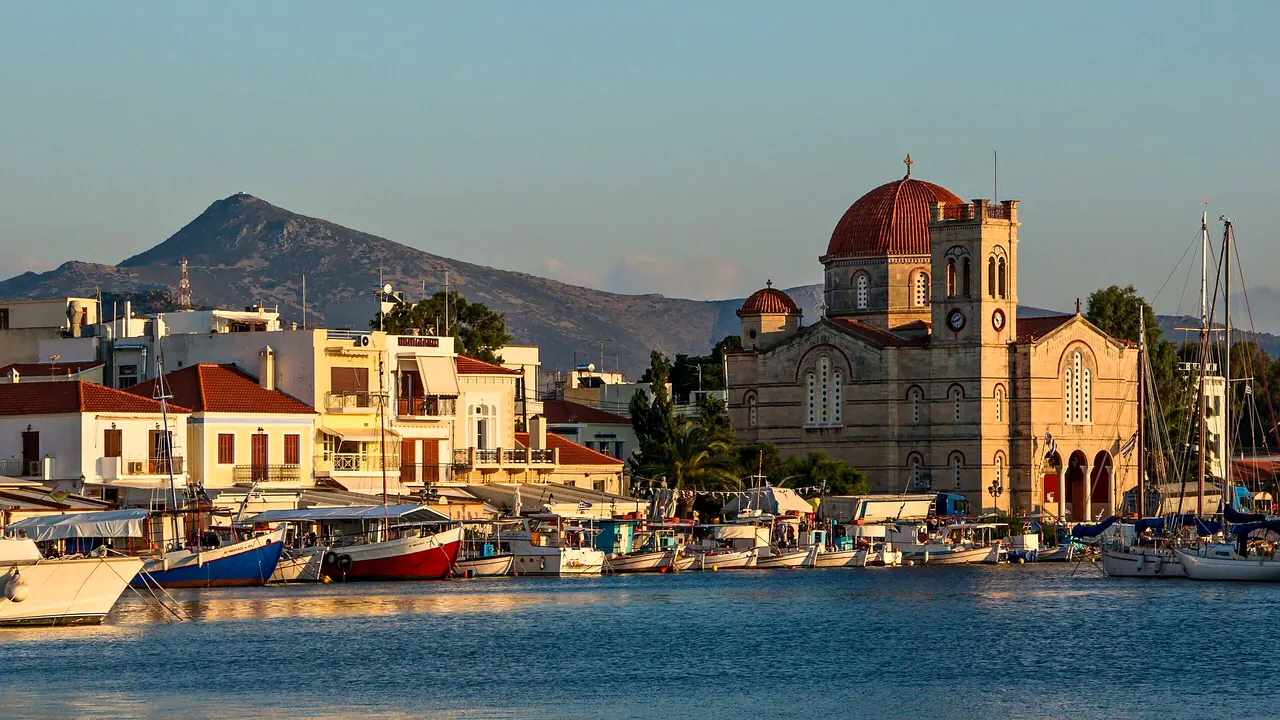
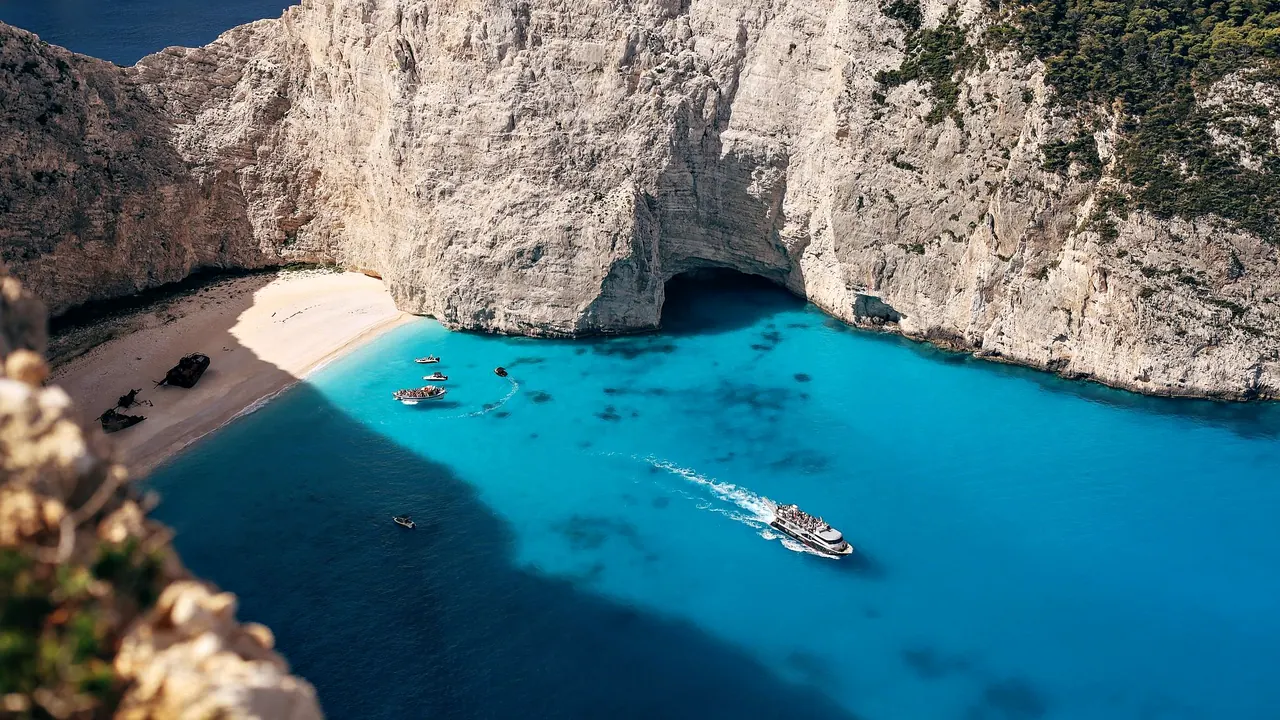
Photos: Aegina by Jebulon, CC0; Zakynthos by Sadettin Dogan, Pexels License.
Aegina or Zakynthos?
Our verdict in twelve categories, each scored against the same fixed benchmark cities, and the climate month by month, so you can choose for your trip.
Choose Aegina for
- day trips
- culture and sights
- getting around
Aegina suits a slower, more grown-up trip within easy reach of Athens. Its pull is the Temple of Aphaia, the chapels of Paleochora and an old harbour town that was briefly the first capital of modern Greece, and the fast boats to Piraeus put the Acropolis and Athens's museums within a day out. It works well for a long weekend or as a quiet base beside a city trip, as long as you are content with small coves and rocky swimming spots rather than long sandy beaches.
Choose Zakynthos for
- nightlife
- beaches
- nature and the outdoors
Zakynthos is the island for a proper beach vacation. Laganas Bay, the Vasilikos coves and the shallow north-east coast give far more sand and swimming, and the cliffs, sea caves and turtle-nesting marine park make the coast an outing in itself. Families have more to work with here, and young groups have the Laganas strip. What you give up is history and easy escapes: the sights fill half a day, and leaving the island means a long ferry day.
Scoreboard
Twelve categories on one fixed scale from 0 to 100. The shaded stretch is the gap between the two.
Your match
Pick a travel style or drag the sliders, and both match scores follow your weighting.
Wins on day trips and culture and sights with your weighting.
Wins on nightlife and beaches with your weighting.
What matters to you?
Category by category
What the scores mean for a trip.
Beaches & swimming
On Aegina, swimming is a small, local affair: coves around Marathonas and Aiginitissa, people diving off the rocks near Perdika, the pine-backed cove on Moni, and one longer sandy resort beach at Agia Marina. It is pleasant for a dip between other things, but the beaches are not the point of the island.
Zakynthos is built around its beaches and has far more of them. Laganas Bay gives long sand plus the protected turtle beaches of Gerakas and Dafni, the Vasilikos peninsula adds coves, and the north-east has shallow, calm water. Pale blue water over white limestone and the boat trips past Navagio and the Blue Caves make the sea itself a highlight, though the resort sunbeds get crowded in high summer.
Food & drink
Both islands serve honest Greek taverna cooking, and neither is a destination for food alone. Aegina's strength is the meze culture of its harbour ouzeries and the fish tavernas on the quay at Perdika, with pistachios turning up in everything, and the Athenian weekend crowd keeps standards up.
Zakynthos has more dishes of its own, from garlicky skordostoumbi to ladotyri cheese, mantolato nougat and Verdea wine, but you have to seek them out in villages around Keri and the north, because Laganas and Tsilivi lean towards English breakfasts.
Culture & sights
Aegina has the stronger sights by some distance. The Temple of Aphaia stands almost complete on its pine-covered hilltop, Paleochora's ruined medieval town is scattered with frescoed chapels, and Aegina town keeps neoclassical buildings from its spell as Greece's first modern capital.
Zakynthos lost most of its Venetian capital in the 1953 earthquake, so what remains is a rebuilt town with the Byzantine Museum's Ionian icons, the Solomos museum, the castle on Bochali and some village churches. It makes a pleasant half day rather than a theme for the trip.
Nightlife
Zakynthos has a real party scene, but it is concentrated almost entirely on the Laganas strip, with clubs, foam parties and drinking until dawn aimed at young British groups from June to September. Away from it, the island is quiet, with family bars in Tsilivi and a few local haunts in town.
Aegina's evenings are about cocktails and late dinners on the harbour, livelier at summer weekends when Athenians come over, and there is no clubbing to speak of. It suits couples who want a drink by the water; anyone after a big night goes back to Athens.
Nature & outdoors
Zakynthos has the more dramatic outdoors, and most of it is coastal: high white cliffs at Keri and above Navagio, sea caves at Cape Skinari, and a national marine park in Laganas Bay where boats spot loggerhead turtles. Diving, snorkelling and kayaking along the cliffs add to it.
Aegina's landscape is gentler, with pistachio orchards and pine woods on low volcanic hills. The climb up Mount Oros past the sanctuary of Zeus is its one fine walk, and the rest is quiet cycling, a stroll on Moni and easy sailing in the sheltered gulf.
Day trips
Aegina is far better placed for outings. Athens and Piraeus are about forty minutes away by fast boat, so the Acropolis is an easy day, and Agistri, Poros and car-free Hydra are all within ferry reach, with Epidaurus possible by car from the mainland.
From Zakynthos, leaving means a longer commitment: a summer ferry from the north tip to southern Kefalonia, or an hour to Kyllini for Chlemoutsi castle and a long full day to ancient Olympia. Most visitors simply tour their own island instead.
Good for families
Zakynthos gives families more to do. The resorts of Tsilivi, Planos and Alykes have shallow sand, pools and kids' clubs, and turtle-spotting boats, sea caves and an inland water park fill the days, though some famous beaches need steep paths or a boat.
Aegina is safe and simple, with short crossings, shallow water at Agia Marina and Marathonas and the deer and peacocks of Moni, but nothing is built for children. It suits toddlers and an early bedtime better than older children wanting activities.
Getting around
Aegina is the easier island to manage. Ferries run from Piraeus all day, Aegina town is flat and walkable, and buses reach Agia Marina via the Temple of Aphaia and Perdika, with scooters filling the gaps on a short half-hour drive.
Zakynthos's buses only link the town with the main resorts, so the cliffs, villages and western viewpoints need a car on narrow, winding roads, and many beaches and caves are reached by boat excursion.
Shopping & style
Neither island is a place to shop, and both send you home with food. On Aegina, that means the pistachio shops along the harbour; on Zakynthos, it is mantolato, thyme honey and Verdea wine, with village lace and weaving around Volimes as the one craft worth seeking out.
Affordability
Costs are much the same on both, but for different reasons. Aegina's mostly Greek visitors keep tavernas and guesthouses at mainland prices, with rooms dearer at summer weekends and in August.
Zakynthos's package tourism keeps resort rooms moderate, while boat trips, car hire and sunbeds add up over a week. On both, June and September are the cheaper months.
Live music & performing arts
There is little formal performance on either island, so the difference is in character. Aegina offers summer open-air cinema, occasional concerts and live Greek music in tavernas, with Athens and Epidaurus close by for real theatre.
Zakynthos has a living tradition of its own in the kantades serenades sung in town and village tavernas, a philharmonic band at feasts and omilies folk theatre at carnival.
Wellness & relaxation
Neither has a bathing culture, and both rely on their slow pace, with small hotel spas as the only treatments. Aegina's calm is in long Perdika lunches and the quiet chapels of Paleochora, best on weekdays.
Zakynthos adds the cool sulphur springs at Xigia, and its restful bases are the hill villages around Keri, Vasilikos and the northern harbours, well away from Laganas.
When should you go?
Pick your month. The climate figures are measured averages, not a forecast.
Aegina in July
Zakynthos in July
Daytime high, °C
Rainfall in the month, mm
Where the figures come from
Aegina's temperatures are measured 32 km from the centre, at Athinai Airport.
Aegina has no rain gauge within 25 km of the centre, so its rainfall comes from a gridded climate dataset read at the destination rather than from a gauge further away.
Temperature and rainfall are climate normals, averaged over the years shown. Aegina: 1991-2020 normals, Athinai Airport (31.8 km from centre). Zakynthos: 1991-2020 normals, Zakinthos / Agrilia (4.3 km from centre).
The two islands follow almost the same summer curve. On both Aegina and Zakynthos the sea is warm enough for the beach from June to September, starting at about 22°C in June and warmest in August, and October is still good for swimming. July and August reach about 33°C at midday, too hot to walk up to the Temple of Aphaia or along the clifftop viewpoints in the afternoon, so May, June and September are the comfortable months for exploring. Summers on both are almost rainless and very sunny.
The real difference is in winter. Aegina does have a wet season, with November and December its rainiest months at about 77mm, but that is roughly half what Zakynthos gets. Zakynthos turns wet from October onwards, with about 150mm in November and heavy rain on through February. Daytime temperatures on both stay in the mid-teens through the winter, so for a mild off-season visit Aegina is the drier choice.
Which traveller are you?
On a beach and sun trip, Zakynthos is the clear choice. Laganas Bay, Banana Beach and the gentle sands of Tsilivi and Alykes give real variety, and boat trips to the Blue Caves add swimming in very clear water that Aegina's small coves cannot match.
For a culture and arts trip, Aegina is better. The Temple of Aphaia ranks among the best-preserved in Greece, Paleochora's frescoed chapels and Kolona add depth, and Athens's museums are a fast boat away, while Zakynthos offers little beyond a half day in town.
On a family trip with children, Zakynthos has more to fill the days. North-east coast resorts offer pools and kids' clubs, turtle-spotting boats and a water park, whereas Aegina gives shallow sand and the peacocks of Moni but little made for children.
Before you go
| Measure | Aegina | Zakynthos |
|---|---|---|
| Official language | Greek | Greek |
| Currency | Euro (EUR) | Euro (EUR) |
| Sockets | CF230 V, 50 Hz | CF230 V, 50 Hz |
| Driving side | Right | Right |
| Time zone | UTC+2, UTC+3 in summer | UTC+2, UTC+3 in summer |
| Emergency number | 112 | 112 |
| Main airport | Athens Eleftherios Venizelos International Airport (ATH)176 non-stop destinations | Zakynthos International Airport "Dionysios Solomos" (ZTH)69 non-stop destinations |
| Public holidays this year | 15 days | 15 days |
By the numbers
| Measure | Aegina | Zakynthos |
|---|---|---|
| Population | 13,056 | 41,180 |
| People per km² | 149 | 102 |
| Swim season, months above 21 °C | 5 months | 5 months |
Where else could you go?
Every comparison below shares a destination with this one, so you can follow Aegina or Zakynthos somewhere new.
- Hydravs Aegina
- Kefaloniavs Zakynthos
- Peloponnesevs Aegina
- Lefkadavs Zakynthos
- Sifnosvs Aegina
- Milosvs Aegina