Austrian Alps or Black Forest?
Our verdict in twelve categories, each scored against the same fixed benchmark cities, and the climate month by month, so you can choose for your trip.
Choose Austrian Alps for
- nightlife
- beaches
- nature and the outdoors
The Austrian Alps are the choice for a trip built around big mountains, whether that means a ski week with loud après-ski in a famous resort or a summer of glacier walks, lake swimming in Carinthia and an evening at the Salzburg Festival. Salzburg and Innsbruck add more history than anything in the forest. The price is higher, and the everyday cooking is plainer.
Choose Black Forest for
- food and drink
- prices
- day trips
If you want a slower pace, the Black Forest suits you better. Eating well, drinking local Pinot and spending long afternoons in Baden-Baden's baths come first here, and the walking is gentle rather than steep. It also costs less, and its position on the border lets you add Basel, Colmar or Strasbourg, while a stay in the Alps keeps you deep inside the mountains.
Scoreboard
Twelve categories on one fixed scale from 0 to 100. The shaded stretch is the gap between the two.
Your match
Pick a travel style or drag the sliders, and both match scores follow your weighting.
Wins on nightlife and beaches with your weighting.
Wins on food and drink and prices with your weighting.
What matters to you?
Category by category
What the scores mean for a trip.
Beaches & swimming
Neither region has a sea, but only the Austrian Alps offer a real lake summer. In Carinthia, the Wörthersee, Millstätter See and Faaker See can reach 27°C in high summer, and towns such as Velden have grassy lidos with piers and diving boards. The Salzkammergut lakes are a few degrees cooler but very clear.
In the Black Forest, Titisee and Schluchsee reach about 20°C at best. Swimming there means a cool dip after a hike or an afternoon in a heated spa-town pool, not a reason to go.
Food & drink
The Black Forest eats and drinks better. Its cooking leans towards France, the village of Baiersbronn has an unusual number of top restaurants for its size, and country inns serve trout, venison, Flammkuchen and the famous cherry cake. Pinot Noir from the Kaiserstuhl and Markgräflerland, together with the seasonal farm wine taverns, gives a second reason to go.
Austrian food is at its best on a hut terrace, with Kaiserschmarrn or Käsespätzle after a morning outdoors and a pine schnapps to follow. Kitzbühel, the Arlberg and Salzburg have fine dining, but the everyday menus in the ski villages repeat one another.
Culture & sights
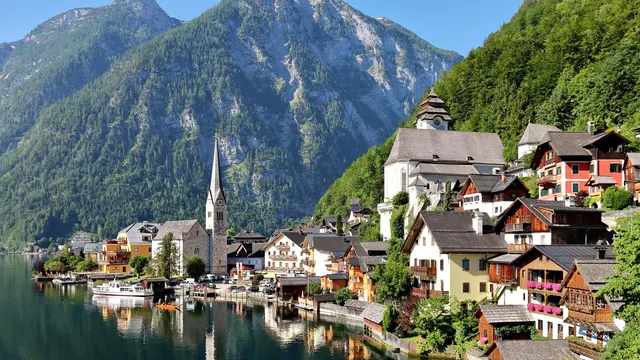
The Austrian Alps have more to see, mostly because of Salzburg: the baroque centre beneath the Hohensalzburg, the cathedral, the Residenz and Mozart's birthplace. Add Innsbruck's Golden Roof and Hofkirche, and the old salt-mining landscape around Hallstatt, and the region has several sights of real weight.
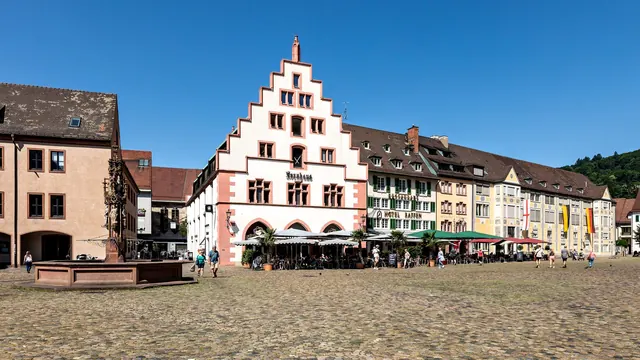
The Black Forest's best is Freiburg's red sandstone Minster and its car-free old town, followed by Baden-Baden's nineteenth-century spa quarter. Beyond those two towns it offers smaller pleasures: half-timbered Gengenbach and Schiltach, Maulbronn monastery and the cuckoo-clock museum in Furtwangen. In both regions the sights are spread out, so you see them by moving between towns.
Nightlife
In winter the Austrian Alps win easily. Ischgl, St Anton, Saalbach and Mayrhofen run loud après-ski from the slopeside huts in late afternoon to the village clubs late at night, and nothing in the Black Forest compares.
In summer the gap narrows to a choice between two student towns. Innsbruck has a modest bar scene, while Freiburg has wine bars, a few clubs and busy beer gardens on warm nights. Apart from these, the Black Forest's villages and spa towns go quiet after dinner, with Baden-Baden's casino as the elegant exception.
Nature & outdoors
These are two different kinds of mountain. The Austrian Alps have the Grossglockner, nearly 3,800m, glaciers in the Hohe Tauern and the Ötztal, and the Krimml waterfalls. Lifts run into high terrain for summer hiking, via ferratas and mountain biking, and winter brings skiing across the Arlberg, Kitzbühel and Ski Amadé areas.
The Black Forest is lower and softer: rounded hills of dark fir, with the Feldberg at 1,493m as its highest point. It is walking country, with the long Westweg, the Wutach and Ravenna gorges and the Triberg waterfalls, plus strong mountain biking around Todtnau. Winter means cross-country trails rather than serious downhill skiing.
Day trips
The Black Forest's position on the borders is its trump card. Basel is a short train ride from Freiburg, and the Alsace wine villages, Colmar and Strasbourg's cathedral are each within about an hour, so day trips take you into a different country and culture. Heidelberg, Speyer and Lake Constance add more to the north and south-east.
The Austrian Alps have good outings too: the Salzkammergut lakes from Salzburg, Berchtesgaden and Munich over the German border, and Hall in Tirol or Rattenberg from Innsbruck. Bolzano and Merano mean a longer drive over the passes, so most trips stay within the same Alpine world.
Good for families
Both regions work very well for children, but in different ways. The Austrian Alps are built around family resorts such as Serfaus-Fiss-Ladis and the Zillertal, with ski schools, childcare and hotels with kids' clubs and pools. In summer the lifts lead to adventure trails and mountain play areas, though the steep paths are hard going for small legs.
The Black Forest has one big draw, Europa-Park at Rust, which can fill several days. Around it are gentler attractions such as treetop walks, wildlife parks and pedal boats on Titisee. The hills are easier for small children, but expect plenty of driving between sights.
Getting around
The Austrian Alps are easier without a car. Trains run along the Inn valley, through the Gastein valley and over the Arlberg, and Postbus lines continue into the side valleys, so you can stay in one valley without driving. Moving between valleys is slower, and Saturday changeover days clog the roads into Tyrol.
The Black Forest has the quick Rhine valley line and two scenic branches up to Triberg and Titisee, and many hosts include free local transport. Away from those lines, buses to villages and trailheads are sparse, so visiting waterfalls, lakes and half-timbered towns in one day really needs a car.
Shopping & style
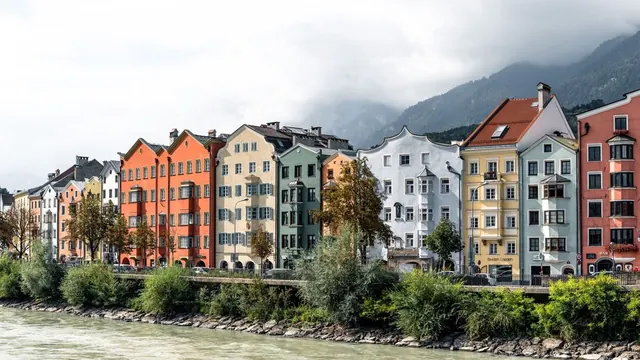
Neither region is worth choosing for shopping, but the Austrian Alps have more to browse. Salzburg's Getreidegasse and Innsbruck's Maria-Theresien-Strasse sell dirndls, loden and felt hats, Kitzbühel and Lech have luxury boutiques, and there are December Christmas markets in both cities.
The Black Forest's best-known souvenir is the cuckoo clock, bought from workshops around Triberg. Freiburg has a good spread of independent shops and Baden-Baden a small upmarket quarter, but the villages offer little beyond farm shops.
Affordability
The Black Forest is the cheaper choice. Valley guesthouses and inn meals are fairly priced, free local transport cards save money, and the walking and waterfalls cost almost nothing. Baden-Baden's grand hotels, the top restaurants and a family day at Europa-Park are where the costs build up.
In the Austrian Alps, a ski week means paying for lift passes, hire, lessons and resort hotels, and the Arlberg and Kitzbühel are among the most expensive places in the Alps. To spend less, stay in summer in Carinthia or in a quieter Tyrolean valley, and book half-board.
Live music & performing arts
For live music the Austrian Alps reach higher. In July and August the Salzburg Festival brings leading orchestras, singers and the open-air Jedermann, and Bregenz stages opera on its floating stage on Lake Constance. The Schubertiade runs on its own calendar, bringing chamber music to Schwarzenberg and Hohenems over several weeks between spring and autumn. Salzburg also has Mozart Week in January and an Easter festival, and Erl has opera in winter as well as summer.
The Black Forest has one major hall, Baden-Baden's Festspielhaus, which is at its busiest during its Easter festival, while the town's philharmonic plays in the Kurhaus. Freiburg adds opera and drama at its municipal theatre, a well-known baroque ensemble and a summer tent festival of rock and world music.
Wellness & relaxation
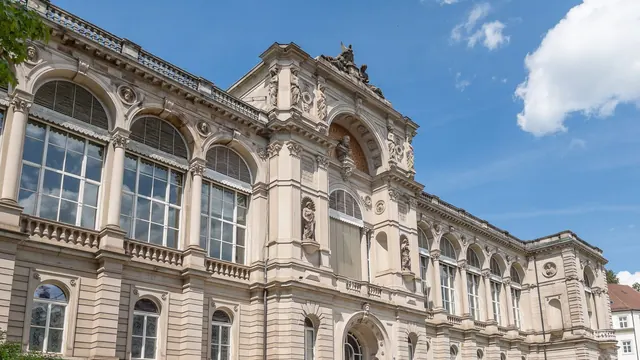
The Black Forest is where to go if rest is the main point of the trip. Baden-Baden is a whole town built around bathing, with the domed Friedrichsbad and the Caracalla baths among its parks and promenades. Badenweiler and Bad Wildbad are smaller spa towns nearby, and forest bathing trails and quiet guesthouses set the slow pace.
The Austrian Alps are almost as good, but here a spa day is more often the reward for an active one. Choices include Bad Gastein's radon springs and healing gallery, the outdoor pools of the Aqua Dome beneath the Ötztal peaks, and hotel sauna areas in almost every valley.
When should you go?
Pick your month. The climate figures are measured averages, not a forecast.
Austrian Alps in July
Black Forest in July
Daytime high, °C
Rainfall in the month, mm
Temperature and rainfall are climate normals, averaged over the years shown. Austrian Alps: 1991-2020 normals, Innsbruck-Flughafen (4.1 km from centre). Black Forest: 1991-2020 normals, Freiburg (0.6 km from centre).
In the Austrian Alps the figures come from the lower ground around the valley towns, where most visitors stay. July there reaches about 26°C, and resorts higher up are cooler. Summer is also the wettest time, with rain peaking in August at around 144mm, so a hike in high summer may run into afternoon showers. September is drier and still mild, which makes it the steadier month for long walks between huts. From December to April the high valleys are given over to skiing, and even down in the towns winter has noticeably more sunshine than the Black Forest.
In the Black Forest's towns and lower valleys, July is slightly warmer at about 27°C. The wettest month comes earlier, with May at around 103mm, and June to August are drier and sunnier than in the Alps, so high summer is the best time for walking. From November to January the lower ground is grey and sees little sun, which suits town strolls and spa days. Up on the Feldberg, winter is the season for cross-country trails, sledging and the small downhill slopes.
Which traveller are you?
On an outdoors trip, choose the Austrian Alps. Glaciers, high peaks, via ferratas and a dense network of staffed huts give serious Alpine terrain, and in winter there is skiing on a scale the Black Forest's small Feldberg slopes cannot match.
For a culture and arts trip, the Austrian Alps again come out ahead. Salzburg's old town and fortress, Innsbruck's Hofburg and Hallstatt cover the history, while the Salzburg Festival and the Bregenz floating stage make summer one of Europe's great seasons for music.
On a relaxing and wellness trip, the Black Forest is the better choice. Baden-Baden's Friedrichsbad and Caracalla baths sit in a town of parks built for slow days, and smaller spa towns such as Badenweiler, quiet guesthouses and long dinners keep the pace gentle throughout.
Before you go
| Measure | Austrian Alps | Black Forest |
|---|---|---|
| Official language | German, Austrian Sign Language | German |
| Currency | Euro (EUR) | Euro (EUR) |
| Sockets | CF230 V, 50 Hz | CF230 V, 50 Hz |
| Driving side | Right | Right |
| Time zone | UTC+1, UTC+2 in summer | UTC+1, UTC+2 in summer |
| Emergency number | 112 | 112 |
| Main airport | Innsbruck Airport (INN)40 non-stop destinations | EuroAirport Basel–Mulhouse–Freiburg (BSL)112 non-stop destinations |
| Public holidays this year | 16 days | 12 days |
Where else could you go?
Every comparison below shares a destination with this one, so you can follow Austrian Alps or Black Forest somewhere new.
- Bavariavs Austrian Alps
- Dolomitesvs Austrian Alps
- Swiss Alpsvs Black Forest
- Lake Gardavs Austrian Alps
- Lake Comovs Austrian Alps
- French Alpsvs Black Forest