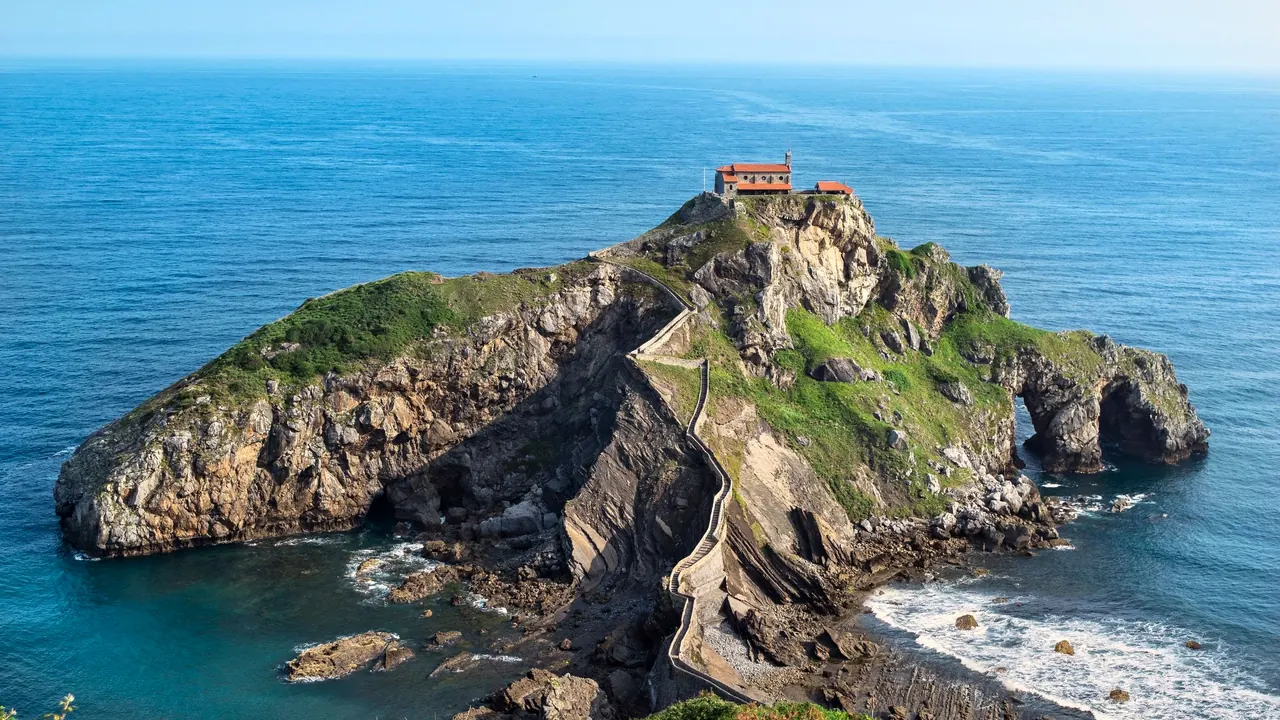
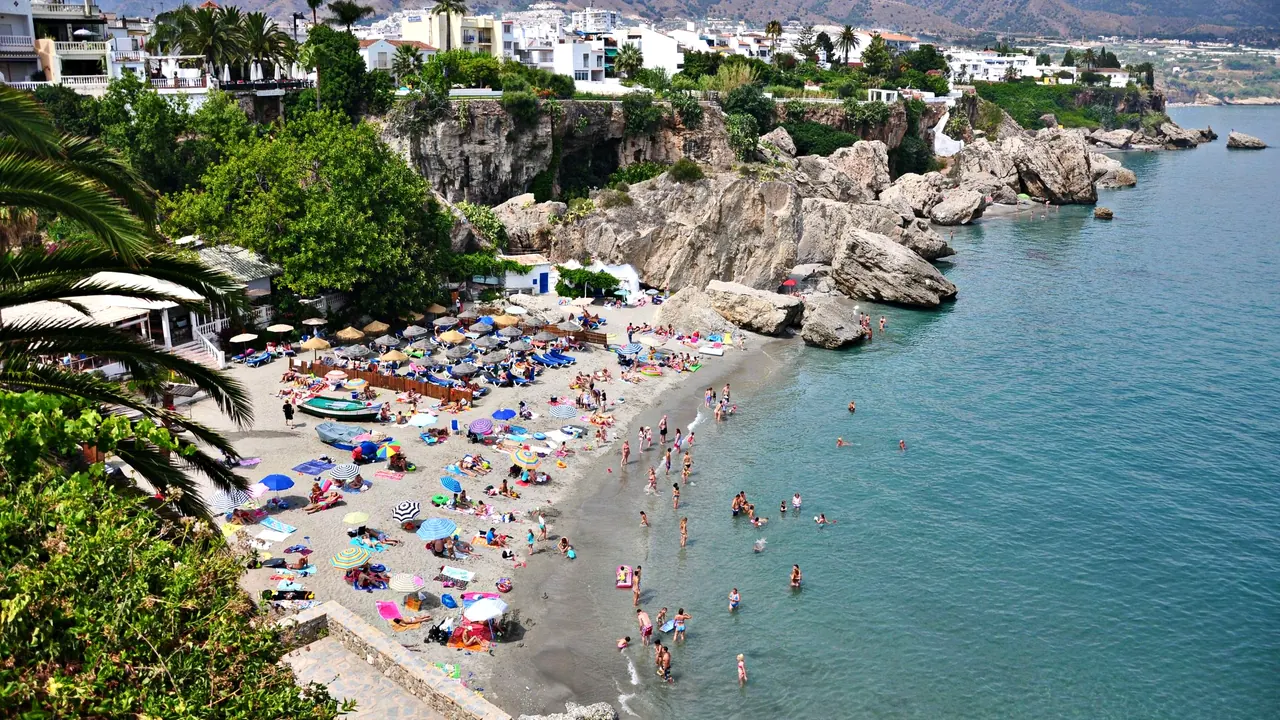
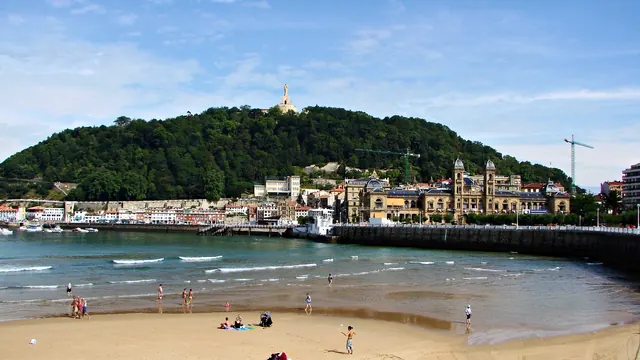
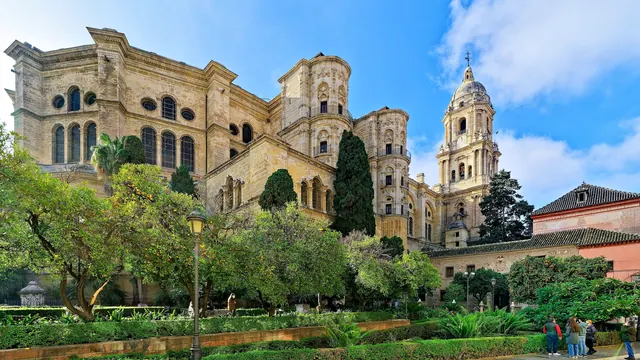
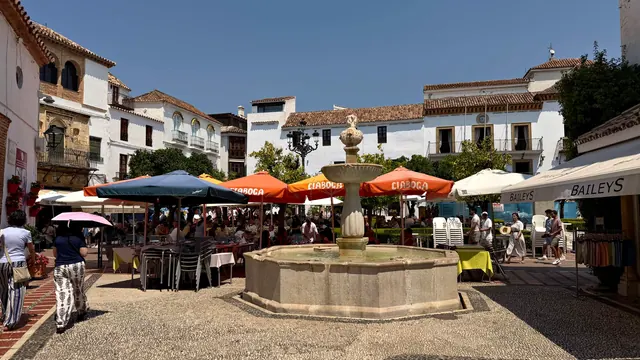
Photos: Basque Country by Enrique, Pexels License; Costa del Sol by Rober Martinez, CC0.
Basque Country or Costa del Sol?
Our verdict in twelve categories, each scored against the same fixed benchmark cities, and the climate month by month, so you can choose for your trip.
Choose Basque Country for
- food and drink
- culture and sights
- live music and the arts
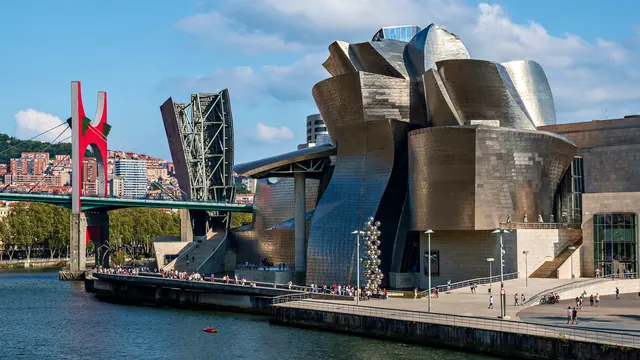
Choose the Basque Country if food is the point of the trip and you are happy to move between cities. The pintxos bars of San Sebastián and Bilbao, the cider houses and the restaurants in the hills make eating the main event. The Guggenheim, the green limestone hills and the cliffs of the geopark fill the days between meals. It suits travellers who don't mind mild, often grey weather and who see the beach as a summer extra rather than the reason to go.
Choose Costa del Sol for
- beaches
- wellness
- families
When sun and sand come first, the Costa del Sol is the better bet. Its long sandy beaches, dry summers and resorts built around pools make it the easier vacation with children. The high-speed train and good roads put Granada, Córdoba, Seville and Ronda within a day's reach. Outside Málaga you have to look harder for good food, and the base needs choosing with care, since Marbella and Fuengirola are very different places.
Scoreboard
Twelve categories on one fixed scale from 0 to 100. The shaded stretch is the gap between the two.
Your match
Pick a travel style or drag the sliders, and both match scores follow your weighting.
Too close to call, 1 point apart
Wins on food and drink and culture and sights with your weighting.
Wins on beaches and wellness with your weighting.
What matters to you?
Category by category
What the scores mean for a trip.
Beaches & swimming
The Costa del Sol is the beach destination of the two. Sand runs almost unbroken from Nerja to Estepona and the sea is warm from June to October. You can pick the crowded fronts of Torremolinos and Fuengirola, lined with sunbeds, the quieter long beaches near Estepona or the clear coves around Maro for snorkelling.
The Basque coast has fewer beaches, but its best town beaches are finer. La Concha, San Sebastián's sheltered shell of pale sand, is lovelier than anything in the big resorts, and Zurriola and Zarautz add surf. The Biscay water is cooler and grey days interrupt even summer, so the beach is part of a stay rather than its purpose.
Food & drink
For eating, the Basque Country is in a different league. In San Sebastián's Parte Vieja and Bilbao's Casco Viejo, the walk from bar to bar for pintxos and txakoli is the evening itself, and the hills behind San Sebastián hold a cluster of Spain's most celebrated restaurants. The cider houses of Astigarraga, Getaria's grilled turbot and the Rioja Alavesa wineries add local cooking with real depth, and it runs through ordinary places too.
The Costa del Sol has its own pleasures: sardines grilled on skewers over beach fires, fried fish in Pedregalejo and El Palo, and Málaga's old taverns and Atarazanas market. Beyond Málaga and Marbella's fine-dining restaurants, though, many resort seafronts serve international menus, and eating well takes some effort.
Culture & sights
The Basque Country spreads its heritage across several towns. Bilbao has the Guggenheim and the Fine Arts Museum, San Sebastián its Belle Époque promenades and San Telmo Museum, and Vitoria a medieval core built in rings around its cathedral. Gernika and the sanctuary of Loyola add places of deep meaning to the Basques, and together they make a fuller cultural trip.
On the Costa del Sol the culture is concentrated in Málaga. The Alcazaba, the Roman theatre and the Gibralfaro walls sit beside a strong group of museums led by the Picasso Museum and the Pompidou branch. Away from Málaga there is little beyond Marbella's old town and the Nerja cave, because most resorts were built for the beach.
Nightlife
The Costa del Sol offers more ways to go out, and more of everything in summer. There are superyachts and beach clubs in Puerto Banús, the long-established gay scene of Torremolinos and cheap, loud bar strips in Fuengirola and Benalmádena. Málaga's late terraces around Calle Larios keep going all year.
Basque nights grow out of the pintxos round and move on to cocktail bars and late pubs in Bilbao and San Sebastián, with only a few clubs open until dawn at weekends. The region comes fully alive at its August fiestas, Aste Nagusia and Semana Grande, and is quiet midweek.
Nature & outdoors
The Basque Country's best landscape lies on the shore as well as inland. There are the tilted flysch cliffs of the geopark between Zumaia and Deba, the long stair up to the hermitage of San Juan de Gaztelugatxe and the Urdaibai marshes. Inland, Urkiola and Gorbeia have green hikes through beech forest. With Mundaka's wave and the beaches for beginners, it is also the better coast for surfing.
On the Costa del Sol the scenery sits behind the resorts: the Sierra Almijara above Nerja, the Sierra de las Nieves, and further inland the Caminito del Rey and El Torcal. The country is drier and rockier, with golf and boat trips on the coast, and the summer heat limits hiking to spring and autumn.
Day trips
Both regions make excellent bases for days out, but the Costa del Sol reaches bigger names. The high-speed train makes Córdoba and Seville easy trips from Málaga, and the Alhambra in Granada is within reach by road. Ronda, Antequera, Gibraltar and white villages such as Frigiliana and Mijas fill the shorter days.
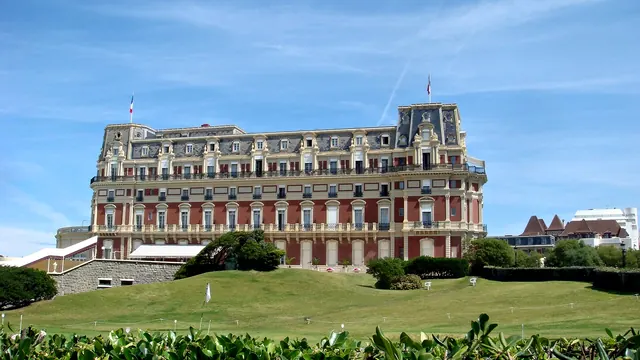
The Basque outings are closer and smaller in scale. There are fishing ports such as Getaria, Lekeitio and the walled town of Hondarribia, the French Basque towns of Biarritz and Saint-Jean-de-Luz, and the Rioja Alavesa wine villages around Laguardia. Pamplona or Burgos make a city day.
Good for families
With children, the Costa del Sol is the simpler choice. Hotels built around pools, gently sloping sandy beaches, a zoo in Fuengirola, Benalmádena's marine park and cable car, water parks and the safari park near Estepona make it easy to pair a beach morning with an outing. June or September are easier than the crowded peak of summer.
San Sebastián is a good family base, with La Concha's calm water, the aquarium, the Eureka science museum and the old funfair on Monte Igueldo, and children are welcome late in bars and squares. There are fewer big attractions, though, and the frequent rain means planning some indoor days.
Getting around
The Basque Country is easier to move around without a car. Bilbao, San Sebastián and Vitoria are about an hour apart by frequent coach and all three centres are walkable. Bilbao, the largest, is made simple by its metro designed by Norman Foster and its riverside tram. Wine country and the hills still need a car.
On the Costa del Sol, the commuter train runs only from Málaga to Fuengirola. Beyond that, buses serve Marbella, Estepona and Nerja and slow down in summer traffic. A car helps for the villages and Ronda, but parking in the resorts in August is a trial.
Shopping & style
Neither region is a shopping destination, but the Costa del Sol has more range. It runs from the luxury fashion houses along the harbour at Puerto Banús to Málaga's Calle Larios, the weekly resort markets and the big malls by the motorway.
Shopping in the Basque Country is on a smaller scale, with chain stores on Bilbao's Gran Vía and independent boutiques in San Sebastián's Centro. The best buys are things to eat and drink, such as Idiazabal cheese, anchovies from Getaria and txakoli, along with striped Basque linen and the txapela beret.
Affordability
The Costa del Sol makes it easier to keep costs down, mainly because Torremolinos, Benalmádena and Fuengirola compete hard for package visitors and have plenty of mid-range rooms. Marbella and Puerto Banús are the expensive exception, while beachside grills and tapas in Málaga are fair value.
The Basque Country is dearer overall. San Sebastián's summer hotels are among the most expensive in Spain and its top restaurants cost a great deal. Staying in Bilbao or Vitoria and eating pintxos rather than tasting menus brings the bill down a long way.
Live music & performing arts
The Basque Country has more to offer on stage, especially in summer. San Sebastián's Jazzaldia plays on the beach and in the Kursaal, the Quincena Musical brings orchestras in August, and BBK Live fills a hillside above Bilbao. For the rest of the year, ABAO's opera season, two orchestras and the Arriaga Theatre keep Bilbao busy.
On the Costa del Sol, performance centres on Málaga's Teatro Cervantes and the city's flamenco peñas, which are worth seeking out over the dinner shows in the resorts. Summer brings big open-air pop concerts around Marbella, but elsewhere live music mostly means cover bands.
Wellness & relaxation
The Costa del Sol is better set up for a restful stay. It has large spa hotels and detox clinics between Marbella and Estepona, golf resorts with spas and Arab-style baths in Málaga. Its mild, sunny winters suit long, slow stays around Nerja or in the hill villages.
The Basque Country offers less formal pampering: mainly the seawater pools of San Sebastián's thalassotherapy centre on La Concha and the springs at Zestoa. Its calm comes from walking, long lunches and quiet nights in Lekeitio or at a farmhouse in the green interior.
When should you go?
Pick your month. The climate figures are measured averages, not a forecast.
Basque Country in July
Costa del Sol in July
Daytime high, °C
Rainfall in the month, mm
Where the figures come from
Basque Country's station stands 253 m above the place it is measured for, so that place is likely a little warmer than the figures say.
Temperature and rainfall are climate normals, averaged over the years shown. Basque Country: 1991-2020 normals, San Sebastian / Igueldo (10 km from centre). Costa del Sol: 1991-2020 normals, Malaga / Aeropuerto (5.4 km from centre).
The Basque Country is never hot. Daytime highs only reach about 22°C in July and August, which makes summer ideal for walking the cities and hills, and the sea is warm enough for comfortable swimming only from July to early September. Rain falls in every month. It is lightest in summer and heaviest in late autumn, when November brings around 200mm, and winter is cool and grey.
The Costa del Sol is much warmer and drier. June to August are almost rainless and very sunny, but highs above 30°C make midday sightseeing and inland hiking hard work. The sea stays warm enough to swim from June to October. Spring and autumn are the best months for walking and day trips. Even December stays mild at around 18°C, so the coast works as a winter escape in a way the Basque coast does not.
Which traveller are you?
On a beach and sun trip, the Costa del Sol wins easily. Its long sandy beaches, almost rainless summers and sea warm enough to swim from June to October beat the cooler Biscay water and the grey spells that interrupt even a Basque July.
For a food and nightlife trip, go to the Basque Country for the eating: pintxos rounds in San Sebastián and Bilbao, cider houses and celebrated restaurants in the hills. Nights on the Costa del Sol run later and bigger, but its food rarely matches.
On a family trip with young children, the Costa del Sol is easier. Pool hotels, gently sloping sandy beaches, a zoo, a marine park and water parks are all close together. San Sebastián is charming with children but has fewer attractions and more rain.
Before you go
| Measure | Basque Country | Costa del Sol |
|---|---|---|
| Official language | Spanish | Spanish |
| Currency | Euro (EUR) | Euro (EUR) |
| Sockets | CF230 V, 50 Hz | CF230 V, 50 Hz |
| Driving side | Right | Right |
| Time zone | UTC+1, UTC+2 in summer | UTC+1, UTC+2 in summer |
| Emergency number | 112 | 112 |
| Main airport | Bilbao Airport (BIO)73 non-stop destinations | Málaga-Costa del Sol Airport (AGP)165 non-stop destinations |
| Public holidays this year | 13 days | 12 days |
By the numbers
| Measure | Basque Country | Costa del Sol |
|---|---|---|
| Population | 3,193,513 | 1,364,837 |
| Swim season, months above 21 °C | 2 months | 3 months |
Where else could you go?
Every comparison below shares a destination with this one, so you can follow Basque Country or Costa del Sol somewhere new.
- Bordeauxvs Basque Country
- Dordognevs Basque Country
- Algarvevs Costa del Sol
- Costa Bravavs Basque Country
- Costa Blancavs Costa del Sol
- Brittanyvs Basque Country