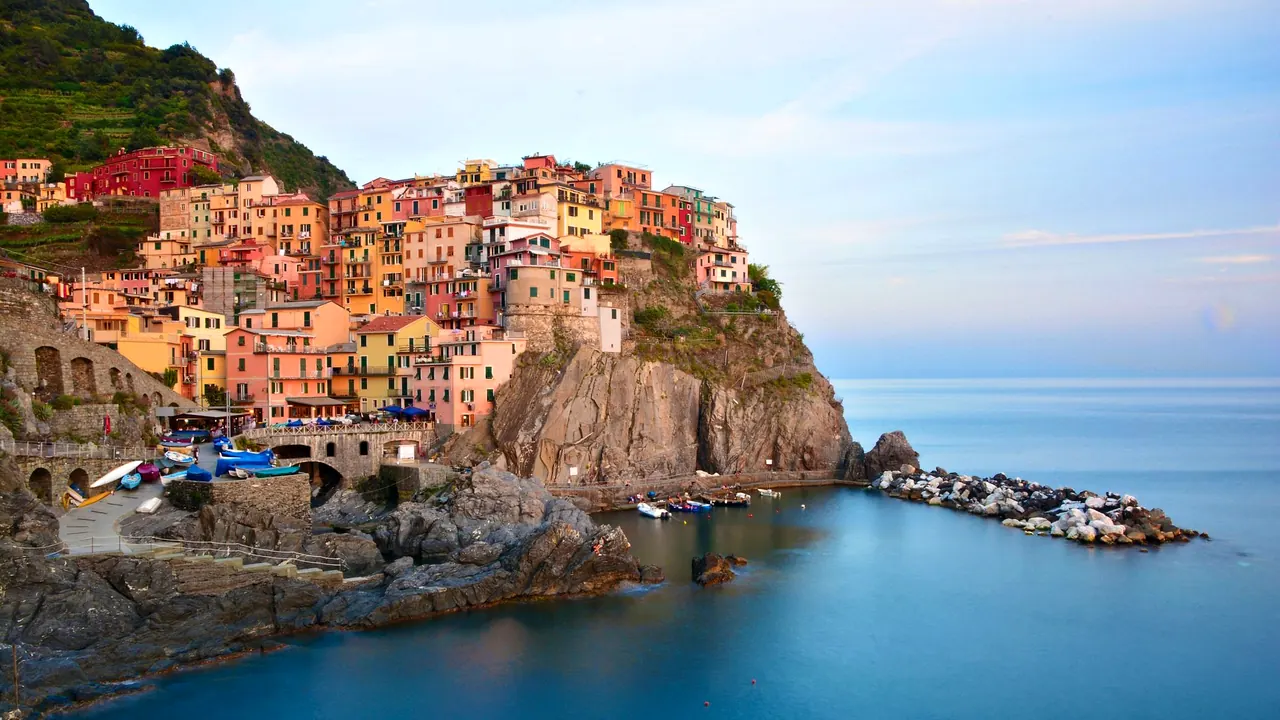
Photos: Cinque Terre by Narcisa Aciko, Pexels License.
Bavaria or Cinque Terre?
Our verdict in twelve categories, each scored against the same fixed benchmark cities, and the climate month by month, so you can choose for your trip.
Choose Bavaria for
- live music and the arts
- wellness
- families
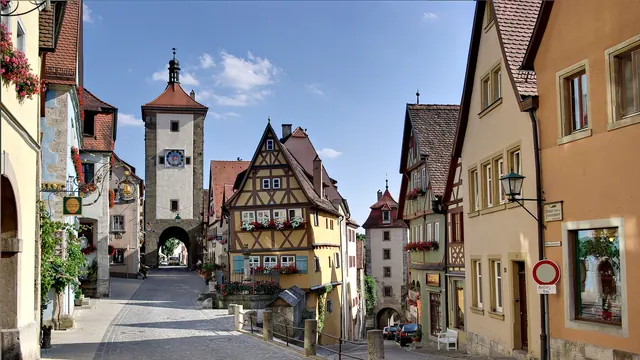
Bavaria suits a longer, varied trip with several bases. You get Munich's galleries, opera and beer gardens, the walled towns of Bamberg and Regensburg, Alpine trails and lakes in the south, and old spa towns for slower days. It is the clear choice for families, for anyone who wants evenings out and for travellers who like a week of different day trips. What it gives up is a warm sea.
Choose Cinque Terre for
- beaches
Cinque Terre is the pick for a short, focused stay on the coast: cliff paths between five terraced villages, swimming off the rocks in clear water and sunsets with a glass of local white. It asks for steady legs and offers little beyond that. The nights are quiet, there are no museums of any size, and the steep lanes make it hard going with small children.
Scoreboard
Twelve categories on one fixed scale from 0 to 100. The shaded stretch is the gap between the two.
Your match
Pick a travel style or drag the sliders, and both match scores follow your weighting.
Wins on live music and the arts and wellness with your weighting.
Wins on beaches with your weighting.
What matters to you?
Category by category
What the scores mean for a trip.
Beaches & swimming
Neither is a classic beach destination, but only Cinque Terre has the sea. Bavaria's swimming is in lakes south of Munich, such as the Starnberger See and Chiemsee, from jetties and grassy meadows, plus quick dips in the Isar. The season is short and depends on the weather.
Cinque Terre's water is clear and warm through the summer. Monterosso has proper sand and fine pebble at Fegina. Elsewhere you swim from rock shelves and harbour slipways at Vernazza and Manarola, which are better for a dip between walks than for a lazy day on the beach.
Food & drink
Bavaria has more to offer at the table, largely because of what it pours: Munich's beer gardens and beer halls, Bamberg's smoked beer and the Silvaner in Würzburg's wine taverns. Munich adds fine dining and the Viktualienmarkt, though once you leave the cities the cooking is heavy and much the same everywhere.
Cinque Terre's food is lighter and its range even narrower: trofie with pesto, focaccia, Monterosso's anchovies and fried fish in paper cones, with Sciacchetrà as the local rarity. In the busiest villages, menus written for day-trippers are the risk, and for real variety you go to La Spezia.
Culture & sights
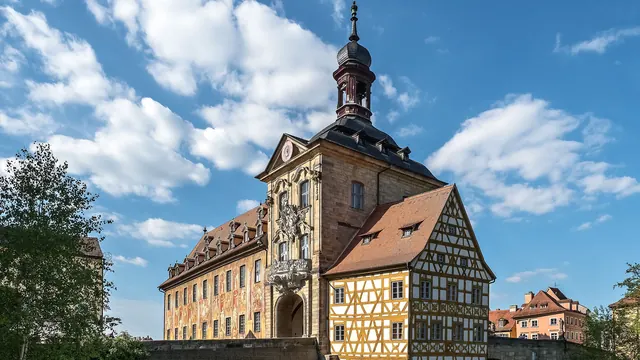
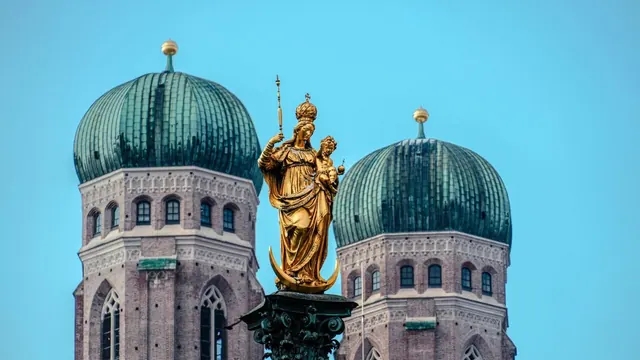
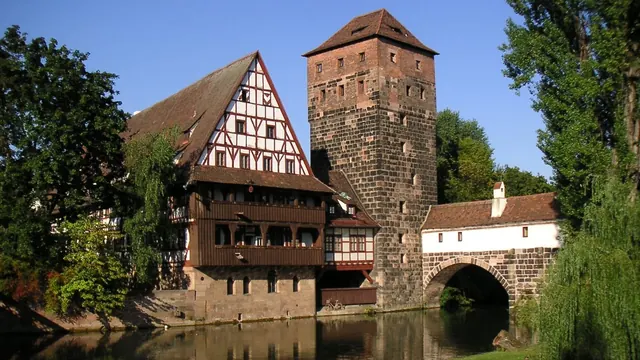
Here the gap is wide. Munich has great collections, from the Old Masters in the Alte Pinakothek to the Deutsches Museum. Around it are Nuremberg's castle, the UNESCO-listed old towns of Bamberg and Regensburg, Tiepolo's ceiling in Würzburg and Ludwig II's castles, enough to fill weeks spread across several bases.
In Cinque Terre the sight is the landscape as a whole: colour-washed villages above terraced cliffs, striped Ligurian Gothic churches and the watchtower above Vernazza. It is lovely to wander through, but with no museums of any size, a day or two covers it.
Nightlife
Bavaria has proper evenings out, and Cinque Terre largely does not. Munich has cocktail bars in Glockenbachviertel, a club scene and student bars in Schwabing. Bamberg, Würzburg and Regensburg have pub streets full of students, and Oktoberfest turns Munich into one enormous party in late September.
In Cinque Terre, the night out is a sunset drink on a harbour wall, with a few bars open later in Monterosso and Riomaggiore in summer. The villages are quiet well before midnight, so anyone after more goes to La Spezia.
Nature & outdoors
Both are made for walking, but Bavaria has more range. Its southern edge has the Zugspitze above Garmisch, the Königssee in Berchtesgaden National Park, hut-to-hut routes in the Allgäu and skiing in winter. In the north, the Bavarian Forest and long river cycle paths add more.
Cinque Terre's outdoors is one remarkable stretch of coast. The Sentiero Azzurro links the villages, the higher Sentiero Rosso runs through pine and chestnut woods, and you can kayak or dive in the marine reserve. It is short and steep rather than vast, and summer heat makes walking at midday hard.
Day trips
Bavaria gives more choice of outings from wherever you stay. From Munich, Augsburg, Nuremberg, Regensburg and Salzburg are all easy by train. Franconia works as a second base for Bamberg, the wine villages along the Main and the Romantic Road towns of Rothenburg and Dinkelsbühl.
For such a small coast, Cinque Terre's railway still opens up a good spread. Portovenere is a boat ride away, Lerici and Sarzana are close, Pisa and Lucca lie in Tuscany, and Portofino and Genoa are to the north. Almost every outing follows the one coastal line, though, so the variety is narrower.
Good for families
Bavaria is far easier with children. Beer gardens have playgrounds, and Munich has the Hellabrunn zoo and the children's section of the Deutsches Museum. The lakes have shallow, grassy bathing spots, and Alpine resorts add summer toboggan runs and gentle cable-car walks.
Cinque Terre is built of steps, so a pushchair is no use. Summer trains are packed, and nothing on the coast is aimed at children. It suits older children who enjoy walking and swimming off rocks, and families with toddlers do best in mostly flat Monterosso, by the beach.
Getting around
You can manage both without a car, and in Bavaria the trains cover far more ground. Munich has a walkable centre with the U-Bahn, S-Bahn and trams, and regional trains reach the Alps, the lakes and the Franconian towns on one day ticket. Remote valleys and villages still mean infrequent buses or a car.
Cinque Terre's local train links all five villages a few minutes apart, with ferries in season and footpaths in between, and a car is only a burden. The effort here comes from crammed summer platforms and steep stairways rather than distance.
Shopping & style
Bavaria has real shopping in Munich, with luxury houses on Maximilianstrasse, department stores between Marienplatz and Karlsplatz and independent shops in Glockenbach. Away from the city there are crafts such as Oberammergau's woodcarving, and the Christmas markets fill December. Cinque Terre has small produce and souvenir shops, where the best things to take home are pesto, anchovies, lemon liqueur and Sciacchetrà.
Affordability
Neither is cheap, but Bavaria gives you more ways to keep costs down. Munich is expensive, especially during Oktoberfest and the big trade fairs. Franconian towns, the Bavarian Forest and Alpine guesthouses are moderate, though, and beer gardens let you bring your own food.
In Cinque Terre the cost is in the beds, because village rooms are few and much in demand, and there is a charge for the park's paths. Food and the train are reasonable, which is why many travellers on a budget sleep in La Spezia or Levanto and take the train in.
Live music & performing arts
This is one of the starkest differences between the two. Bavaria has the Bavarian State Opera, two orchestras of international rank, the rococo Cuvilliés Theatre and Bayreuth's Wagner festival, which is reason enough to travel for many devotees. Cinque Terre has only the odd summer concert in a church or on a square and the bands of saints' days, so for a play or an orchestra you go to La Spezia or Genoa.
Wellness & relaxation
Bavaria has a deep spa tradition. There are Bad Kissingen's colonnades, the brine baths of Bad Reichenhall, the thermal resort at Bad Füssing, Bad Wörishofen where Kneipp's water cure began, and Munich's Art Nouveau Müller'sches Volksbad. Saunas are taken the German way, mostly nude and mixed.
Cinque Terre's rest comes only from its pace: car-free villages, a terrace over the sea and quiet evenings, best in spring, autumn or early in the morning. There are no spas, and a crowded summer afternoon is anything but restful.
When should you go?
Pick your month. The climate figures are measured averages, not a forecast.
Bavaria in July
Cinque Terre in July
Daytime high, °C
Rainfall in the month, mm
Where the figures come from
Cinque Terre's temperatures are measured 78 km from the centre, at Pisa / S. Giusto.
Cinque Terre has no rain gauge within 25 km of the centre, so its rainfall comes from a gridded climate dataset read at the destination rather than from a gauge further away.
Temperature and rainfall are climate normals, averaged over the years shown. Bavaria: 1991-2020 normals, München (1.9 km from centre). Cinque Terre: 1991-2020 normals, Pisa / S. Giusto (77.8 km from centre).
Bavaria's warm season runs from June to August, when afternoons reach about 25°C and the lakes are warm enough for swimming. These are also its wettest months, though, so expect rainy spells in the middle of summer. May and September suit walking in the towns and on mountain trails. Winter is cold, around 4°C by day in January, which suits skiing and Christmas markets rather than long days of sightseeing.
Cinque Terre is warmer, drier and sunnier through the summer. July highs come close to 30°C, which makes the steep coastal path hard work at midday, and the sea stays around 24°C from July to September. April, May and late September are the best months for hiking, sunny but mild. October and November bring the heaviest rain, about 170mm a month, and the winters are mild but damp.
Which traveller are you?
On a beach and sun trip, Cinque Terre wins easily. Its sea is clear and warm from June to September, with sand at Monterosso and rock swimming below the other villages. Bavaria offers only lake bathing in a short, changeable summer.
For a culture and arts trip, Bavaria is far richer. Munich's Pinakotheken, Residenz and Deutsches Museum, the old towns of Bamberg and Regensburg, and its opera and orchestras outweigh Cinque Terre's beautiful villages, which have no museums or concert life to speak of.
On a family trip with children, Bavaria is by far the easier choice. Beer garden playgrounds, zoos, a large theme park at Günzburg and gentle lakes all suit young children. In Cinque Terre, the steps and crowded trains defeat pushchairs and tire small legs.
Before you go
| Measure | Bavaria | Cinque Terre |
|---|---|---|
| Official language | German | Italian |
| Currency | Euro (EUR) | Euro (EUR) |
| Sockets | CF230 V, 50 Hz | CFL230 V, 50 Hz |
| Driving side | Right | Right |
| Time zone | UTC+1, UTC+2 in summer | UTC+1, UTC+2 in summer |
| Emergency number | 112 | 112 |
| Main airport | Munich Airport (MUC)211 non-stop destinations | Pisa International Airport (PSA)82 non-stop destinations |
| Public holidays this year | 12 days | 13 days |
By the numbers
| Measure | Bavaria | Cinque Terre |
|---|---|---|
| Population | 13,038,724 | - |
| Swim season, months above 21 °C | - | 4 months |
Where else could you go?
Every comparison below shares a destination with this one, so you can follow Bavaria or Cinque Terre somewhere new.
- Portofinovs Cinque Terre
- Austrian Alpsvs Bavaria
- Tuscanyvs Cinque Terre
- Lake Gardavs Cinque Terre
- Dolomitesvs Bavaria
- Lake Comovs Cinque Terre