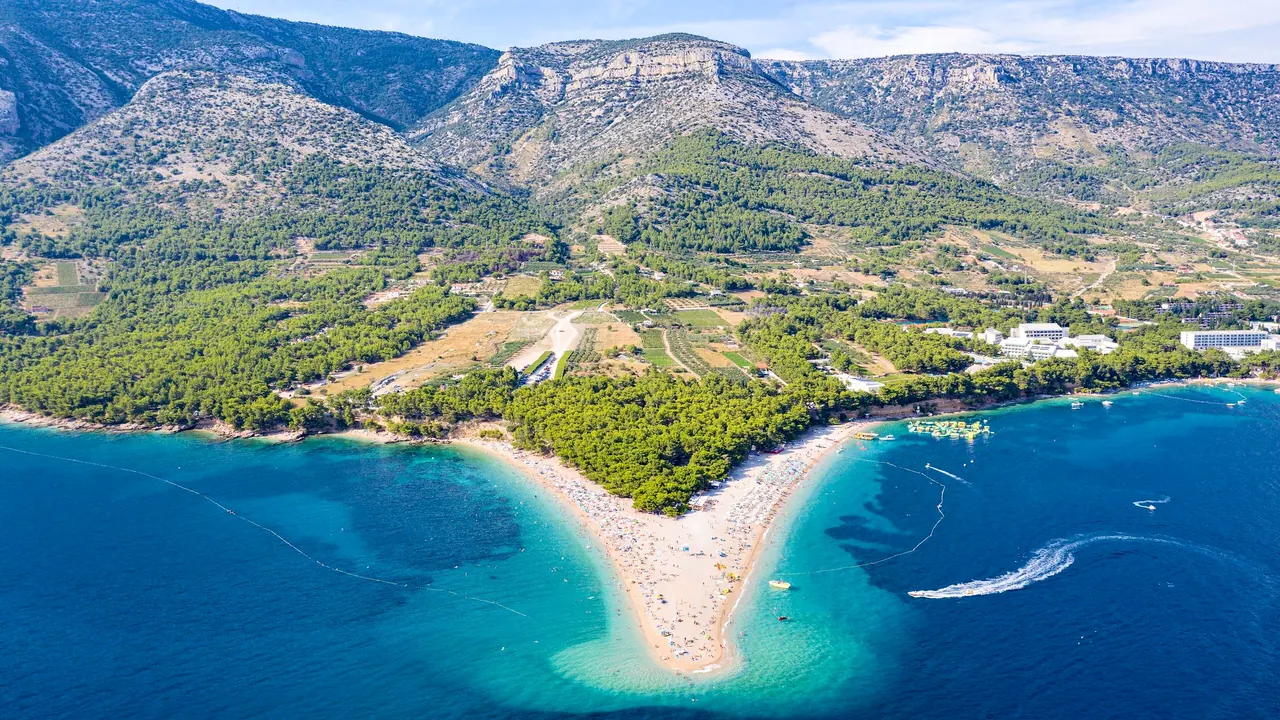
Brač or Tuscany?
Our verdict in twelve categories, each scored against the same fixed benchmark cities, and the climate month by month, so you can choose for your trip.
Choose Brač for
- beaches
- prices
Brač is the better pick for a summer by the sea and not much else. You get Zlatni Rat and the coves near Bol, the clear channel water, the wind for windsurfing in the afternoons and a slow island routine of beach, konoba and harbour. Go there to swim and do very little, and accept that art, shopping and evening entertainment mostly mean a ferry to Split.
Choose Tuscany for
- culture and sights
- shopping
- live music and the arts
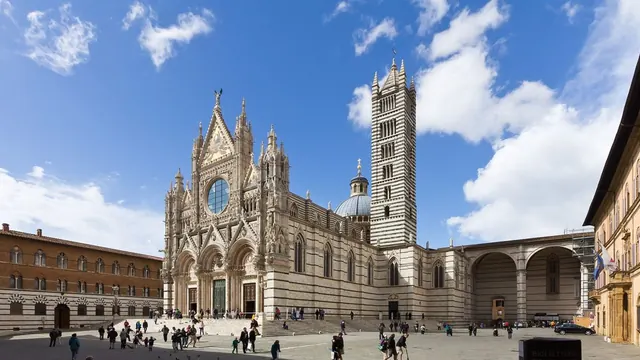
Tuscany suits travellers who want a lot from each day. It has Florence's Renaissance galleries, the hill towns of Siena, San Gimignano and Pienza, wine estates in Chianti and Montalcino, and hot springs at Saturnia and Bagno Vignoni. Its beaches on Elba and in the Maremma are good, but for most visitors the coast is an add-on to a trip built around towns, food and countryside.
Scoreboard
Twelve categories on one fixed scale from 0 to 100. The shaded stretch is the gap between the two.
Your match
Pick a travel style or drag the sliders, and both match scores follow your weighting.
Wins on beaches and prices with your weighting.
Wins on culture and sights and shopping with your weighting.
What matters to you?
Category by category
What the scores mean for a trip.
Beaches & swimming
Brač has the edge here, because on the island the sea is never more than a short drive away. Zlatni Rat at Bol is a beach worth travelling for, a long pebble spit in very clear water with coves running west and gentle family bays on the north coast. The catch is the ground underfoot: nearly all of it is pebble or rock, and Lovrečina is a rare patch of sand.
Tuscany has more sand, on Elba's bays such as Fetovaia, on the pine-backed strands of the Maremma and along the long, orderly lidos of Versilia. Its good beaches lie far from Florence and the hill towns, though, so you either base yourself on the coast or treat swimming as a side trip.
Food & drink
Tuscany is one of Europe's great food regions, and Brač is a simple island table. On Brač you eat grilled fish, octopus cooked under an iron lid, lamb, island olive oil and walnut cake from Dol, and the best meals are in the inland villages rather than on Bol's waterfront.
Tuscany has bistecca over coals, lampredotto from Florence's street carts, the San Lorenzo and Sant'Ambrogio markets, pecorino in Pienza and truffles in San Miniato. Above all it has wine: Chianti Classico, Brunello and Vino Nobile can all be tasted at the cellars where they are made.
Culture & sights
This is the widest gap between the two. Brač's heritage is quiet and made of stone: the Blaca hermitage built into a cliff, the Illyrian walls of Škrip, the stonemasons of Pučišća and a few unhurried days of chapels and olive mills.
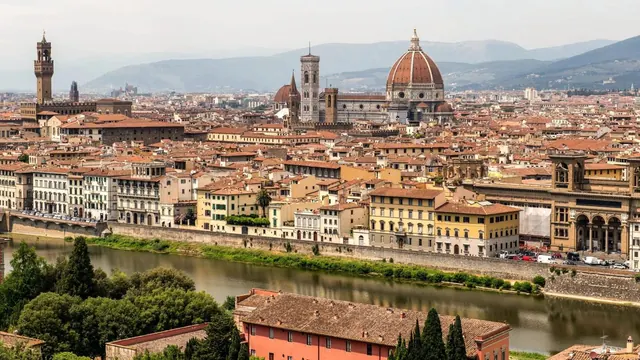
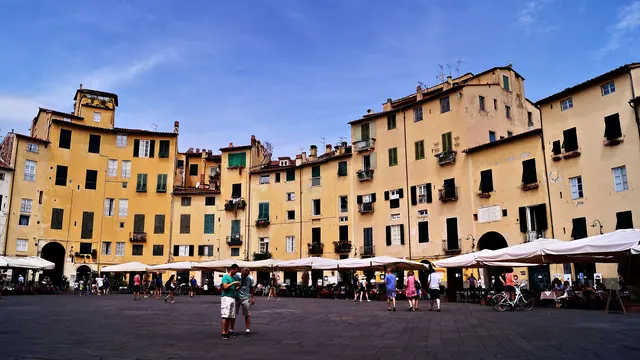
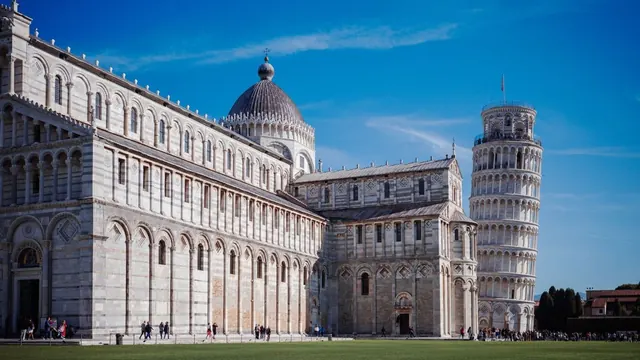
Tuscany is where the Renaissance began. Florence alone has Brunelleschi's dome, the Uffizi and the Accademia, and Siena, Pisa, Lucca, San Gimignano and Arezzo each add enough to fill a day of their own.
Nightlife
Neither is a party destination, but Tuscany offers more after dark. On Brač, evenings mean dinner and a drink by the harbour, with some late beach bars at Bol in July and August, and serious partygoers take the catamaran to Hvar.
Tuscany has two kinds of night out. Florence has students on the steps of Santo Spirito and wine bars in Oltrarno all year, and in summer Versilia has beach clubs and dance halls that stay busy until dawn.
Nature & outdoors
Brač's outdoors is compact and dramatic: a bare karst plateau rising to Vidova Gora, the highest peak on any Adriatic island, with a view straight down to Zlatni Rat. Its other real draw is the reliable summer wind off Bol for windsurfing and kitesurfing.
Tuscany has far more range. It has cypress lanes and gravel roads through Chianti and the Val d'Orcia for cycling and walking between towns, marble ridges in the Apuan Alps, beech forests in the Casentino, the Maremma's coastal park and sailing around Elba.
Day trips
From Brač, the outings all start with a ferry. Split and Diocletian's Palace are the best of them, Trogir is close behind, and Hvar and Makarska are within reach, but the options shrink once the summer timetables end.
Tuscany has more day trips than one stay can use. Siena, Lucca, Pisa and San Gimignano are all within easy reach, and so are the wine towns of the south. Bologna, Umbria's hill towns and the Cinque Terre lie just beyond the border.
Good for families
Tuscany is slightly the better family choice, mainly because it has more variety. Brač offers a simple, safe seaside routine, with shallow sheltered beaches at Supetar, Sutivan and Postira and apartments with kitchens, but almost nothing built for children.
Tuscany can combine a farmhouse with a pool and animals with sandy, lifeguarded beaches in Versilia or the Maremma. It also has Pinocchio's park at Collodi, the leaning tower and bike rides on Lucca's walls, though Florence's galleries will test young children's patience.
Getting around
Both reward having a car, for different reasons. On Brač you need one to cross the plateau between the north coast and Bol, because buses are infrequent, and every trip to the mainland depends on a ferry queue.
Tuscany is easier without a car than the island is. Regional trains link Florence, Pisa, Lucca, Arezzo and Viareggio well, so a car-free trip along that line works. A car is still needed for Chianti, the Val d'Orcia and the Maremma.
Shopping & style
Brač has very little shopping. You can buy carved stone from Pučišća, olive oil, honey, lavender and wine, and for anything more you go to Split.
Tuscany has real craft traditions. Florence has leather workshops around Santa Croce, goldsmiths on the Ponte Vecchio, marbled paper in Oltrarno and the luxury street of Via de' Tornabuoni. Outside Florence there is alabaster in Volterra, ceramics in Montelupo and the designer outlets of the Arno valley.
Affordability
Both are expensive in high summer, and costs are broadly the same. The difference is in what drives the bill. On Brač it is rooms in Bol, sunbeds and car ferry fares, while north coast apartments, village konobas and a June or September visit keep costs down.
In Tuscany, rooms in central Florence, Chianti villas and resorts like Forte dei Marmi are the big costs, along with car hire. Trattoria meals, wine from the cellar door and bases in Lucca, Arezzo or the Maremma help balance them.
Live music & performing arts
Brač has no theatre or concert hall. Summer brings open-air concerts on the squares of Bol and Supetar, and if you are lucky you may hear a klapa group sing.
Tuscany has a proper season. The Maggio Musicale Fiorentino and Florence's opera house lead it, Puccini is played in Lucca and staged by the lake at Torre del Lago, and the Accademia Chigiana holds concerts in Siena's palaces.
Wellness & relaxation
Brač relaxes you through its slow pace rather than through treatments. The quiet harbours of Milna, Povlja and Sumartin and long evenings over the water do the work, while the spas are hotel facilities in Bol and Supetar.
Tuscany has thermal springs. You can bathe in the open-air terraced pools at Saturnia, the steaming square of Bagno Vignoni and the woodland pools of Bagni San Filippo, or in the grand spa town of Montecatini. A countryside farmhouse adds to the rest.
When should you go?
Pick your month. The climate figures are measured averages, not a forecast.
Brač in July
Tuscany in July
Daytime high, °C
Rainfall in the month, mm
Where the figures come from
Brač's temperatures are measured 34 km from the centre, at Split / Marjan.
Brač has no rain gauge within 25 km of the centre, so its rainfall comes from a gridded climate dataset read at the destination rather than from a gauge further away.
Brač's sunshine is measured 34 km from the centre, at Split / Marjan.
Tuscany has no rain gauge within 25 km of the centre, so its rainfall comes from a gridded climate dataset read at the destination rather than from a gauge further away.
Tuscany's sunshine is measured 71 km from the centre, at Pisa / S. Giusto.
Temperature and rainfall are climate normals, averaged over the years shown. Brač: 1991-2020 (sunshine 1971-2000) normals, Split / Marjan (33.5 km from centre). Tuscany: 1995-2020 (sunshine 1991-2020, rainfall 1991-2020) normals, Firenze / Peretola (5.6 km from centre).
Both destinations have mild, wet winters and hot summers on much the same calendar. On Brač, July and August are the sunniest stretch of the year and the heart of the beach season. The sea is pleasant from June and peaks at about 25°C in August. The same two months in Tuscany climb to about 33°C, which makes walking around Florence and Siena hard work in the middle of the day.
On Brač, June and September are the gentler beach months, and the weather turns wet from October, with November the rainiest month on the island. In Tuscany, May, June and September are the comfortable months for sightseeing, and October brings heavier rain, around 105mm. Spring is good both for walking on the Brač plateau and for touring the Tuscan hills.
Which traveller are you?
For a beach and sun trip, Brač is the stronger choice. The beaches are the whole point of the island, from Zlatni Rat to the quiet north coast bays, and Tuscany's coast is split between resorts that sit far from its towns.
On a culture and arts trip, Tuscany wins easily. It has the Uffizi, the David, Siena's Campo, Pisa's cathedral square and evenings of Puccini at Torre del Lago, while Brač offers stone villages, a cliff hermitage and a Tintoretto in Bol.
For a relaxing and wellness trip, choose Tuscany. Its thermal springs at Saturnia, Bagno Vignoni and Montecatini, together with farmhouse stays in the Val d'Orcia, give a deeper rest than Brač's hotel spas, although the quiet island harbours have a calm of their own.
Before you go
| Measure | Brač | Tuscany |
|---|---|---|
| Official language | Croatian | Italian |
| Currency | Euro (EUR) | Euro (EUR) |
| Sockets | CF230 V, 50 Hz | CFL230 V, 50 Hz |
| Driving side | Right | Right |
| Time zone | UTC+1, UTC+2 in summer | UTC+1, UTC+2 in summer |
| Emergency number | 112 | 112 |
| Main airport | Split Saint Jerome Airport (SPU)69 non-stop destinations | Florence Airport, Peretola (FLR)46 non-stop destinations |
| Public holidays this year | 14 days | 13 days |
By the numbers
| Measure | Brač | Tuscany |
|---|---|---|
| Population | 14,434 | 3,729,641 |
| People per km² | 36 | - |
| Swim season, months above 21 °C | 4 months | - |
Where else could you go?
Every comparison below shares a destination with this one, so you can follow Brač or Tuscany somewhere new.