China
Hangzhou
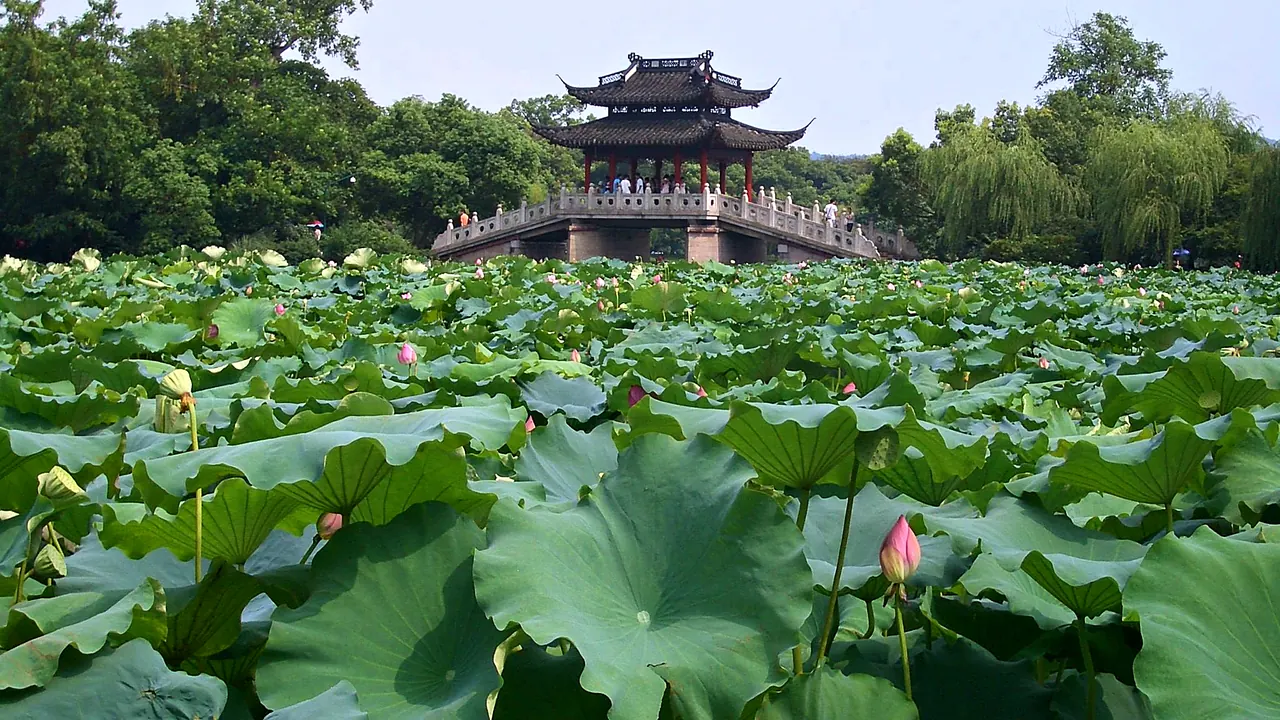
The pavilion on a bridge over a lotus pond by West Lake
- Day trips86
- Culture & sights73
- Affordable cities72
Photo: Vmenkov, CC BY-SA 3.0, cropped
Match
58
Every category weighted equally
- Beach & sun54
- Culture & arts63
- Food & nightlife58
- Family trip59
- Outdoors63
- Relax & unwind57
- Shopping & style60
- On a budget60
Hangzhou in twelve categories
Our verdict on each, scored 0 to 100 against the same fixed benchmark cities, so a score means the same thing on every page.
Beaches & swimming. Scores 7 out of 100.
Food & drink. Scores 70 out of 100.
Culture & sights. Scores 73 out of 100.
Nightlife. Scores 40 out of 100.
Nature & outdoors. Scores 68 out of 100.
Day trips. Scores 86 out of 100.
Good for families. Scores 58 out of 100.
Getting around. Scores 66 out of 100.
Shopping & style. Scores 56 out of 100.
Affordability. Scores 72 out of 100.
Live music & performing arts. Scores 48 out of 100.
Wellness & relaxation. Scores 56 out of 100.
Hangzhou category by category
Beaches & swimming
7Hangzhou isn't a beach city. It sits at the head of the Qiantang estuary, where the water is brown, tidal and known for its tidal bore, not for bathing, and West Lake is for boating, not swimming. The nearest proper swimming is at Qiandao Lake, roughly two hours away, where a few designated areas open in the hot summer months. Anyone who wants sand and sea should plan a separate stretch of the trip on the coast or an island.
Food & drink
70Hangzhou cooking is one of the refined, slightly sweet styles of eastern China. Its classic dishes are West Lake fish in vinegar sauce, slow-braised Dongpo pork, shrimp stir-fried with Longjing tea leaves and beggar's chicken baked in clay. Lakeside restaurants serve these in banquet style, and noodle shops serve pian'erchuan, a bowl of noodles with pickled greens and bamboo shoots, for breakfast and lunch. Freshwater fish, lotus root and spring bamboo shoots change the menus through the seasons.
Tea is the other half of the story. Longjing green tea grows on the hills just west of the lake, and in the tea villages of Longjing and Meijiawu you can drink the spring harvest where it was picked. Night-market snacks and the food courts of a large modern city fill in the cheaper end. Visitors who want fiery food or wide international choice will find less here.
Culture & sights
73Hangzhou's main monument is a landscape. West Lake, with its causeways, pagodas, islands and garden pavilions, was shaped over a thousand years into the ideal Chinese scenery that poets and painters copied across East Asia. Around it stand Lingyin Temple, one of the great Buddhist monasteries of southern China, the stone carvings of Feilai Feng in the cliffs beside it, and the Leifeng and Six Harmonies pagodas.
In the city, the Zhejiang Provincial Museum, the China National Silk Museum and the National Tea Museum are all well worth visiting. The southern end of the Grand Canal runs through the north of town, and the Neolithic city of Liangzhu, with its jade and earthworks, lies on the outskirts. What the city lacks is an intact old town: Hefang Street and its neighbours are largely rebuilt, so the heritage is in the temples, the lake and the museums rather than the streets.
Nightlife
40Nights in Hangzhou are mild. The most typical evening is a walk along the lit-up lakeshore, followed by a drink in one of the bars and terraces around Hubin and the streets just east of the lake. Wulin and the business districts have the larger clubs and late lounges, and the young workforce and university crowd keep a reasonable scene of craft beer bars and karaoke going. Things are quiet by big-city standards, though, and serious night owls usually save their nights out for Shanghai.
Nature & outdoors
68Green hills come right down to the edge of the city. Paths climb from West Lake into wooded ridges and terraced tea slopes around Longjing and Jiuxi, the Nine Creeks valley, which make easy half-day walks among bamboo, streams and small temples. Cycling the causeways and the full lake shore is a pleasure early in the morning. The Xixi wetland to the west, with its waterways and birdlife, is explored on foot or by small boat.
Further out, the bamboo-covered hills of Moganshan are about an hour away, and the hundreds of islands of Qiandao Lake and the forests of Tianmushan take around two hours. Spring and autumn are the seasons for walking. Midsummer is hot and very humid, and winter is damp and grey.
Day trips
86Hangzhou makes an excellent base for exploring the Yangtze delta. Shaoxing, the canal city of rice wine, black-awning boats and the writer Lu Xun, is under half an hour away by high-speed train. Shanghai is about an hour away, and Suzhou, with its UNESCO-listed classical gardens and canal lanes, is about an hour and a half.
The water towns are closer still. Wuzhen, Xitang and Nanxun, with their stone bridges, canals and old merchant houses, are each about an hour or so by road. Ningbo and its ancient Tianyi Ge library are within reach to the east. With an early start, Huangshan and the Huizhou villages of Hongcun and Xidi are just about manageable to the west, though they are better as an overnight stay.
Good for families
58Children tend to enjoy West Lake itself: pedal boats and ferries to the islands, wide lakeside paths for scooters and lots of space to run around. The city zoo is set in the hills, a polar-themed aquarium has penguins and beluga whales, and the theme parks on the edge of town range from rides to a recreated Song-dynasty town with costumed shows. The streets feel safe and children are fussed over everywhere.
The hard parts are humid summer heat, very dense crowds around the lake during the national festival weeks, and how little English is spoken outside hotels. Shanghai Disneyland is a possible long day out.
Getting around
66The metro is modern, clean and covers much of the city, with lines out to the railway stations and the airport. Shared bikes and the cycle lanes along the lake make the scenic core easy to explore. The lakeshore and the causeways are good walking, but the lake is large and the temples, tea villages and wetlands are spread out, so most days combine walking with buses, taxis or ride-hailing, which are cheap.
The main hurdles are language and payment. Away from the metro, signs and drivers rarely use English, and daily life runs on mobile payment apps, which are worth setting up before you arrive.
Shopping & style
56Hangzhou's own shopping is silk and tea. Silk comes as fabric, scarves and qipao, sold in the silk market district and the specialist shops. Longjing green tea is best bought from the growers in the hill villages, and is at its finest in spring. Wulin and the streets along the eastern lakeshore have the department stores, international brands and luxury malls of a wealthy modern city. Hefang Street and the old lanes near Wushan sell fans, scissors, silk parasols and many souvenirs, while independent design boutiques are scattered and harder to find.
Affordability
72For a visitor, Hangzhou is good value. Noodle shops, local restaurants and street snacks are cheap, and so are the metro, buses, shared bikes and taxis. The lake, the causeways and most of the hill walks are free, and the temple and museum fees are modest. Costs climb with lakeside luxury hotels, set tea ceremonies and banquet-style restaurants on the water, and room rates jump during the national festival weeks, when much of China travels at once. Staying a little back from the shore saves a good deal.
Live music & performing arts
48The performances most visitors see are big staged spectaculars. One is an evening show performed on the surface of West Lake, and others are large historical extravaganzas at the theme parks on the edge of town, built around legends of the Song dynasty. They are made for tourists, but they are impressive. Yue opera, the lyrical, mostly female-cast opera of Zhejiang, can be seen in local theatres, though it is sung in dialect and rarely surtitled in English. The Hangzhou Grand Theatre hosts the city orchestra, touring ballet and concerts, but the scene is modest beyond that.
Wellness & relaxation
56Hangzhou has long been known as a place for taking life slowly. Mornings by the lake bring tai chi, calligraphy with water on the paving stones and slow walks under the willows. Afternoons are for the tea houses in the hills, where a pot of Longjing lasts as long as you like. Foot massage and traditional Chinese massage parlours are found in every neighbourhood, and several secluded retreat hotels in the tea valleys west of the lake offer spas.
There is no real bathing culture of public baths or hot springs in the city itself, and the lakeshore loses its calm at weekends and during the national festival weeks. Early mornings and the side valleys are where the restful Hangzhou is found.
When should you go?
Pick a month to see what it is like. The climate figures are measured averages, not a forecast.
Hangzhou in July
Daytime high, °C
Rainfall in the month, mm
The whole year
Shaded against this city’s own year: the deepest cell is its best month for that figure and the palest its weakest.
Temperature and rainfall are climate normals, averaged over the years shown. Hangzhou: 1991-2020 normals, Hangzhou (1.9 km from centre).
Before you go
| Measure | Hangzhou |
|---|---|
| Official language | Putonghua |
| Currency | Yuan Renminbi (CNY) |
| Sockets | ACI220 V, 50 Hz |
| Driving side | Right |
| Time zone | UTC+8 |
| Emergency number | Police 110, ambulance 120, fire 119 |
| Elevation | 19 m |
| Main airport | Hangzhou Xiaoshan International Airport (HGH)25 km from centre131 non-stop destinations |
| Public holidays this year | 6 days |
By the numbers
| Measure | Hangzhou |
|---|---|
| City population | 11,936,010 |
| People per km² | 708 |
| Museums within 10 km | 13 |
| UNESCO World Heritage sites within 50 km | 3 |
| Swim season, months above 21 °C | 5 months |
Compare Hangzhou with
Every comparison with a written verdict behind it.