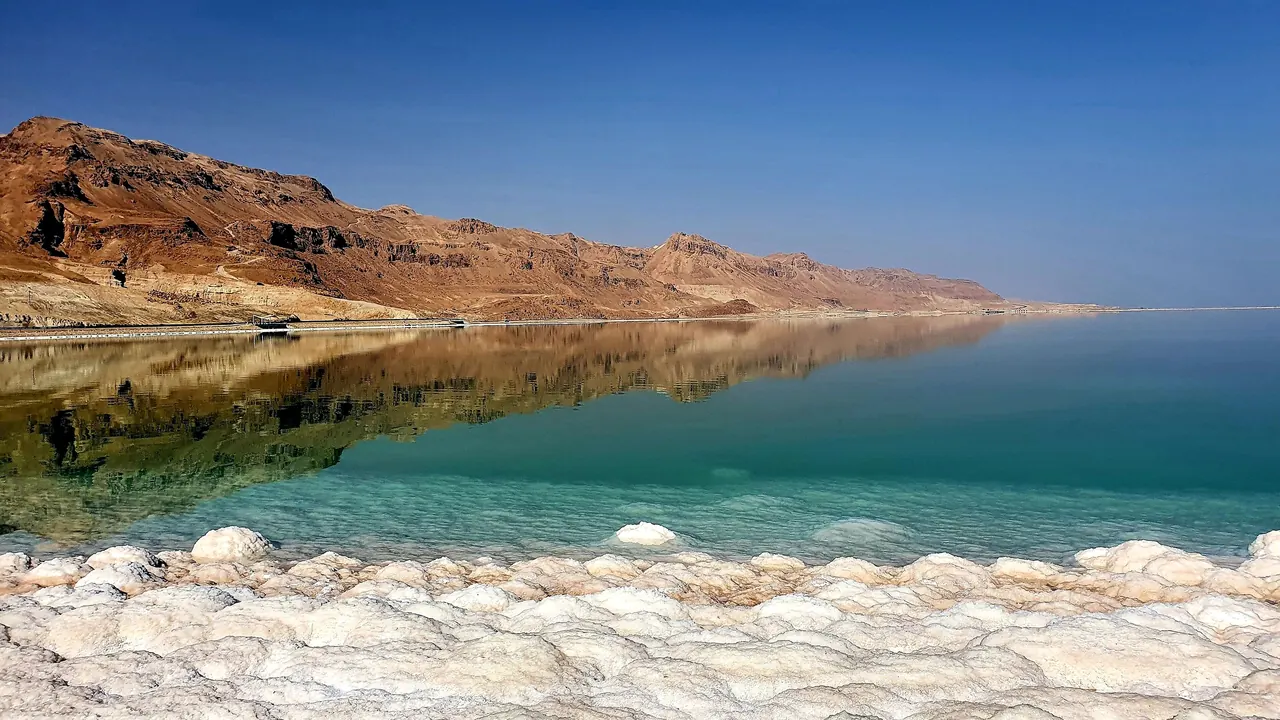
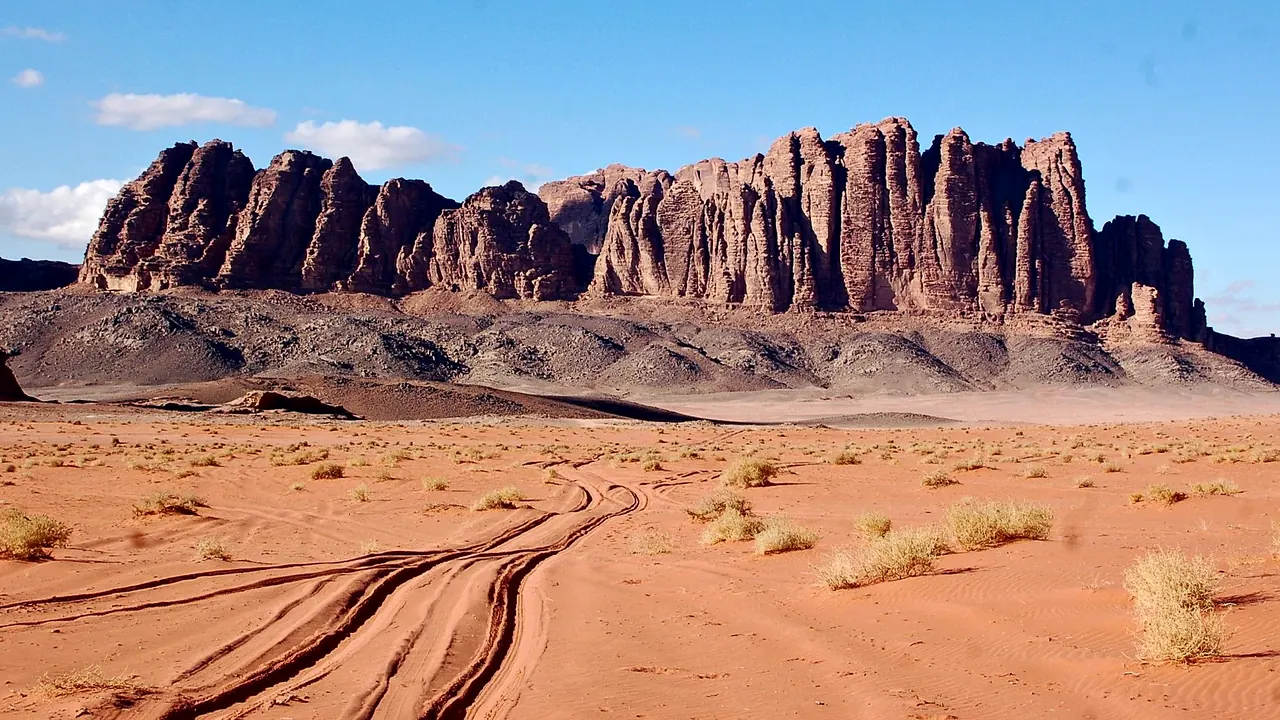
Photos: Dead Sea by Anagoria, CC BY-SA 4.0, cropped; Wadi Rum by twiga-swala, CC BY-SA 2.0, cropped.
Dead Sea or Wadi Rum?
Our verdict in twelve categories, each scored against the same fixed benchmark cities, and the climate month by month, so you can choose for your trip.
Choose Dead Sea for
- wellness
- beaches
- getting around
The Dead Sea suits a slow, restorative stay built around the water: floating, mud and warm mineral pools at the Ein Bokek spa hotels, with Masada at dawn and a day in Jerusalem to break the routine. It is the easier of the two to manage, with one shore road and everything close together, and it is the better choice for anyone with sore skin or tired joints who mainly wants to rest. Expect it to cost a lot.
Choose Wadi Rum for
- prices
- nature and the outdoors
- live music and the arts
Wadi Rum is for travellers who want the landscape itself to be the trip. You explore red sand valleys, rock bridges and sheer sandstone walls by 4x4, on foot, by camel or on a climbing rope, then spend the night under an exceptionally clear sky. At the simple end it costs far less, and it fits naturally with Petra on a wider Jordan itinerary. It rewards early risers more than bathers, and comfort is simple rather than pampered.
Scoreboard
Twelve categories on one fixed scale from 0 to 100. The shaded stretch is the gap between the two.
Your match
Pick a travel style or drag the sliders, and both match scores follow your weighting.
Wins on wellness and beaches with your weighting.
Wins on prices and nature and the outdoors with your weighting.
What matters to you?
Category by category
What the scores mean for a trip.
Beaches & swimming
Neither place offers ordinary swimming, but at the Dead Sea the water is right on your doorstep. At Ein Bokek the hotel beaches have shade, showers, lifeguards and a calm, shallow shore, and floating in that warm, dense water is the main event of every day, even in winter. The catch is that you spend a quarter of an hour on your back rather than swimming, and the water stings any graze.
Wadi Rum has no water at all, apart from a camp shower or a lodge pool. The Red Sea at Aqaba, an hour south, has proper swimming and snorkelling off the reefs, but it is a separate stop rather than part of a desert stay.
Food & drink
Food is a weak point in both, and in both you mostly eat where you sleep. At the Dead Sea that means big Israeli breakfast spreads and kosher hotel buffets, with a few grills in the Ein Bokek malls and kibbutz dining rooms serving dates from their own groves.
Wadi Rum's camp dinners have more theatre: zarb lifted from its pit under the sand, served with rice, hummus and endless sage tea, though alcohol is scarce. Keen eaters will plan around Jerusalem from the Dead Sea, and around Amman or Aqaba from Wadi Rum.
Culture & sights
The Dead Sea has the bigger history close at hand. Masada, Herod's fortress on its desert mesa with the Roman siege ramp still visible below, is a major archaeological site with a museum at its foot. Qumran, linked to the Dead Sea Scrolls, and the synagogue mosaic at Ein Gedi add two shorter visits.
Wadi Rum's heritage is written on its rocks: thousands of ancient carvings and inscriptions in Khazali Canyon and at Anfashieh, plus a small Nabataean temple and the spring and rock house linked to Lawrence. They are worth seeing, but they are pauses on a jeep tour rather than outings in their own right.
Nightlife
Both places go quiet early. At Ein Bokek the choice is a hotel bar or a stroll along the promenade. In Wadi Rum it is tea by the camp fire and a short walk away from the lights to see a remarkably clear night sky. Anyone who wants a real night out faces a long drive from either.
Nature & outdoors
Both are desert, but Wadi Rum gives you more ground to be outdoors in. Its red sand valleys, rock bridges such as Burdah, narrow siq canyons and sheer sandstone walls invite days on foot, by camel or on a rope. It also has serious climbing, scrambles up Jordan's highest summit and a celebrated stretch of the Jordan Trail.
The Dead Sea has its own drama, with pale Judean cliffs above a turquoise sea and the oasis of Ein Gedi, where springs, waterfalls and ibex make for the best short hikes. Mount Sodom and Nahal Zohar add canyon walks, but there is less country to walk in, and summer heat limits walking to the hour after dawn.
Day trips
Each has one outstanding day out and not much after it. From the Dead Sea it is Jerusalem, an hour or so up through the hills to the Old City, the Western Wall and the Israel Museum. From Wadi Rum it is Petra, up to two hours north, with Little Petra added on a long day.
The second-choice trips differ in kind: desert towns at Arad, Beersheba and the Ramon crater on one side, and the Red Sea at Aqaba and the Crusader castle at Shobak on the other.
Good for families
Neither is built for children, but each suits them in a different way. The Ein Bokek hotels at the Dead Sea have pools and a flat promenade, and the short trail to the Ein Gedi waterfalls, with ibex on the rocks, is the best family outing. Little ones need close watching in the stinging water.
Wadi Rum gives school-age children a night they will remember, with camels, dunes and stars. The price is long, rough rides in the back of a 4x4, little shade and scarce medical help. In both places spring and autumn are far kinder to families than summer.
Getting around
The Dead Sea is far easier to get around. A single good highway follows the water, Masada is a short drive from the Ein Bokek hotels, and Ein Gedi is not much further. A hire car lets you set your own hours, and the hotel strip itself is flat and walkable. Without a car you depend on hotel shuttles and tours.
Wadi Rum is simple to reach by road, but once inside the protected area you cannot drive or walk yourself between the sights, which lie far apart across soft sand. Every outing is a 4x4 trip with a Bedouin driver, booked through your camp.
Shopping & style
Shopping is minimal in both, and what there is reflects the place. The Dead Sea sells its own minerals as mud masks, salts and creams in the Ein Bokek malls and factory shops, along with kibbutz dates. Wadi Rum has keffiyeh scarves, bottles of coloured sand and silver jewellery from stalls at the tour stops, so for better crafts you need Amman or Aqaba.
Affordability
Wadi Rum is far easier on the budget. A simple Bedouin camp with a shared tent, dinner and breakfast costs little, and entry to the protected area is cheap. With so little else to spend on, the jeep tours are the main extra. Only the glass-domed luxury camps reach resort prices.
The Dead Sea is expensive almost throughout. Hotel rates are high and climb at weekends and during the Jewish festivals, meals are costly, and Masada and Ein Gedi charge park fees. Kibbutz guesthouses and hostels help, and floating is free on the public beaches.
Live music & performing arts
Neither has live music or theatre worth travelling for. Wadi Rum's evenings at least have local character, with hosts playing the oud or the one-stringed rababa and singing by the fire. The Dead Sea offers a lounge singer or a hotel show, so anyone wanting concerts or theatre has to go to Jerusalem.
Wellness & relaxation
Here the two are hardly comparable. A Dead Sea stay is built around treatment. The Ein Bokek spa hotels fill their indoor pools with the sea's own heated water, and a day slips by between floating, a coat of black mud, massage and a soak in sulphur. The thick air so far below sea level takes the edge off the sun, which is why people with skin complaints come and stay for weeks.
In Wadi Rum, rest comes from what is missing: traffic, phone signal, other people. Apart from the odd massage tent at a smarter camp there is nothing to book, only evenings watching the cliffs darken before the stars come out. That does you good for a night or two, but anyone who wants to be pampered should go to the Dead Sea.
When should you go?
Pick your month. The climate figures are measured averages, not a forecast.
Dead Sea in July
Wadi Rum in July
Daytime high, °C
Rainfall in the month, mm
Where the figures come from
Wadi Rum's temperatures are measured 75 km from the centre, at Ma'An.
Wadi Rum has no rain gauge within 25 km of the centre, so its rainfall comes from a gridded climate dataset read at the destination rather than from a gauge further away.
Temperature and rainfall are climate normals, averaged over the years shown. Dead Sea: 1991-2020 normals, Ghor El Safi (21.1 km from centre). Wadi Rum: 1991-2020 normals, Ma'An (74.5 km from centre).
The Dead Sea is at its best from late autumn to spring. In January daytime highs reach about 22°C, warm enough to float and lie in the sun, and March, April, October and November are warm without being punishing. From June to September the heat below sea level is severe, peaking around 42°C in July, so walking at Masada or Ein Gedi is only possible at first light. Rain is rare and falls in a few winter showers.
Wadi Rum is several degrees cooler all year, which makes spring and autumn ideal for jeep tours, hikes and climbs. Winter days are mild at around 14°C but the nights turn cold, and summer still brings about 35°C to the valleys. Both places are sunny almost every day, and Wadi Rum has noticeably more winter sunshine. The Red Sea at Aqaba, an hour south, is warmest in late summer at near 28°C and stays swimmable through the winter.
Which traveller are you?
On a relaxing and wellness trip, the Dead Sea lets you settle in for a whole week of morning floats, mud left to dry in the sun, afternoons by the spa pool and early nights. In Wadi Rum the calm is real but brief, and most days still start with a jeep.
For an outdoors trip, Wadi Rum can fill several active days: a dawn scramble, a long walk between rock bridges, perhaps a night out on a camel trek. From the Dead Sea you get a good morning hike at Ein Gedi, then hide from the heat.
On a trip on a tight budget, Wadi Rum lets the money last. You can stay a couple of nights in a simple camp, pay for one good jeep day and move on to Petra. At the Dead Sea, keeping costs down means hunting hard for a bed and eating few meals out.
Before you go
| Measure | Dead Sea | Wadi Rum |
|---|---|---|
| Official language | Hebrew | Arabic |
| Currency | New Israeli Sheqel (ILS) | Jordanian Dinar (JOD) |
| Sockets | CHM230 V, 50 Hz | BCFGJ230 V, 50 Hz |
| Driving side | Right | Right |
| Time zone | UTC+2, UTC+3 in summer | UTC+3 |
| Emergency number | Police 100, fire 102 | 911 |
| Main airport | Ben Gurion International Airport (TLV)111 non-stop destinations | King Hussein International Airport (AQJ)5 non-stop destinations |
By the numbers
| Measure | Dead Sea | Wadi Rum |
|---|---|---|
| Swim season, months above 21 °C | - | 12 months |
Where else could you go?
Every comparison below shares a destination with this one, so you can follow Dead Sea or Wadi Rum somewhere new.
- Jerusalemvs Dead Sea
- Petravs Wadi Rum
- Petravs Dead Sea
- Eilatvs Dead Sea
- Aqabavs Dead Sea
- Saharavs Wadi Rum