Dominican Republic
Punta Cana
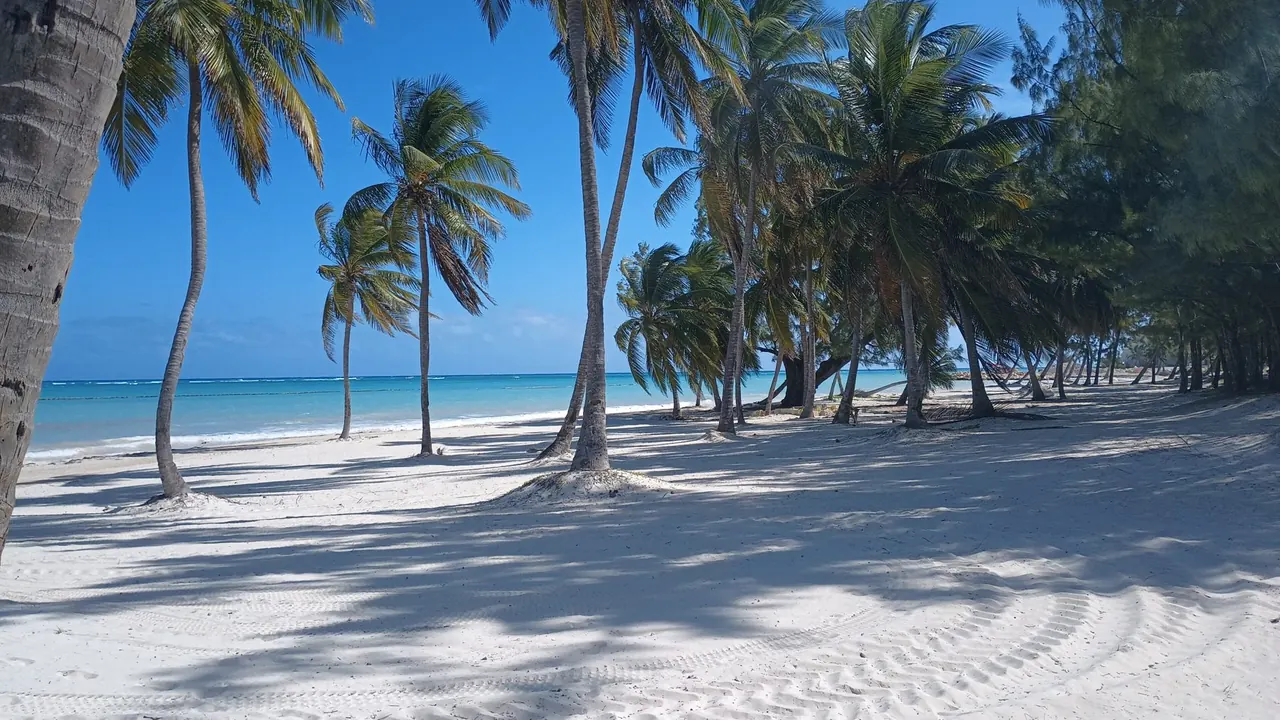
Palms on a white beach at Cap Cana
- Beaches94
- Families68
- Nature & outdoors52
Photo: Mary Mark Ockerbloom, CC0
Match
40
Every category weighted equally
- Beach & sun49
- Culture & arts29
- Food & nightlife33
- Family trip47
- Outdoors45
- Relax & unwind46
- Shopping & style33
- On a budget41
Punta Cana in twelve categories
Our verdict on each, scored 0 to 100 against the same fixed benchmark cities, so a score means the same thing on every page.
Beaches & swimming. Scores 94 out of 100.
Food & drink. Scores 30 out of 100.
Culture & sights. Scores 8 out of 100.
Nightlife. Scores 40 out of 100.
Nature & outdoors. Scores 52 out of 100.
Day trips. Scores 35 out of 100.
Good for families. Scores 68 out of 100.
Getting around. Scores 15 out of 100.
Shopping & style. Scores 30 out of 100.
Affordability. Scores 44 out of 100.
Live music & performing arts. Scores 15 out of 100.
Wellness & relaxation. Scores 52 out of 100.
Punta Cana category by category
Beaches & swimming
94Punta Cana is the beach. Around 50km of pale sand runs along the island's eastern tip, from Juanillo and Cap Cana in the south through Bávaro and Cabeza de Toro to Macao and Uvero Alto in the north. Offshore reefs keep most of it calm and shallow, and the Caribbean stays at about 26°C to 29°C all year. Most stays are planned around a sunbed, a palm tree and the water.
The beaches change in character as you go. Bávaro and Los Corales are long and sociable and lined with resorts. Juanillo is quieter and more polished, while Macao is open, wilder and gets surf. Catamarans run out to the white sand of Saona Island. Some summers bring rafts of sargassum seaweed onto the shore, and the resorts rake it away each morning.
Food & drink
30Most visitors eat at their all-inclusive resort. That means buffets and a rotation of themed à la carte rooms, and the result is generous and predictable rather than memorable. Outside the resorts, Bávaro and the marina at Cap Cana have beachfront grills serving lobster and grilled fish, along with Italian and steak places aimed at visitors.
If you want Dominican food, look for the small comedores and roadside stands used by local workers. They serve la bandera (rice, beans and stewed meat), sancocho stew, fried fish with tostones, and mangú for breakfast. Drinks mean cold Presidente beer, local rum and fresh coconut, and coffee comes strong and sweet. There is no market culture or fine-dining tier to speak of.
Culture & sights
8Punta Cana is a resort coast built from the 1970s onwards. It has no old town, no historic architecture and no museums of note. A few small craft and cigar displays and the chapels inside resort complexes are about all there is. If you want history or heritage, plan a day out, because nothing in Punta Cana itself will satisfy that interest.
Nightlife
40Most evenings happen inside the resorts, with a lobby bar, a show and a resort disco that winds down around midnight. Out in Bávaro the night is louder and later. There are big party-show clubs with acrobats and confetti, a club set inside a natural limestone cave, and a cluster of open-air bars and colmados (corner shops that double as bars) playing bachata and reggaeton late into the night.
Going out means taking a taxi between spread-out venues, and the scene is built for visitors on vacation rather than for locals. It suits groups and couples who want one or two big nights, not anyone looking for a neighbourhood bar culture.
Nature & outdoors
52The land here is flat: coastal scrub, coconut groves and cattle country, with no hills nearby. The outdoors is mostly on the water. You can snorkel and dive the reef just offshore, take a catamaran or speedboat across Parque Nacional del Este to Saona Island and the shallow natural pool where starfish gather, go kitesurfing and windsurfing at Cabeza de Toro, or go deep-sea fishing for marlin and dorado.
On land, the Indigenous Eyes Ecological Reserve has short trails between freshwater lagoons, and the cliffs at Cap Cana hide the turquoise sinkhole of Hoyo Azul. Buggy rides through sugarcane fields and zip lines fill out the menu. Serious hiking means a long drive to the mountains in the interior.
Day trips
35There are a few places worth leaving the resort for. Higüey, about 45 minutes inland, is the country's pilgrimage town, centred on its striking modern basilica. Altos de Chavón, above the Chavón River near La Romana and a little over an hour away, is a stone village built in Mediterranean style with an amphitheatre and craft workshops. Bayahibe is a fishing village and the departure point for most Saona boats.
The real prize is Santo Domingo's Zona Colonial, the oldest European city in the Americas. It sits at the outer edge of a day trip, about two and a half hours each way by road. Many visitors do it on a long organised day, and it deserves the effort more than anything closer.
Good for families
68Punta Cana works well for a family who want an easy, contained week. Many resorts are built around children, with kids' clubs, splash parks and waterslides, family suites and food on tap all day. The reef-protected beaches at Bávaro and Juanillo shelve gently and are mostly calm.
Outside the resorts there are adventure parks with zip lines and cenotes, dolphin and sea-lion encounters, and catamaran trips to Saona that children enjoy. There are no big zoos, aquariums or theme parks, and every outing needs a taxi or a tour. Parents should plan for strong sun and mosquitoes, and choose a family-oriented resort rather than an adults-leaning party one.
Getting around
15There is no town centre to walk around. The resorts are strung along roughly 50km of coast, often behind gates and long driveways, and the roads have few pavements. The beach itself is the best place to walk, and you can follow the sand for miles between hotels.
Getting anywhere else means a hotel taxi, a pre-booked transfer or an excursion pickup. Local guaguas (minibuses) run along the main roads between Bávaro and Higüey and are fine for the adventurous. A hire car gives you freedom for day trips, but expect fast, unpredictable traffic. Most visitors simply stay put and let tours do the driving.
Shopping & style
30Shopping here is a matter of souvenirs and a few Dominican specialities. These are larimar, a pale blue stone found only on this island, along with amber jewellery, hand-rolled cigars, aged rum, vanilla and cacao, and brightly painted faceless dolls. You find them at the craft stalls along Bávaro beach and in the plazas near the resorts, where haggling is expected.
A couple of open-air malls in Bávaro and at Cap Cana cover sportswear, resort fashion and a handful of upscale labels. Beyond that there is little: no old shopping street, no design district and no real local market aimed at visitors.
Affordability
44Punta Cana is not priced like the rest of the Dominican Republic. All-inclusive packages range from modest to lavish and can be good value, especially when booked with flights. The costs that add up are outside the package: hotel taxis on fixed tourist fares, boat excursions and tours, and beachfront restaurants charging resort-area prices.
Budget travellers can save by eating at local comedores, riding guaguas and staying in the small apartment hotels around Los Corales. Cap Cana and the upscale resorts sit firmly at the expensive end.
Live music & performing arts
15There is almost no formal performing arts life here: no theatre, no concert hall and no classical season. What you can see are the nightly shows in resort theatres, a couple of big, glossy acrobatic and tribute-act spectacles in Bávaro, and live merengue and bachata bands at beach bars and resort parties. The Dominican rhythms are genuine and worth hearing. The rest is light entertainment.
Wellness & relaxation
52Wellness here comes as a hotel amenity, not as a local tradition. Most of the larger resorts have a spa with hydrotherapy circuits, steam rooms and massage cabanas in gardens or by the sea. Treatments often use local cacao, coffee or coconut, and masseurs also work under palm shelters along Bávaro. The quality is reliable and the setting is pleasant, but one resort spa feels much like the next.
Punta Cana has no thermal springs, public baths or bathing customs of its own, so nobody comes for the spa culture. What it does give you is an easy, unhurried pace with nothing pulling you away. Choose an adults-only or quieter resort if calm matters most, because family and party resorts can be loud.
When should you go?
Pick a month to see what it is like. The climate figures are measured averages, not a forecast.
Punta Cana in July
Daytime high, °C
Rainfall in the month, mm
The whole year
Shaded against this city’s own year: the deepest cell is its best month for that figure and the palest its weakest.
Where the figures come from
Punta Cana has no rain gauge within 25 km of the centre, so its rainfall comes from a gridded climate dataset read at the city rather than from a gauge further away.
Temperature and rainfall are climate normals, averaged over the years shown. Punta Cana: 1993-2020 (rainfall 1991-2020) normals, Punta Cana (0.9 km from centre).
Before you go
| Measure | Punta Cana |
|---|---|
| Official language | Spanish |
| Currency | Dominican Peso (DOP) |
| Sockets | AB110 V, 60 Hz |
| Driving side | Right |
| Time zone | UTC-4 |
| Emergency number | 911 |
| Elevation | 28 m |
| Main airport | Punta Cana International Airport (PUJ)1 km from centre93 non-stop destinations |
| Public holidays this year | 13 days |
By the numbers
| Measure | Punta Cana |
|---|---|
| City population | 138,919 |
| People per km² | 292 |
| Museums within 10 km | 0 |
| UNESCO World Heritage sites within 50 km | 0 |
| Swim season, months above 21 °C | 12 months |
Compare Punta Cana with
Every comparison with a written verdict behind it.