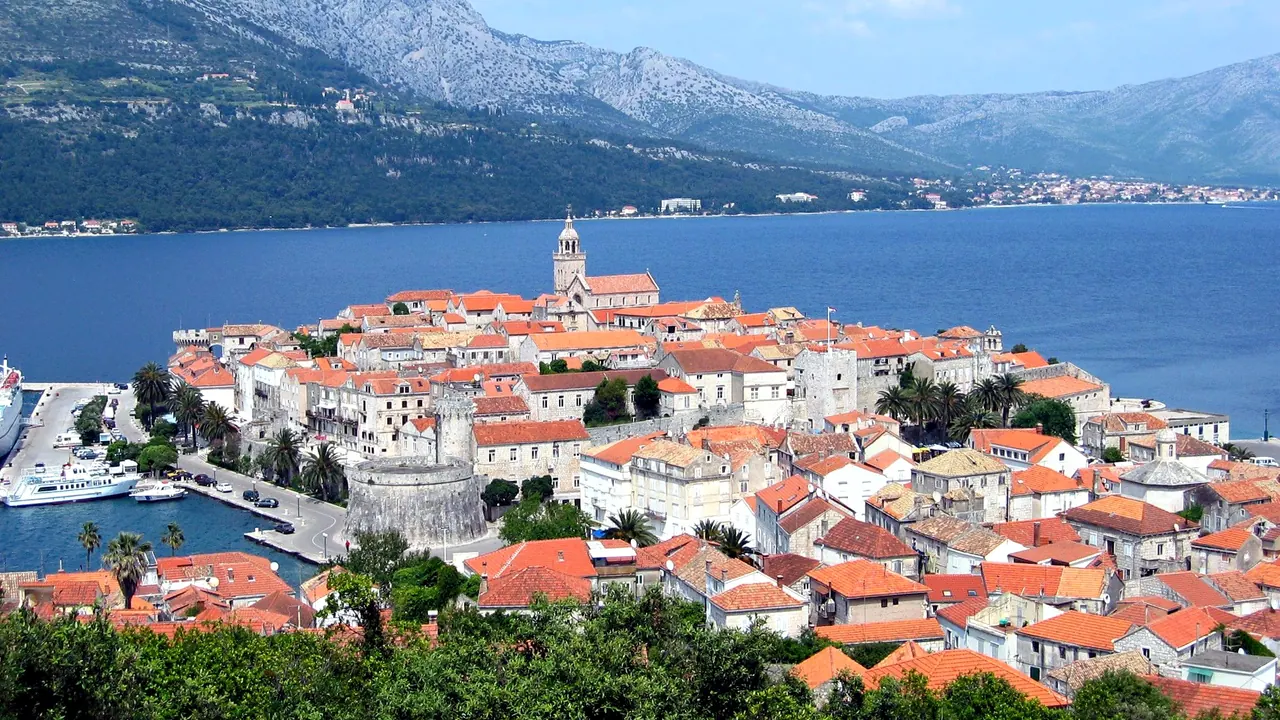
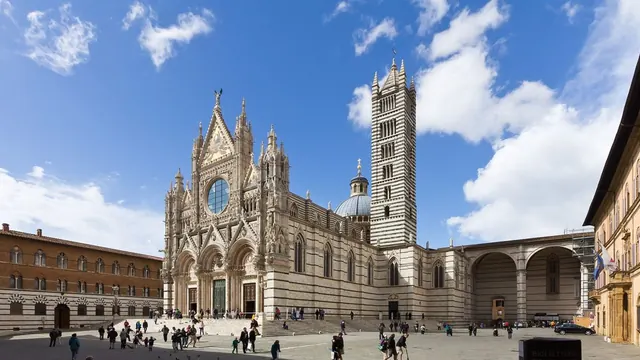
Photos: Korčula by Εὐθυμένης, CC BY-SA 3.0, cropped.
Korčula or Tuscany?
Our verdict in twelve categories, each scored against the same fixed benchmark cities, and the climate month by month, so you can choose for your trip.
Choose Korčula for
- beaches
- prices
Korčula suits a summer trip built around the sea and very little else. You get clear water in pebble coves and the sandy bays at Lumbarda, a compact walled town to stroll in the evening, and island wine with a long dinner. It is smaller, quieter and narrower than Tuscany in almost every way, and that is the appeal if what you want is a week of swimming and slowing down, with Pelješac and Mljet across the water for a change of scene.
Choose Tuscany for
- shopping
- wellness
- culture and sights
Tuscany is the stronger choice for nearly any other kind of trip. It has the art and architecture of Florence and Siena, a long list of hill towns, wine country and hot springs, Puccini in Lucca and craft workshops in Oltrarno, and the coast and Elba are there if you want beach days too. It asks more planning and usually a car. In return it gives you far more to fill your days, and it holds up much better outside high summer.
Scoreboard
Twelve categories on one fixed scale from 0 to 100. The shaded stretch is the gap between the two.
Your match
Pick a travel style or drag the sliders, and both match scores follow your weighting.
Wins on beaches and prices with your weighting.
Wins on shopping and wellness with your weighting.
What matters to you?
Category by category
What the scores mean for a trip.
Beaches & swimming
For swimming the two are roughly level. The difference is in how the beaches fit the trip. On Korčula the sea is the whole point and always close by: rocky and pebbly coves under pine, Pupnatska Luka on the south coast, swimming off flat rocks on Badija, and real sand and shallow water at Pržina and Bilin Žal near Lumbarda. The coves are small, though, and the well-known ones fill early in high summer.
Tuscany's coast is bigger and more varied, but you have to pick it. Elba has the clearest water and sandy bays such as Fetovaia. The Maremma has pine-backed strands and Cala Violina. Versilia gives you long fine sand, mostly lined with private beach clubs. If you are based in Florence or the hill towns, the sea becomes a long drive.
Food & drink
Tuscany is a far richer place to eat. It has lampredotto from Florence's street carts, the San Lorenzo and Sant'Ambrogio markets, ribollita and Florentine steak in Oltrarno trattorias, pecorino in Pienza, autumn truffles at San Miniato, and a wine map running from Chianti Classico through Brunello and Vino Nobile to Bolgheri.
Korčula's cooking is good Dalmatian home food: grilled fish, black risotto and dishes slow-cooked under the iron bell. Menus repeat from one konoba to the next, though. Its real strength is wine, with Grk from Lumbarda and Pošip from Čara and Smokvica, plus Ston oysters and Dingač reds over on Pelješac.
Culture & sights
The two are not on the same scale. Korčula Town is a handsome, intact stone town on its peninsula, with herringbone streets, St Mark's Cathedral and its Tintoretto, and the house claimed for Marco Polo. Add the prehistoric cave of Vela Spila at the far end of the island and most visitors have seen it all in a couple of days.
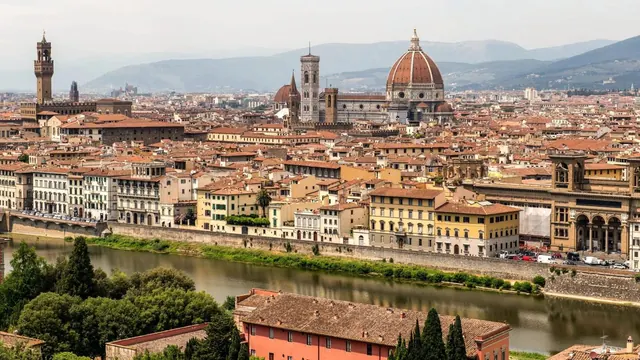
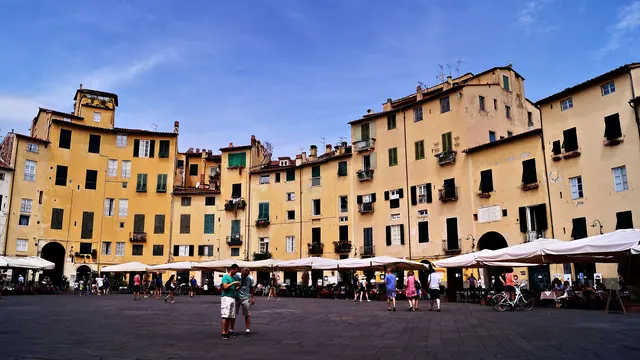
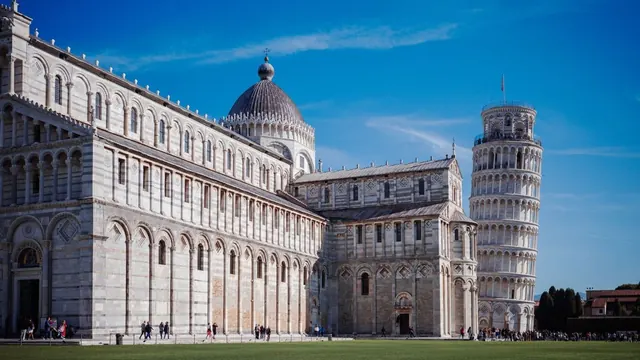
Tuscany could fill several trips. In Florence alone you have the Uffizi, the Accademia, the Bargello and the frescoed churches, all on foot. Beyond it lie Siena's Campo, Pisa's marble square, Lucca's walls, San Gimignano's towers and Piero della Francesca in Arezzo.
Nightlife
Neither is a party destination, but Tuscany offers far more after dinner. In Florence, students and visitors gather on the steps of Santo Spirito and in the wine bars of Oltrarno. In summer the Versilia coast keeps its beach clubs and dance halls going until dawn.
On Korčula an evening means sunset cocktails on the town walls and towers, and a few harbour bars open late in July and August. Anyone after clubs takes a boat to another island.
Nature & outdoors
Korčula is green and gentle, with pine and oak, vineyard terraces, easy walks and rides along the central ridge, and sea kayaking around the islets. The bigger outdoor days are across the water: the climb up Sveti Ilija above Orebić, the wind at Viganj for windsurfers and kitesurfers, and the lakes and forest of Mljet.
Tuscany has much more country to explore, and more kinds of it. You can cycle the gravel roads of Chianti and the Val d'Orcia, walk stretches of the Via Francigena, hike ridges in the Apuan Alps above the Carrara quarries, explore the Casentino beech forests and the Maremma park, and sail or dive around the Tuscan Archipelago.
Day trips
From Korčula there are a handful of good outings. Pelješac gives you wineries, monasteries and the walls of Ston, Mljet makes a full day by boat, and Hvar Town is a catamaran ride away. Dubrovnik and Split are long days out.
Tuscany has more outings than any one trip can use. Siena, Lucca, Pisa, San Gimignano and Volterra are easy from Florence or Chianti, and the southern wine towns make a natural loop. Bologna, the Cinque Terre and the Umbrian towns of Assisi and Orvieto are all within reach too.
Good for families
Tuscany is easier with children. You can pair a farmhouse with a pool and animals with a sandy, lifeguarded lido in Versilia or the Maremma. There are also things made for children, such as the Pinocchio park at Collodi, the leaning tower and bikes on Lucca's walls.
Korčula works for one specific plan: a base near Lumbarda for its shallow sandy bays, with boat trips to the islets for older children. Beyond that there is nothing built for families, and Korčula Town's stepped lanes are hard going with a pushchair.
Getting around
Away from Korčula Town, which is entirely walkable, the island is hard work without your own wheels. Taxi boats run to Lumbarda, the islets and Orebić, but buses on the single road along the island are infrequent and the best coves lie down steep side roads. A hired car or scooter makes a real difference, and ferries and catamarans govern how you arrive and move on.
A car-free trip works better in Tuscany, at least along one rail line. Florence is compact, and regional trains connect it with Pisa, Lucca, Arezzo and the coast at Viareggio. Chianti, the Val d'Orcia and the Maremma still need a car, and because old town centres are closed to visitors' cars, you park outside the walls and walk in.
Shopping & style
Tuscany is a real shopping trip, with the craft at its heart. In Florence you find leather around Santa Croce and San Lorenzo, goldsmiths on the Ponte Vecchio, marbled paper in Oltrarno and luxury houses on Via de' Tornabuoni. Around the region there is alabaster in Volterra, ceramics in Montelupo and marble in Pietrasanta.
Korčula has souvenir lanes and a few craft studios. The best things to take home are bottles of Grk and Pošip, olive oil and cukarini biscuits.
Affordability
Both cost about the same, and both are expensive in July and August. The money goes on different things. On Korčula it is old-town hotels, boat trips, car hire and drinks on the walls. In Tuscany it is central Florence rooms, Chianti villas and Versilia beach umbrellas, with Forte dei Marmi at the top end.
Each has its way of spending less. On Korčula, stay in an apartment in Lumbarda or Vela Luka and eat at inland konobas. In Tuscany, base yourself in Lucca, Arezzo or the Maremma rather than Florence or Siena. In both, wine bought at the cellar door is good value.
Live music & performing arts
Tuscany has a proper music life. Florence has its opera house and the Maggio Musicale Fiorentino, Lucca keeps Puccini recitals going all year, his operas are staged by the lake at Torre del Lago in summer, and Siena's Accademia Chigiana holds concerts in palaces.
Korčula's offer is narrow but distinctive. The Moreška sword dance is performed in town through the summer, and klapa groups sing in churches and squares, but there is no theatre or concert season.
Wellness & relaxation
This is where Tuscany pulls far ahead. It sits on hot springs, from the grand pump rooms of Montecatini to the free terraced pools at Saturnia, the steaming square at Bagno Vignoni and the white pools of Bagni San Filippo. A pool at a Val d'Orcia farmhouse rounds it off.
Korčula has no springs and only hotel spa areas. What it offers instead is stillness: vineyard villages and empty evenings, at their best in June or September.
When should you go?
Pick your month. The climate figures are measured averages, not a forecast.
Korčula in July
Tuscany in July
Daytime high, °C
Rainfall in the month, mm
Where the figures come from
Korčula's temperatures are measured 69 km from the centre, at Mostar.
Korčula has no rain gauge within 25 km of the centre, so its rainfall comes from a gridded climate dataset read at the destination rather than from a gauge further away.
Tuscany has no rain gauge within 25 km of the centre, so its rainfall comes from a gridded climate dataset read at the destination rather than from a gauge further away.
Tuscany's sunshine is measured 71 km from the centre, at Pisa / S. Giusto.
Temperature and rainfall are climate normals, averaged over the years shown. Korčula: 1991-2020 normals, Mostar (69.2 km from centre). Tuscany: 1995-2020 (sunshine 1991-2020, rainfall 1991-2020) normals, Firenze / Peretola (5.6 km from centre).
Both heat up on almost the same calendar, peaking around 33°C in July and August. On Korčula that heat is easy to live with because the day revolves around the water. The sea is warm enough to swim from June to late September and reaches about 25°C in August. July and August are the dry heart of the island's summer, with very little rain. September is still warm for swimming but brings the first proper autumn rain, and from October it builds steadily.
In Tuscany the midsummer heat is harder going, because a trip there usually means walking around Florence or climbing up to hill towns. Late spring and early autumn, with days in the low to mid twenties, are the better months for sightseeing and the countryside, though spring is a little wetter there than on Korčula. Both turn wet in autumn, and November is the rainiest month in each, at about 120mm. In winter much of Korčula's restaurant life has closed for the season, while the Tuscan cities still make a mild, if damp, off-season trip.
Which traveller are you?
For a beach and sun trip, Korčula is the easier choice. The sea is never far from where you sleep, and every day can start and end with a swim. In Tuscany the coast is a separate part of the trip, a long drive from Florence and the hill towns.
On a culture and arts trip, Korčula gives you one handsome stone town that you will have seen in a day or two. Tuscany is where the Renaissance began, with enough galleries, churches and historic towns to fill a fortnight without repeating yourself.
On a relaxing and wellness trip, Korčula offers quiet villages and empty evenings but no bathing tradition. Tuscany gives you the calm and the cure together, because soaking in natural hot water is an old local habit there and countryside stays make unwinding easy.
Before you go
| Measure | Korčula | Tuscany |
|---|---|---|
| Official language | Croatian | Italian |
| Currency | Euro (EUR) | Euro (EUR) |
| Sockets | CF230 V, 50 Hz | CFL230 V, 50 Hz |
| Driving side | Right | Right |
| Time zone | UTC+1, UTC+2 in summer | UTC+1, UTC+2 in summer |
| Emergency number | 112 | 112 |
| Main airport | Dubrovnik Ruđer Bošković Airport (DBV)76 non-stop destinations | Florence Airport, Peretola (FLR)46 non-stop destinations |
| Public holidays this year | 14 days | 13 days |
By the numbers
| Measure | Korčula | Tuscany |
|---|---|---|
| Population | - | 3,729,641 |
| Swim season, months above 21 °C | 5 months | - |
Where else could you go?
Every comparison below shares a destination with this one, so you can follow Korčula or Tuscany somewhere new.
- Bračvs Korčula
- Hvarvs Korčula
- Umbriavs Tuscany
- Cinque Terrevs Tuscany
- Lake Gardavs Tuscany
- Pugliavs Korčula