Photos: Krka by Alberto-g-rovi, CC BY 4.0, cropped; Puglia by Acquario51, CC BY-SA 4.0, cropped.
Krka or Puglia?
Our verdict in twelve categories, each scored against the same fixed benchmark cities, and the climate month by month, so you can choose for your trip.
Choose Krka for
- nature and the outdoors
- getting around
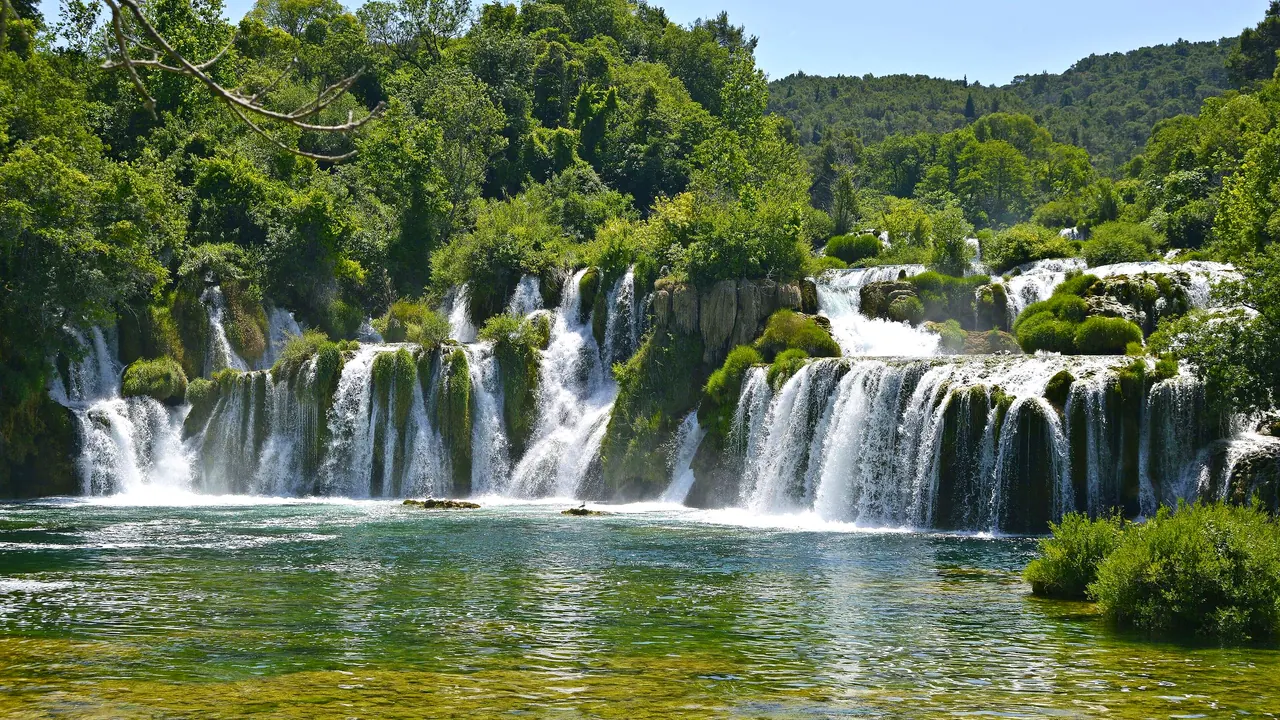
Krka suits the traveller for whom landscape is the point of the trip. A few days of canyon boardwalks, travertine falls, river boats to Visovac and walks on the gorge rim, ideally in spring when the water runs fullest, fit neatly into a wider Dalmatian journey taking in Šibenik, Trogir and Split. In return you give up sandy beaches, a varied table and anything like a night out.
Choose Puglia for
- nightlife
- beaches
- food and drink
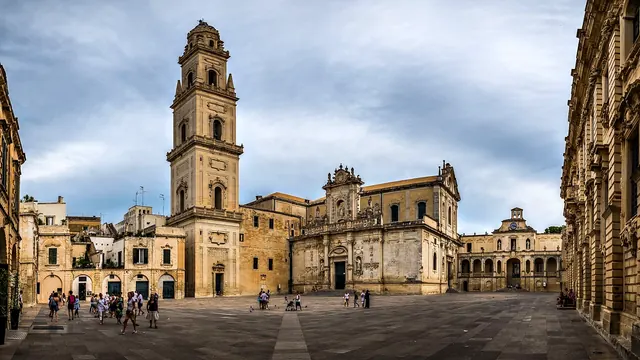
Puglia is the better choice for a longer summer vacation that mixes the sea, good eating and wandering from town to town. It has two coasts, the baroque of Lecce, the trulli of Alberobello and a long list of whitewashed hill towns, and family life and late evenings fill the piazzas. What it lacks is one natural spectacle as concentrated as the Krka falls, and the region is big enough that you need a car and often two bases.
Scoreboard
Twelve categories on one fixed scale from 0 to 100. The shaded stretch is the gap between the two.
Your match
Pick a travel style or drag the sliders, and both match scores follow your weighting.
Wins on nature and the outdoors and getting around with your weighting.
Wins on nightlife and beaches with your weighting.
What matters to you?
Category by category
What the scores mean for a trip.
Beaches & swimming
At Krka you can't swim in the water you came to see. The falls are for walking around, so a swim means driving or taking a boat down to Šibenik's pebble coves at Banj, or catching a ferry to the rocky shores of Zlarin and Prvić. It makes a pleasant afternoon, not the heart of the trip.
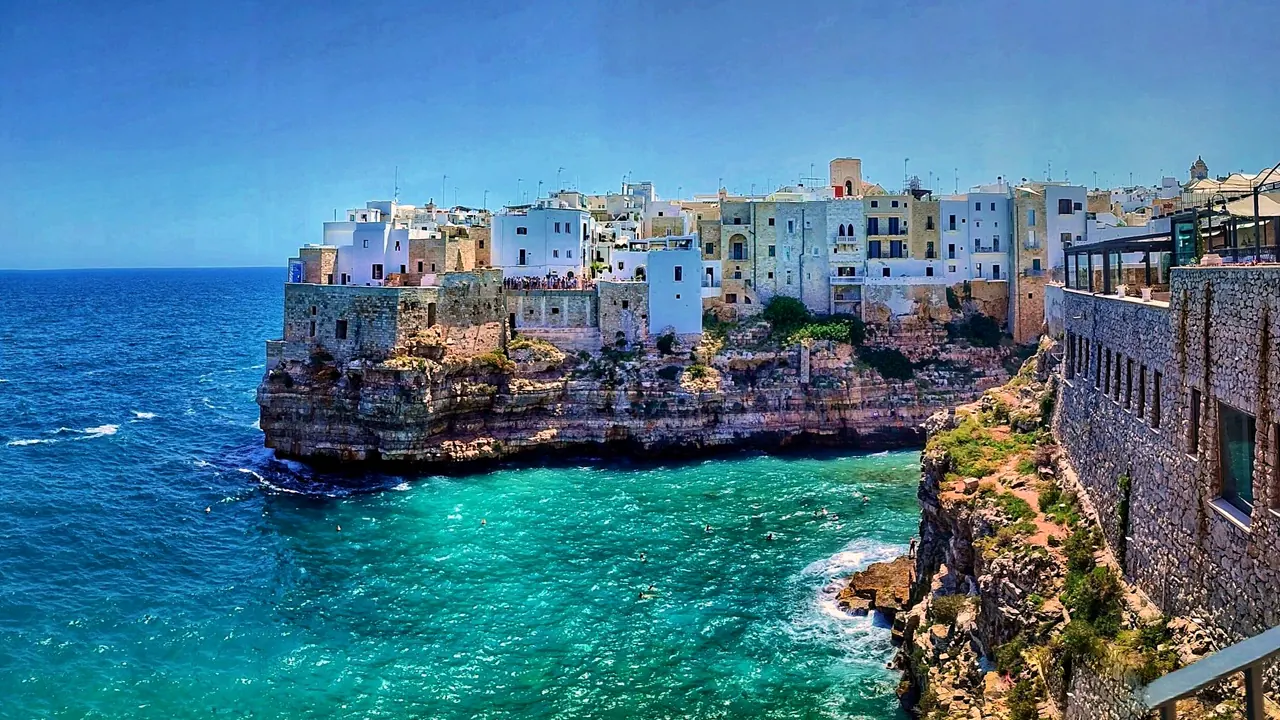
Puglia is a beach destination in its own right, with two coasts to choose from. The Ionian Salento around Pescoluse has long pale sands and shallow turquoise water, and the Adriatic side near Polignano and Otranto has limestone coves and sea stacks. Of the two, only Puglia has real sand.
Food & drink
The food along the Krka is good but limited in range. Expect grilled fish, lamb cooked under the iron bell, estuary mussels and oysters in Skradin's konobas and the town's slow-cooked veal risotto, with the better restaurants in Šibenik's old town.
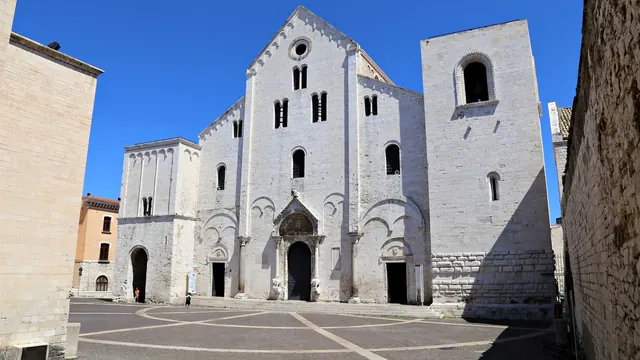
Puglia gives you far more to explore. There is orecchiette with turnip tops, fresh burrata, raw sea urchins on the Bari waterfront, butcher-grill houses in the Valle d'Itria and pasticciotto in Lecce, with Primitivo and Negroamaro to drink where Krka has its dark Babić.
Culture & sights
Krka's heritage lies along the river: the island monastery of Visovac, reached by boat, the catacombs of the Krka Monastery and the Roman arches of Burnum. The two UNESCO-listed sights, the Cathedral of St James and the fortress of St Nicholas, are down in Šibenik.
Puglia offers more, and it is more varied. You have a whole baroque town in Lecce, the trulli districts of Alberobello, Frederick II's octagonal Castel del Monte and a string of Romanesque cathedrals at Trani, Bari and Otranto. In both places you travel between the sights, by park boat at Krka and by car in Puglia.
Nightlife
Krka is a place for a long dinner by the water and a drink on Skradin's harbour. Šibenik has a few bars in its old town that stay lively in summer, but there are no clubs worth the name.
Puglia has a real summer scene. Gallipoli's beach clubs run from sunset into the small hours, DJ nights play at bars along the Salento coast and people drink late in Lecce's squares. Bari keeps its bars going all year, even after the coast goes quiet.
Nature & outdoors
Krka's landscape is the reason to go, and it is all close at hand. A deep limestone canyon drops over travertine falls at Skradinski Buk and Roški Slap, and there are trails along the rim, quiet water for kayaking upstream and boats out to the bare Kornati islands. Most of it is gentle walking rather than hiking.
Most of Puglia is calm olive and dry-stone country, best seen by bicycle around Ostuni and the Valle d'Itria. Its wilder side, with the Foresta Umbra, white cliffs and the Tremiti islands for snorkelling, is up in the Gargano, a long drive from the Salento.
Day trips
From the Krka you can reach a few big names: walled Trogir, Split with Diocletian's Palace and Roman Zadar, each about an hour away, plus short ferries to Zlarin and Prvić and the fortress at Knin.
Puglia has more outings, and they are closer together. Ostuni, Locorotondo, Cisternino and Martina Franca are each a short drive apart, the harbour towns run north of Bari, and the cave city of Matera, just over the border, tops most visitors' lists. Moving between towns is a large part of what a Puglia trip is.
Good for families
Children usually love the Krka boardwalks over rushing water and the boat rides to Visovac. Beyond the park, though, there is little made for them, and families tend to stay in coastal resort hotels near Šibenik and drive in.
Puglia is easier to plan a family vacation around. The shallow sandy Ionian beaches suit small children, Italian piazza life welcomes them until late, and there are the trulli of Alberobello and the safari park at Fasano. Masserie with pools are a common way to stay. In both places, August heat is the main difficulty.
Getting around
You need a car in both, but distances differ. Krka is compact: the motorway runs close to the Lozovac entrance, Skradin is a short hop from Šibenik, and park buses and boats link the falls inside. Without a car, though, you can't easily reach the upper river.
Puglia is long. The Gargano is four to five hours from the southern tip, so covering both ends means two bases. In exchange, the main-line trains through Bari, Polignano a Mare, Monopoli and Lecce let you stay along the Adriatic without driving.
Shopping & style
At Krka, shopping comes down to olive oil, honey, figs and wine from small producers, plus Zlarin's coral work and a few craft shops in Šibenik.
Puglia has much more to bring home. There is the ceramics quarter at Grottaglie, Lecce's papier-mache studios, linen and pottery across the Valle d'Itria, and the chain shops and boutiques around Via Sparano in Bari.
Affordability
Puglia is the slightly gentler on the wallet, mainly because eating out costs less than in much of Italy. Rooms near the Salento beaches and restored masserie are pricey in high summer, and car hire adds to the bill.
At Krka, rooms and meals sit around the middle of Western Europe, and the park entrance is the biggest single cost. Staying in an apartment inland near Lozovac is the way to save. In both places, June and September are noticeably cheaper than August.
Live music & performing arts
There is almost nothing to attend along the Krka itself. Performances happen in Šibenik: summer concerts in its fortresses, the International Children's Festival and klapa singing on warm evenings.
Puglia has a proper programme. Bari's Teatro Petruzzelli puts on opera and ballet, Martina Franca's summer festival revives rare operas in a palace courtyard, and the pizzica folk dance fills village squares before the huge Notte della Taranta at Melpignano.
Wellness & relaxation
Krka offers quiet rather than treatment: Skradin's harbour at dusk, the river early in the morning and silent stone houses inland. For spas you have only a few resort hotels on the coast.
Puglia has more for a restful stay. Many of its masserie among the olive groves have their own pools and spas, and there are thermal waters at Santa Cesarea Terme and Torre Canne and mud treatments at Margherita di Savoia. Neither place has a real bathing culture to plan a trip around.
When should you go?
Pick your month. The climate figures are measured averages, not a forecast.
Krka in July
Puglia in July
Daytime high, °C
Rainfall in the month, mm
Where the figures come from
Krka's temperatures are measured 53 km from the centre, at Split / Marjan.
Krka has no rain gauge within 25 km of the centre, so its rainfall comes from a gridded climate dataset read at the destination rather than from a gauge further away.
Krka's sunshine is measured 53 km from the centre, at Split / Marjan.
Puglia's temperatures are measured 64 km from the centre, at Brindisi.
Puglia has no rain gauge within 25 km of the centre, so its rainfall comes from a gridded climate dataset read at the destination rather than from a gauge further away.
Temperature and rainfall are climate normals, averaged over the years shown. Krka: 1991-2020 (sunshine 1971-2000) normals, Split / Marjan (52.9 km from centre). Puglia: 1991-2020 (sunshine 1981-2010) normals, Brindisi (64.4 km from centre).
The two lie on opposite shores of the same sea and keep almost the same calendar. Around Krka, July and August reach about 31°C, which makes midday on the boardwalks hard going. Spring, when the falls run fullest, and September are kinder for walking. The sea is warm enough to swim from June to September and peaks at around 24°C. Rain returns in autumn, and November is the wettest month at about 106mm.
On Puglia's coast the summer peak is a degree lower, but the sea is warmer, at about 26°C in August, and the summer months are drier still, so swimming lasts into late September. Autumn rain arrives there too, and winters are slightly milder than at Krka. For touring towns and cycling through the olive country, spring and October are the comfortable seasons in both places.
Which traveller are you?
For a beach and sun trip, Puglia is the clear pick. The sandy, shallow Ionian shore of the Salento and the rocky Adriatic coves are both within reach of one base, and the water is warmer. At Krka, swimming means leaving the river for Šibenik's pebbles.
On an outdoors trip, Krka gives more for less effort. Canyon-rim trails, boardwalks over travertine falls, kayaking on the upper river and boats out to the Kornati are all close together, while Puglia's wilder country is mostly up in the distant Gargano.
For a food and nightlife trip, Puglia wins comfortably. There is burrata, orecchiette and Primitivo by day, then Gallipoli's beach clubs, Lecce's crowded squares and Bari's old-town bars after dark. On the Krka, the evening ends with dinner by Skradin's harbour.
Before you go
| Measure | Krka | Puglia |
|---|---|---|
| Official language | Croatian | Italian |
| Currency | Euro (EUR) | Euro (EUR) |
| Sockets | CF230 V, 50 Hz | CFL230 V, 50 Hz |
| Driving side | Right | Right |
| Time zone | UTC+1, UTC+2 in summer | UTC+1, UTC+2 in summer |
| Emergency number | 112 | 112 |
| Main airport | Split Saint Jerome Airport (SPU)69 non-stop destinations | Bari Karol Wojtyła International Airport (BRI)104 non-stop destinations |
| Public holidays this year | 14 days | 13 days |
By the numbers
| Measure | Krka | Puglia |
|---|---|---|
| Population | - | 3,866,174 |
| People per km² | - | 198 |
| Swim season, months above 21 °C | 4 months | 4 months |
Where else could you go?
Every comparison below shares a destination with this one, so you can follow Krka or Puglia somewhere new.