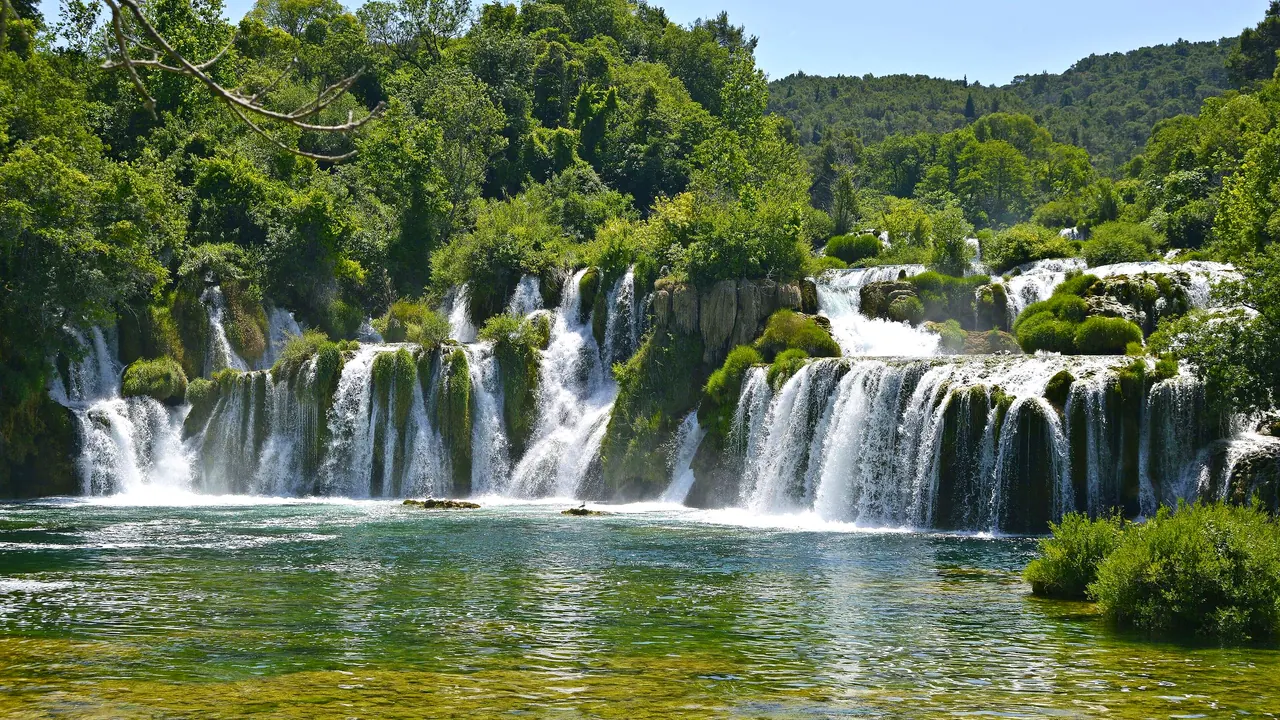
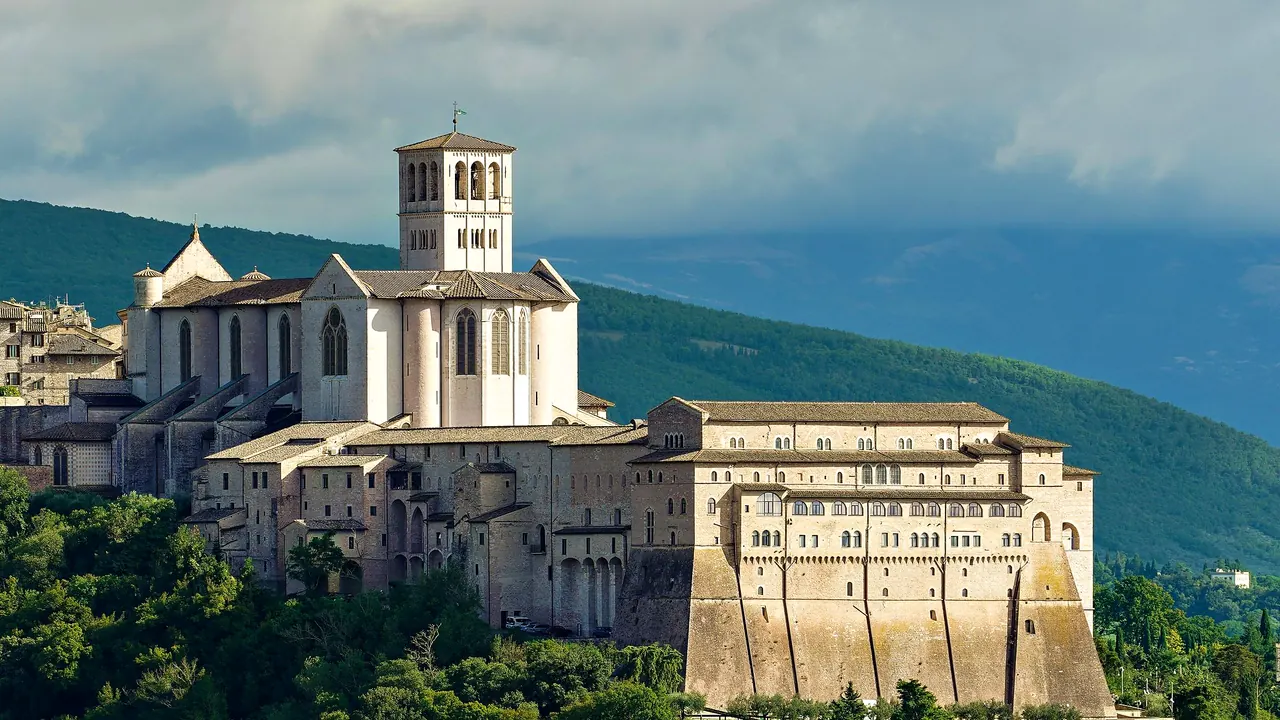
Photos: Krka by Alberto-g-rovi, CC BY 4.0, cropped; Umbria by Tagooty, CC BY-SA 4.0, cropped.
Krka or Umbria?
Our verdict in twelve categories, each scored against the same fixed benchmark cities, and the climate month by month, so you can choose for your trip.
Choose Krka for
- beaches
- families
- nature and the outdoors
Krka is the better pick for a trip built around water. The draw is a single river: travertine falls you walk over on boardwalks, boat rides to an island monastery, and an estuary that ends at the Adriatic, so you can spend the morning in the national park and the afternoon swimming off a pebble cove near Šibenik. It suits travellers who want scenery first, a few days at a gentle pace and the chance to add the Dalmatian coast, and who won't miss museums, shopping or late nights.
Choose Umbria for
- culture and sights
- shopping
- live music and the arts
Umbria is the richer place for a longer, slower tour. Each day can be a different hill town with art of real importance, from Giotto's frescoes in Assisi to Signorelli in Orvieto. Add truffle and pork cooking, Sagrantino tastings, summer festivals and Tuscany just over the border, and it rewards a week or more spent touring by car. What it gives up is the sea: swimming here means a lake or a farmhouse pool.
Scoreboard
Twelve categories on one fixed scale from 0 to 100. The shaded stretch is the gap between the two.
Your match
Pick a travel style or drag the sliders, and both match scores follow your weighting.
Wins on beaches and families with your weighting.
Wins on culture and sights and shopping with your weighting.
What matters to you?
Category by category
What the scores mean for a trip.
Beaches & swimming
Neither destination is built around a beach, but Krka at least has the Adriatic at the end of its river. The falls themselves are off limits for swimming. Down the estuary, though, are Šibenik's pebble coves at Banj and on the Solaris peninsula, the bays towards Primošten and the rocky shores of Zlarin and Prvić, all with clear sea water through the summer.
Umbria has no coast at all. A swim means a lido on Lake Trasimeno, which is warm and shallow but often cloudy, with a soft bottom. Otherwise it's the pool at your farmhouse, and the sea is a long drive away.
Food & drink
Krka's cooking is plain Dalmatian food from the river and the sea: grilled squid, meat slow-cooked under an iron bell, mussels and oysters from the estuary at Skradin, and Skradin's long-cooked veal risotto. The best tables are in Šibenik's old town, and beyond that the choice is small.
Umbria has more to travel for. Black truffle over handmade pasta, Norcia's cured pork, Castelluccio lentils and porchetta from market vans make up a strong, deeply local menu, and Sagrantino estates around Montefalco and the Orvieto vineyards add wine tasting. The one area where Krka does better is seafood, which Umbria barely has.
Culture & sights
Krka's heritage is spread along the river: the Franciscan monastery on the islet of Visovac, the Orthodox monastery with catacombs beneath it, and the Roman arches of Burnum above the canyon. The finest pieces, the Cathedral of St James and the St Nicholas fortress, are down in Šibenik.
Umbria works on another scale. Giotto and Cimabue in Assisi's basilica, Signorelli's Last Judgement in Orvieto and the Perugino rooms of Perugia's gallery are art of the first rank. Gubbio, Spello, Todi and Montefalco each add another full day.
Nightlife
Neither is a place to go out, and neither has clubs. On the Krka the evening is dinner by the water and a drink on Skradin's harbour among the yachts, with a few livelier bars in Šibenik's old lanes in summer. Umbria has a little more going on because of Perugia, where university and language students fill the cathedral steps and the wine bars of the old centre on warm nights. Elsewhere it goes quiet early.
Nature & outdoors
Both are strong, in different ways. Krka is one concentrated spectacle of water: a limestone canyon with travertine falls at Skradinski Buk and Roški Slap, boardwalks through the spray, kayaking on the upper river and boats out to the bare Kornati islands. Most of the walking is gentle, and there are no mountains.
Umbria spreads its scenery across green hills and up into the Monti Sibillini, which rise above 2,000m. There the Castelluccio plain flowers in early summer, the Valnerina offers rafting and canyoning, and Monte Subasio and Monte Cucco have proper hiking. It also has its own great cascade, the Roman-made Marmore Falls.
Day trips
Krka makes a good base for central Dalmatia. Walled Trogir and Split's Diocletian's Palace lie to the south, Zadar's Roman forum to the north, and ferries from Šibenik run to the car-free islands.
Umbria does even better, because its outings are so close together. A different hill town can fill each day, and Cortona, Montepulciano and Siena are just over the Tuscan border. From Orvieto, Rome is a little over an hour by train.
Good for families
The two are fairly evenly matched for families, but they offer different things. At Krka, the boardwalks over rushing water and the boat rides to Visovac are a real adventure for children. Families usually stay in resort hotels near Šibenik with pools and shallow pebble shores, then drive in for the park, ideally outside the hot, crowded peak of summer.
Umbria suits a slower stay at a farmhouse with a pool and animals, with Lake Trasimeno's shallow water, the Marmore Falls and an amusement park near Perugia as outings. Its steep, cobbled towns and frescoed churches are hard going with a pushchair.
Getting around
You'll want a car in both. At Krka the distances are short. Inside the park, visitor buses and boats link the falls, Visovac and Roški Slap, and a park boat leaves from Skradin's harbour. Without a car, though, the upper falls and the monasteries mean joining a tour.
Umbria is more workable by public transport. A regional rail line runs through Perugia, Assisi, Spello and Spoleto, and Orvieto sits on the main Rome line. Drivers have their own catch: hill-town centres are closed to visitors' cars, so you park below the walls and ride up by escalator or funicular.
Shopping & style
Krka has little to buy beyond olive oil, honey, dried figs, lavender and local wine, plus coral work from Zlarin and a few craft shops in Šibenik.
Umbria has proper craft traditions worth seeking out. Deruta's majolica workshops, hand-loomed linen in Montefalco and Bevagna, and cashmere outlets near Perugia are all worth a stop, and Norcia's shops hang with hams and stock truffles. Neither place has luxury streets.
Affordability
Umbria is the gentler place on the budget. Farmhouse stays and small town hotels cost noticeably less than in neighbouring Tuscany, village set lunches and local wine are good value, and most sights are churches that charge little or nothing. A hire car and truffle dishes are where the bill grows.
Krka costs about what coastal Croatia does in summer. Inland apartments around Lozovac undercut the Šibenik waterfront, and the park entrance fee is the largest single cost, at its highest in July and August.
Live music & performing arts
Umbria has two summer festivals worth planning around. Umbria Jazz fills Perugia's arena and squares in July, and the Festival dei Due Mondi brings opera, theatre and dance to Spoleto's Roman theatre and opera house. Small nineteenth-century theatres keep things going on a modest scale the rest of the year.
Krka has much less. There are summer concerts in Šibenik's fortresses, a children's festival, and klapa singing that turns up at village celebrations. Along the river itself there is almost nothing to attend.
Wellness & relaxation
Krka offers quiet rather than treatments: Skradin's harbour at dusk, the river early in the morning before the coaches arrive, and silent stone villages inland. The only spas are in a few coastal hotels near Šibenik.
Umbria is better for a restful stay. Many country houses add massage or yoga to the pool, and Assisi and the hermitages of Monte Subasio draw people looking for retreat. Old mineral-water spas at San Gemini and Nocera Umbra add a little bathing, though neither region has a real thermal tradition.
When should you go?
Pick your month. The climate figures are measured averages, not a forecast.
Krka in July
Umbria in July
Daytime high, °C
Rainfall in the month, mm
Where the figures come from
Krka's temperatures are measured 53 km from the centre, at Split / Marjan.
Krka has no rain gauge within 25 km of the centre, so its rainfall comes from a gridded climate dataset read at the destination rather than from a gauge further away.
Krka's sunshine is measured 53 km from the centre, at Split / Marjan.
Umbria's temperatures are measured 53 km from the centre, at Frontone.
Umbria has no rain gauge within 25 km of the centre, so its rainfall comes from a gridded climate dataset read at the destination rather than from a gauge further away.
Temperature and rainfall are climate normals, averaged over the years shown. Krka: 1991-2020 (sunshine 1971-2000) normals, Split / Marjan (52.9 km from centre). Umbria: 1991-2020 normals, Frontone (52.9 km from centre).
Around Krka, summer is hot and dry, with highs of about 31°C in July and August. The sea off Šibenik is warm enough to swim from June to September and reaches about 24°C at its peak, and those months also bring the most sunshine. Midsummer is a sticky time on the crowded boardwalks, though. Spring has the fullest falls and comfortable walking weather, and early autumn is still mild. From September the rain picks up and peaks in November at about 106mm, and winters are cool and damp rather than cold.
Umbria follows a similar summer pattern, almost as hot in July and with valleys that feel close in the afternoon. Its winters are noticeably colder, with January highs around 7°C, which makes the hill towns bleak outside the warmer months. The best walking weather runs from late April to June and through September. October and November are the wettest months in both places. If you're planning a beach day, only Krka has one.
Which traveller are you?
On a beach and sun trip, Krka is the obvious choice. Its river runs into the Adriatic, so pebble coves near Šibenik and Primošten and the car-free islands of Zlarin and Prvić are close by. Umbria has no sea: swimming means lakes and pools.
For a culture and arts trip, choose Umbria. Krka's river monasteries and Šibenik's cathedral fill a day or two. Assisi's frescoed basilica, Orvieto's cathedral, Perugia's gallery and a chain of hill towns can fill a week.
On a food and nightlife trip, Umbria comes out ahead. Krka eats well but narrowly, mostly grilled fish and estuary oysters, and evenings end quietly on Skradin's harbour. Umbria has black truffle, Norcia's pork, Sagrantino tastings and Perugia's student evenings.
Before you go
| Measure | Krka | Umbria |
|---|---|---|
| Official language | Croatian | Italian |
| Currency | Euro (EUR) | Euro (EUR) |
| Sockets | CF230 V, 50 Hz | CFL230 V, 50 Hz |
| Driving side | Right | Right |
| Time zone | UTC+1, UTC+2 in summer | UTC+1, UTC+2 in summer |
| Emergency number | 112 | 112 |
| Main airport | Split Saint Jerome Airport (SPU)69 non-stop destinations | Perugia San Francesco d'Assisi – Umbria International Airport (PEG)17 non-stop destinations |
| Public holidays this year | 14 days | 13 days |
By the numbers
| Measure | Krka | Umbria |
|---|---|---|
| Population | - | 852,085 |
| People per km² | - | 101 |
| Swim season, months above 21 °C | 4 months | - |
Where else could you go?
Every comparison below shares a destination with this one, so you can follow Krka or Umbria somewhere new.