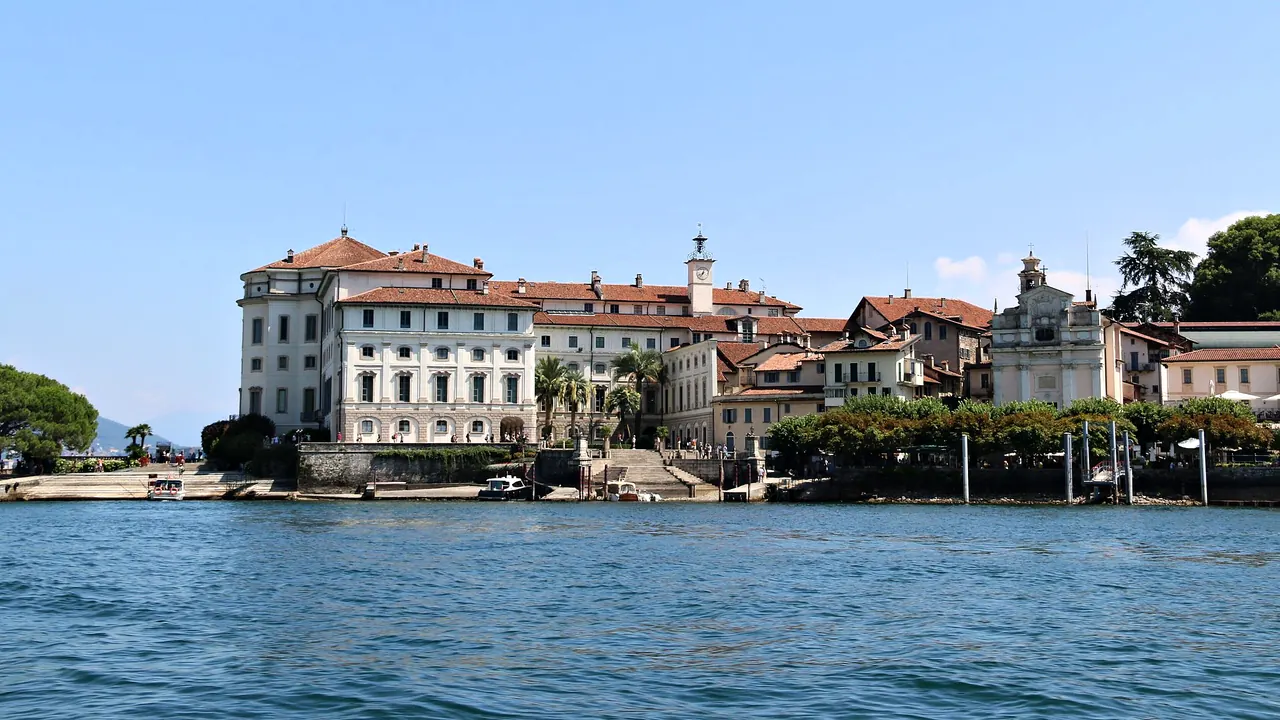
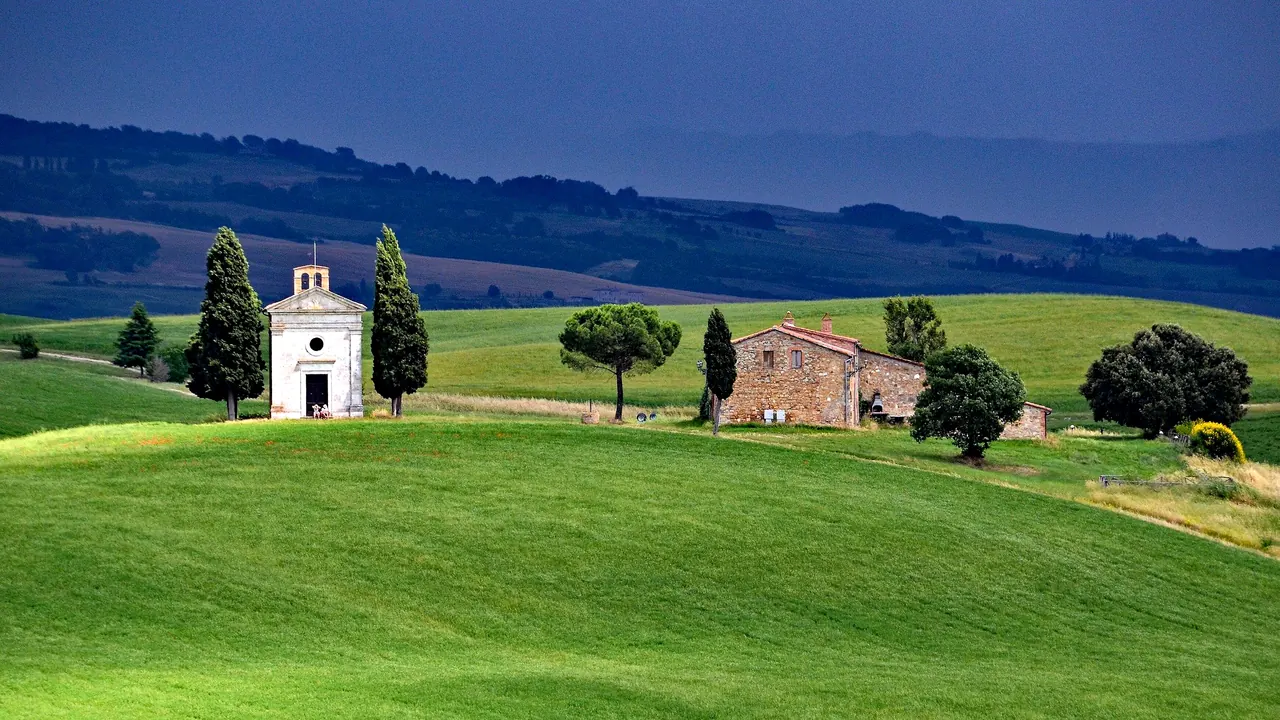
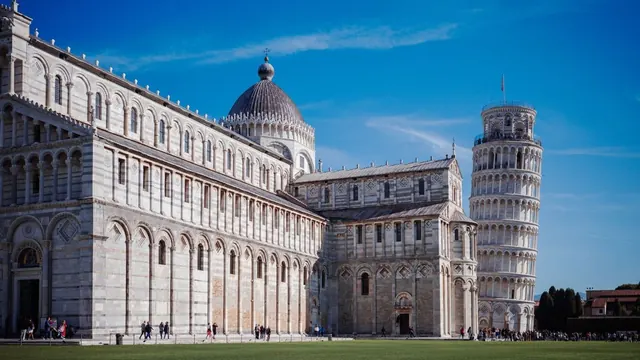
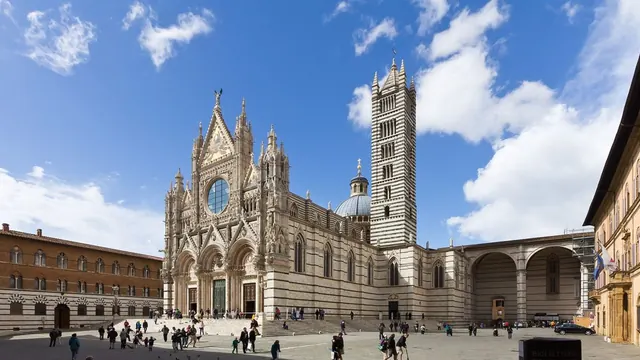
Photos: Lake Maggiore by FrDr, CC BY-SA 4.0, cropped; Tuscany by Hervé Simon, CC BY-SA 2.0, cropped.
Lake Maggiore or Tuscany?
Our verdict in twelve categories, each scored against the same fixed benchmark cities, and the climate month by month, so you can choose for your trip.
Choose Lake Maggiore for
- prices
- nature and the outdoors
Lake Maggiore suits a slower, quieter trip built around water, gardens and mountains. If you base yourself in Stresa, Arona or Locarno, the trains and ferries carry you to Milan and out to the Borromean Islands without a car. The Alpine valleys and hill villages behind the shore, Val Grande and the Verzasca among them, are much easier to reach by car. Summer here is milder than in Tuscany, and the Italian shore costs a little less. Choose it if long lunches by the lake and quiet evenings sound like the point of the trip.
Choose Tuscany for
- shopping
- culture and sights
- nightlife
Tuscany is the bigger and richer destination in almost every respect. Florence and Siena give you art and architecture, the wine country gives you plenty to eat and taste, there is a real sea coast for summer and there are hot springs for unwinding. It suits travellers who want a full itinerary, whether that means galleries, cellar-door lunches, beach days on Elba or warm pools at Saturnia. In return you get more heat, heavier crowds in high summer and, for the countryside, the need for a hire car.
Scoreboard
Twelve categories on one fixed scale from 0 to 100. The shaded stretch is the gap between the two.
Your match
Pick a travel style or drag the sliders, and both match scores follow your weighting.
Wins on prices and nature and the outdoors with your weighting.
Wins on shopping and culture and sights with your weighting.
What matters to you?
Category by category
What the scores mean for a trip.
Beaches & swimming
Lake Maggiore's swimming is lake bathing from pebble beaches, grassy lidos and jetties. The clearest water is on the upper Piedmont shore at Cannobio and Cannero Riviera. The water stays fresh even in midsummer, and most people take a swim between a garden visit and a boat ride.
Tuscany has an actual sea coast with several characters. Elba has sandy bays like Fetovaia and Biodola, the Maremma has pine-backed strands and Cala Violina, and Versilia has miles of fine sand under rows of umbrellas. The catch is distance: from Florence or the hill towns, the beach is a long drive away.
Food & drink
The lake's cooking is quiet northern Italian fare: perch in butter and sage, polenta, Ossola cheeses, and the rustic grotti in the woods around Locarno. Ghemme and Gattinara reds are good company, but a single town's restaurants are soon exhausted.
Tuscany has far more depth. In Florence there are lampredotto carts, the San Lorenzo and Sant'Ambrogio markets and rare Florentine T-bone steaks in Oltrarno trattorias. Beyond the city, a whole region of wine is open for tasting, from Chianti Classico to Brunello and Vino Nobile, with Pienza pecorino and San Miniato truffles in season.
Culture & sights
Lake Maggiore's heritage is aristocratic and scenic. It has the Baroque palace and terraced gardens of Isola Bella, the frescoed Rocca di Angera, the cliffside hermitage of Santa Caterina del Sasso and the Sacro Monte of Ghiffa. Each site makes a good half-day, but they are scattered along the shores and reached by boat.
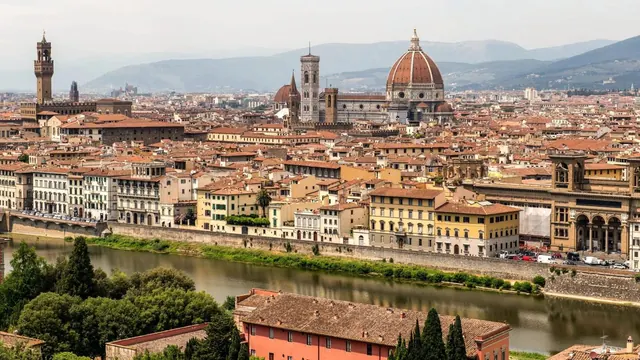
Tuscany is the birthplace of the Renaissance. In Florence's walkable centre alone you will find Brunelleschi's dome, the Uffizi, David and the Bargello, and Siena, Pisa, Lucca, Arezzo and Volterra each add a full day of their own. This is a destination where you can fill a whole trip with sights and never run short.
Nightlife
At the lake, an evening means dinner by the water and perhaps a cocktail in Locarno, Ascona or Stresa. The lakefronts go quiet well before midnight, and any real night out means Milan.
Tuscany also centres its evenings on dinner, but it has genuine places to carry on afterwards. Florence has student crowds around Santo Spirito, wine bars and some weekend clubs. In summer, the Versilia coast around Viareggio and Forte dei Marmi keeps its beach clubs and dance halls going until dawn.
Nature & outdoors
Both are excellent for the outdoors, but the landscapes differ in kind. Lake Maggiore is an Alpine lake, with wooded slopes dropping straight into the water. You can walk up Mottarone for views of Monte Rosa, explore the empty Val Grande wilderness or swim in the green river of the Verzasca valley, and the upper lake has afternoon breezes for sailing and windsurfing.
Tuscany's best-known countryside is farmed: the cypress lanes of the Val d'Orcia and the gravel roads of Chianti, which are ideal for cycling between hill towns. For wilder ground there are the marble ridges of the Apuan Alps and the Casentino forests, along with the Maremma coast and diving around Elba.
Day trips
The lake's position on the border is a real asset. Milan is about an hour away by train, Lake Orta is close, and from Locarno you can reach Bellinzona's castles, Lugano and the viaducts of the Centovalli railway.
Tuscany still offers more. From a single base in Florence or Chianti you can reach Siena, Lucca, Pisa, San Gimignano and the Montalcino and Pienza wine loop. Bologna, Umbria and the Cinque Terre are within reach too, so the list outlasts any one trip.
Good for families
What separates them for children is the kind of water and the scale of the day out. At Lake Maggiore everything stays small and contained. There are safe promenades, shallow lidos and ferry rides that feel like an adventure, plus the animal park at Villa Pallavicino and the summer ride on Mottarone. The summer stays mild, but nothing big is built for children.
Tuscany gives you sandy, shallow, lifeguarded sea beaches in Versilia or the Maremma, often paired with a farmhouse that has a pool. On top of that there is the Pinocchio park at Collodi and cycling on Lucca's walls. Against this, the midsummer heat is hard on children, and Florence's galleries test young patience.
Getting around
Getting around is similar in both, and so is the catch. Lake Maggiore has ferries linking Stresa, the islands and Verbania, plus railways at Stresa, Arona and Locarno. Tuscany has a compact Florence you can walk and a good train line to Pisa, Lucca and Viareggio.
In both places a car becomes necessary away from the main line. At the lake you need one for the valleys and the quieter eastern shore, on narrow coast roads that clog in summer. In Tuscany you need one for Chianti, the Val d'Orcia and the Maremma, where you park outside the town walls and walk in.
Shopping & style
At the lake, shopping is mostly weekly markets, with Luino's Wednesday market the largest, along with a few boutiques in Ascona and local honey and chestnut products. For serious fashion you go to Milan.
Tuscany is a craft destination. Florence has leatherworkers around Santa Croce, goldsmiths on the Ponte Vecchio, marbled paper in Oltrarno and the luxury houses on Via de' Tornabuoni. Elsewhere, Volterra sells alabaster, Pietrasanta marble and Montelupo ceramics, and the Arno valley has designer outlets.
Affordability
Lake Maggiore comes out a little cheaper, as long as you stay on the Italian shore. Family-run hotels, agriturismi and campsites in the smaller Piedmont towns keep costs moderate. Stresa's grand hotels and the Swiss shore around Locarno are expensive, and ferry fares add up.
Tuscany's peak season is costly in central Florence, the Chianti villas and Forte dei Marmi, and car hire is an extra. Trattoria meals, wine bought at the cellar door and stays in Lucca, Arezzo or the Maremma help bring the cost down.
Live music & performing arts
Music at the lake is a summer affair. There are Stresa Festival concerts in churches and on the Borromean Islands, open-air shows in Locarno's Piazza Grande and jazz along the waterfront in Ascona. Outside those weeks, very little is on.
Tuscany has a year-round base in opera and classical music. Florence has the Maggio Musicale and its own opera house, Lucca holds Puccini recitals all year, and his operas are staged outdoors at Torre del Lago in summer. Siena's Accademia Chigiana and Lucca's big summer pop series add more.
Wellness & relaxation
Lake Maggiore restores you through its pace: slow boats, silent gardens and villages that empty after dinner. It has hotel spas with lake views, and the thermal baths of the Ossola valleys and Bognanco make a half-day out rather than a reason to come.
In Tuscany, taking the waters is part of the region's history. You can soak in the free cascades at Saturnia, the medieval bath at Bagno Vignoni, the limestone pools of Bagni San Filippo and the pump rooms of Montecatini Terme. Pair them with an idle farmhouse stay in the Val d'Orcia.
When should you go?
Pick your month. The climate figures are measured averages, not a forecast.
Lake Maggiore in July
Tuscany in July
Daytime high, °C
Rainfall in the month, mm
Where the figures come from
Lake Maggiore's temperatures are measured 36 km from the centre, at Lugano.
Lake Maggiore has no rain gauge within 25 km of the centre, so its rainfall comes from a gridded climate dataset read at the destination rather than from a gauge further away.
Tuscany has no rain gauge within 25 km of the centre, so its rainfall comes from a gridded climate dataset read at the destination rather than from a gauge further away.
Tuscany's sunshine is measured 71 km from the centre, at Pisa / S. Giusto.
Temperature and rainfall are climate normals, averaged over the years shown. Lake Maggiore: 1991-2020 normals, Lugano (35.9 km from centre). Tuscany: 1995-2020 (sunshine 1991-2020, rainfall 1991-2020) normals, Firenze / Peretola (5.6 km from centre).
Around the main lakeside towns of Lake Maggiore, summer is the gentle season. July and August highs sit around 27°C, warm enough for lake swimming from July into early September and still comfortable for walking the waterfronts and riding the ferries. Spring and autumn are the seasons for hiking, but rain falls all year and is heaviest in late spring and late autumn, peaking at 146mm in November. Winters are cold and grey, with short, dull days.
Where most visitors stay in Tuscany, the weather is hotter and drier. July and August reach about 33°C, which makes Florence's streets hard going at midday but suits beach days on the coast. Those two months are nearly dry, with under 40mm of rain a month and far more sunshine than at the lake. For towns and walking, the best months are late April to early June and September, when the heat has eased and the rain has not yet arrived. October is still mild but marks the wetter tail of the season, and the rain grows heavier into November.
Which traveller are you?
On a culture and arts trip, Tuscany is the clear choice. Florence's Uffizi, Accademia and Duomo, Siena's Campo and the hill towns of San Gimignano and Pienza outweigh Lake Maggiore's Borromean palaces and island gardens, however lovely those are for a half-day.
For a food and nightlife trip, go to Tuscany. You get Chianti and Montalcino cellars, Florentine street carts and market halls, and then evenings on the Santo Spirito steps or at Versilia's summer beach clubs. The lake offers perch, risotto and a promenade drink, and its towns are quiet by midnight.
On a relaxing and wellness trip, Tuscany has the springs: open-air pools at Saturnia, the steaming square at Bagno Vignoni and the spa town of Montecatini. Lake Maggiore relaxes you through its slow pace and boat rides, with thermal baths only as a valley outing.
Before you go
| Measure | Lake Maggiore | Tuscany |
|---|---|---|
| Official language | Italian | Italian |
| Currency | Euro (EUR) | Euro (EUR) |
| Sockets | CFL230 V, 50 Hz | CFL230 V, 50 Hz |
| Driving side | Right | Right |
| Time zone | UTC+1, UTC+2 in summer | UTC+1, UTC+2 in summer |
| Emergency number | 112 | 112 |
| Main airport | Milan Malpensa International Airport (MXP)208 non-stop destinations | Florence Airport, Peretola (FLR)46 non-stop destinations |
| Public holidays this year | 13 days | 13 days |
By the numbers
| Measure | Lake Maggiore | Tuscany |
|---|---|---|
| Population | - | 3,729,641 |
Where else could you go?
Every comparison below shares a destination with this one, so you can follow Lake Maggiore or Tuscany somewhere new.
- Lake Comovs Lake Maggiore
- Swiss Alpsvs Lake Maggiore
- Umbriavs Tuscany
- French Alpsvs Lake Maggiore
- Elbavs Tuscany
- Cinque Terrevs Tuscany