Latvia
Riga
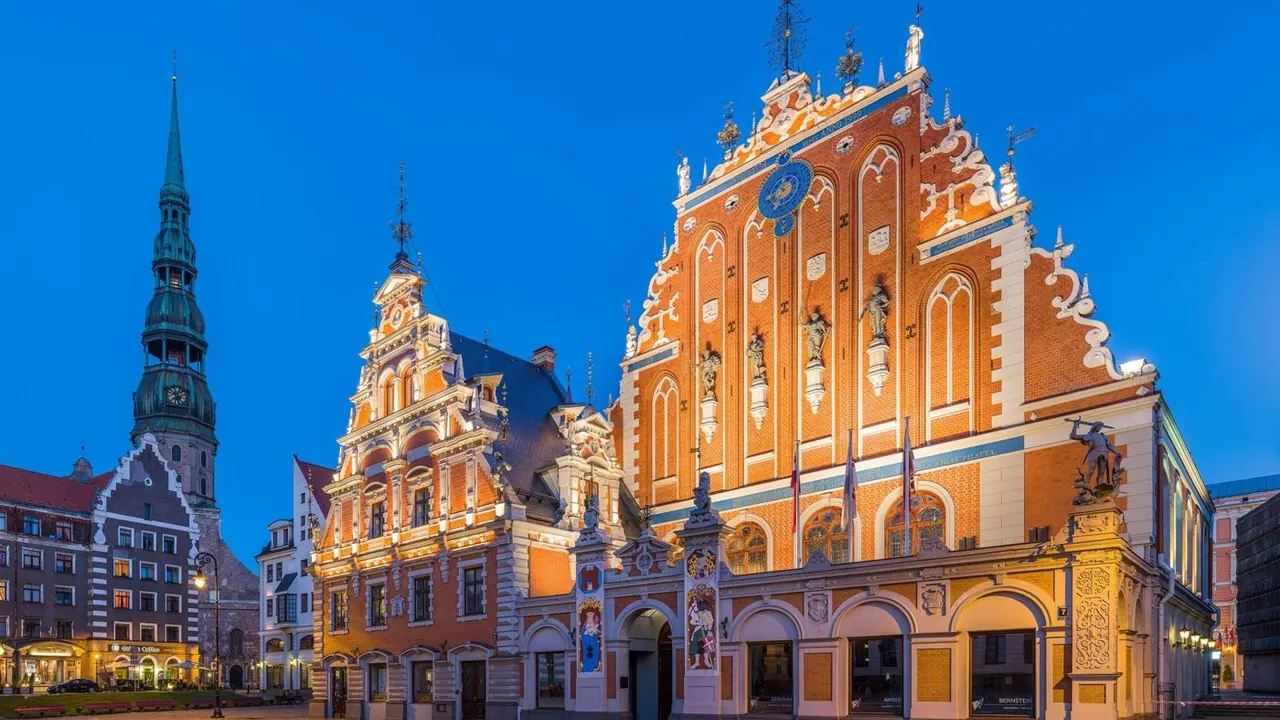
The House of the Blackheads at dusk
- Getting around68
- Culture & sights66
- Live music & the arts65
Photo: Diliff, CC BY-SA 3.0, cropped
Match
55
Every category weighted equally
- Beach & sun53
- Culture & arts59
- Food & nightlife56
- Family trip55
- Outdoors55
- Relax & unwind54
- Shopping & style55
- On a budget56
Riga in twelve categories
Our verdict on each, scored 0 to 100 against the same fixed benchmark cities, so a score means the same thing on every page.
Beaches & swimming. Scores 40 out of 100.
Food & drink. Scores 52 out of 100.
Culture & sights. Scores 66 out of 100.
Nightlife. Scores 52 out of 100.
Nature & outdoors. Scores 55 out of 100.
Day trips. Scores 60 out of 100.
Good for families. Scores 50 out of 100.
Getting around. Scores 68 out of 100.
Shopping & style. Scores 45 out of 100.
Affordability. Scores 62 out of 100.
Live music & performing arts. Scores 65 out of 100.
Wellness & relaxation. Scores 50 out of 100.
Riga category by category
Beaches & swimming
40Riga's beach is Jurmala, a resort strip of fine pale sand that runs for more than 30km along the Gulf of Riga, about half an hour away by suburban train. The sand is soft and wide, backed by pine dunes and old wooden villas, and the water is shallow for a long way out, which suits small children. The Baltic here is brackish, calm and cool: in a warm July or August it reaches 18 to 20°C, and outside those weeks few people go in.
The city itself has river and lake shores, including small sandy patches at Vecaki and on Lake Kisezers, but they are local spots. For most visitors a beach day is a pleasant outing in high summer, not the reason to come.
Food & drink
52Latvian cooking is plain, northern and seasonal: dark rye bread, smoked fish, grey peas with bacon, potatoes, sour cream, mushrooms and forest berries in late summer. The best place to meet it is the Central Market, spread through five vast hangars built for zeppelins, where stalls sell smoked eel, sprats, sauerkraut, honey and pickles. Cafés and bakeries are good and cheap, and there is a modern kitchen of foraged ingredients and local produce in the better restaurants of the Quiet Centre.
Drinking runs to local beer, a lively craft scene and Riga Black Balsam, a bitter herbal liqueur. The Old Town is heavy on medieval-themed tourist restaurants, so it pays to eat a few streets beyond it.
Culture & sights
66The Old Town is a compact UNESCO-listed core of Hanseatic merchant houses, church spires and cobbled squares, with St Peter's Church, the Dom Cathedral, the House of the Blackheads and the Three Brothers. Its real distinction lies just outside: around Alberta iela and Elizabetes iela stand hundreds of Art Nouveau apartment buildings, carved with faces, peacocks and sphinxes, one of the richest collections of the style anywhere.
The museums are solid national ones: the Latvian National Museum of Art, the Museum of the Occupation, the Art Nouveau Museum and an open-air ethnographic museum of farmsteads and windmills in the pine forest at the city's edge. Two or three days covers it well.
Nightlife
52Going out centres on the Old Town, where cellar bars, beer pubs and cocktail bars fill at weekends and stay open late, and a few clubs run until morning. It can feel loud and touristy on Friday and Saturday nights, with groups on short city breaks. Locals tend to drink further out, in the relaxed bars around Miera iela and the Quiet Centre, and in summer on terraces along the canal and in the converted spaces of the old warehouse quarter by the market.
It is a lively, compact scene for a small capital, good for a couple of evenings out, but nobody chooses Riga for its nights alone.
Nature & outdoors
55Latvia is low and forested, and Riga sits among pinewoods, lakes and wetland. The best landscape is the Gauja valley around Sigulda, about an hour away, where the river cuts through red sandstone cliffs and caves, with marked trails, canoeing, cycling and a cable car across the gorge, especially fine in autumn colour. Kemeri National Park, west of Jurmala, has boardwalks over a raised bog, at its best at dawn or in mist.
Closer in, the coast north of the city has dune forests and birdlife, and parks and lakes give easy walks and cycling. There are no hills of note, and winters are dark and cold.
Day trips
60The finest outing is Rundale Palace, a Baroque palace by Rastrelli with French gardens, about an hour and a quarter south by road, often combined with Bauska castle. North-east, Sigulda has Turaida's red-brick castle and the ruins of a Livonian Order fortress, and Cesis, a little further, is one of the best-kept small medieval towns in the country with its castle ruins.
Jurmala makes an easy half day for its wooden resort architecture, and Tukums and the Kurzeme manor houses add more. Beyond about two hours the list thins: the larger Baltic capitals and the old Kurzeme towns such as Kuldiga are better as overnight stays.
Good for families
50Riga is easy and safe with children, with a small walkable centre, plenty of parks along the city canal and a calm, orderly feel. Riga Zoo sits in the Mezaparks forest, the open-air ethnographic museum lets children explore farmsteads and windmills, and in Jurmala there is a large indoor water park and a beach where the sea stays shallow for a long way out.
The Old Town's cobbles are hard on pushchairs, and outside summer the weather limits outdoor play. It works well for a short family city break, though little in the city is made with children in mind.
Getting around
68Almost everything a visitor wants sits within walking distance: the Old Town, the Central Market and the Art Nouveau streets are a few minutes apart, linked by the canal parks. Trams, trolleybuses and buses cover the rest, including the zoo and the open-air museum, and suburban trains run to Jurmala and Sigulda.
There is no metro, routes can take some working out, and the Old Town's cobbles and winter ice make walking slower in the cold months. A car is useful only for Rundale and the countryside.
Shopping & style
45The shopping worth seeking out is local craft: Latvian linen, knitted mittens with traditional patterns, amber jewellery, ceramics, wooden kitchenware and black rye bread or Black Balsam to take home. The Central Market is the place for food and everyday wares, and a few design shops in the Quiet Centre sell Latvian fashion and homeware.
Much of the Old Town is souvenir shops of mixed quality, and international fashion is limited to a couple of malls and one historic department store. An outdoor craft fair each June in the open-air museum is the best single shopping occasion of the year.
Affordability
62Riga is moderately priced for an EU capital. Hotel rooms, public transport, museum entry and market food are reasonable, and lunch menus in ordinary cafés are good value. The Old Town is the exception: restaurants and bars on the main squares charge close to Western European levels, and drinks there add up quickly. Eating and staying a few streets beyond the old walls brings costs down markedly, and opera tickets are among the most accessible in Europe.
Live music & performing arts
65Music is the city's strength. The Latvian National Opera and Ballet, in its white classical house by the canal, performs most nights from autumn to spring, with good singers and seats that are easy to get. The Great Guild hall is home to the national symphony orchestra, and the Dom Cathedral's great organ is heard in regular concerts.
Latvia has one of the strongest choral traditions in the world, culminating in the Song and Dance Festival, held every five years, when tens of thousands of singers fill an open-air stage in Mezaparks. Theatre is mostly in Latvian or Russian, and jazz and live-music venues are small, so the offer is classical first.
Wellness & relaxation
50Riga's wellness lies on the coast. Jurmala has been a spa resort since the nineteenth century, with Kemeri's sulphur springs and peat mud treatments, and its seaside spa hotels offer pools, saunas and massage among the pines, all about half an hour from the city. Latvia also has a living sauna tradition, the pirts, a hot wooden steam room with birch-branch whisking and cold plunges, best found at countryside sauna houses.
The city centre itself is calm for a capital, with canal-side parks and quiet cafés, but it has only hotel spas rather than a public bathing culture.
When should you go?
Pick a month to see what it is like. The climate figures are measured averages, not a forecast.
Riga in July
Daytime high, °C
Rainfall in the month, mm
The whole year
Shaded against this city’s own year: the deepest cell is its best month for that figure and the palest its weakest.
Temperature and rainfall are climate normals, averaged over the years shown. Riga: 1991-2020 normals, Riga (4.1 km from centre).
Before you go
| Measure | Riga |
|---|---|
| Official language | Latvian |
| Currency | Euro (EUR) |
| Sockets | CF230 V, 50 Hz |
| Driving side | Right |
| Time zone | UTC+2, UTC+3 in summer |
| Emergency number | 112 |
| Elevation | 6 m |
| Main airport | Riga International Airport (RIX)9 km from centre93 non-stop destinations |
By the numbers
| Measure | Riga |
|---|---|
| City population | 588,911 |
| Museums within 10 km | 12 |
| UNESCO World Heritage sites within 50 km | 1 |
| Swim season, months above 21 °C | None |
Compare Riga with
Every comparison with a written verdict behind it.