Norway
Oslo
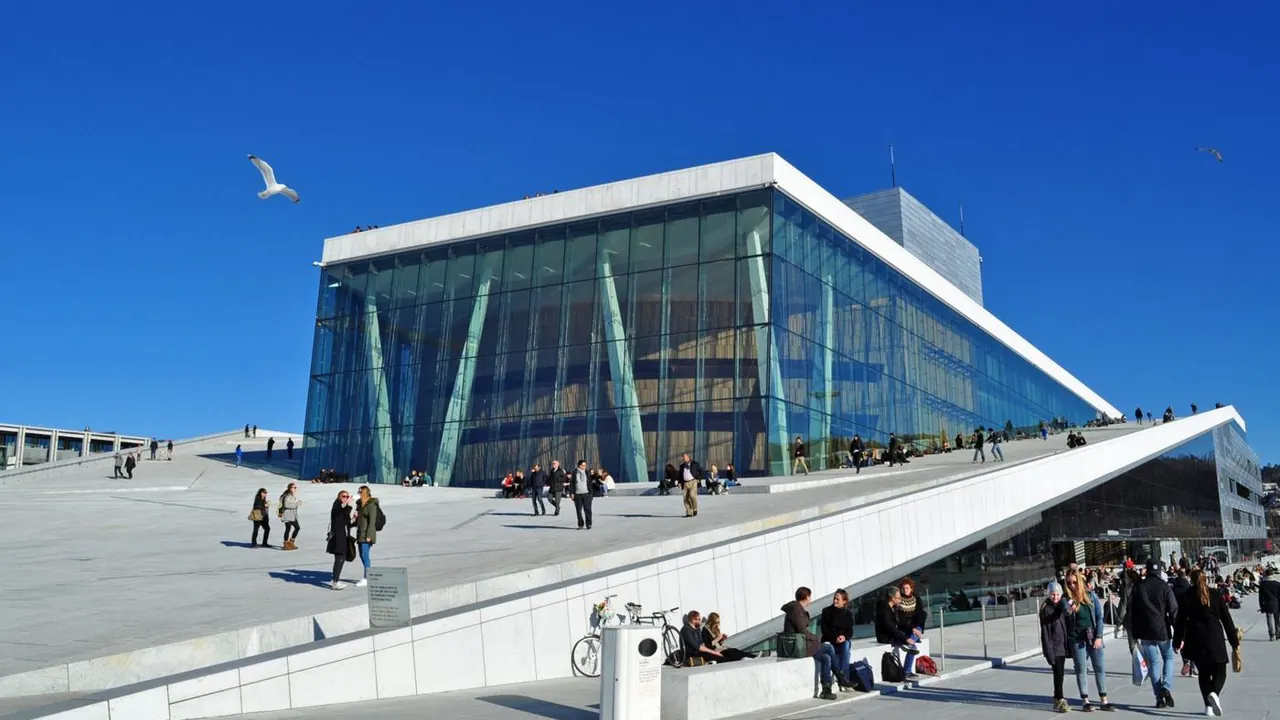
The Opera House on the fjord
- Getting around85
- Nature & outdoors82
- Culture & sights66
Photo: Beata May, CC BY-SA 4.0, cropped
Match
56
Every category weighted equally
- Beach & sun52
- Culture & arts59
- Food & nightlife55
- Family trip56
- Outdoors57
- Relax & unwind56
- Shopping & style58
- On a budget51
Oslo in twelve categories
Our verdict on each, scored 0 to 100 against the same fixed benchmark cities, so a score means the same thing on every page.
Beaches & swimming. Scores 36 out of 100.
Food & drink. Scores 55 out of 100.
Culture & sights. Scores 66 out of 100.
Nightlife. Scores 48 out of 100.
Nature & outdoors. Scores 82 out of 100.
Day trips. Scores 52 out of 100.
Good for families. Scores 63 out of 100.
Getting around. Scores 85 out of 100.
Shopping & style. Scores 50 out of 100.
Affordability. Scores 14 out of 100.
Live music & performing arts. Scores 62 out of 100.
Wellness & relaxation. Scores 60 out of 100.
Oslo category by category
Beaches & swimming
36Oslo has a real summer swimming habit, but it lasts a few weeks. On warm days locals take the harbour ferries to the fjord islands, Hovedøya, Langøyene and Gressholmen, for rocky shores and small sandy coves. Others go to Huk and Paradisbukta on the Bygdøy peninsula, or swim off the boardwalks and diving platforms along the waterfront at Sørenga and Tjuvholmen. Forest lakes such as Sognsvann, at the end of a metro line, are popular too.
The fjord is calm and clean, and in July it can reach about 18-20°C, though it is often cooler. Outside high summer swimming is for the hardy, and many people pair it with a sauna. Come for a refreshing dip, not a beach vacation.
Food & drink
55Eating in Oslo centres on produce: cold-water fish and shellfish, cured meats, game, root vegetables and berries. At the top end there is a strong tier of Nordic tasting menus built on these ingredients. Lower down, the offer is more ordinary: brunch places, international bistros and food halls such as Mathallen in Vulkan. Grünerløkka is the easiest area for wandering and picking somewhere to eat.
Coffee is where the city really stands out. Light-roast specialty cafés are everywhere, and lingering over a filter coffee and a cinnamon bun is a daily habit. Seafood is excellent, especially prawns eaten on the quay in summer. Street food is limited, and eating out at every level costs a lot, so many visitors save the special meals for one or two evenings.
Culture & sights
66Oslo's sights are mostly museums and modern landmarks rather than an old townscape. The Munch Museum and the National Museum hold the core of Norwegian art, including The Scream. On the Bygdøy peninsula, a short ferry ride across the harbour, the Fram and Kon-Tiki museums tell the story of polar and ocean exploration, and the Norwegian Folk Museum gathers farmhouses and a medieval stave church in an open-air park.
In the city itself there is the brick City Hall with its murals, the medieval Akershus Fortress above the harbour, and the marble Opera House, whose sloping roof you can walk up. Vigeland Park, filled with hundreds of granite and bronze figures, is free and unlike anything else. The centre has little old architecture, and the main sights can be covered in two or three days.
Nightlife
48Going out in Oslo is pleasant rather than famous. Grünerløkka and the streets around Youngstorget and Grønland have the most character, with craft beer bars, natural wine bars, cocktail rooms and a few clubs playing electronic music. In summer the waterfront at Aker Brygge and Tjuvholmen fills with people drinking outdoors in the long light.
Bars close around three, and alcohol is very expensive, so locals often drink at home first and go out late. Weekends are lively. Weeknights, especially in the dark months, are quiet. It is a good city for a few drinks in a relaxed bar, less so for anyone planning a trip around big nights out.
Nature & outdoors
82The forest comes right up to the city. Metro lines climb to Holmenkollen, Frognerseteren and Sognsvann, where the huge Nordmarka woodland begins, with lakes, marked trails and cabins serving waffles. In winter the same trails become hundreds of kilometres of cross-country ski tracks, many of them floodlit, and there are downhill slopes and a toboggan run within the public transport network. Østmarka, on the east side, is quieter.
In summer the Oslofjord adds a gentler landscape of skerries and wooded islands that you can reach by ferry, for kayaking, sailing and coastal walks. Cycling routes follow the rivers and the shore. The land rises in hills rather than high mountains, and the dramatic western fjords are far beyond a day trip.
Day trips
52There are good outings from Oslo but no famous ones. The pick is Fredrikstad, about an hour south by train, where a moated, star-shaped fortress town still has its cobbled streets and ramparts. Along the fjord, Drøbak is a small wooden town of white houses, pleasant to reach by boat in summer. Tønsberg claims to be Norway's oldest town and has Viking-age history.
Inland, Kongsberg has old silver mines and a baroque church. Lillehammer, about two hours north on Lake Mjøsa, has its open-air museum and Olympic ski jumps. These make pleasant days out but none is a reason to come in itself, and the famous fjord landscapes are much further away.
Good for families
63Oslo is calm, safe and used to children. Prams are everywhere on trams and buses, playgrounds sit in almost every park, and the streets are easy to manage with small legs. The Bygdøy museums are the main family day: the Norwegian Folk Museum has farm animals and old wooden houses to explore, and at the Fram Museum children can climb aboard a real polar ship. The Norwegian Museum of Science and Technology is hands-on, and Tusenfryd, a regional amusement park, is a short bus ride south.
Outdoors, children can run up the sloping Opera House roof, ride the ferries to the fjord islands in summer and go sledding in the hills near Holmenkollen in winter. What Oslo lacks is a headline attraction: there is no large zoo, aquarium or major theme park. Food and admissions cost a lot for a family, and short, dark winter days limit what you can fit in.
Getting around
85Oslo is easy. The centre is compact enough to walk, from the Royal Palace down Karl Johans gate to the harbour, the Opera House and Akershus Fortress. Trams cover the inner districts, and the metro runs east and west, climbing into the forested hills to Holmenkollen and Sognsvann. Trams, buses, metro and the ferries out to the fjord islands form one integrated network.
The Bygdøy museums are reachable by city bus all year, and in summer a separate boat crosses the harbour to them from beside City Hall. An airport express train reaches the centre quickly, and you never need a car. Winter brings ice and snow to the pavements, so good shoes matter, but public transport keeps running.
Shopping & style
50Shopping in Oslo is tidy and pleasant without much depth. Karl Johans gate and the streets off it hold the high-street chains. Steen & Strøm, a department store founded in the eighteenth century, has the main luxury and Nordic brands under one roof. Bogstadveien in the west is the locals' main shopping street.
Grünerløkka is better for vintage, records and small Scandinavian design shops. Things worth taking home include traditional patterned knitwear, outdoor clothing, silver, ceramics and woollen blankets. Prices are high across the board, and there are few markets.
Affordability
14Oslo is one of the most expensive places to travel. Restaurant meals, coffee and above all alcohol cost far more than in most of Europe, and hotels are dear. A day of museums and taxis adds up quickly.
There are ways to cut costs. Vigeland Park, the Opera House roof, the forest trails and the fjord islands are free to visit. A transport pass also covers the harbour ferries. Supermarket picnics and hotel breakfasts are how many visitors keep the budget in check.
Live music & performing arts
62The Opera House on the harbour is home to the national opera and ballet, and seeing a performance inside its oak-lined hall is a highlight of a visit. The Oslo Philharmonic is a well-regarded orchestra and plays in the Konserthus. The National Theatre stages Ibsen in the city where many of his plays were written, though mostly in Norwegian.
There is also a lively scene of small jazz and rock clubs. Summer brings big outdoor festivals, especially the music festival in the Tøyen park in August, and Oslo has a long jazz festival tradition. The scene is good but not large, and a short visit may not line up with much.
Wellness & relaxation
60Oslo's way to relax is the sauna. Wood-fired saunas, many of them floating, line the harbour by the Opera House and at Sørenga. People sweat, then climb down a ladder into the fjord in every season, ice included, and many of these saunas are public and sociable. There are no thermal springs, and spa hotels are few and expensive. Still, this sauna habit is a real part of daily life and easy for a visitor to join.
The city itself is unhurried. Streets are quiet and green spaces are everywhere, and long summer evenings and candlelit cafés in winter give a slow, restful pace.
When should you go?
Pick a month to see what it is like. The climate figures are measured averages, not a forecast.
Oslo in July
Daytime high, °C
Rainfall in the month, mm
The whole year
Shaded against this city’s own year: the deepest cell is its best month for that figure and the palest its weakest.
Temperature and rainfall are climate normals, averaged over the years shown. Oslo: 1991-2020 normals, Oslo-Blindern (4.3 km from centre).
Before you go
| Measure | Oslo |
|---|---|
| Official language | Norwegian, Nynorsk, Bokmål, Sámi |
| Currency | Norwegian Krone (NOK) |
| Sockets | CF230 V, 50 Hz |
| Driving side | Right |
| Time zone | UTC+1, UTC+2 in summer |
| Emergency number | Police 112, ambulance 113, fire 110 |
| Elevation | 23 m |
| Main airport | Oslo-Gardermoen International Airport (OSL)37 km from centre147 non-stop destinations |
| Public holidays this year | 13 days |
By the numbers
| Measure | Oslo |
|---|---|
| City population | 717,710 |
| Museums within 10 km | 60 |
| UNESCO World Heritage sites within 50 km | 0 |
| Swim season, months above 21 °C | None |
Compare Oslo with
Every comparison with a written verdict behind it.