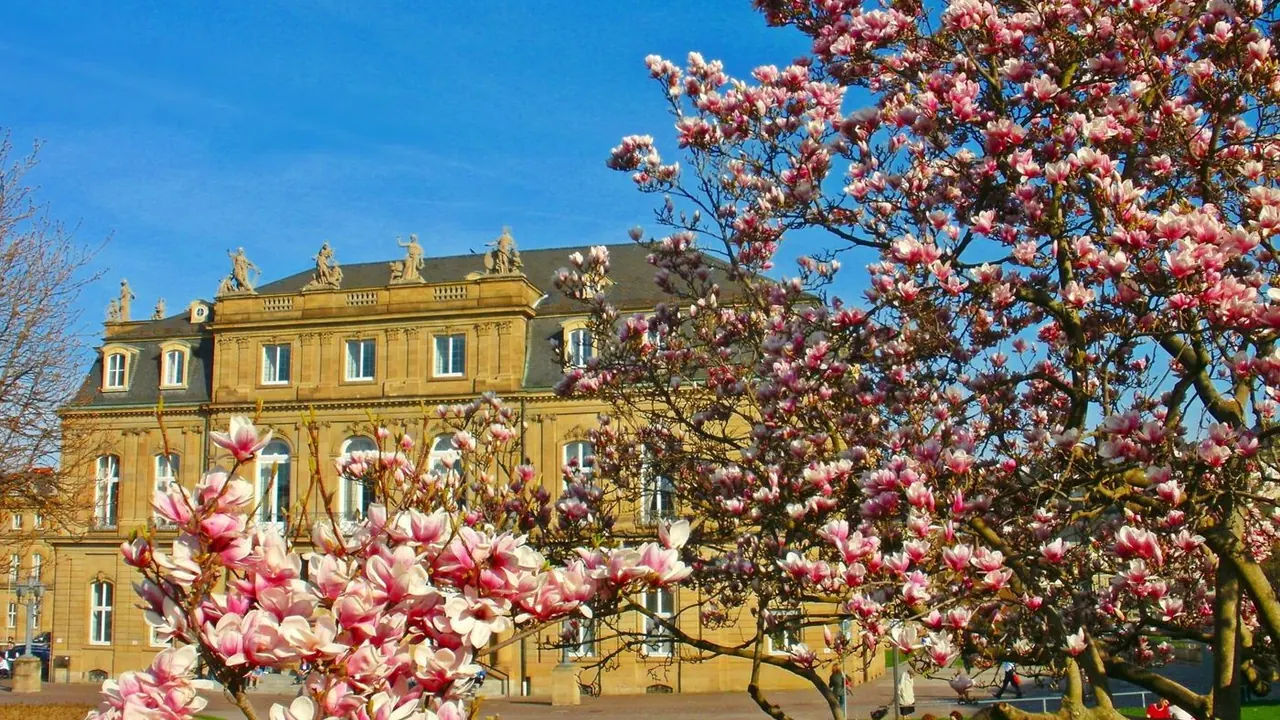
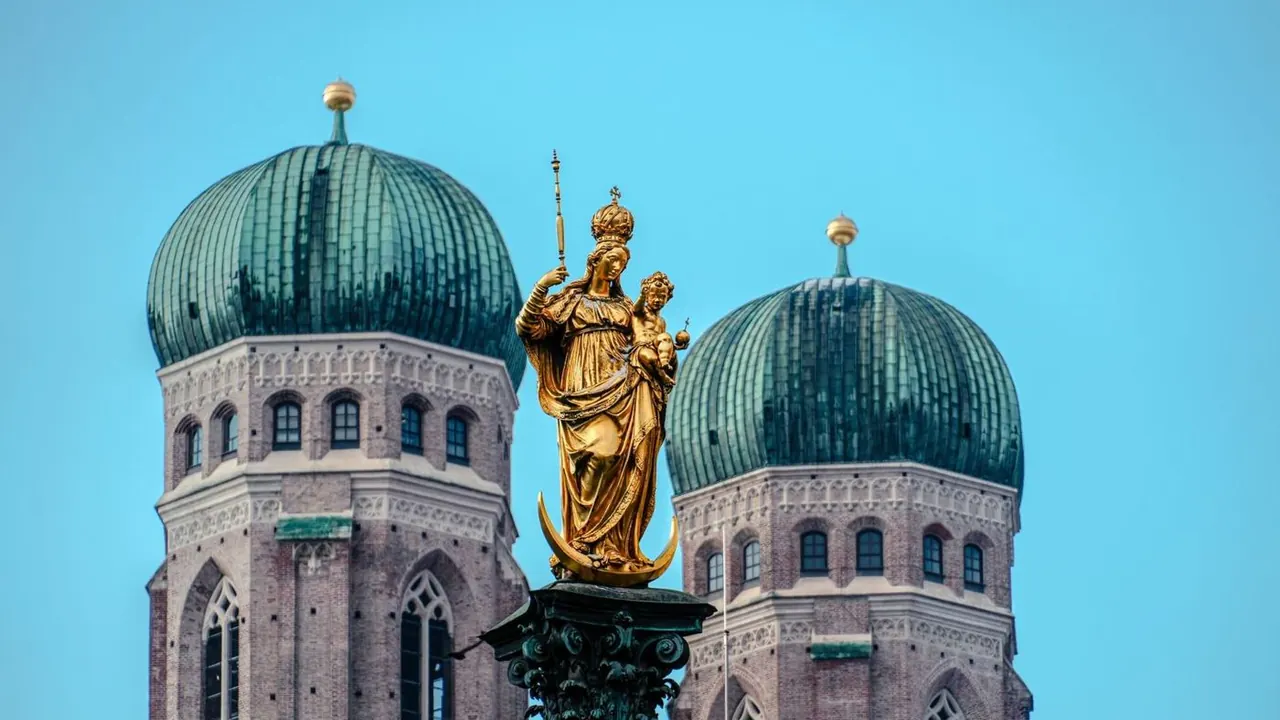
Photos: Stuttgart by Baden de, CC BY 3.0, cropped; Munich by 0xd1ma, Pexels License.
Stuttgart or Munich?
Our verdict in twelve categories, each scored against the same fixed benchmark cities, and the climate month by month, so you can choose for your trip.
Choose Stuttgart for
- prices
- wellness
Stuttgart is the choice for a shorter, calmer and somewhat cheaper visit built around cars, modern design and wine. The Mercedes-Benz and Porsche museums, the Weissenhof Estate and the Stuttgart Ballet are the main draws. Vineyards come right down to the edge of the centre, and the mineral baths at Bad Cannstatt make an easy afternoon. Two or three days covers the city, and weekend hotel rooms cost less than Munich's.
Choose Munich for
- nature and the outdoors
- beaches
- culture and sights
Munich suits travellers who want the fuller trip. It has great picture galleries and palaces, a world-class opera house, beer gardens under chestnut trees, and the Alps near enough for a day of hiking or skiing. It is also easier with children and has lakes for summer swims. The price is a heavier hotel bill.
Scoreboard
Twelve categories on one fixed scale from 0 to 100. The shaded stretch is the gap between the two.
Your match
Pick a travel style or drag the sliders, and both match scores follow your weighting.
Wins on prices and wellness with your weighting.
Wins on nature and the outdoors and beaches with your weighting.
What matters to you?
Category by category
What the scores mean for a trip.
Beaches & swimming
Neither city is a beach destination, but Munich gives a swimmer far more to work with. In town, people sunbathe on the gravel banks of the Isar at the Flaucher in summer. The Starnberger See and the Ammersee are under an hour away by S-Bahn, with jetties, lawns and clear, fresh alpine water.
In Stuttgart, the Neckar is a working river with barges, and the Max-Eyth-See is for boating, not bathing. Swimming there means outdoor pools, some fed by mineral springs, and the nearest proper swimming lake, Lake Constance, is more than two hours away.
Food & drink
Both cities serve hearty regional cooking of a similar standard, and the real difference is what you drink. Munich is a beer city: Helles in huge brewery halls and shady gardens, with roast pork, white sausage and pretzels, and the Viktualienmarkt for snacks.
Stuttgart is wine country. Trollinger and Riesling come from vineyards inside the city limits, growers open seasonal Besen taverns in their own houses, and the Swabian dishes are Maultaschen and Käsespätzle. Its Art Nouveau Markthalle matches Munich's market for browsing, and both cities have a solid fine-dining tier but a fairly narrow international range.
Culture & sights
Munich is the richer city for sights, and its strength is royal collections. The Kunstareal alone, with the Alte Pinakothek, the Glyptothek and the Lenbachhaus, could fill several days. The Residenz, Nymphenburg Palace and the Deutsches Museum add palaces and science on a grand scale.
Stuttgart's sights come from industry and modern design: the Mercedes-Benz and Porsche museums, the Staatsgalerie and the Le Corbusier houses of the Weissenhof Estate. Wartime bombing hit both old towns, but Stuttgart's heritage is patchier, and two or three days covers the essentials.
Nightlife
Munich offers more of a night out, even if many evenings never leave the beer garden. The Glockenbachviertel and Gärtnerplatz area has the most cocktail bars and gay bars, Schwabing has student pubs, and a few serious techno clubs stay open until morning at weekends.
In Stuttgart, nights out centre on the bar strip along Theodor-Heuss-Strasse, with clubs in basements scattered round the centre and wine bars in the Bohnenviertel. Each city has a huge autumn beer festival, the Oktoberfest and the Cannstatter Volksfest, but outside those weeks Stuttgart goes quiet earlier.
Nature & outdoors
Munich has the clear edge because the Alps are so close. Within about an hour you are in real mountain country around Garmisch-Partenkirchen and the Zugspitze, with hiking in summer and skiing in winter. In town, the English Garden and the cycle paths along the Isar give plenty of green space.
Stuttgart's countryside is gentler but starts closer to the centre. Vineyard trails and deer forests begin at the edge of its basin, and the cliffs and caves of the Swabian Jura and the northern Black Forest are about an hour away. There is plenty for walkers and cyclists, but no high peaks.
Day trips
Both are excellent bases, with Munich slightly ahead for range. Salzburg and Innsbruck put Austria within easy reach, Nuremberg and Regensburg add medieval towns, and Neuschwanstein and the island palace of Herrenchiemsee are the classic royal outings.
Stuttgart's list leans towards university towns, abbeys and castles. Heidelberg is about forty minutes away by fast train, and Tübingen, Maulbronn and the palace at Ludwigsburg are close by. Hohenzollern Castle and Ulm's spire are further out, and Strasbourg makes a long day across the French border.
Good for families
Both cities are safe and easy with children, but Munich has more to fill a longer stay. Hellabrunn zoo on the Isar meadows, the hands-on sections of the Deutsches Museum, the Sea Life aquarium and summer days at the lakes all help, and the flat streets are easy with a pushchair.
Stuttgart's highlight is Wilhelma, a zoo and botanical garden among Moorish-style pavilions. Killesberg park with its little railway and the fairy-tale garden at Ludwigsburg make good follow-ups. Outside the flat centre, though, the steep hills make pushing a buggy hard work.
Getting around
Munich is the easier city to get around. Its old town is flat and largely pedestrianised, and the U-Bahn, S-Bahn and trams reach the museums, the palaces and the lakes. Long riverside routes make cycling a pleasure, and delays on the central S-Bahn line are the main complaint.
Stuttgart's centre is just as walkable, but the city climbs steeply out of its basin. Beyond Königstrasse you rely on the Stadtbahn, a rack railway and a funicular, or you climb the long public stairways known as Stäffele.
Shopping & style
Munich makes the better shopping trip. Maximilianstrasse holds the luxury houses, and Dallmayr, a delicatessen trading for centuries, is worth a visit in its own right. Bavarian Tracht from specialist tailors is the purchase that is truly local, and in December the Christmas markets fill the old town with craft stalls.
Stuttgart is more about brands. There is the long Königstrasse, the old Breuninger department store for designer fashion, and the outlet town of Metzingen about half an hour away. Independent shops and markets are modest by comparison.
Affordability
Neither city is cheap, but Munich is the more expensive. It is the dearest city in Germany, with hotel rooms expensive all year and more so during the Oktoberfest and trade fairs. Beer-garden picnics, free parks and lakes, and token museum fees on Sundays help keep costs down.
Stuttgart is easier on a budget. Its hotels depend on business travel, so they get noticeably cheaper at weekends and in quieter months, and tavern meals give good value for the portions. Smart restaurants and central hotels are where the money goes in both.
Live music & performing arts
Both cities take their stages seriously, and Munich has the greater depth. The Bavarian State Opera in the National Theatre is one of the world's leading companies. Three orchestras of real standing play in halls such as the Herkulessaal and the Prinzregententheater, and the gilded Cuvilliés Theatre stages chamber opera.
Stuttgart's pride is its ballet, one of Europe's most respected companies since John Cranko's time, which shares the state theatre with an opera company known for bold productions. With the Bach tradition at the Liederhalle and long-running musicals at Möhringen, it makes a fine night out, but ballet tickets need booking early.
Wellness & relaxation
The two are well matched, and both have a real bathing culture of different kinds. In Munich it is about the setting and the size: the Art Nouveau Müller'sches Volksbad, public saunas with infusion rituals, and the large thermal complex at Erding about forty minutes away. Slow afternoons in a beer garden complete the picture.
Stuttgart's baths draw on its own mineral springs. At the Mineralbad Cannstatt and the Mineralbad Leuze you can soak indoors and out in naturally carbonated warm water, which Munich cannot match. The city's businesslike pace makes this an afternoon soak rather than a spa retreat.
When should you go?
Pick your month. The climate figures are measured averages, not a forecast.
Stuttgart in July
Munich in July
Daytime high, °C
Rainfall in the month, mm
Temperature and rainfall are climate normals, averaged over the years shown. Stuttgart: 1991-2020 normals, Stuttgart / Neckartal (2.8 km from centre). Munich: 1991-2020 normals, München (1.9 km from centre).
Both cities follow the same pattern through the year: cold, grey winters, a fresh spring, and summer highs of about 25°C from June to August, with the most sunshine in July. May and September are the best months for walking the streets, mild and bright without the full summer heat. Munich, closer to the Alps, has much wetter summers, with around 120mm of rain a month from June to August, so a lake or mountain day needs a back-up plan. Its winters are also a little colder, which suits skiers but makes sightseeing in town chilly.
Stuttgart sits in a sheltered basin and stays a degree or two warmer through the year. It is also clearly drier, with under 80mm of rain even in its wettest summer months. That makes it the more reliable choice for a summer city break, and early autumn is good for walks in the vineyards and the Swabian Jura.
Which traveller are you?
On an outdoors trip, Munich is the stronger choice. The Alps begin about an hour away, so Garmisch-Partenkirchen, the Zugspitze and Tegernsee are easy by train for summer hikes or winter skiing, and the Five Lakes add cycling and sailing. Stuttgart's Jura and Black Forest walks are gentler.
For a culture and arts trip, Munich gives you more to fill the days: the Pinakotheken, the Residenz, Nymphenburg and the Deutsches Museum by day, then the Bavarian State Opera at night. Stuttgart answers with fine car museums and a celebrated ballet, but its heritage survives only in pockets.
On a trip on a tight budget, Stuttgart is the easier of the two on your money. Its hotels, which fill up with business travellers, get cheaper at weekends and in quieter months, and tavern meals come in generous portions. Munich stays expensive all year, though beer-garden picnics and free parks help.
Before you go
| Measure | Stuttgart | Munich |
|---|---|---|
| Official language | German | German |
| Currency | Euro (EUR) | Euro (EUR) |
| Sockets | CF230 V, 50 Hz | CF230 V, 50 Hz |
| Driving side | Right | Right |
| Time zone | UTC+1, UTC+2 in summer | UTC+1, UTC+2 in summer |
| Emergency number | 112 | 112 |
| Elevation | 245 m | 519 m |
| Main airport | Stuttgart Airport (STR)10 km from centre124 non-stop destinations | Munich Airport (MUC)29 km from centre211 non-stop destinations |
| Public holidays this year | 12 days | 12 days |
By the numbers
| Measure | Stuttgart | Munich |
|---|---|---|
| City population | 609,365 | 1,505,036 |
| People per km² | 2,938 | 4,844 |
| Museums within 10 km | 42 | 75 |
| UNESCO World Heritage sites within 50 km | 3 | 1 |
Where else could you go?
Every comparison below shares a destination with this one, so you can follow Stuttgart or Munich somewhere new.
- Baden-Badenvs Stuttgart
- Heidelbergvs Stuttgart
- Innsbruckvs Munich
- Rothenburg ob der Taubervs Stuttgart
- Strasbourgvs Stuttgart
- Salzburgvs Munich