Taiwan
Taipei
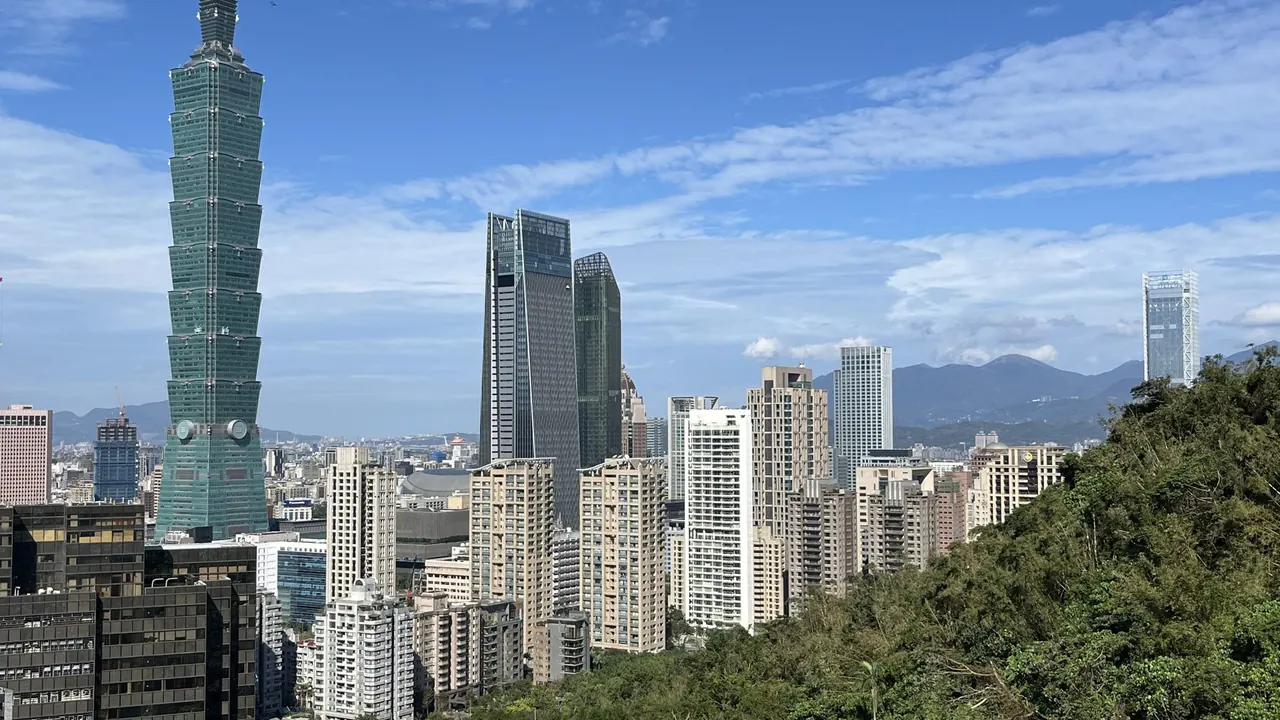
Taipei 101 and the skyline from Elephant Mountain
- Food & drink88
- Getting around86
- Wellness & relaxation80
Photo: Another Believer, CC BY-SA 4.0, cropped
Match
70
Every category weighted equally
- Beach & sun68
- Culture & arts72
- Food & nightlife70
- Family trip70
- Outdoors72
- Relax & unwind71
- Shopping & style72
- On a budget69
Taipei in twelve categories
Our verdict on each, scored 0 to 100 against the same fixed benchmark cities, so a score means the same thing on every page.
Beaches & swimming. Scores 40 out of 100.
Food & drink. Scores 88 out of 100.
Culture & sights. Scores 68 out of 100.
Nightlife. Scores 58 out of 100.
Nature & outdoors. Scores 78 out of 100.
Day trips. Scores 76 out of 100.
Good for families. Scores 72 out of 100.
Getting around. Scores 86 out of 100.
Shopping & style. Scores 70 out of 100.
Affordability. Scores 66 out of 100.
Live music & performing arts. Scores 55 out of 100.
Wellness & relaxation. Scores 80 out of 100.
Taipei category by category
Beaches & swimming
40Taipei sits in a basin with no shore of its own, so swimming means a day out. The nearest sand is on the north coast beyond Tamsui, where Baishawan has a pale beach. Fulong, on the northeast coast about an hour by train, is the best-known stretch, a long golden spit backed by a river lagoon. In summer the sea is warm, around 28°C. Still, beaches are a side trip here, not the reason for the stay.
The swimming season runs from roughly June to September. Lifeguarded sections are short, rip currents are common on the open coast, and typhoons can close beaches for days at a time. Outside summer, the coast is for looking at rather than swimming.
Food & drink
88Eating is the main reason many people choose Taipei. Night markets such as Raohe, Ningxia and Shilin fill with stalls selling oyster omelettes, pepper buns baked in clay ovens, stinky tofu, grilled squid and shaved ice. In the day there are beef noodle shops, braised pork rice counters, soy milk breakfast halls serving youtiao and egg crêpes, and dumpling houses where xiaolongbao are pleated in front of you. The cooking draws on Hokkien, Hakka and mainland regional traditions and has strong Japanese influences.
Above the street food is a serious restaurant tier, from Taiwanese banquet cooking to modern tasting menus. Drinking is just as good. Oolong grown in the hills around the city is served in traditional teahouses, bubble tea started in Taiwan, Da'an and Zhongshan have a strong speciality coffee culture, and Taiwanese whisky has a good name. A visitor can eat very well at any price.
Culture & sights
68The National Palace Museum is the main draw. Its huge collection of Chinese imperial art, jade, bronzes, porcelain and calligraphy is world class, and it deserves at least half a day. Around it is a good second tier: Longshan Temple in Wanhua, smoky and busy with worshippers, the Confucius Temple and Bao'an Temple, the monumental Chiang Kai-shek Memorial Hall, and the Japanese-era Presidential Office Building.
Most of the city is modern, so historic streets come in patches. Dadaocheng has restored merchant shophouses along Dihua Street, and Bopiliao preserves a lane of older Wanhua buildings. Taipei 101 dominates the skyline. Smaller museums cover Taiwanese history, the 228 Incident and fine art. There is plenty for three or four days, but the city does not feel like a museum in itself.
Nightlife
58Going out in Taipei is relaxed and safe rather than wild. Its strength is cocktail bars, especially in Da'an and Zhongshan, where bartenders make a point of using local tea, fruit and spirits, and several bars have reputations well beyond Taiwan. Xinyi, around Taipei 101, has the large dance clubs and glossy lounges where the weekend crowd dresses up. Ximending and the streets near the universities have cheaper bars, craft beer and a younger crowd.
Karaoke in private rooms is a big part of a night out, and many locals spend late evenings at night markets and stir-fry beer halls rather than in clubs. Most of the city goes quiet fairly early on weeknights, but the streets feel safe at any hour.
Nature & outdoors
78Taipei is ringed by green hills that start where the city ends. Yangmingshan National Park sits inside the city limits, a volcanic landscape of fumaroles, silvergrass slopes and the peak of Qixingshan, with cherry and calla lily seasons in spring. Elephant Mountain and the Four Beasts trails rise right behind Xinyi for short, steep climbs with skyline views. A gondola runs up to the tea terraces of Maokong.
Further out, the northeast coast has sea-carved cliffs and the Caoling Historic Trail, and the gorges and waterfalls around Wulai and Pingxi are reachable by bus or train. The Tamsui and Keelung riverside paths make long, flat cycling routes. Summer is hot and humid with typhoons, so autumn and spring are the best seasons for hiking.
Day trips
76The hills and coast around Taipei hold many small towns that make easy outings. Jiufen, an old gold-mining town of teahouses and lantern-hung stairways above the sea, is the classic one, often paired with nearby Jinguashi. The Pingxi branch line runs through Shifen and other old coal towns where visitors launch sky lanterns. Tamsui has a Spanish-built fort, colonial consulates and sunsets over the river mouth. Keelung has a busy harbour and a famous temple night market.
In the southwest suburbs, Yingge is a pottery town and Sanxia has an ornately carved temple and an old street of brick shophouses. High-speed rail opens up more. Taichung is under an hour away, and Tainan, the old capital with the island's oldest temples and forts, is about two hours. Yilan's hot-spring towns are reachable through the mountain tunnel.
Good for families
72Taipei is an easy city for children. It is safe and clean, the metro has lifts and priority seating, and locals are warm towards small children. Taipei Zoo is large, with pandas and good walk-through areas, and it sits next to the Maokong gondola, which children love. The Children's Amusement Park in Shilin, the Taipei Astronomical Museum and the National Taiwan Science Education Center fill a rainy day well. The riverside parks have long cycle paths and playgrounds.
Night markets, with their games and snacks, are often the highlight for older children. On the downside, summer is very hot and humid, scooters crowd the side streets, and the big theme parks are an hour or more outside the city.
Getting around
86The Taipei MRT is one of the easiest metro systems a visitor will use. It is spotless, clearly signed in English and colour-coded, and it reaches almost every sight, including the Maokong gondola, Beitou and Tamsui. One stored-value card covers the metro, city buses, the public bike-share system, regional trains and convenience-store purchases. Taxis are plentiful and honest.
Walking is pleasant in the central districts, where covered arcades along the shopfronts give shade and shelter from the rain. Away from them, pavements are uneven, often blocked by parked scooters, and lanes are shared with traffic. Distances between neighbourhoods are larger than they look, but no visitor needs a car.
Shopping & style
70Taipei shopping is a mix of big department stores and small, specialised finds. Xinyi, around Taipei 101, is a district of linked department stores and malls holding the luxury and international brands. Zhongxiao East Road has more of the same, plus the side lanes behind it. Ximending is the teenage and streetwear quarter. The cultural parks at Huashan and Songshan, both old industrial sites, house Taiwanese design shops and makers' markets, and Da'an and Chifeng Street have small independent boutiques.
For things to take home, Dihua Street sells dried goods, herbs and fabric in old merchant shophouses. Specialist shops sell high-mountain oolong and teaware, and Yingge pottery is easy to find. The Guanghua area is the place for electronics, and the night markets are full of cheap clothes and gadgets. It suits browsing more than high-end fashion.
Affordability
66Taipei is good value for a developed Asian capital. Eating costs very little: night markets, noodle shops and breakfast counters are cheap, and even good sit-down Taiwanese meals are moderately priced. The metro, buses, bike share and taxis are all inexpensive, and many temples, parks and trails are free. Museum entry is modest.
Hotels are where the money goes. Central rooms cost a fair amount for their small size, especially in Xinyi and at weekends, though guesthouses and business hotels around Zhongshan and Ximending soften this. Imported alcohol and cocktail bars also cost more.
Live music & performing arts
55Taipei has a solid performing arts calendar rather than a famous one. At Liberty Square, the palace-style National Theater and Concert Hall host the National Symphony Orchestra, visiting soloists, opera and dance. The Taipei Performing Arts Center, a striking modern building in Shilin, stages theatre and contemporary work. Cloud Gate, the internationally known contemporary dance company, is based just outside the city.
For something specifically Taiwanese, look for glove puppetry and Taiwanese opera at Dadaocheng's theatres and at temple festivals. The independent live houses around Gongguan and the cultural parks put on Mandopop, indie and rock acts, and big Mandarin pop concerts fill the arena. English-language theatre is scarce.
Wellness & relaxation
80Taipei sits on volcanic ground, and hot-spring bathing is part of the city. Beitou, at the end of a short MRT branch line, grew up as a Japanese-era spa resort. Steam rises from Thermal Valley, the old public bathhouse is a museum, and there are hot-spring hotels with private tubs, communal sulphur pools and an inexpensive open-air public bath. Higher up, Yangmingshan has rustic springs among the hills, and Wulai, south of the city, has hot springs beside a river gorge.
Foot reflexology and massage parlours are on almost every street, and tea in the hillside houses of Maokong is a slow way to spend an afternoon. The central city is busy, but it is orderly and calm compared with most Asian capitals.
When should you go?
Pick a month to see what it is like. The climate figures are measured averages, not a forecast.
Taipei in July
Daytime high, °C
Rainfall in the month, mm
The whole year
Shaded against this city’s own year: the deepest cell is its best month for that figure and the palest its weakest.
Where the figures come from
Taipei has no rain gauge within 25 km of the centre, so its rainfall comes from a gridded climate dataset read at the city rather than from a gauge further away.
Temperature and rainfall are climate normals, averaged over the years shown. Taipei: 1992-2020 (rainfall 1991-2020) normals, Sungshan / Taipei (3.5 km from centre).
Before you go
| Measure | Taipei |
|---|---|
| Official language | Taiwanese Sign Language, Amis, Taiwanese Hokkien, Rukai, Bunun, Kanakanavu, Standard Taiwanese Mandarin, Paiwan, Yami, Atayal, Saaroa, Kavalan, Tsou, Seediq, Puyuma, Saisiyat, Sakizaya, Taiwanese Hakka, Truku, Matsu dialect, Kinmen dialect, Wuqiu dialect |
| Currency | New Taiwan Dollar (TWD) |
| Sockets | AB110 V, 60 Hz |
| Driving side | Right |
| Time zone | UTC+8 |
| Emergency number | 110 or 112 or 119 |
| Elevation | 10 m |
| Main airport | Taiwan Taoyuan International Airport (TPE)33 km from centre |
By the numbers
| Measure | Taipei |
|---|---|
| City population | 2,429,429 |
| People per km² | 8,938 |
| Museums within 10 km | 69 |
| UNESCO World Heritage sites within 50 km | 0 |
| Swim season, months above 21 °C | 8 months |
Compare Taipei with
Every comparison with a written verdict behind it.