Tanzania
Dar es Salaam
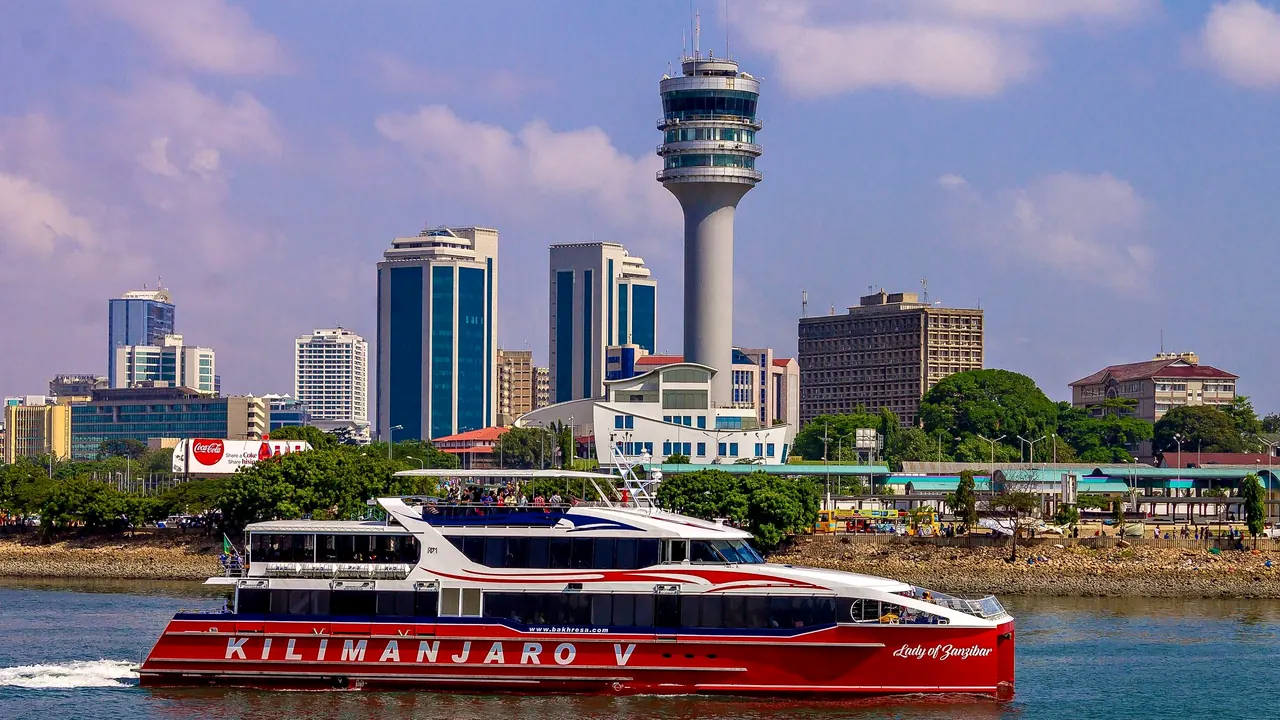
A ferry in the harbour below the city skyline
- Affordable cities66
- Beaches62
- Food & drink52
Photo: Dicksonpicha, CC BY-SA 4.0, cropped
Match
41
Every category weighted equally
- Beach & sun45
- Culture & arts39
- Food & nightlife42
- Family trip43
- Outdoors44
- Relax & unwind42
- Shopping & style40
- On a budget44
Dar es Salaam in twelve categories
Our verdict on each, scored 0 to 100 against the same fixed benchmark cities, so a score means the same thing on every page.
Beaches & swimming. Scores 62 out of 100.
Food & drink. Scores 52 out of 100.
Culture & sights. Scores 30 out of 100.
Nightlife. Scores 44 out of 100.
Nature & outdoors. Scores 42 out of 100.
Day trips. Scores 50 out of 100.
Good for families. Scores 30 out of 100.
Getting around. Scores 28 out of 100.
Shopping & style. Scores 40 out of 100.
Affordability. Scores 66 out of 100.
Live music & performing arts. Scores 28 out of 100.
Wellness & relaxation. Scores 25 out of 100.
Dar es Salaam category by category
Beaches & swimming
62The Indian Ocean here is warm all year, usually 26°C to 29°C, but the city's own shoreline is not where you swim. Coco Beach on the Msasani Peninsula is a local promenade more than a bathing beach, with seaweed, a big tidal range and water of uncertain quality. The good sand lies a short way out. Boats from the Msasani peninsula reach Bongoyo and Mbudya, small uninhabited islands with white beaches and clear water, in about half an hour.
South of the harbour, the Kigamboni coast has long, quieter beaches backed by palms and low-key resorts, reached by ferry or the bridge. North of the city, Kunduchi and the coast towards Bagamoyo have more resort beaches. Expect tides that pull the water far out at low tide, and plan swims around them.
Food & drink
52Eating in Dar es Salaam is Swahili coastal food with a strong Indian thread. On the street, look for mishkaki skewers grilled at dusk, chipsi mayai (a chip omelette), mandazi doughnuts, roasted cassava and sugarcane juice. Nyama choma, grilled goat or beef eaten with kachumbari salad and a cold beer, is the city's social meal. The Indian community, rooted in Upanga and the streets around Kariakoo, gives the city good biryani, bhajia and sweet shops.
The Kivukoni fish market by the harbour, where the morning catch is auctioned and fried on the spot, is worth a visit. Coconut-based curries, octopus and grilled fish turn up across the city. Upmarket dining clusters in Masaki and Oyster Bay, competent but rarely distinctive.
Culture & sights
30Dar es Salaam is a working port city rather than a place of sights. The National Museum holds fossil hominid finds from Olduvai Gorge and galleries on Swahili and colonial history. The Village Museum, on the road north, gathers traditional houses from Tanzania's many ethnic groups. Near the harbour, a short walk takes in the German-era Azania Front Lutheran Church, St Joseph's Cathedral, the Askari Monument and a scatter of colonial administrative buildings. Kariakoo shows the commercial city at full intensity. A day or two covers it, and the deep history of the coast lies outside the city.
Nightlife
44Going out happens mostly at weekends and mostly by taxi. The expatriate and well-off crowd fills the bars and beach lounges of Masaki and Oyster Bay, while Sinza, Mwenge and Mikocheni have the local bars, open-air beer gardens with grilled meat and clubs playing bongo flava and Afrobeats until the early hours. Friday and Saturday nights run late. Midweek is quiet, the venues are spread out, and nobody walks between them after dark.
Nature & outdoors
42The best of the outdoors here is on the water. The islands of the marine reserve off the northern coast have coral and reef fish for snorkelling and diving, and dhow trips under sail are a calm way to see the coast and its mangroves. Kitesurfing works on the steady trade winds along the northern beaches. On land the surroundings are flat and spread with suburbs. The Pugu Hills forest reserve, about an hour inland, offers birdwatching and short walks. The great game parks are a flight or a long road journey away, so safaris are separate trips, not outings from the city.
Day trips
50Two outings carry the list. Zanzibar's Stone Town, a UNESCO-listed maze of coral-stone houses, carved doors and the old slave market, is about two hours by fast ferry, so a long day there is possible, though most visitors stay over. Bagamoyo, up the coast, was the end of the caravan route from the interior and a German colonial capital, with mission buildings, the old fort and the medieval Kaole ruins nearby. It is about two hours by road, depending on traffic. Beyond these two, the rest of what lies within reach is beaches and countryside.
Good for families
30Families usually treat Dar es Salaam as a stop on the way to the coast or a safari rather than a destination. Children enjoy boat trips to the islands and the resort pools along the Kigamboni and northern beaches, and there is a water park north of the city. Otherwise there is little made for them. The heat, heavy traffic and lack of pavements make getting about tiring. Malaria precautions and care with food and water matter here. Tanzanians are warm and welcoming towards children.
Getting around
28Dar es Salaam is a sprawling city where traffic sets the pace. A bus rapid transit network runs in dedicated lanes along the main arterial roads, with its corridors meeting in the centre and at Kariakoo. It is quick and orderly where it goes, but it mostly serves commuter routes rather than the places visitors stay and visit. Elsewhere the options are crowded daladala minibuses, bajaji tuk-tuks, motorbike taxis and ride-hailing cars, and most visitors rely on ride-hailing.
The old centre around the harbour is walkable, but pavements vanish quickly outside it, and Masaki, the beaches and the museums are far apart. Allow much more time than distances suggest, above all at rush hour.
Shopping & style
40Kariakoo is East Africa's great trading market, a dense grid of stalls and wholesalers selling everything from spices to electronics. It is intense, crowded and better for watching than buying. For crafts, the Mwenge carvers' market has rows of workshops making Makonde ebony carvings, and Tingatinga paintings, the bright, naïve style born in the city, are sold from studios and stalls. Kanga and kitenge cloth is easy to find and cheap to have tailored. Malls on the Msasani Peninsula cover the basics. There is no luxury or fashion scene to speak of.
Affordability
66Local life is cheap: street food, daladalas, bajaji rides and simple guesthouses cost very little. The prices a visitor tends to meet are higher. International-standard hotels, restaurants in Masaki and Oyster Bay, beach resorts and island boat trips are priced closer to Western levels, and imported goods and wine are expensive. Mid-range travellers who eat locally and use ride-hailing will find it good value. Those staying in resort-style comfort will not.
Live music & performing arts
28The city is the home of bongo flava, Tanzania's hip hop and pop, and of a long tradition of dance bands and taarab, the sung poetry of the Swahili coast. Live music turns up in bars and open-air venues at weekends, and cultural centres host concerts, traditional dance and small theatre productions. There is no opera, orchestra or established theatre district, and the programme for a visitor is irregular. Those keen on traditional performance do better at the arts college in Bagamoyo or at festivals on Zanzibar.
Wellness & relaxation
25There is no bathing or spa tradition in the city. Wellness means massages at hotel spas in Masaki and Oyster Bay, or a few slow days at a resort on the Kigamboni coast, where the pace drops to tides and shade. The city itself is hot, humid, congested and loud, and not a place to rest. Visitors who want a restorative break usually take it on Zanzibar or the quieter coast.
When should you go?
Pick a month to see what it is like. The climate figures are measured averages, not a forecast.
Dar es Salaam in July
Daytime high, °C
Rainfall in the month, mm
The whole year
Shaded against this city’s own year: the deepest cell is its best month for that figure and the palest its weakest.
Temperature and rainfall are climate normals, averaged over the years shown. Dar es Salaam: 1991-2020 normals, Dar Es Salaam Airport (10.5 km from centre).
Before you go
| Measure | Dar es Salaam |
|---|---|
| Official language | English, Swahili |
| Currency | Tanzanian Shilling (TZS) |
| Sockets | G230 V, 50 Hz |
| Driving side | Left |
| Time zone | UTC+3 |
| Emergency number | Police 112, ambulance 115, fire 114 |
| Elevation | 12 m |
| Main airport | Julius Nyerere International Airport (DAR)10 km from centre39 non-stop destinations |
| Public holidays this year | 13 days |
By the numbers
| Measure | Dar es Salaam |
|---|---|
| City population | 4,715,000 |
| People per km² | 3,385 |
| Museums within 10 km | 3 |
| UNESCO World Heritage sites within 50 km | 0 |
| Swim season, months above 21 °C | 12 months |
Compare Dar es Salaam with
Every comparison with a written verdict behind it.