Türkiye
Fethiye
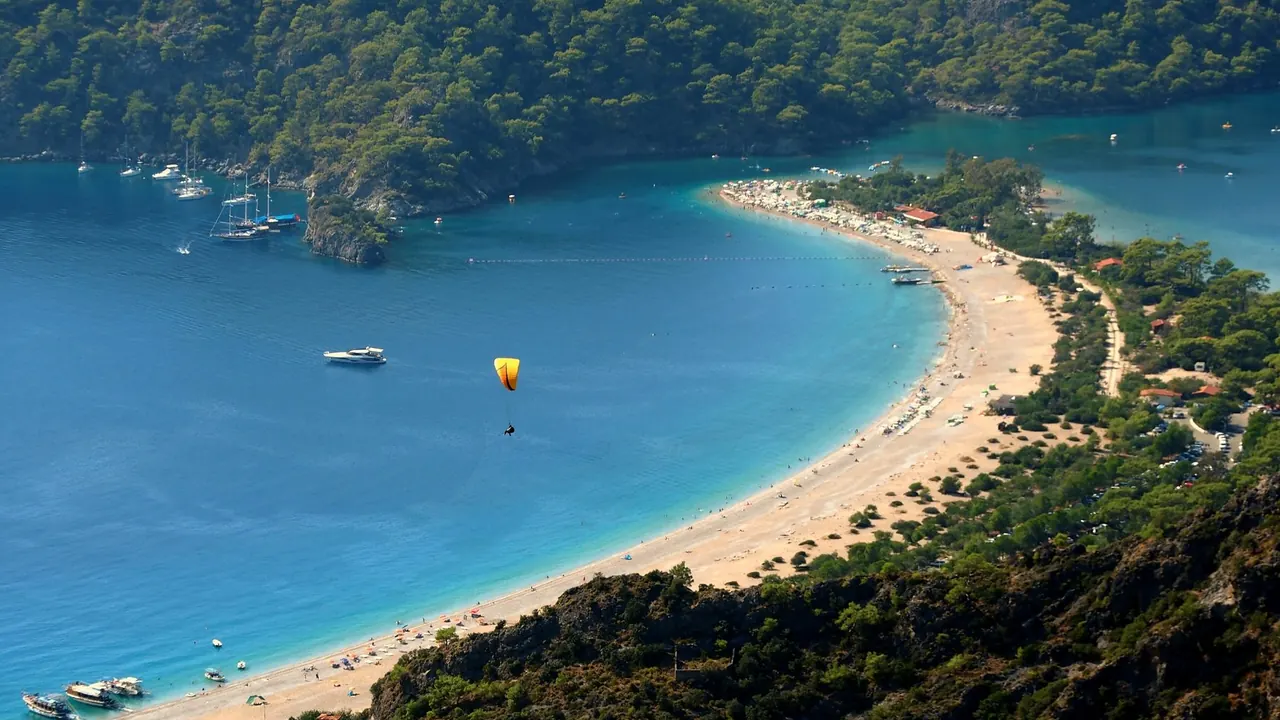
A paraglider over the beach at Ölüdeniz
- Nature & outdoors84
- Beaches82
- Day trips76
Match
54
Every category weighted equally
- Beach & sun60
- Culture & arts47
- Food & nightlife46
- Family trip60
- Outdoors63
- Relax & unwind58
- Shopping & style47
- On a budget55
Fethiye in twelve categories
Our verdict on each, scored 0 to 100 against the same fixed benchmark cities, so a score means the same thing on every page.
Beaches & swimming. Scores 82 out of 100.
Food & drink. Scores 45 out of 100.
Culture & sights. Scores 35 out of 100.
Nightlife. Scores 42 out of 100.
Nature & outdoors. Scores 84 out of 100.
Day trips. Scores 76 out of 100.
Good for families. Scores 60 out of 100.
Getting around. Scores 50 out of 100.
Shopping & style. Scores 38 out of 100.
Affordability. Scores 62 out of 100.
Live music & performing arts. Scores 15 out of 100.
Wellness & relaxation. Scores 55 out of 100.
Fethiye category by category
Beaches & swimming
82Beach life is the main reason most people come. The town's own shore at Calis is a long strip of coarse sand and pebble with a steady afternoon breeze and sunset views towards the islands, fine for a swim but not the highlight. The highlight is Oludeniz, about 25 minutes away by minibus, where a pine-backed lagoon of shallow turquoise water sits behind a long shingle spit, with the open bay beside it for proper swimming.
Beyond that the coast keeps giving: the sandy cove of Kidrak, the cliff-walled beach of Butterfly Valley reached by boat, the quieter shingle at Kabak, and the island coves visited on day cruises around the bay. The water is clear and reaches about 26°C in August. Swimming is comfortable from late May into October; in winter the beaches are empty and the sea too cool for most.
Food & drink
45Eating here is pleasant rather than memorable. The best-known ritual is the fish market in the town centre: you choose fish at the stalls, then a ring of restaurants around the square cooks it for you with meze and salads. The large weekly market by the canal is good for gozleme, olives, cheese, honey and seasonal fruit, and simple lokantas in the town serve stews and grills to locals.
Away from the centre, the resort strips at Hisaronu and Oludeniz lean heavily towards full English breakfasts, pizza and menus aimed at package visitors. Rakı with meze on the harbour is the evening drink to seek out. Food lovers will eat well if they stay in town, but the range and depth are limited.
Culture & sights
35The town sits on ancient Telmessos, and its most striking sight is above the streets: the Lycian rock tombs carved into the cliff face, the largest with a temple-style facade and columns, glowing at sunset. Down by the harbour lie the remains of a Roman theatre, and stone sarcophagi stand in the middle of ordinary streets. A small museum holds finds from Telmessos and nearby Lycian sites.
The abandoned Greek village of Kayakoy, a hillside of roofless stone houses and churches emptied in 1923, lies just over the ridge and is the most affecting sight close by. Beyond these, the town is modern and largely rebuilt after an earthquake in 1957, so the cultural interest is concentrated rather than broad.
Nightlife
42Going out splits into two moods. In the old Paspatur quarter in town, lanes strung with lights hold cocktail bars, meyhane-style tables and rooftop terraces over the harbour, a relaxed setting for a drink. Up the hill, Hisaronu has a long pedestrian strip of loud bars, karaoke and late clubs aimed squarely at package visitors, busy until the early hours in high summer, with Oludeniz's beachfront bars a calmer alternative.
It is a summer scene. From November to April much of Hisaronu shuts and evenings in town end early. Anyone choosing a destination for nightlife will find this a fun resort night out, not a scene with its own reputation.
Nature & outdoors
84Mountains run straight into the sea here. Babadag climbs to almost 1,970m directly behind Oludeniz, and paragliding off its slopes down to the lagoon is one of the best-known tandem flights anywhere. The Lycian Way, a long-distance trail along the old Lycian coast, begins at Ovacik and follows cliff paths past Faralya, Butterfly Valley and Kabak, with pine forest and steep drops to the water.
Inland, Saklikent Gorge is a narrow canyon where you wade upstream through icy water between high walls, about 45 minutes away. On the water there are gulet cruises around the islands of the bay, sea kayaking and diving in clear water. Spring and autumn are the seasons for walking; summer heat pushes activity to the early morning and the sea.
Day trips
76The coast around the town was the heartland of ancient Lycia, and there are ruins in every direction. Tlos sits on a hilltop acropolis about 40 minutes inland, and the cliff at Pinara is full of rock-cut tombs. Xanthos and the sanctuary of Letoon, which share a UNESCO listing, are about an hour south. Patara adds a vast ancient city behind a long beach backed by dunes. To the west, Dalyan is a riverside town where boats pass beneath temple tombs cut into the rock on their way to the ruins of Kaunos.
In season, a ferry from the harbour reaches Rhodes in about an hour and a half. That leaves most of a day for the walled medieval Old Town and the Street of the Knights, and since it means crossing into Greece you need a passport. Along the coast road to the south, whitewashed Kalkan and the harbour town of Kas are both under two hours away and good for a day of wandering and eating. Yachting Gocek is closer still. In winter the island crossing stops, but the Lycian sites are at their most pleasant to visit.
Good for families
60For a sun-and-sea vacation with young children it works well. The lagoon at Oludeniz is shallow, sheltered and warm, close to ideal for small swimmers, and many hotels around Hisaronu and Ovacik are built around pools and family rooms. Boat trips with swimming stops, a small water park and the novelty of minibuses keep older children busy, and Turkish waiters and shopkeepers fuss over children everywhere.
There is little else designed for them: no zoo, aquarium or science museum of note, and the ruins mean a lot of walking in the heat. July and August are very hot, so June and September suit families best. Teenagers may enjoy watching the paragliders and trying canyon wading at Saklikent.
Getting around
50The town centre, harbour and Paspatur quarter are compact and flat enough to walk, and a waterfront path runs much of the way round the bay. Shared minibuses called dolmus are the backbone of local travel, running regularly from town to Oludeniz, Hisaronu, Ovacik, Calis and Kayakoy, and water taxis cross from the harbour to Calis.
Further out it gets harder. Intercity buses from the bus station reach Dalyan, Kas and Kalkan, but sites such as Tlos, Pinara and Saklikent are awkward without a hire car or an organised tour. There is no rail line, and Dalaman airport is about 45 minutes by road.
Shopping & style
38Shopping is market and bazaar rather than boutiques. The weekly market by the canal in town is the best of it: a long covered sprawl of fruit, spices, honey, cotton towels and textiles alongside stalls of copy brands. The old Paspatur quarter has narrow lanes of carpet, leather, ceramics, lamps and Turkish delight shops, pleasant to browse though not cheap.
In Hisaronu and Oludeniz the shops are mostly beachwear, souvenirs and imitation designer goods. There are no fashion streets or department stores worth seeking out, so this suits someone wanting a few gifts and peshtemal towels, not a shopping trip.
Affordability
62Costs depend heavily on where you stay and eat. In the town itself, simple lokantas, market food, minibus fares and family-run guesthouses are good value, and the ancient sites charge modest entry. In Oludeniz and Hisaronu, prices follow the resort economy: beachfront hotels, seafront restaurants and sunbed hire cost noticeably more.
Activities add up quickly, with paragliding, boat cruises and diving the big extras, and alcohol is heavily taxed across the country. Staying in town and eating where locals eat keeps a stay inexpensive by European standards; a lagoon-side package in peak season is closer to ordinary Mediterranean resort prices.
Live music & performing arts
15Formal performing arts are scarce. The town has a modest cultural centre with occasional concerts and events, mostly in Turkish, and summer brings some open-air performances. More often, live music means a singer with a saz or a small band in a meyhane or harbour restaurant, and cover bands in the Hisaronu bars. Anyone wanting opera, theatre or serious concerts will not find a season here.
Wellness & relaxation
55There are two ways to unwind here. The traditional one is the hammam: a historic Ottoman bath in the Paspatur quarter offers the full ritual of hot marble, scrubbing and foam massage, and most larger hotels have their own hammam and spa. The quieter one lies down the coast, where small retreats on the terraced slopes above Kabak and Faralya run yoga weeks and simple, slow stays with sea views and little else to do.
The town itself is easy-going, with a harbourside promenade made for slow evening walks. Spring and autumn are the calmest seasons; in high summer Hisaronu and Oludeniz are loud and busy, so those after rest should stay out of the resort strips.
When should you go?
Pick a month to see what it is like. The climate figures are measured averages, not a forecast.
Fethiye in July
Daytime high, °C
Rainfall in the month, mm
The whole year
Shaded against this city’s own year: the deepest cell is its best month for that figure and the palest its weakest.
Where the figures come from
Fethiye's temperatures are measured 31 km from the centre, at Dalaman.
Fethiye has no rain gauge within 25 km of the centre, so its rainfall comes from a gridded climate dataset read at the city rather than from a gauge further away.
Temperature and rainfall are climate normals, averaged over the years shown. Fethiye: 2000-2020 (rainfall 1991-2020) normals, Dalaman (30.8 km from centre).
Before you go
| Measure | Fethiye |
|---|---|
| Official language | Turkish |
| Currency | Turkish Lira (TRY) |
| Sockets | CF230 V, 50 Hz |
| Driving side | Right |
| Time zone | UTC+3 |
| Emergency number | 112 |
| Elevation | 0 m |
| Main airport | Dalaman International Airport (DLM)30 km from centre61 non-stop destinations |
| Public holidays this year | 14 days |
By the numbers
| Measure | Fethiye |
|---|---|
| City population | 182,200 |
| Museums within 10 km | 1 |
| UNESCO World Heritage sites within 50 km | 1 |
| Swim season, months above 21 °C | 6 months |
Compare Fethiye with
Every comparison with a written verdict behind it.