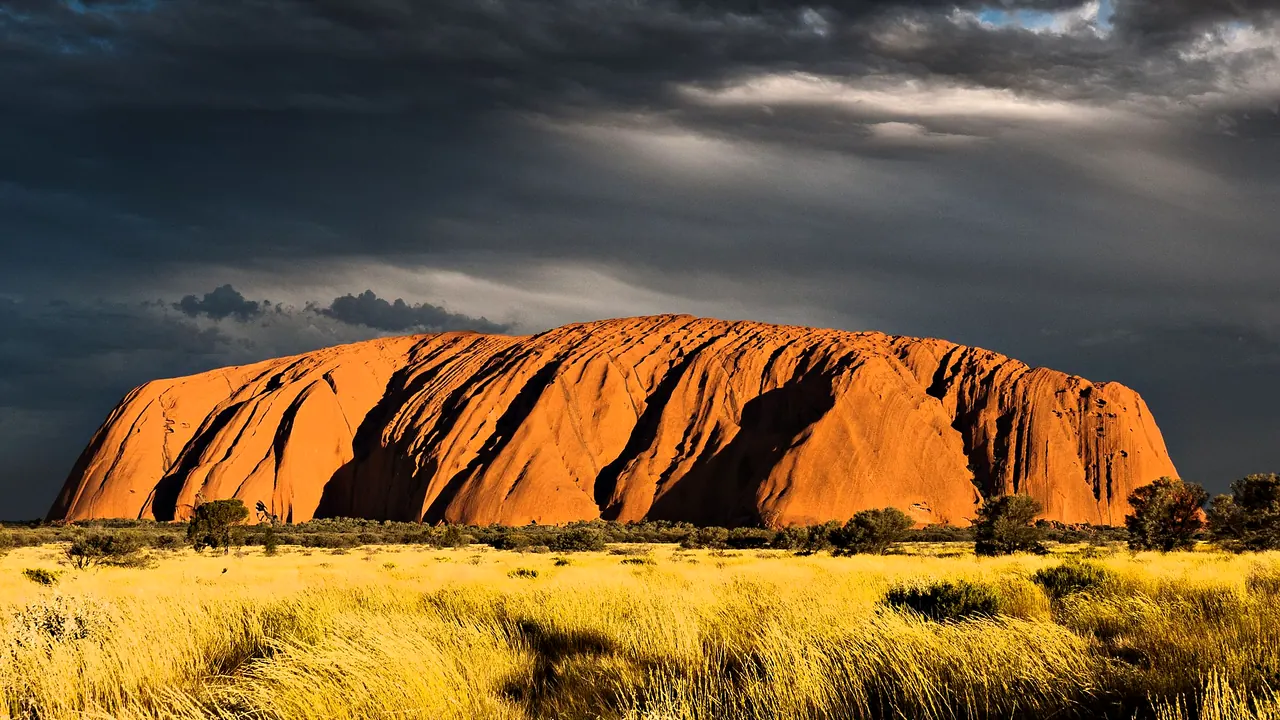
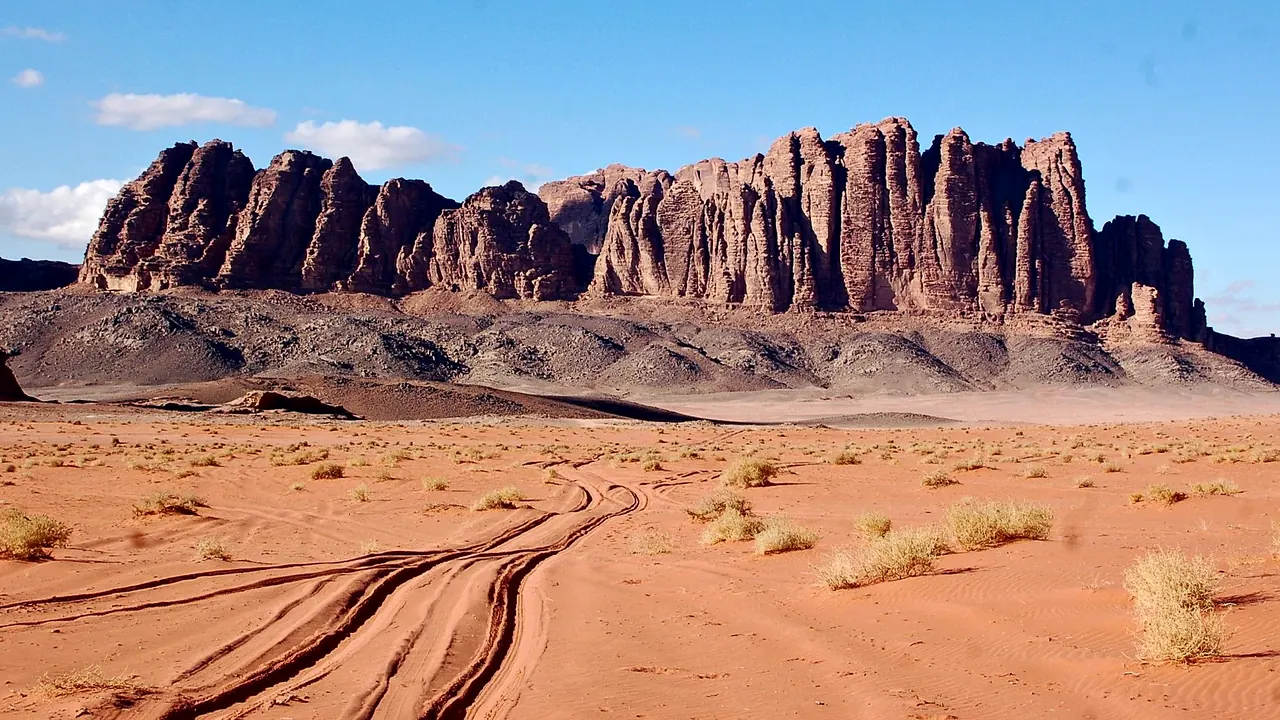
Photos: Uluru by Weyf, CC0; Wadi Rum by twiga-swala, CC BY-SA 2.0, cropped.
Uluru or Wadi Rum?
Our verdict in twelve categories, each scored against the same fixed benchmark cities, and the climate month by month, so you can choose for your trip.
Choose Uluru for
- getting around
- culture and sights
- shopping
Uluru suits travellers who want one great landmark explained properly. The rock and Kata Tjuta come with the living law and stories of the Anangu, told at the Cultural Centre and on ranger walks, and you can buy art straight from the communities that made it. It is also easy to reach, with an airport beside the resort and quiet sealed roads to the park. What you give up is money and range. Everything belongs to one remote resort, and once you have seen the park there is nowhere else to go.
Choose Wadi Rum for
- day trips
- prices
- beaches
Wadi Rum is the better choice if you want a desert to roam rather than a monument to visit, and it costs far less. Its valleys, rock bridges and cliffs reward camel treks, climbing and nights in a Bedouin camp. It also fits into a wider trip, with Petra under two hours north and the Red Sea at Aqaba an hour south. The trade-off is that every outing inside the protected area is a booked 4x4 tour, and the ancient carvings are short stops rather than a culture you can study in depth.
Scoreboard
Twelve categories on one fixed scale from 0 to 100. The shaded stretch is the gap between the two.
Your match
Pick a travel style or drag the sliders, and both match scores follow your weighting.
Wins on getting around and culture and sights with your weighting.
Wins on day trips and prices with your weighting.
What matters to you?
Category by category
What the scores mean for a trip.
Beaches & swimming
Neither desert has anywhere to swim in the sand itself, but Wadi Rum has the sea within an easy hour. Aqaba's stretch of the Red Sea is warm for much of the year, and its coral reefs start right off the shore, so many visitors end their Jordan trip there.
Uluru sits in the middle of the continent, about 700km from the nearest coast, and the waterholes at the rock are sacred. Apart from the pools at Yulara, swimming means flying somewhere else.
Food & drink
Both are places where you eat what your base serves, and neither will hold your interest for long. At Uluru that means the resort's restaurants, a supermarket and a communal barbecue, with native flavours such as wattleseed, quandong and lemon myrtle, kangaroo on the grill, and wine with dinner in the dunes at sunset.
Wadi Rum's meals come with the camp: a shared buffet built around zarb, lamb and chicken lifted from a pit under the sand, with sage tea poured all day. It feels more like eating in someone's home, but alcohol is scarce or absent.
Culture & sights
Uluru gives you much more to understand. The rock is at the heart of Anangu Tjukurpa, a body of law and creation stories that is still lived today. Rangers and the Cultural Centre, built in the shape of two ancestral snakes, explain it as you go, and the base walk passes rock art in the shelters at Kulpi Mutitjulu and Kantju Gorge. Two or three days of looking closely are well spent.
Wadi Rum's heritage was left by people passing through. You will see carvings of camels and hunters and early Arabic inscriptions in Khazali Canyon and at Anfashieh, a small ruined Nabataean temple, and the spring linked to T.E. Lawrence. All of them are worth the stop. But they come as brief halts on a jeep tour, and there are no museums or historic buildings around them to fill out the story.
Nightlife
Neither has nightlife. Both send people to bed early ahead of sunrise. At Uluru you can at least have a drink in a hotel bar or the outback-style bar with its pool table. In a Wadi Rum camp the evening is tea around the fire, usually without alcohol, and a walk beyond the lights to see the stars.
Nature & outdoors
Both are among the great desert landscapes, but they work in different ways. Uluru is about two formations: the rock itself, with its 10km base walk past caves and waterholes, and the domes of Kata Tjuta, where the Valley of the Winds walk winds between them. The trails are marked and you can walk them on your own, timed around sunrise and sunset.
Wadi Rum is a whole terrain rather than a single sight. Its sand valleys, sheer sandstone and granite walls, rock bridges such as Burdah and Um Fruth, and high dunes give you more to explore. It suits multi-day camel treks, serious traditional climbing and a summit attempt on Jebel Umm ad Dami, and the Jordan Trail crosses it on the way to the sea.
Day trips
Wadi Rum is far better placed. Petra is under two hours north and can be combined with Little Petra and Wadi Musa in a long day. Aqaba's fort and seafront are an hour south, and Shobak's Crusader castle is within reach if you start early.
From Uluru the only outing is Kata Tjuta, inside the same park. Kings Canyon is three and a half hours' drive each way, and Alice Springs, about 450km away, is a separate stop rather than a day out.
Good for families
Both work for school-age children, but for different reasons. Uluru is the gentler option: a small, safe resort with pools, a free shuttle, ranger talks and astronomy evenings, best between May and September.
Wadi Rum gives children more adventure, with a night in a Bedouin camp, camel rides and dunes to run down. The cost is long hours in an open 4x4 and very little shade, toilets or medical help, so it is better kept to a night or two in spring or autumn.
Getting around
Uluru is easier on your own. Ayers Rock airport sits beside Yulara with direct flights, a free shuttle links the resort, and a hire car on quiet sealed roads lets you reach the rock and Kata Tjuta at whatever hour you like.
Wadi Rum is a simple drive from Aqaba or Petra on good highways, but the sights inside the protected area lie across soft sand. A Bedouin driver in a 4x4 takes you everywhere, so every outing has to be arranged in advance.
Shopping & style
Uluru has one thing genuinely worth buying: Aboriginal art. Paintings by artists from nearby communities and carved punu are sold at the Cultural Centre and Yulara galleries, and buying from community-run outlets means the money reaches the artists.
Wadi Rum offers only keffiyeh scarves, bottles of coloured sand, silver jewellery and coffee pots at village shops and tour stops. Jordan's better crafts are found in Amman or Aqaba.
Affordability
This is where the two differ most sharply. At Uluru one resort owns every bed, and rooms, meals, tours and flights are all priced for a place where everything comes in by truck. The campground, the lodge dormitories, supermarket cooking and driving yourself reduce the bill, but only so far.
In Wadi Rum a basic camp with meals included is inexpensive and park entry costs little. Jeep tours and guides are the main extra cost. You can spend heavily in a glass-domed luxury camp, but you never have to.
Live music & performing arts
Neither has a stage of any kind, only small performances put on for guests. At Uluru these are short sets of Indigenous dance and didgeridoo at the resort. In Wadi Rum it is camp hosts playing the oud or the one-stringed rababa and singing Bedouin songs by the fire after dinner, which feels more informal.
Wellness & relaxation
Both offer stillness more than treatments. Uluru has the more comfortable version: a proper spa at the top hotel using native botanicals, and pools to wait out the heat, though early tour alarms break up lazy days.
Wadi Rum has only the odd massage tent, so anyone wanting real pampering goes to the Dead Sea or Aqaba. What it gives you instead is deeper isolation, with no traffic, often no phone signal and long evenings watching the cliffs change colour.
When should you go?
Pick your month. The climate figures are measured averages, not a forecast.
Uluru in July
Wadi Rum in July
Daytime high, °C
Rainfall in the month, mm
Where the figures come from
Wadi Rum's temperatures are measured 75 km from the centre, at Ma'An.
Wadi Rum has no rain gauge within 25 km of the centre, so its rainfall comes from a gridded climate dataset read at the destination rather than from a gauge further away.
Temperature and rainfall are climate normals, averaged over the years shown. Uluru: 1991-2020 normals, Yulara (4.7 km from centre). Wadi Rum: 1991-2020 normals, Ma'An (74.5 km from centre).
The two deserts have opposite seasons, which makes the choice easier. Uluru is at its best through the southern winter, from May to September, when days are mild, around 20°C in June, and nights can fall close to freezing. From November to March the heat is severe, with highs near 38°C in January. The longer trails close by late morning, and the summer storms bring most of the little rain the region gets.
Wadi Rum peaks in its spring and autumn, March to May and October to November, when walking and camping are comfortable. Winter days are cool, about 14°C in January, with cold nights. From June to September highs reach 35°C under almost constant sun, and rain is practically absent all year. Summer there is a time for the Red Sea at Aqaba, where the water is around 28°C in August.
Which traveller are you?
For a culture and arts trip, Uluru is the stronger choice. The Cultural Centre, ranger-led walks and the rock art at Kulpi Mutitjulu explain a living Aboriginal culture, and you can buy canvases and punu from community-run outlets.
On a trip on a tight budget, Wadi Rum is far kinder. A simple Bedouin camp with dinner and breakfast included costs little and entry is cheap. At Uluru one remote resort sets every price, so even the campground and self-catering are expensive.
For a beach and sun trip, Wadi Rum wins easily, because Aqaba is an hour away and has warm Red Sea water and reefs you can snorkel from the shore. Uluru is about 700km from any coast, so the hotel pool is all you get.
Before you go
| Measure | Uluru | Wadi Rum |
|---|---|---|
| Official language | English | Arabic |
| Currency | Australian Dollar (AUD) | Jordanian Dinar (JOD) |
| Sockets | I230 V, 50 Hz | BCFGJ230 V, 50 Hz |
| Driving side | Left | Right |
| Time zone | UTC+9:30 | UTC+3 |
| Emergency number | 000 | 911 |
| Main airport | Ayers Rock Connellan Airport (AYQ)3 non-stop destinations | King Hussein International Airport (AQJ)5 non-stop destinations |
| Public holidays this year | 12 days | - |
By the numbers
| Measure | Uluru | Wadi Rum |
|---|---|---|
| Swim season, months above 21 °C | - | 12 months |
Where else could you go?
Every comparison below shares a destination with this one, so you can follow Uluru or Wadi Rum somewhere new.