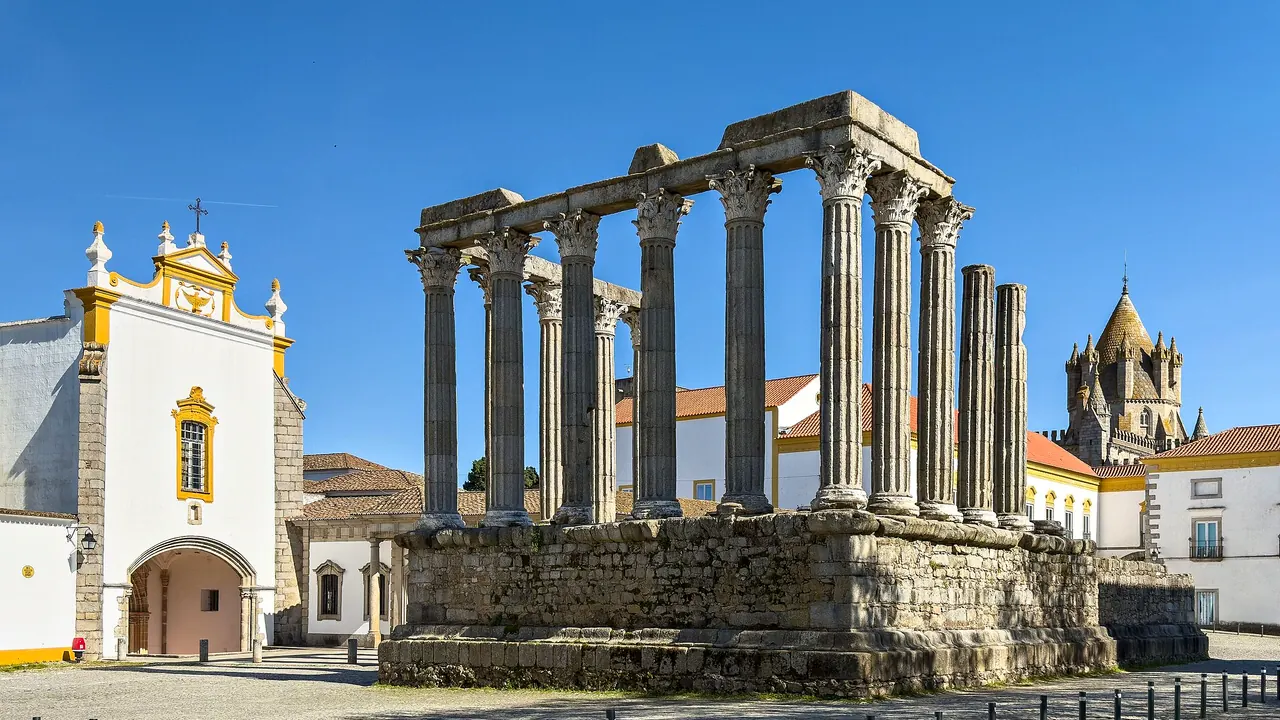
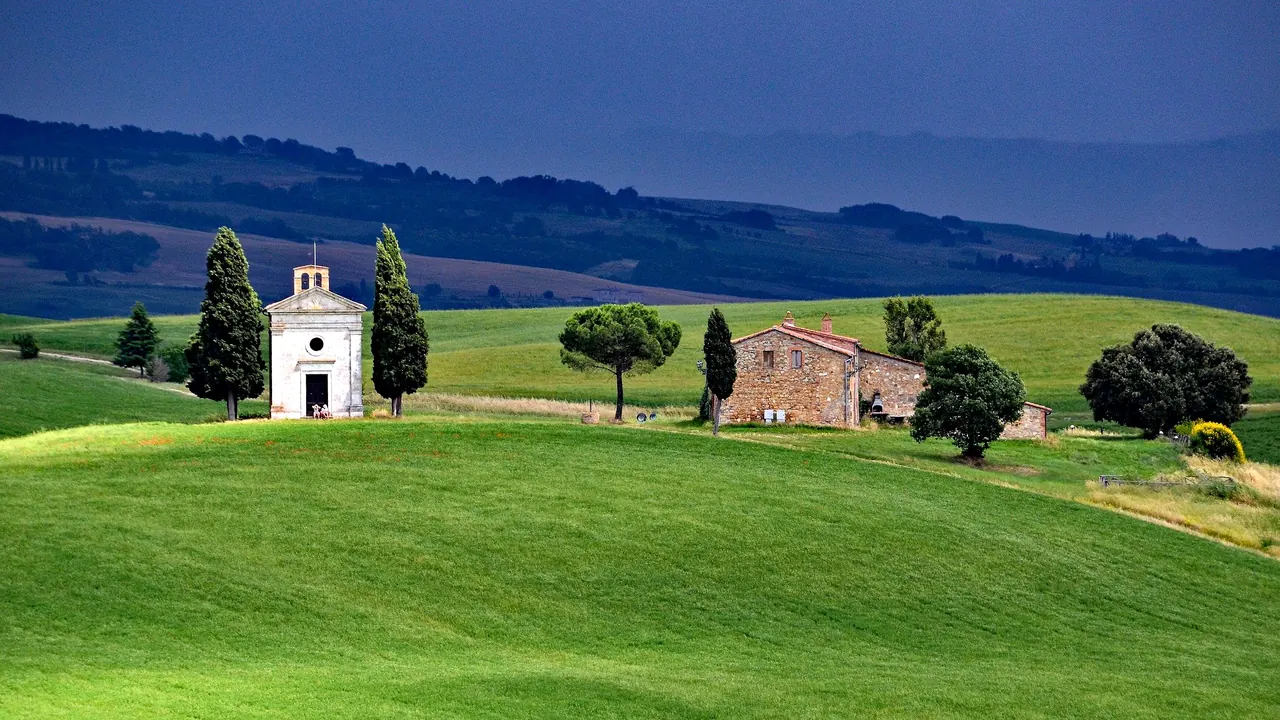
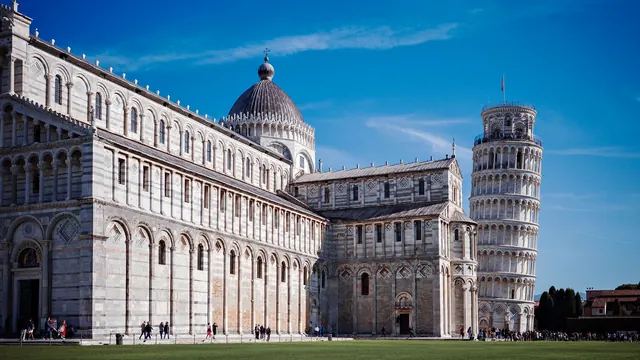
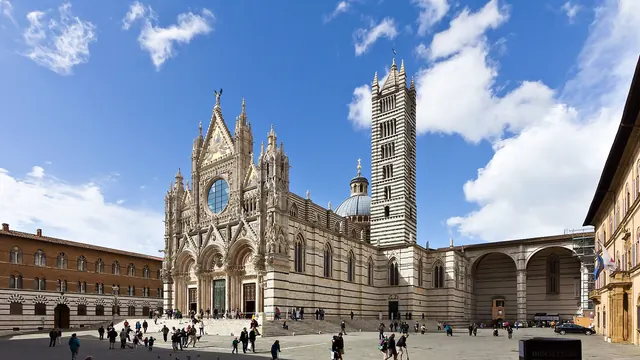
Photos: Alentejo by Kent Wang, CC BY 4.0, cropped; Tuscany by Hervé Simon, CC BY-SA 2.0, cropped.
Alentejo or Tuscany?
Our verdict in twelve categories, each scored against the same fixed benchmark cities, and the climate month by month, so you can choose for your trip.
Choose Alentejo for
- prices
Pick the Alentejo if you want space, quiet and a smaller bill. Its great asset is emptiness: dune beaches and cliff coves with room to spare even in August, whitewashed hill towns, wine estates and long lunches in village tascas, all costing noticeably less than central Italy. It suits a slow driving trip from two bases with few fixed plans. You give up nightlife, great museums and much of a stage programme.
Choose Tuscany for
- shopping
- wellness
- live music and the arts
Tuscany is the richer trip on almost every other count. Florence, Siena and Pisa show the Renaissance at full strength, there are more outings than one stay can hold, the food and wine go deeper, and hot springs such as Saturnia and Bagno Vignoni make it a far better place to unwind. In return you get heavy crowds in Florence and a much higher bill in season, so it rewards travellers who want a full itinerary and will pay for it.
Scoreboard
Twelve categories on one fixed scale from 0 to 100. The shaded stretch is the gap between the two.
Your match
Pick a travel style or drag the sliders, and both match scores follow your weighting.
Wins on prices with your weighting.
Wins on shopping and wellness with your weighting.
What matters to you?
Category by category
What the scores mean for a trip.
Beaches & swimming
Tuscany is the better place to swim. In August its sea reaches about 24°C, against barely 19°C off the Alentejo, and it has the clear bays of Elba, the sheltered Cala Violina and shallow lifeguarded sand in the Maremma and Versilia.
Where the Alentejo wins is space. The dune beaches of Comporta and Melides and the coves below the schist cliffs at Zambujeira stay quiet when Versilia is packed with rows of umbrellas. The Atlantic swell means calm swims are mostly found in the Mira estuary or at the Alqueva river beaches.
Food & drink
Both regions cook rural food built on bread and olive oil, and neither offers much beyond its own cuisine. The Alentejo's version has a lot of character: acorn-fed black pork, migas, coriander-scented dogfish soup, Serpa cheese and generous reds from Reguengos and Vidigueira, some fermented in clay amphorae.
Tuscany goes deeper and wider. Florence has lampredotto carts, the San Lorenzo and Sant'Ambrogio markets and Oltrarno trattorias. Beyond the city you can follow Chianti, Brunello, Vino Nobile and Bolgheri from cellar to cellar, with pecorino in Pienza and white truffles in San Miniato as further reasons to plan a route around eating.
Culture & sights
The Alentejo has real treasures: Évora's Roman temple and Chapel of Bones, the Almendres standing stones, the star-shaped walls of Elvas and the hilltop villages of Marvão and Monsaraz. They are spread out, though, and seeing them takes a lot of driving.
Tuscany is a cradle of Western art. Florence packs the Uffizi, the Accademia, the Bargello and Brunelleschi's dome into one walkable centre, with Siena's Campo, Pisa's marble square, San Gimignano and Lucca all close by. The trade-off is the heavy summer crowds in Florence, which the Alentejo never has.
Nightlife
Neither region is built for late nights, but Tuscany has far more going on. In Florence students and visitors fill the steps of Santo Spirito and the Oltrarno wine bars, and in summer the Versilia beach clubs and dance halls run until dawn.
An Alentejo evening is dinner, a bottle of red and bed. The only exceptions are Évora's student bars in term time and the summer beach bars of Zambujeira and Milfontes.
Nature & outdoors
Tuscany has the more varied outdoors. It offers ridge hikes in the Apuan Alps at nearly 2,000m, beech forests in the Casentino, wild cattle in the Maremma park, and diving and sailing around Elba, as well as the cycling country of Chianti and the Val d'Orcia.
The Alentejo's strength is the wild Atlantic edge. The Fishermen's Trail runs above sea stacks with storks' nests, the surf is dependable, and kayaking on the Mira, the great bustards of Castro Verde and the dark skies over Alqueva are hard to find in Tuscany.
Day trips
Tuscany is hard to beat for outings. From one base you can reach Siena, Lucca, Pisa, Volterra or a Montalcino and Pienza wine loop, and Bologna, Assisi, Orvieto and the Cinque Terre are all within easy reach.
From Évora the Alentejo has a good week of small towns: the marble triangle of Estremoz, Borba and Vila Viçosa, the rug makers of Arraiolos and the potters of São Pedro do Corval. Many of these towns feel alike, and the big extras, Roman Mérida in Spain and Lisbon, are well over an hour away.
Good for families
Both work best as a farm stay with a pool, and children are welcome at late dinners in either country. Tuscany gives more to do. It has shallow sandy beaches with lidos and playgrounds, the Pinocchio park at Collodi, the leaning tower to climb and bikes on Lucca's walls.
The Alentejo offers calm and safe villages but few attractions beyond the safari park near Santiago do Cacém, and the drives between places are long. With small children, stick to the Mira estuary or the Alqueva river beaches rather than the open Atlantic.
Getting around
In the countryside you need a car in both regions, but Tuscany gives you an alternative. The regional line linking Florence, Pisa, Lucca and Viareggio makes a car-free trip easy, and Florence itself is best on foot. Expect winding roads, parking outside the old town walls and ferries to Elba to plan.
In the Alentejo a car is practically unavoidable. The roads are quiet and easy, but the trains reach only Évora and Beja, and with about two hours between the coast and the interior most visitors split the stay between two bases.
Shopping & style
Both regions sell craft, but Tuscany has far more of it and some luxury besides. Florence has leather workshops around Santa Croce, goldsmiths on the Ponte Vecchio, marbled paper in Oltrarno and the designer houses of Via de' Tornabuoni, and each smaller town has its own speciality, from Volterra alabaster to Pietrasanta marble.
The Alentejo's shopping is rugs from Arraiolos, clay figurines and the Saturday market in Estremoz, pottery from São Pedro do Corval, and cork, cheese and wine bought where they are made. It makes a good souvenir hunt but not a shopping trip.
Affordability
The Alentejo is clearly the cheaper vacation. Inland guesthouses, generous village set lunches and estate wine stretch a budget a long way. The exception is the coast in August, where Comporta and Melides draw a wealthy crowd.
Tuscany is expensive in season, from central Florence hotels to Chianti villas and the beach clubs of Forte dei Marmi. Trattoria meals and cellar-door wine help, as do bases in Lucca, Arezzo or the Maremma. Both regions add the cost of a hire car.
Live music & performing arts
Tuscany gives you far more on stage. Florence has the Maggio Musicale with its own opera house, Puccini's music is played year-round in Lucca and staged outdoors at Torre del Lago in summer, and Siena's Accademia Chigiana fills palaces with concerts.
The Alentejo's treasure is cante alentejano, the slow polyphonic singing heard in taverns and at feast days around Serpa, but you only hear it if you are lucky with the timing. Apart from Évora's modest theatre and the summer classical festival at Marvão, there is little on stage.
Wellness & relaxation
Tuscany sits on hot springs and uses them. There is the grand spa town of Montecatini, the warm terraced pools at Saturnia open to anyone, the steaming medieval square of Bagno Vignoni and the white limestone pools of Bagni San Filippo. Add a quiet farmhouse in the Val d'Orcia and it is a superb place to rest.
The Alentejo restores you in a different way, through silence, long lunches and very dark nights on a wine or olive estate. Its old springs at Cabeço de Vide and Moura are modest, and most spa treatments are found in hotels.
When should you go?
Pick your month. The climate figures are measured averages, not a forecast.
Alentejo in July
Tuscany in July
Daytime high, °C
Rainfall in the month, mm
Where the figures come from
Tuscany has no rain gauge within 25 km of the centre, so its rainfall comes from a gridded climate dataset read at the destination rather than from a gauge further away.
Tuscany's sunshine is measured 71 km from the centre, at Pisa / S. Giusto.
Temperature and rainfall are climate normals, averaged over the years shown. Alentejo: 1991-2020 normals, Evora / C. Coord (4.3 km from centre). Tuscany: 1995-2020 (sunshine 1991-2020, rainfall 1991-2020) normals, Firenze / Peretola (5.6 km from centre).
In the Alentejo, summer is long, hot and almost completely dry. Inland, afternoons reach about 33°C in July and August and July sees barely 2mm of rain, so walking Évora's lanes at midday is hard work, while the coast has swimming weather from June to September. The best walking months are April and May, when the plains are green, and late September, before the rain sets in during October and stays through the winter. Winter days there are a few degrees milder and sunnier than in Tuscany.
Tuscany's summer is just as hot and a little less dry, with the odd storm, and the beach season is the same June to September. Its autumn rain starts a month earlier, though. September already brings about 74mm, more than any month from January to August, and the rain builds to around 124mm in November, the wettest month of the year. That makes spring the surer time for the hill towns and the countryside: April, May or early June, before the heat sets in.
Which traveller are you?
On a trip on a tight budget, the Alentejo lets you stay a week on what Tuscany would spend in a few days. Make lunch the main meal, order the local red without studying the list and stay inland rather than on the August coast.
For a culture and arts trip, Tuscany can fill every day: galleries in the morning, a train to Pisa or Lucca in the afternoon, a concert or opera at night. In the Alentejo, Évora rewards a day or two, but the rest of the trip is long drives between hill towns.
On a relaxing and wellness trip, Tuscany lets you combine rest with real bathing, a morning in open-air thermal pools and an afternoon by a farmhouse pool. The Alentejo suits people who simply want to stop, but there you rest by slowing down, not by taking the waters.
Before you go
| Measure | Alentejo | Tuscany |
|---|---|---|
| Official language | Portuguese | Italian |
| Currency | Euro (EUR) | Euro (EUR) |
| Sockets | CF230 V, 50 Hz | CFL230 V, 50 Hz |
| Driving side | Right | Right |
| Time zone | UTC, UTC+1 in summer | UTC+1, UTC+2 in summer |
| Emergency number | 112 | 112 |
| Main airport | Lisbon Humberto Delgado Airport (LIS)157 non-stop destinations | Florence Airport, Peretola (FLR)46 non-stop destinations |
| Public holidays this year | 14 days | 13 days |
By the numbers
| Measure | Alentejo | Tuscany |
|---|---|---|
| Population | 705,478 | 3,729,641 |
Where else could you go?
Every comparison below shares a destination with this one, so you can follow Alentejo or Tuscany somewhere new.
- Umbriavs Tuscany
- Elbavs Tuscany
- Cinque Terrevs Tuscany
- Algarvevs Alentejo
- Lake Gardavs Tuscany
- Andalusiavs Alentejo