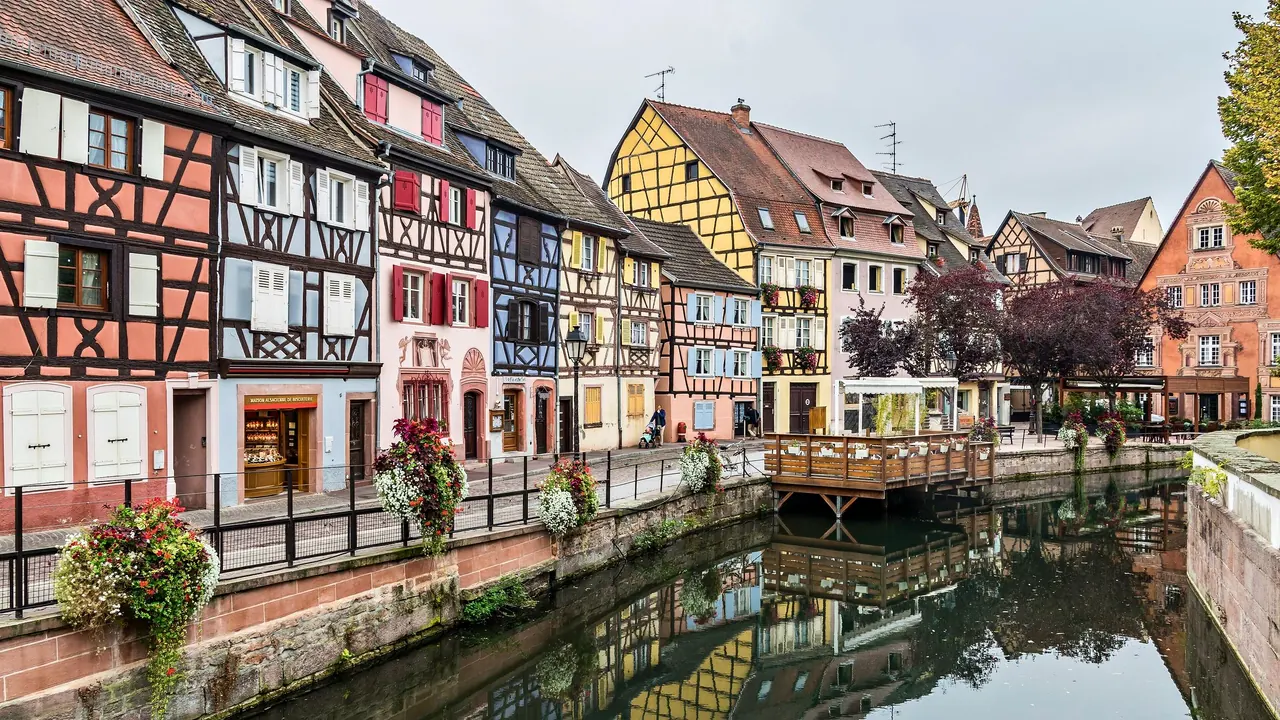
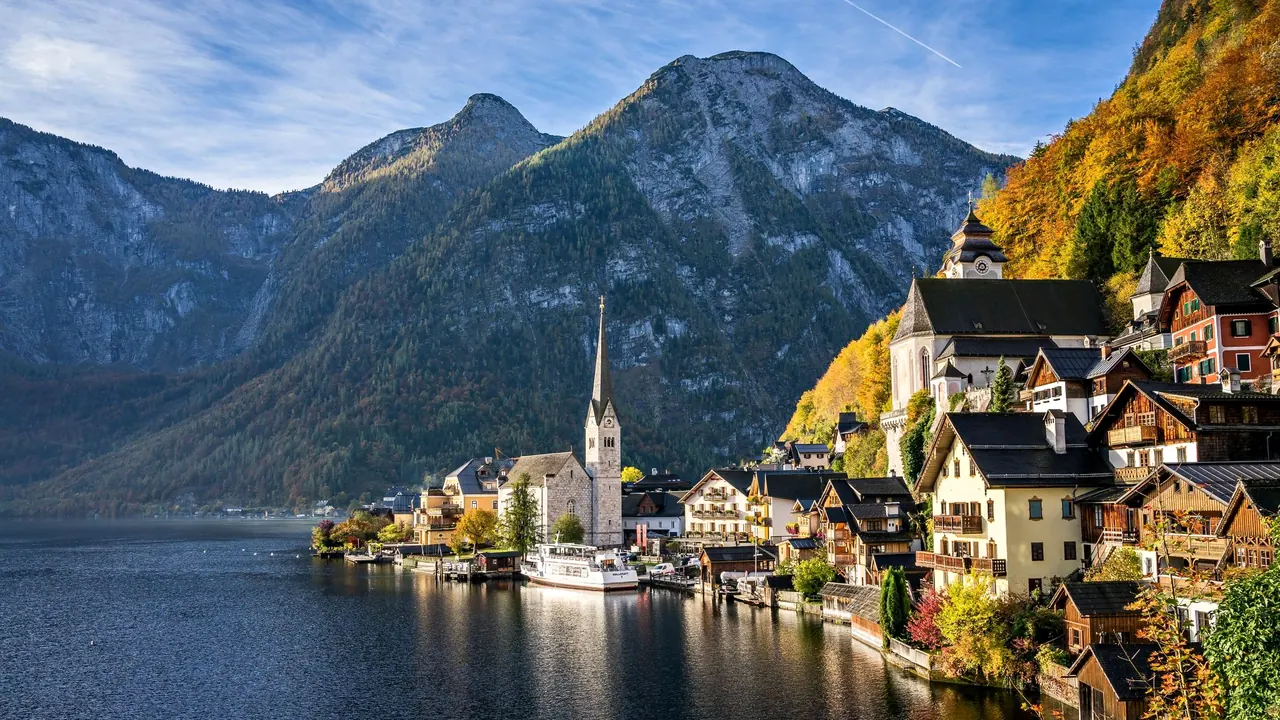
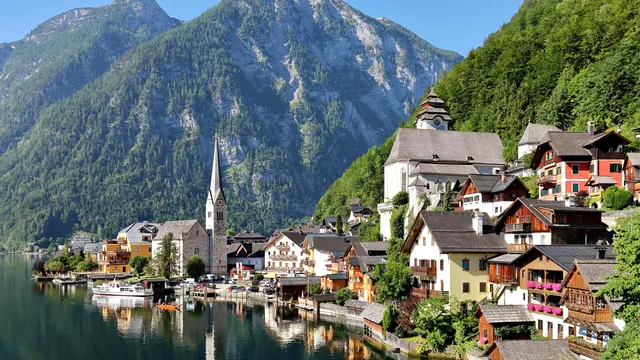
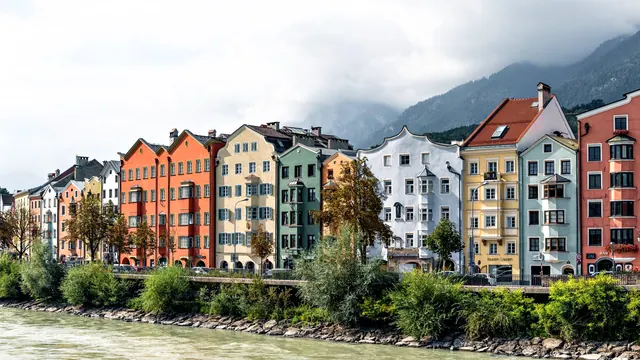
Photos: Alsace by Krzysztof Golik, CC BY-SA 4.0, cropped; Austrian Alps by Leonhard Niederwimmer, Pexels License.
Alsace or Austrian Alps?
Our verdict in twelve categories, each scored against the same fixed benchmark cities, and the climate month by month, so you can choose for your trip.
Choose Alsace for
- food and drink
- prices
- culture and sights
Alsace suits a slower trip built around the table and the old towns. You get winstub dinners, tastings in growers' cellars along the Route des Vins, Strasbourg's cathedral and Colmar's Isenheim Altarpiece, all within a short train ride or drive of each other. Choose it if you love food, want to pair a city with walks between half-timbered villages, or want a lighter bill. You give up proper swimming, big mountains and late nights.
Choose Austrian Alps for
- beaches
- nature and the outdoors
- wellness
The Austrian Alps are the choice when the landscape is the point. Glaciers in the Hohe Tauern, trails and staffed huts above Innsbruck and some of Europe's largest ski areas set the tone. Thermal baths at Bad Gastein, warm Carinthian lakes in summer, the Salzburg Festival and loud winter après-ski add to it. In return the cooking is narrower, the sights are spread across valleys and the costs run higher.
Scoreboard
Twelve categories on one fixed scale from 0 to 100. The shaded stretch is the gap between the two.
Your match
Pick a travel style or drag the sliders, and both match scores follow your weighting.
Wins on food and drink and prices with your weighting.
Wins on beaches and nature and the outdoors with your weighting.
What matters to you?
Category by category
What the scores mean for a trip.
Beaches & swimming
Neither has a sea, and Alsace offers only a cooling afternoon. Its flooded gravel pits on the Rhine plain have small sandy shores and lifeguards in high summer, and there are some cool reservoirs up in the Vosges. They are good for an hour out of the heat, not a reason to come.
The Austrian Alps can carry a real swimming vacation. In Carinthia, lakes such as the Wörthersee and Millstätter See warm up properly in July and August, and towns like Velden organise the season around lidos with lawns, piers and diving boards. Those lidos are grass and gravel rather than sand.
Food & drink
Alsace eats far better. Its winstub cooking of choucroute, baeckeoffe and wood-fired flammekueche has real depth. Serious restaurants turn up in the wine villages as well as in Strasbourg, and you can taste Riesling and crémant at the growers' own cellars along the 170km wine road.
Alpine food is hearty and at its best on a hut terrace after a hike, with Kaiserschmarrn, Käsespätzle, Speck and a pine schnapps. Salzburg, Kitzbühel and the Arlberg have fine-dining kitchens. Day to day, though, the ski-village menus repeat themselves, and the range stays narrow.
Culture & sights
Alsace has the slight edge, mostly because its heritage sits close together. Strasbourg's cathedral and UNESCO-listed island centre, Colmar's Unterlinden Museum and the walled wine villages are all a short hop apart. Mulhouse adds its national car and railway museums.
The Austrian Alps have fine set pieces in Salzburg's baroque old town and fortress, Innsbruck's Hofburg and Hofkirche, and the salt-mining landscape around Hallstatt. These are separated by valleys and passes, though, so seeing them means more time on the road.
Nightlife
In winter the Austrian Alps offer by far the bigger night. In Ischgl, St Anton and Saalbach, après-ski starts in the slopeside huts in the late afternoon and carries on in village clubs until late. Out of season it fades to Innsbruck's student bars and quiet evenings in Salzburg after a concert.
Alsace is smaller but steadier through the year. Strasbourg's Krutenau quarter has beer and wine bars, and the quays fill on summer evenings. In the wine villages the night ends with a bottle at the winstub.
Nature & outdoors
The Austrian Alps are mountain country on another scale. The Grossglockner, the Hohe Tauern glaciers and the Krimml waterfalls are here, along with ski areas running from December to April and, in summer, staffed huts, via ferratas and lakes for sailing and paddling.
The Vosges are gentler: rounded, forested summits topping out at the Grand Ballon, with long views from the Route des Crêtes. The flat plain below suits easy cycling. It is pleasant country for walking among vines and castle ruins, with only modest skiing.
Day trips
Both are well placed for outings, but in different ways. Alsace is compact: its wine villages sit a few kilometres apart, so one day can take in three or four. Basel, Freiburg and Baden-Baden are an easy hop across the borders.
In the Austrian Alps, outings start from two hubs. From Salzburg you reach the Salzkammergut lakes, the Königssee and Munich. From Innsbruck you reach Hall, Rattenberg and, over the passes, Bolzano and Merano. Those longer runs take a couple of hours on winding roads.
Good for families
Both are easy, safe places for children, with different attractions. In Alsace the draws are days out: Europa-Park just across the Rhine, macaques and eagle shows near Kintzheim, and the railway museum in Mulhouse. Most of these need a car.
The Austrian Alps build the vacation itself around children. There are hotels with kids' clubs and pools, ski schools with nursery slopes, and summer toboggan runs. The weak spot is rainy days, while steep paths and gravel tracks are hard going with a pushchair.
Getting around
Getting around is about equally easy in both, but they are built differently. In Alsace one rail line runs down the plain through Strasbourg, Colmar and Mulhouse, and Strasbourg has trams and excellent cycle routes. The wine villages need a car or a bike, though distances there are short.
In the Austrian Alps, trains and Postbus lines serve the main valleys, and resort guest cards often cover local buses. You can manage without a car while you stay in one valley. Moving between valleys is slow on winding roads.
Shopping & style
Neither is a shopping destination. Each has its own crafts to take home. Alsace offers Betschdorf stoneware, Soufflenheim baking moulds, kelsch linen and wine bought straight from the grower, and Strasbourg's Christmas market is among Europe's oldest.
The Austrian Alps lean towards dirndls, loden coats, carved Tyrolean figures and Wattens crystal. Kitzbühel and Lech add a little luxury fashion, which Alsace largely lacks.
Affordability
Alsace is the cheaper of the two, though not cheap. Strasbourg's hotels charge big-city rates and fill up in December and during Parliament sessions. Guesthouses in the wine villages, generous winstub portions and wine from the growers bring costs down.
The Austrian Alps cost more, above all in winter in the famous resorts, where lift passes, ski hire and lessons add up fast. Farm stays in quieter valleys, summer on the Carinthian lakes, half-board and guest cards all help.
Live music & performing arts
Alsace is steadier through the year, but it does not reach the same heights. Strasbourg carries most of it, with the Opéra national du Rhin, the Philharmonic, the Théâtre National de Strasbourg and autumn festivals of jazz and contemporary music. The opera also tours to Colmar and Mulhouse, and Colmar holds a classical festival in summer. Beyond that, the region mostly offers church concerts in the villages.
At their peak the Austrian Alps go much further. In summer the Salzburg Festival brings leading orchestras and opera, Bregenz stages opera on a floating stage on Lake Constance, and the Schubertiade fills Vorarlberg villages with chamber music. Outside those weeks, Salzburg keeps a steady calendar of concerts.
Wellness & relaxation
Rest can be the main purpose of a trip to the Austrian Alps. Bad Gastein has radon springs and a healing gallery inside the mountain, and the Aqua Dome's thermal pools face the Ötztal peaks. Nearly every valley hotel takes its sauna seriously.
Alsace's version is quieter. There are thermal baths at Niederbronn-les-Bains, spa hotels among the vineyards, and Baden-Baden within an hour across the Rhine. The calm comes more from the slow pace of a wine-village stay than from the spas, as long as you avoid Strasbourg in December.
When should you go?
Pick your month. The climate figures are measured averages, not a forecast.
Alsace in July
Austrian Alps in July
Daytime high, °C
Rainfall in the month, mm
Temperature and rainfall are climate normals, averaged over the years shown. Alsace: 1991-2020 normals, Ihringen (20.8 km from centre). Austrian Alps: 1991-2020 normals, Innsbruck-Flughafen (4.1 km from centre).
The two warm up on almost the same curve, with highs of about 26°C in July in both, so May to September are the comfortable months for walking in either. The real difference is summer rain. On the Rhine plain, where most visitors to Alsace stay, summer is drier and sunnier, with about 78mm in July. The Alpine valleys get their wettest weather in high summer, peaking around 144mm in August, so mountain days there need some flexibility. For swimming, the Carinthian lakes are at their best from June to early September, while the Alsace lakes are pleasant from late June to August.
Winter splits them more clearly. Alsace has its driest months then, but it turns cold and grey, with highs around 6°C and very little sunshine. December there is for the Christmas markets in a warm coat rather than long walks. The Alpine valleys are a little colder in midwinter but noticeably brighter from November through March, which suits the ski season. Autumn also stays sunnier in the mountains than on the Alsace plain.
Which traveller are you?
On an outdoors trip, the Austrian Alps win clearly. Glaciers in the Hohe Tauern, hut-to-hut trails, via ferratas and big ski areas through the winter go well beyond the Vosges. Those suit gentle vineyard walks and flat cycling on the Rhine plain rather than high Alpine days.
For a relaxing and wellness trip, choose the Austrian Alps again. Thermal towns such as Bad Gastein and Bad Ischl, the Aqua Dome's outdoor pools and serious hotel sauna worlds go far beyond Alsace's small spa towns. A wine-village stay in Alsace is still restful in its own way.
On a food and nightlife trip where the food matters most, Alsace is the place. It has winstub dinners, starred kitchens in the wine villages and cellar tastings along the Route des Vins. The Alps win only if loud, late nights come first, and then only at the ski resorts in winter.
Before you go
| Measure | Alsace | Austrian Alps |
|---|---|---|
| Official language | French | German, Austrian Sign Language |
| Currency | Euro (EUR) | Euro (EUR) |
| Sockets | CE230 V, 50 Hz | CF230 V, 50 Hz |
| Driving side | Right | Right |
| Time zone | UTC+1, UTC+2 in summer | UTC+1, UTC+2 in summer |
| Emergency number | 112 | 112 |
| Main airport | Strasbourg Airport (SXB)43 non-stop destinations | Innsbruck Airport (INN)40 non-stop destinations |
| Public holidays this year | 11 days | 16 days |
Where else could you go?
Every comparison below shares a destination with this one, so you can follow Alsace or Austrian Alps somewhere new.
- Black Forestvs Alsace
- Bavariavs Austrian Alps
- Dolomitesvs Austrian Alps
- Swiss Alpsvs Alsace
- Lake Gardavs Austrian Alps
- Lake Comovs Austrian Alps