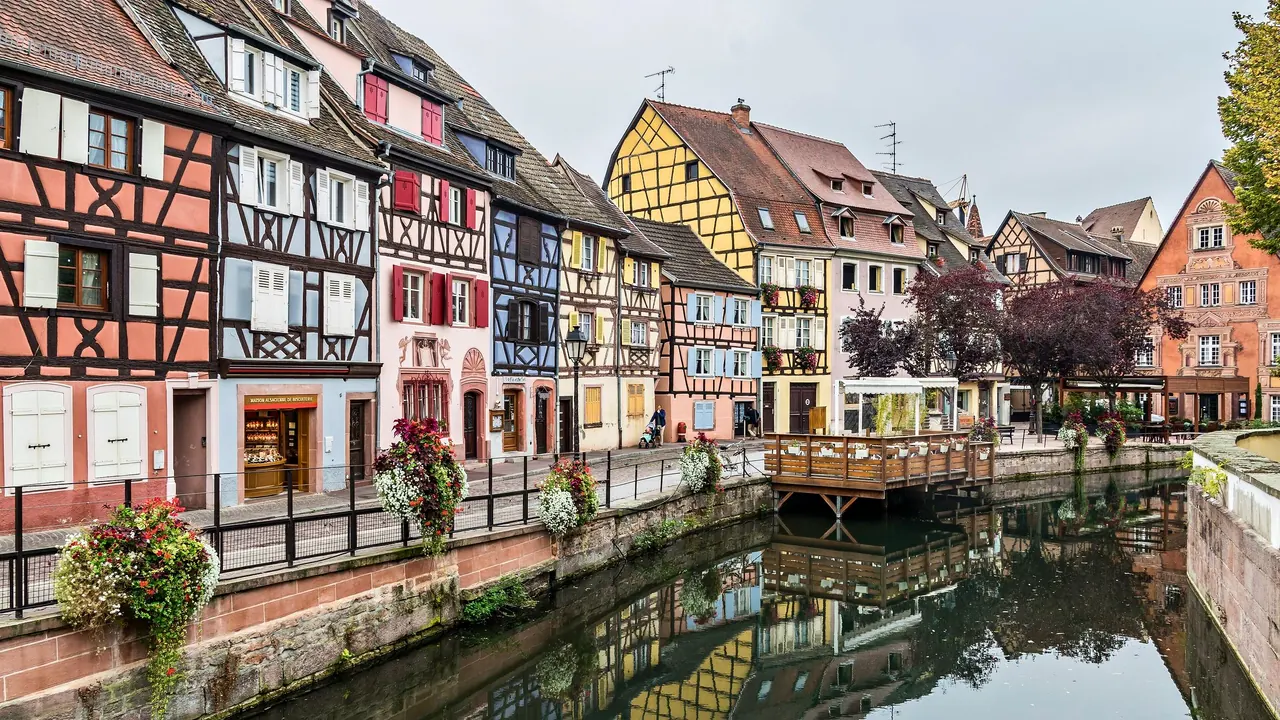
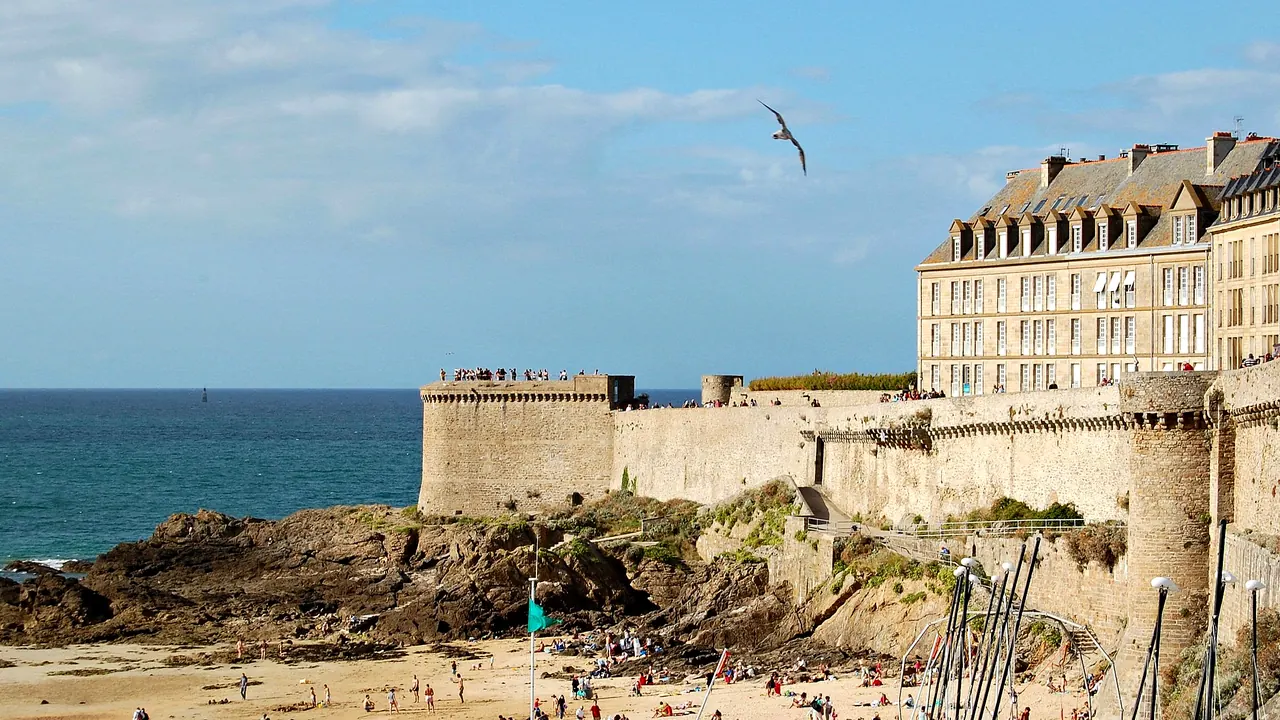
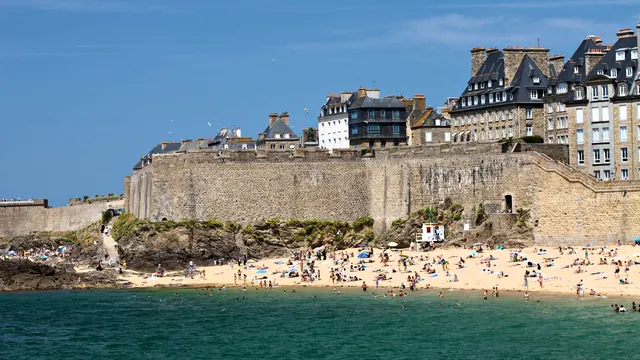
Photos: Alsace by Krzysztof Golik, CC BY-SA 4.0, cropped; Brittany by Pline, CC BY-SA 3.0, cropped.
Alsace or Brittany?
Our verdict in twelve categories, each scored against the same fixed benchmark cities, and the climate month by month, so you can choose for your trip.
Choose Alsace for
- shopping
- food and drink
- culture and sights
Alsace suits a trip built around eating, drinking and old towns. You get winstub dinners, cellar tastings along the Route des Vins, Strasbourg's cathedral and Colmar's Isenheim Altarpiece. It is also easier to tour without a car, and families have Europa-Park and the animal parks within reach. In December its Christmas markets give it a season Brittany cannot match. Just don't come expecting to swim.
Choose Brittany for
- beaches
- nature and the outdoors
- wellness
If the sea is the point, Brittany wins. It has the sandy bays of Carnac and Quiberon, the pink granite of the north coast, the GR34 cliff path and islands such as Belle-Île and Bréhat. It rewards a slow summer of beaches, sailing schools, oysters and crêpes, or a thalassotherapy stay out of season, as long as you accept cool water and weather that can turn grey.
Scoreboard
Twelve categories on one fixed scale from 0 to 100. The shaded stretch is the gap between the two.
Your match
Pick a travel style or drag the sliders, and both match scores follow your weighting.
Too close to call, 1 point apart
Wins on shopping and food and drink with your weighting.
Wins on beaches and nature and the outdoors with your weighting.
What matters to you?
Category by category
What the scores mean for a trip.
Beaches & swimming
These two are as far apart as they can be on beaches. Alsace is landlocked, and summer swimming there means flooded gravel pits on the Rhine plain, a few chilly Vosges lakes and town pools. They are fine for cooling off, but they are not a beach vacation.
Brittany has France's longest coastline: wide sandy bays around Carnac and Bénodet, granite coves at Ploumanac'h, the strands of Crozon, and tidal resorts at Saint-Malo and Dinard. The water is brisk, so expect bracing swims rather than warm ones, and check the tides before choosing a beach.
Food & drink
Alsace is the stronger table. Winstub cooking such as baeckeoffe, choucroute and flammekueche sits alongside a surprising number of serious restaurants in the wine villages, and you can taste Riesling and crémant in growers' cellars along the 170km wine road.
Brittany eats well in a narrower way: oysters at Cancale, shellfish platters in the ports, galettes with bowls of cider, and salted butter in everything. It is excellent for seafood, but beyond Breton and classic French cooking there is less range.
Culture & sights
Alsace has more weight in one place. Strasbourg alone has the cathedral and its astronomical clock, a UNESCO-listed island centre and the Neustadt. Colmar has the Isenheim Altarpiece, and Mulhouse has its national car and railway museums, all close together.
Brittany's strengths are spread out and older in character: the menhir rows at Carnac, the walled towns of Saint-Malo, Dinan and Vitré, and the parish closes of Finistère. These are towns and monuments to drive between rather than great collections.
Nightlife
There is little to choose between them. In each, a student city does most of the work: Strasbourg's Krutenau and the streets around the cathedral, and Rennes' Rue Saint-Michel. Elsewhere evenings end early. In Alsace a night out usually means a long dinner and a bottle in a winstub, and the bigger nights are across the border in Basel. In Brittany the summer resorts stay up later, and a village fest-noz is the night people remember.
Nature & outdoors
Brittany has the more varied outdoors, all shaped by the sea. You can walk the GR34 past Cap Fréhel and Pointe du Raz, kayak among the islands of the Gulf of Morbihan, surf in Finistère or see the gannets of the Sept-Îles.
Alsace offers gentle hill country instead. The forested Vosges ballons, the Route des Crêtes with its views to the Black Forest, and flat cycling along the Rhine and the canals suit walkers and cyclists, and the hills get a little snow in winter.
Day trips
Both regions are easy to explore from one base, but in different ways. In Alsace the wine villages sit a few kilometres apart, so one day can take in several. The border adds whole cities to the choice: Basel, Freiburg, Baden-Baden and even Heidelberg.
Brittany's outings lean towards the sea. There are ferries to Belle-Île, Ouessant and car-free Bréhat, boats around the Gulf of Morbihan, the Quimper and Pont-Aven circuit, and Mont-Saint-Michel about an hour from Saint-Malo.
Good for families
Alsace has more built for children. Europa-Park lies across the Rhine, and the parks near Kintzheim offer free-roaming macaques and falconry at a castle. Mulhouse adds its zoo and the train and car museums, though much of this needs a car.
Brittany is the simpler seaside version: rock pools, sailing schools, crêpes and campsites, with Océanopolis and the Saint-Malo aquarium for rainy days. The cool water and strong tides mean small children need close watching.
Getting around
Alsace is easier without a car. Frequent trains link Strasbourg, Sélestat, Colmar and Mulhouse, Strasbourg has trams and excellent cycle lanes, and only the wine villages and the Vosges really call for a car.
In Brittany the train gets you to Rennes, Saint-Malo, Quimper and Brest, but the coast, the megaliths and the villages mostly need a car. Add busy coastal roads in high summer and ferries to the islands, and it pays to pick one base well.
Shopping & style
Shopping is where Alsace pulls clearly ahead. Strasbourg's department stores and boutiques around Place Kléber sit alongside Betschdorf stoneware, Soufflenheim baking moulds and wine bought straight from the growers. In December the Christmas markets, a Strasbourg tradition since the sixteenth century, make shopping a reason to go in itself.
Brittany's buys are mostly local products: Quimper faience, striped sailor tops, salted butter caramels and Guérande salt, with Rennes' Saturday market at Place des Lices as the high point. Outside Rennes there is little in the way of fashion.
Affordability
Overall the costs are much the same, and what differs is when they rise. Alsace is dearest in Strasbourg, especially during the Christmas markets and Parliament sessions, and cheapest in wine-village guesthouses. Brittany peaks in July and August in the coastal resorts, while campsites, gîtes and toll-free roads keep a stay reasonable, and June and September are cheaper. In both regions, a hire car is a real part of the budget.
Live music & performing arts
The two are evenly matched but follow different calendars. Alsace's offer is formal and runs all year in Strasbourg: the Opéra national du Rhin, the Philharmonic and the Théâtre National, plus autumn festivals of jazz and contemporary music.
Brittany's peaks in summer with Celtic music: the Festival Interceltique in Lorient, Les Vieilles Charrues at Carhaix, and bagad pipe bands and fest-noz dances in the villages. Rennes keeps up opera and theatre through the year.
Wellness & relaxation
Alsace relaxes in a slower, inland way. It offers the thermal waters of Niederbronn-les-Bains and Morsbronn, the great baths of Baden-Baden across the Rhine, spa hotels in the Vosges valleys, and wine-village days that move at the pace of a long lunch. Strasbourg in December is the exception.
For a stay built around a spa, though, Brittany is the better choice. It is one of the homes of thalassotherapy, and seawater spas line the seafront from Quiberon to Perros-Guirec. In spring and autumn the resorts are calm, and the bracing Atlantic air and car-free islands make for a restorative break.
When should you go?
Pick your month. The climate figures are measured averages, not a forecast.
Alsace in July
Brittany in July
Daytime high, °C
Rainfall in the month, mm
Where the figures come from
Brittany has no rain gauge within 25 km of the centre, so its rainfall comes from a gridded climate dataset read at the destination rather than from a gauge further away.
Brittany's sunshine is measured 89 km from the centre, at Rennes.
Temperature and rainfall are climate normals, averaged over the years shown. Alsace: 1991-2020 normals, Ihringen (20.8 km from centre). Brittany: 2004-2020 (sunshine 1991-2020, rainfall 1991-2020) normals, Vannes-Meucon (8.1 km from centre).
On the Rhine plain, Alsace has the bigger swing between seasons. Its summers are the warmer and sunnier of the two, reaching about 27°C in August. That is ideal for vineyard terraces and evenings by the water in Strasbourg, though a little warm for long walks around town in the middle of the day. Winter is cold, around 6°C by day in December and January, but fairly dry. Most rain falls from late spring through summer, with May the wettest at about 87mm. May, June and September are the most comfortable months for walking between villages.
Brittany's coastal climate is milder at both ends of the year, with gentler winters and summers a few degrees cooler than Alsace. The sea reaches only about 18°C even in July and August, so beach weather is a short summer window. Most rain comes in autumn and winter, peaking at around 121mm in November. Late spring to September is much drier, which makes May, June and September the best months for the coast path.
Which traveller are you?
For a beach and sun trip, Brittany is the only real choice. It has long sandy bays on the south coast, coves among pink granite on the north and classic resort beaches at Dinard and Saint-Malo. Alsace has lakes and gravel pits for a cool afternoon, but nothing to plan a vacation around.
On a culture and arts trip, Alsace gives more in a short distance. Strasbourg's UNESCO centre and cathedral, Colmar's Isenheim Altarpiece and the Mulhouse museums are all on one rail line. Brittany's heritage is spread across standing stones, ramparts and small museums.
For a shopping trip, Alsace is the better bet, especially in December, when markets in Strasbourg, Colmar and the wine villages fill with crafts and gingerbread. Strasbourg also has proper department stores. Brittany's shopping is mostly faience, sailor tops and market produce.
Before you go
| Measure | Alsace | Brittany |
|---|---|---|
| Official language | French | French |
| Currency | Euro (EUR) | Euro (EUR) |
| Sockets | CE230 V, 50 Hz | CE230 V, 50 Hz |
| Driving side | Right | Right |
| Time zone | UTC+1, UTC+2 in summer | UTC+1, UTC+2 in summer |
| Emergency number | 112 | 112 |
| Main airport | Strasbourg Airport (SXB)43 non-stop destinations | Nantes Atlantique Airport (NTE)97 non-stop destinations |
| Public holidays this year | 11 days | 11 days |
By the numbers
| Measure | Alsace | Brittany |
|---|---|---|
| Population | - | 4,687,381 |
| Swim season, months above 21 °C | - | None |
Where else could you go?
Every comparison below shares a destination with this one, so you can follow Alsace or Brittany somewhere new.
- Black Forestvs Alsace
- Swiss Alpsvs Alsace
- Burgundyvs Alsace
- Normandyvs Brittany
- French Alpsvs Alsace
- Lake Maggiorevs Alsace