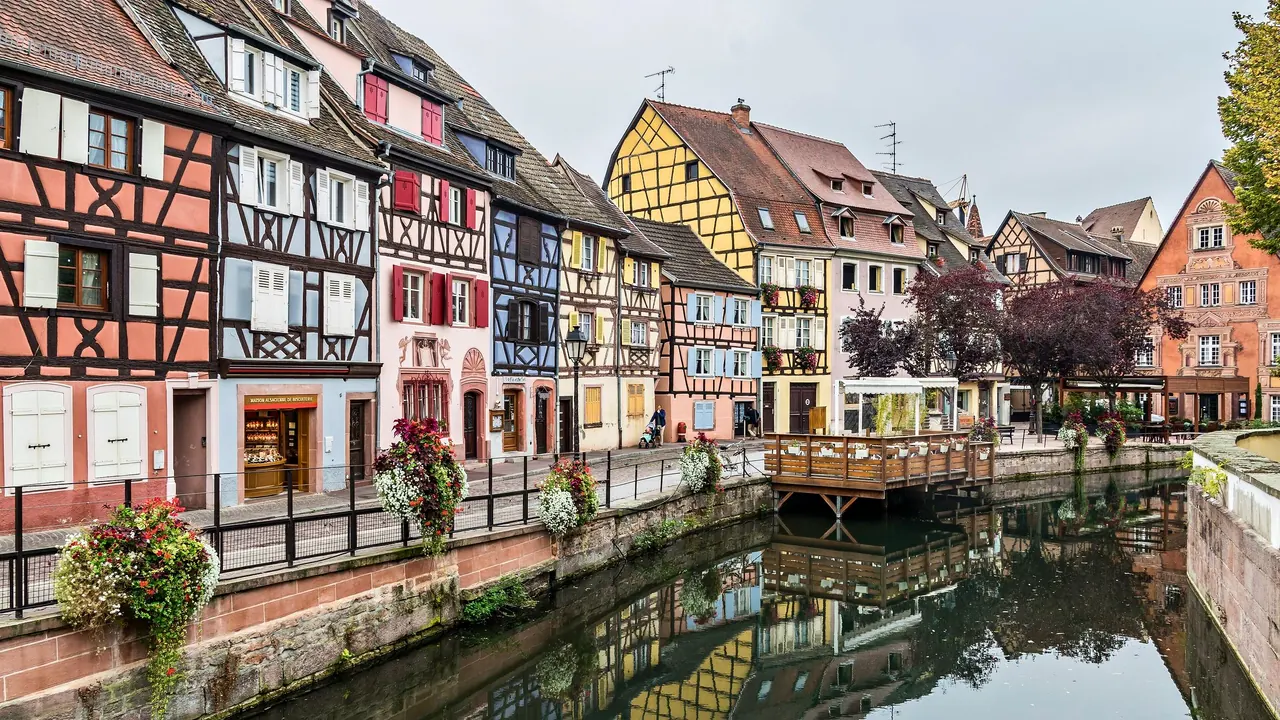
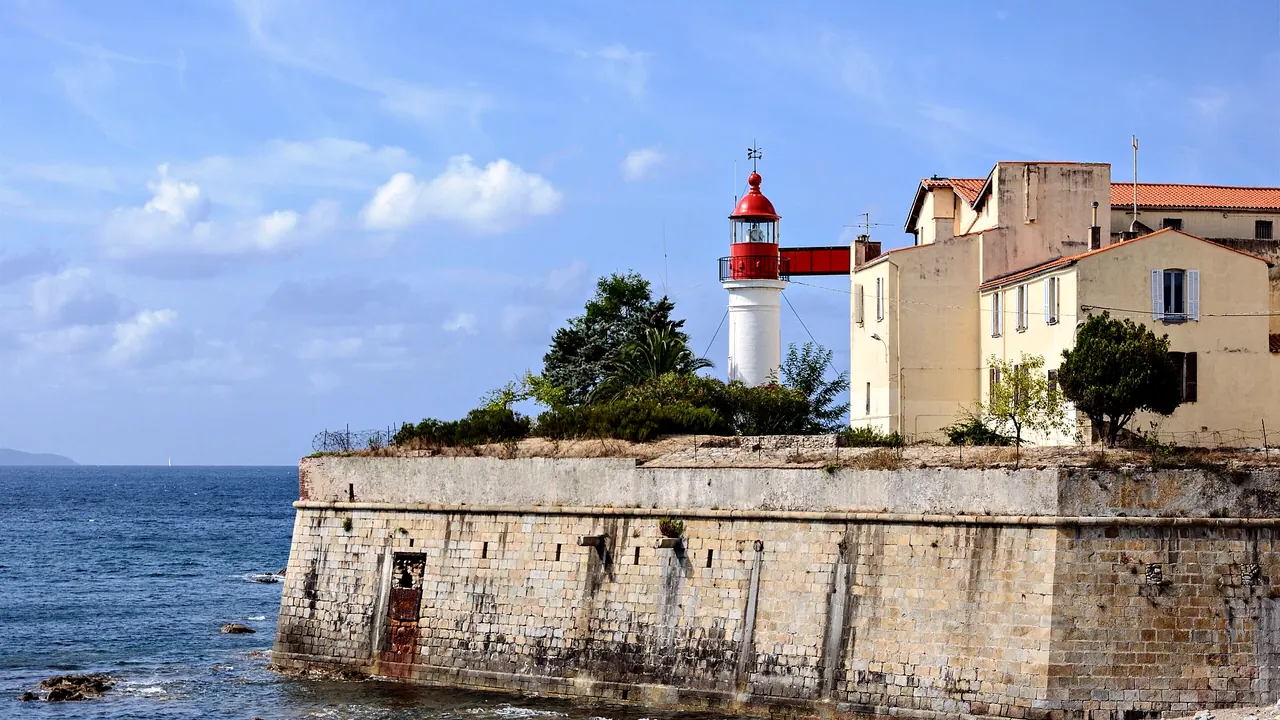
Photos: Alsace by Krzysztof Golik, CC BY-SA 4.0, cropped; Corsica by Myrabella, CC BY-SA 3.0, cropped.
Alsace or Corsica?
Our verdict in twelve categories, each scored against the same fixed benchmark cities, and the climate month by month, so you can choose for your trip.
Choose Alsace for
- getting around
- day trips
- shopping
Alsace suits a trip built around eating, drinking and looking at things. Strasbourg gives you a cathedral city with real museums, opera and trams. The wine villages give you slow days of cellars and winstub dinners, and Basel, Freiburg and the Black Forest are close by. It is the better choice for families who want ready-made days out, for anyone travelling without a car for part of the trip, and for a December vacation among the Christmas markets.
Choose Corsica for
- beaches
- nature and the outdoors
Corsica is for the sea and the mountains. Choose it for turquoise coves around Porto-Vecchio and Bonifacio, for treks and canyons in a granite interior, and for long, quiet evenings on a harbour terrace. In return you need a car, you have to accept slow, winding roads and high summer costs, and there is far less to do on a wet day. It rewards travellers who want to be outdoors from morning to night and are happy to settle into one or two bases.
Scoreboard
Twelve categories on one fixed scale from 0 to 100. The shaded stretch is the gap between the two.
Your match
Pick a travel style or drag the sliders, and both match scores follow your weighting.
Wins on getting around and day trips with your weighting.
Wins on beaches and nature and the outdoors with your weighting.
What matters to you?
Category by category
What the scores mean for a trip.
Beaches & swimming
This is the widest gap between the two. Alsace is landlocked, and summer swimming means a lake made from a flooded gravel pit, a cold reservoir in the Vosges or a town pool. That is fine on a hot afternoon, but nobody should plan a trip around it.
Corsica's southern beaches rank with the best in the Mediterranean, with Palombaggia's pines and pink rocks, the sheltered curve of Santa Giulia and the boat-access sands of Saleccia in the Agriates. The west coast adds granite coves. The famous southern beaches fill early in high summer, so a car helps.
Food & drink
Alsace is the stronger table. Winstub cooking such as choucroute, baeckeoffe and flammekueche sits alongside an unusual number of serious restaurants in the wine villages, and the Route des Vins lets you taste Riesling and crémant in the growers' own cellars.
Corsica's food is honest mountain fare: lonzu and figatellu from free-roaming pigs, brocciu, chestnut flour and wild boar, plus Patrimonio wines. The catch is that the best of it is found in village inns and town markets, while many beach-resort menus are ordinary.
Culture & sights
Alsace has the richer heritage, much of it within an hour of the train line. Strasbourg's sandstone cathedral and its UNESCO-listed island centre, the Isenheim Altarpiece in Colmar and the huge car and railway museums in Mulhouse could fill a week, before you count the walled wine villages.
Corsica's history is mostly in its places rather than its museums: Genoese citadels at Calvi and Bonifacio, Corte's upper town, Napoleon's birthplace in Ajaccio and the carved standing stones at Filitosa. These are rewarding stops on a road trip, but not a reason in themselves to choose the island.
Nightlife
Neither is a place for big nights, but they differ in when and where things happen. In Alsace almost everything is in Strasbourg, where the student bars of Krutenau and the cathedral streets keep going all year, and many locals go to Basel or Germany for clubbing.
In Corsica, evenings revolve around summer. In July and August there are open-air clubs in the hills behind Porto-Vecchio and late beach bars in Calvi. Outside those months and those towns, the island goes quiet early.
Nature & outdoors
Corsica is far more dramatic. Peaks of over 2,700m rise within sight of the sea, and the GR20 crosses them as one of Europe's hardest treks. The island also has the red cliffs of Piana, the Bavella needles, the lakes above the Restonica gorge and the marine reserve at Scandola, with canyoning and kayaking to match.
The Vosges behind the Alsace vineyards are softer, with rounded forested ballons, the Route des Crêtes and well-marked trails between castle ruins. Add flat cycling along the Rhine and the canals, and it is easy, green country rather than wild terrain.
Day trips
Alsace is made for day trips. The wine villages are only a few kilometres apart, so you can link Riquewihr, Kaysersberg and Eguisheim in a single afternoon. Across the borders, Basel, Freiburg and Baden-Baden are easy outings, and Heidelberg or Nancy are possible in a day.
In Corsica, mountain roads make every journey slow, so each base has its own handful of outings rather than the whole island within reach. Good examples are Cap Corse from Bastia, the Balagne villages from Calvi, and the short ferry crossing from Bonifacio to Sardinia.
Good for families
Alsace has much more built for children. Europa-Park is under an hour away, there are free-roaming macaques and falconry shows near Kintzheim, and Mulhouse has its zoo and railway museum. Boat trips through Petite France round things off, though many of these places are easiest by car.
Corsica works as a simple beach and outdoor vacation. Santa Giulia's shallow water and the campsites with pools are ideal for that. But the island has no theme park, zoo or aquarium, and its twisting drives are hard on young passengers.
Getting around
Alsace is far easier. Frequent trains link Strasbourg, Colmar and Mulhouse, and Strasbourg has trams and excellent cycle lanes. A hire car is useful for the wine route, but the drives there are short and simple.
In Corsica a car is close to essential, and journeys take much longer than the map suggests on narrow, winding roads that clog near the resorts in summer. The little railway between Ajaccio, Corte, Bastia and Calvi is a lovely ride, but it does not reach the south.
Shopping & style
Alsace offers more of both kinds of shopping: department stores and boutiques around Place Kléber, and distinctive regional crafts such as Betschdorf stoneware, Soufflenheim baking moulds and kelsch linen. In December the Christmas markets make shopping the main event.
Corsica is for edible souvenirs and a hand-forged knife, bought at the Ajaccio and Bastia markets or in the craft villages of the Balagne. There is very little else to shop for.
Affordability
Neither is cheap, but Alsace is the easier one on the budget. Its pressure points are Strasbourg hotels in December and during Parliament sessions, and guesthouses in the wine villages and wine bought from the grower are good value.
Corsica's peak season is the one most people travel in, and July and August bring resort prices in Porto-Vecchio, Bonifacio and Calvi, on top of ferries and car hire. Campsites, inland villages and June or September soften the cost.
Live music & performing arts
Alsace has a real performing arts calendar. In Strasbourg there is the Opéra national du Rhin, a philharmonic orchestra and the Théâtre National de Strasbourg, with autumn festivals of jazz and contemporary music on top.
Corsica's distinctive offer is polyphonic singing, unaccompanied male harmonies heard in churches on summer evenings, along with the Calvi jazz festival. There is no opera or major concert life on the island.
Wellness & relaxation
Alsace is the better choice if you want baths and treatments. Niederbronn-les-Bains and Morsbronn keep up an old tradition of taking the waters, plenty of country hotels among the vines and up the Vosges valleys have spas of their own, and Baden-Baden, one of Europe's grand bathing towns, is a short drive across the Rhine. For simple rest, stay in a wine village, where the day comes down to a walk through the vineyards, a slow lunch and a tasting in a cool cellar.
If quiet is the point, stay away from Strasbourg during the Christmas markets.\n\nCorsica's thermal springs, Pietrapola among them, are small and plain, and apart from those the only treatments are in the spas of upmarket hotels around Porto-Vecchio, Calvi and Ajaccio. The island gives you stillness instead: a siesta through the hottest hours, and mountain villages that go silent by nightfall. It suits someone who wants to switch off outdoors more than someone planning a week of baths and massages.
When should you go?
Pick your month. The climate figures are measured averages, not a forecast.
Alsace in July
Corsica in July
Daytime high, °C
Rainfall in the month, mm
Temperature and rainfall are climate normals, averaged over the years shown. Alsace: 1991-2020 normals, Ihringen (20.8 km from centre). Corsica: 1991-2020 normals, Ajaccio (5.1 km from centre).
On the Alsace plain, where most visitors stay, summers are warm, with highs around 27°C in August. The weather is pleasant for walking in towns and vineyards from May to September, though May is the wettest month at about 87mm and early summer brings showers. Winter is grey and cold, with highs near 6°C and very little sunshine, so December is for the Christmas markets rather than for the weather. Spring and the September grape harvest are the gentlest times for walking.
Corsica's coast is much warmer and sunnier, and July and August are almost completely dry. The sea is comfortable for swimming from June to October and reaches about 25°C in August, but high summer is hot for hiking at low altitude, so late spring and September suit walkers best. The rain comes in autumn and peaks in November at around 115mm. Winters are mild by Alsace standards, but they are not beach weather.
Which traveller are you?
On a beach and sun trip, Corsica is the clear pick. Palombaggia, Rondinara and the Agriates coves have pale sand and clear water, and the summers are long and dry. Alsace has no sea at all, only lakes in gravel pits and town pools for a cooling afternoon.
On a family trip with children, Alsace has more ready-made days. Europa-Park is across the Rhine, there are the monkey and eagle parks near Kintzheim and the railway museum in Mulhouse, and journeys between them are short. Corsica gives calm, shallow bays but little else built for children.
For an outdoors trip, Corsica wins easily. You can walk the GR20 or the gentler Mare e Monti paths, go canyoning in the interior rivers, or kayak and dive around Scandola and the Lavezzi islands. The Vosges offer pleasant forest walks and cycling, but they are much tamer country.
Before you go
| Measure | Alsace | Corsica |
|---|---|---|
| Official language | French | French |
| Currency | Euro (EUR) | Euro (EUR) |
| Sockets | CE230 V, 50 Hz | CE230 V, 50 Hz |
| Driving side | Right | Right |
| Time zone | UTC+1, UTC+2 in summer | UTC+1, UTC+2 in summer |
| Emergency number | 112 | 112 |
| Main airport | Strasbourg Airport (SXB)43 non-stop destinations | Ajaccio Napoléon Bonaparte airport (AJA)29 non-stop destinations |
| Public holidays this year | 11 days | 11 days |
By the numbers
| Measure | Alsace | Corsica |
|---|---|---|
| Population | - | 355,486 |
| People per km² | - | 41 |
| Swim season, months above 21 °C | - | 4 months |
Where else could you go?
Every comparison below shares a destination with this one, so you can follow Alsace or Corsica somewhere new.
- Black Forestvs Alsace
- Sardiniavs Corsica
- Swiss Alpsvs Alsace
- Elbavs Corsica
- Burgundyvs Alsace
- French Rivieravs Corsica