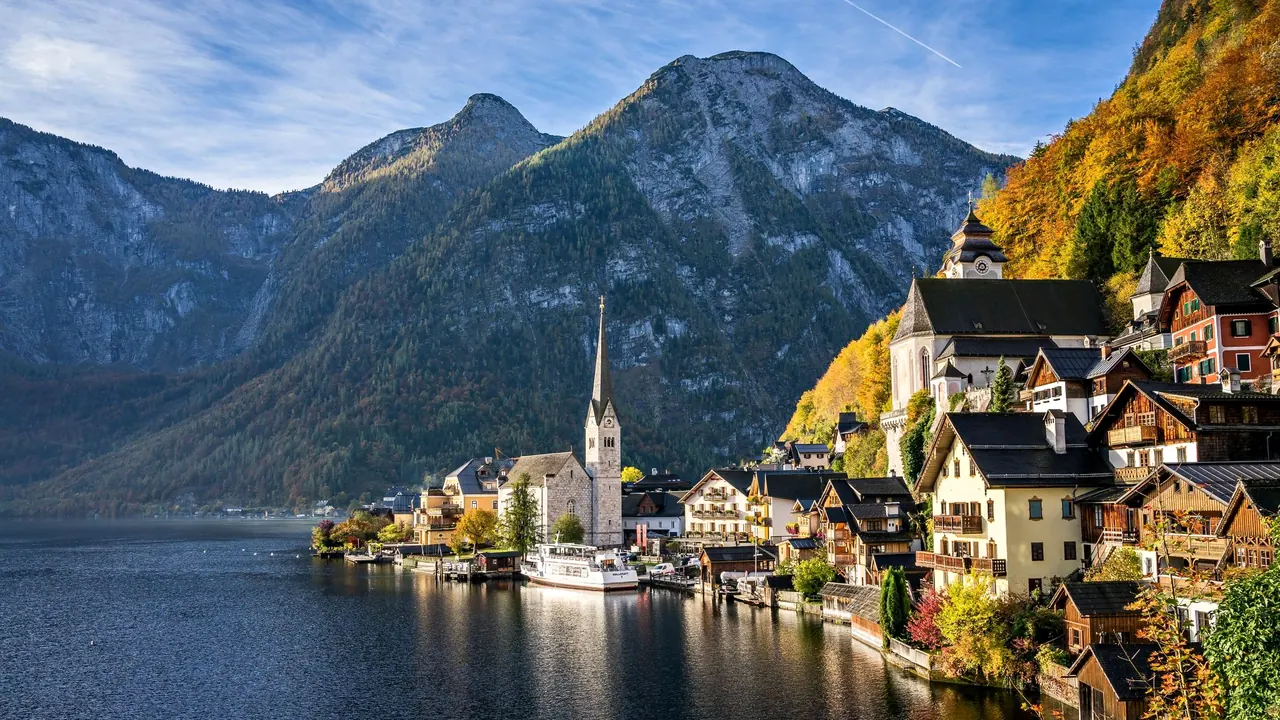
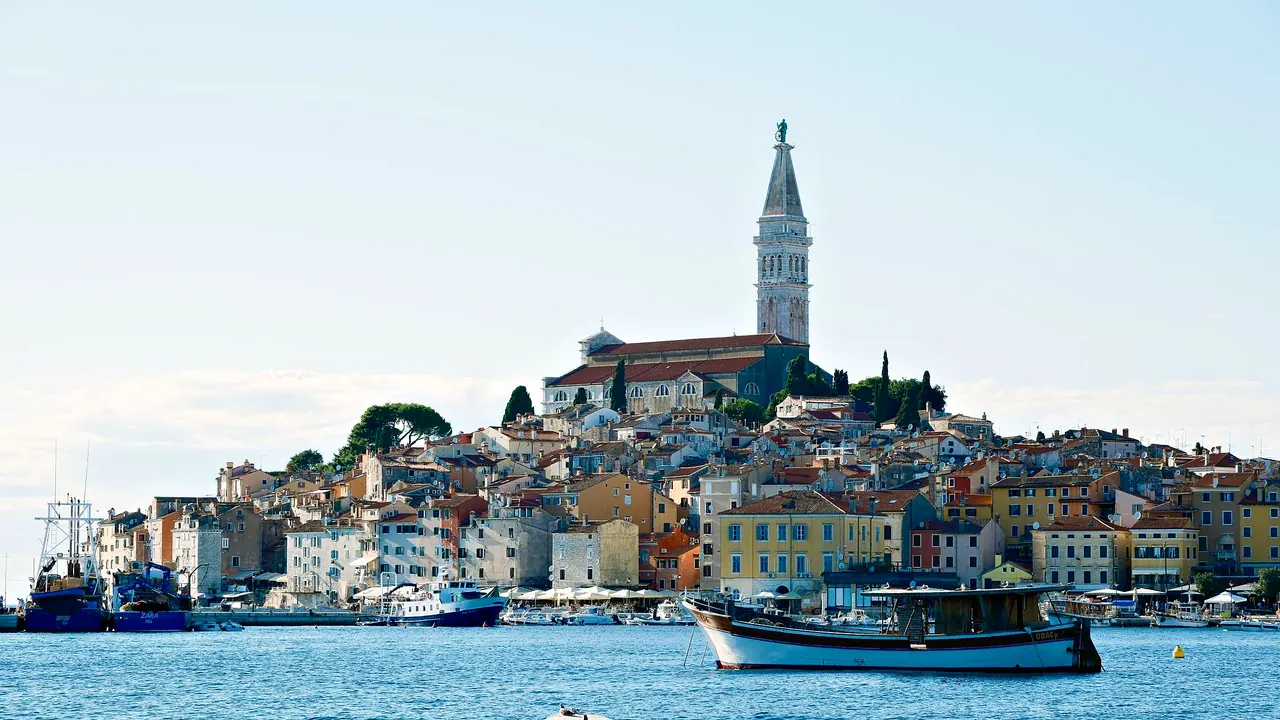
Photos: Austrian Alps by Leonhard Niederwimmer, Pexels License; Istria by Ramon Karolan, Pexels License.
Austrian Alps or Istria?
Our verdict in twelve categories, each scored against the same fixed benchmark cities, and the climate month by month, so you can choose for your trip.
Choose Austrian Alps for
- wellness
- live music and the arts
- nature and the outdoors
The Austrian Alps suit an active trip built around the mountains: skiing from December to April, hut-to-hut hiking in summer, then spa towns and hotel sauna worlds to recover in. Music lovers can plan around the Salzburg Festival. Families do especially well here, with children's ski schools, hotels built for children and easy trains and buses within the main valleys.
Choose Istria for
- beaches
- food and drink
- prices
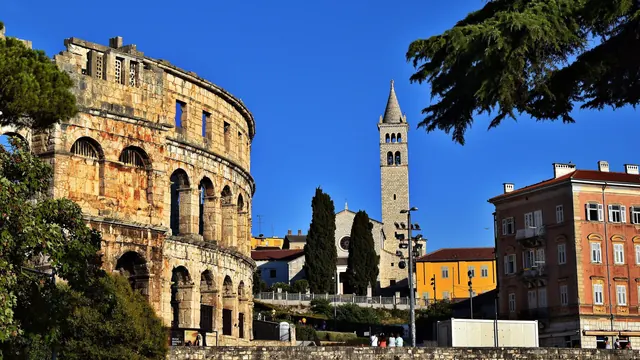
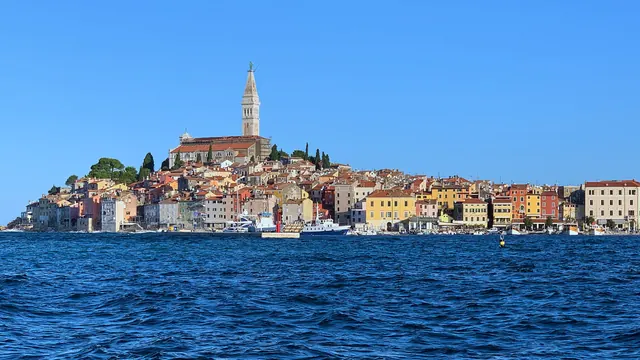
Istria is better for a slower, warmer trip built around the sea and the table. Its clear coves at the southern tip, truffles and Malvazija in the hill towns, and Roman Pula and Venetian Rovinj make for days of swimming, eating and walking old stone streets, best done with a car. You give up the big mountains, the après-ski and the festival stages. In return you get salt water and an open Adriatic coast of coves and headlands, with swimming that lasts into late September.
Scoreboard
Twelve categories on one fixed scale from 0 to 100. The shaded stretch is the gap between the two.
Your match
Pick a travel style or drag the sliders, and both match scores follow your weighting.
Wins on wellness and live music and the arts with your weighting.
Wins on beaches and food and drink with your weighting.
What matters to you?
Category by category
What the scores mean for a trip.
Beaches & swimming
The Austrian Alps have no sea, but in high summer the Carinthian lakes such as the Wörthersee and Millstätter See get warm, and Velden and Pörtschach organise their summers around lidos with lawns and piers. It is good bathing, but the season is shorter and the Salzkammergut and high mountain lakes are cooler.
Istria gives you a proper seaside, with clear Adriatic water from June to late September. You can choose between the wild coves of Kamenjak, the shallow bays near Medulin and the rocky headlands by Rovinj. Neither has much sand, so expect pebbles, rock ledges and concrete platforms on the coast and grass and gravel at the lakes.
Food & drink
Food is one of the strongest reasons to pick Istria. Truffles from the forests below Motovun grated over fuži, oysters from the Lim Bay, slow-cooked boškarin beef and Malvazija tasted in hill-country cellars make eating the centre of the trip. The cooking leans towards Venice more than the rest of Croatia does.
The Austrian Alps feed you well but with less variety: Kaiserschmarrn, Käsespätzle and Speck on a hut terrace after a hike, cakes in Salzburg's cafés and serious kitchens in the Arlberg and Kitzbühel. In the big ski villages, though, many menus look alike, which Istria's taverns and seafood places avoid.
Culture & sights
Both have strong heritage, but from different eras. The Austrian Alps are baroque and Habsburg: Salzburg's old town under its fortress, Innsbruck's Hofburg and Hofkirche, salt-mining Hallstatt and the Admont abbey library. These sights are spread across towns you travel between.
Istria's heritage is older and Mediterranean. It has Pula's Roman Arena, still standing to its full height, the gold mosaics of the Euphrasian Basilica in Poreč and walled hill towns such as Motovun and Hum. Its museums are small, so the pleasure lies in walking old stone streets rather than touring palaces and great interiors.
Nightlife
In winter the Austrian Alps have much livelier nights. In Ischgl, St Anton, Saalbach and Mayrhofen, loud après-ski starts in the huts by the slopes and carries on late in the village bars and clubs. Out of season, Innsbruck's students keep a modest scene going.
Istria's evenings are gentler: long dinners, cocktails on Rovinj's waterfront, and a few beach bars and seasonal clubs around Poreč and Medulin in summer. Pula is the only town with much going on all year. Choose Istria for a drink by the harbour and an Austrian ski village for dancing in ski boots.
Nature & outdoors
This is where the Austrian Alps are furthest ahead. Glaciers around the Grossglockner, the Krimml waterfalls, the high Tyrolean valleys and some of Europe's largest ski areas give you true Alpine terrain. In summer there are hut-to-hut trails, via ferratas and mountain-bike routes.
Istria is gentler country of vineyards, olive groves and oak forest, and Učka, at about 1,400m, is its only real mountain. Its strengths are cycling, above all along the old Parenzana railway line, and kayaking and windsurfing off Kamenjak. It is best in spring and autumn, when walking inland is more comfortable.
Day trips
Both are good bases for day trips, but the outings differ. From Salzburg or Innsbruck you head for lake towns such as Hallstatt and Bad Ischl, the Königssee, Munich by train or Bolzano over the passes. Some of these involve longer mountain journeys.
In Istria everything is close: the hill towns, Rovinj, Poreč and the boat to Brijuni all make easy days out. Just across the borders are Piran, Trieste and the Postojna and Škocjan caves.
Good for families
The Austrian Alps are the stronger choice for families. Resorts such as Serfaus-Fiss-Ladis have nursery slopes, children's ski schools and childcare, there are hotels designed for children, and in summer there are adventure trails and toboggan runs. Bad weather is their weak spot.
Istria works well for a beach vacation with children, with campsites and resort villages around Poreč and Medulin, water parks and the dinosaur park near Funtana. The rocky beaches, the summer heat and the slippery cobbles of the old towns call for more care.
Getting around
Within a single valley, the Austrian Alps are easy to explore without a car. Trains run along the Inn valley and to Gastein, Postbus lines climb into the side valleys, and guest cards cover local buses. Travel between valleys is slower, and a car helps if you want to combine lakes, towns and passes.
Istria depends more on a car. Distances are short and the motorway is good, but buses only link the main coastal towns, so hill towns, wineries and many beaches are hard to reach. In summer, traffic and parking near Rovinj and the resorts can be tiring.
Shopping & style
Neither is a shopping destination, but the Austrian Alps have more to browse. There are dirndls, loden coats and felt hats on Salzburg's Getreidegasse and in Innsbruck's old town, Wattens crystal, carved Tyrolean figures and a few luxury boutiques in Kitzbühel and Lech, plus Christmas markets in December.
In Istria, shopping is almost all about food and drink: truffle products in Motovun and Buzet, and olive oil and wine bought from the producers. Grožnjan and Rovinj's Grisia add small galleries and craft studios.
Affordability
Neither is cheap, but Istria is a little easier on the budget. In the Austrian Alps the costs add up in winter, when lift passes, ski hire and lessons come on top of the hotel bill, and the Arlberg and Kitzbühel are among the most expensive places to stay in the Alps.
Istria's coast is expensive in summer too, especially Rovinj. Campsites, private apartments, simple tavern meals and wine bought at the cellar bring costs down, and so does going in June or September.
Live music & performing arts
In summer the Austrian Alps are in a different league for music. The Salzburg Festival, opera on the floating stage at Bregenz, the Schubertiade in Vorarlberg and the festivals at Erl draw serious audiences. Salzburg keeps going through the rest of the year with Mozart Week and concerts at the Mozarteum.
Istria's highlight is an open-air concert or film screening in Pula's Roman Arena, and Grožnjan adds summer concerts by young musicians. They are nice to come across, but not a reason to plan a trip.
Wellness & relaxation
Wellness is a core part of an Austrian Alpine vacation. There are radon springs and a healing gallery inside the mountain at Bad Gastein, outdoor thermal pools at the Aqua Dome facing the Ötztal peaks, the old Habsburg spa town of Bad Ischl, and large sauna areas in almost every valley hotel.
Istria relaxes you through its slow pace instead, with stone farmhouses among the olive groves and long lunches in the hill towns. Its one historic spa, Istarske Toplice in the Mirna valley, and the spas in resort hotels cannot match the range in Austria.
When should you go?
Pick your month. The climate figures are measured averages, not a forecast.
Austrian Alps in July
Istria in July
Daytime high, °C
Rainfall in the month, mm
Where the figures come from
Istria's temperatures are measured 57 km from the centre, at Trieste.
Istria has no rain gauge within 25 km of the centre, so its rainfall comes from a gridded climate dataset read at the destination rather than from a gauge further away.
Temperature and rainfall are climate normals, averaged over the years shown. Austrian Alps: 1991-2020 normals, Innsbruck-Flughafen (4.1 km from centre). Istria: 1991-2020 normals, Trieste (56.5 km from centre).
The Austrian Alps have two distinct seasons. Winter, from December to April, is cold and fairly dry, which suits the ski slopes. Summer brings highs around 26°C in July, warm enough for the Carinthian lakes from June to early September. It is also the wettest part of the year, with about 144mm of rain in August, so a hiking trip needs some flexible days. May, June and September are mild, with plenty of sunshine, and are pleasant months for walking.
Istria's year runs the other way. Summers are hot, dry and very sunny, with highs of 29°C in July and August and the sea reaching 26°C in August. June and September are still good for swimming and much easier for exploring inland. The rain comes in autumn and peaks at about 102mm in November, and winters are mild but grey rather than cold. Choose the Alps for snow and Istria for a reliable beach summer.
Which traveller are you?
On an outdoors trip, the Austrian Alps are the clear choice. The Hohe Tauern, the glaciers of the Tyrolean valleys and some of Europe's biggest ski areas give you serious Alpine terrain. Istria's gentler country is better for cycling the Parenzana than for mountains.
For a beach and sun trip, Istria wins. Its clear Adriatic coves around Kamenjak and Rovinj warm up through the summer, and the sunshine is reliable. The Alps have grassy lake lidos in Carinthia, which are lovely but have a shorter season and no sea.
On a relaxing and wellness trip, the Austrian Alps have much more to offer. Thermal towns such as Bad Gastein, the Aqua Dome's outdoor pools and the sauna worlds in valley hotels go well beyond Istria's single historic spa at Istarske Toplice and its resort hotel spas.
Before you go
| Measure | Austrian Alps | Istria |
|---|---|---|
| Official language | German, Austrian Sign Language | Croatian |
| Currency | Euro (EUR) | Euro (EUR) |
| Sockets | CF230 V, 50 Hz | CF230 V, 50 Hz |
| Driving side | Right | Right |
| Time zone | UTC+1, UTC+2 in summer | UTC+1, UTC+2 in summer |
| Emergency number | 112 | 112 |
| Main airport | Innsbruck Airport (INN)40 non-stop destinations | Pula Airport (PUY)34 non-stop destinations |
| Public holidays this year | 16 days | 14 days |
By the numbers
| Measure | Austrian Alps | Istria |
|---|---|---|
| Swim season, months above 21 °C | - | 4 months |
Where else could you go?
Every comparison below shares a destination with this one, so you can follow Austrian Alps or Istria somewhere new.
- Bavariavs Austrian Alps
- Dolomitesvs Austrian Alps
- Plitvice Lakesvs Istria
- Dolomitesvs Istria
- Lake Gardavs Austrian Alps
- Lake Comovs Austrian Alps