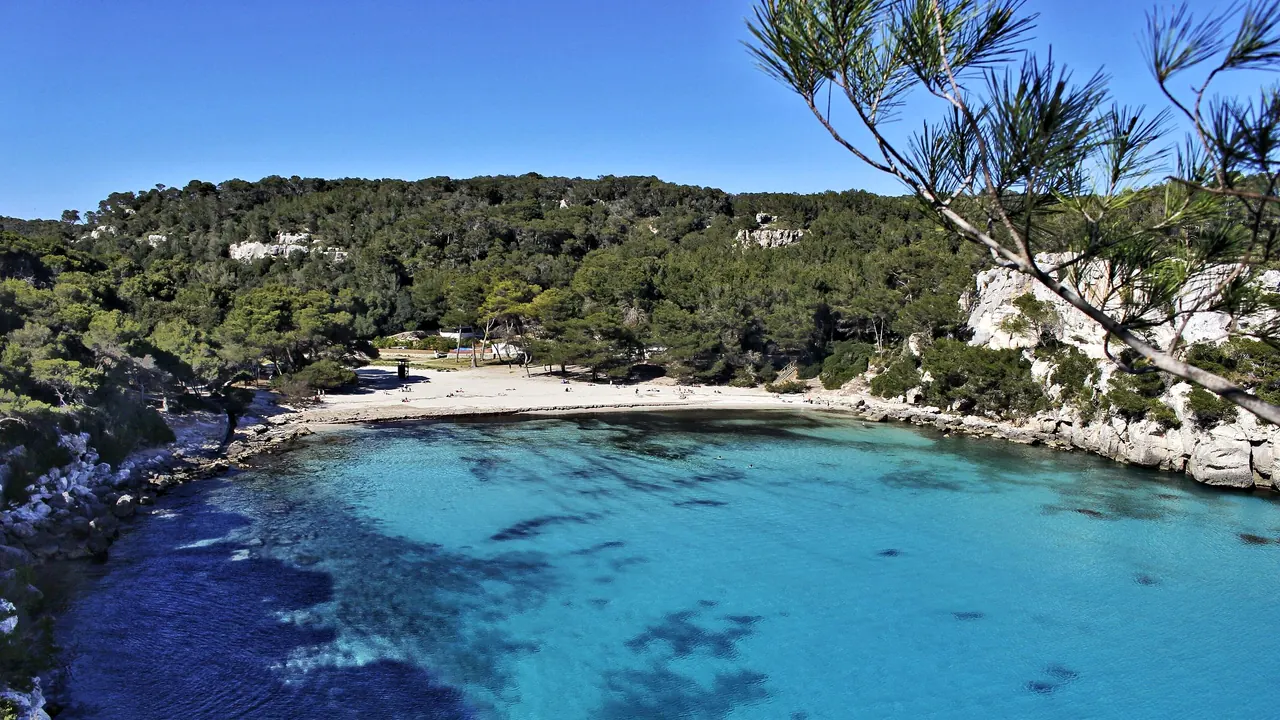
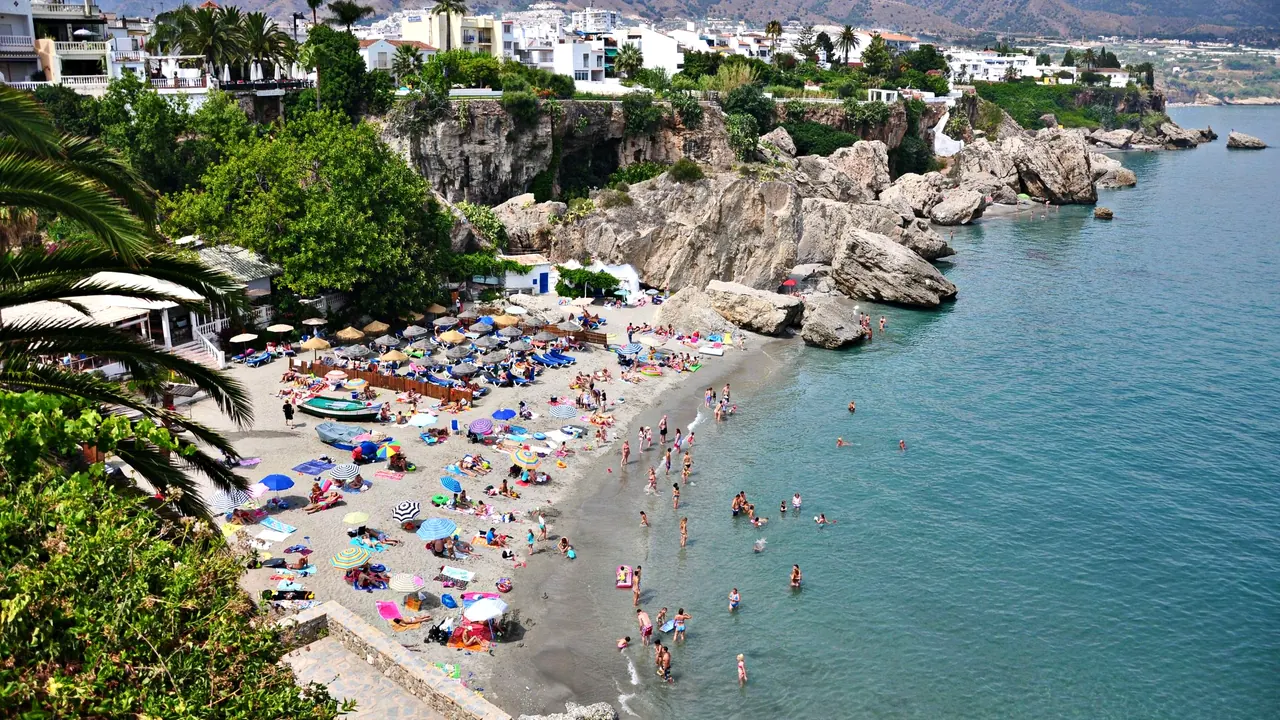
Photos: Balearic Islands by Travelinho, CC BY-SA 3.0, cropped; Costa del Sol by Rober Martinez, CC0.
Balearic Islands or Costa del Sol?
Our verdict in twelve categories, each scored against the same fixed benchmark cities, and the climate month by month, so you can choose for your trip.
Choose Balearic Islands for
- nightlife
- beaches
- nature and the outdoors
The Balearic Islands suit a trip built around the sea itself. The coves of Menorca, the shallows of Formentera and the dune beach of Es Trenc beat anything on the Andalusian coast for clarity and colour, and Ibiza's club season has no rival on the mainland. Add the Tramuntana mountains for walking and cycling, and the islands reward people who want water, landscape or dancing, and who will pay more and pick one island to stay on.
Choose Costa del Sol for
- day trips
- prices
- getting around
Costa del Sol is the better base for a trip that reaches beyond the beach. Granada, Córdoba, Seville and Ronda are all within a day's outing, Málaga gives you proper tapas taverns, flamenco clubs and a strong set of museums, and a commuter train links the main resorts. It costs less than the islands and is sunnier through the winter, though its sand is coarser and its sea cooler.
Scoreboard
Twelve categories on one fixed scale from 0 to 100. The shaded stretch is the gap between the two.
Your match
Pick a travel style or drag the sliders, and both match scores follow your weighting.
Too close to call, 2 points apart
Wins on nightlife and beaches with your weighting.
Wins on day trips and prices with your weighting.
What matters to you?
Category by category
What the scores mean for a trip.
Beaches & swimming
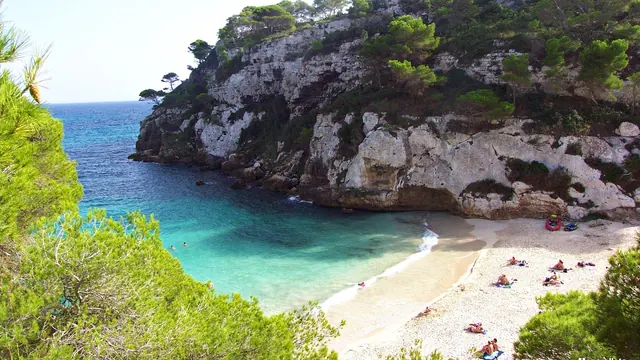
The islands have the finer beaches. Menorca's pine-backed coves at Macarella and Turqueta, Ses Illetes on Formentera and the long natural dunes of Es Trenc offer white sand and glassy water that the Andalusian coast cannot match, and the sea there gets several degrees warmer by late summer. The catch is access, since many of the best coves are a walk or a boat ride away and fill early.
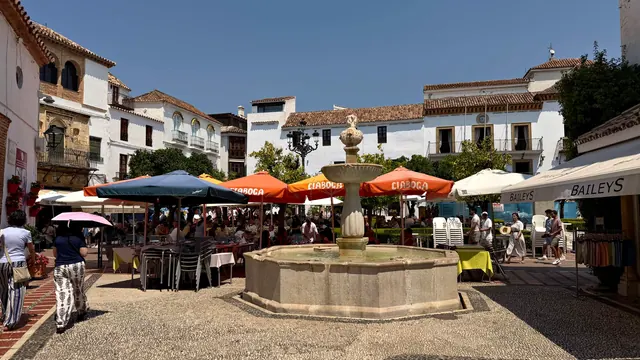
The Costa del Sol gives you quantity and convenience instead: an almost unbroken line of wide, grey-gold sand with sunbeds and chiringuitos, easy to reach from any hotel. For clearer water you have to go east to the coves below the cliffs at Maro and Nerja.
Food & drink
The Costa del Sol eats slightly better, mainly because of Málaga: old taverns pouring sweet wine from the barrel, the Atarazanas market, and the fishing districts of Pedregalejo and El Palo where sardine espetos grill over beach fires. Marbella adds serious fine dining.
The islands' cooking is more rustic and more about land than sea, with sobrasada, tumbet, ensaïmada for breakfast, Menorcan lobster stew and Mahón cheese, plus Mallorca's own wines from Binissalem. Palma is the place to eat well. On both coasts the big resort strips serve forgettable international menus.
Culture & sights
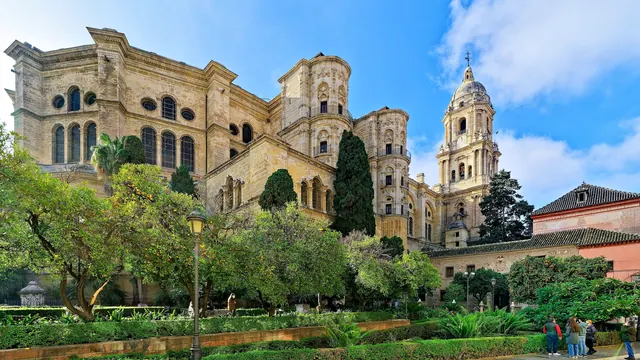
The two are about level, and both keep most of their heritage in one city. Palma has the sea-wall cathedral of La Seu with Gaudí's work inside, the Almudaina and Bellver Castle, while Málaga has the Moorish Alcazaba above a Roman theatre and a run of museums, the Picasso Museum and the Pompidou branch among them, that Palma's Miró foundation does not quite equal.
Beyond the cities the islands have more to offer: Ibiza's walled Dalt Vila and Menorca's Bronze Age talayots and taulas, found nowhere else. Along the Costa del Sol the resorts are mostly modern, with Marbella's old town and the Nerja cave as the exceptions.
Nightlife
Ibiza puts the islands in a different league for anyone who travels to dance. From late spring to early October its superclubs at Playa d'en Bossa and Sant Antoni bring the world's best-known DJs, and nights run past sunrise. Mallorca adds Palma's cocktail bars and the loud strips of Magaluf, though Menorca and Formentera stay quiet.
The Costa del Sol is more varied but lower-key: Puerto Banús for money and yachts, Torremolinos for one of Spain's oldest gay scenes, and Málaga's late tapas crawls on Spanish hours. Málaga has one advantage over the islands, a full night out all year, when Ibiza falls silent in winter.
Nature & outdoors
The islands have the stronger outdoors, much of it by the water. Mallorca's Serra de Tramuntana rises straight from the sea, with the GR221 between stone villages and the climbs to Formentor and Sa Calobra that draw cyclists, while Menorca's Camí de Cavalls circles the whole island. Seagrass meadows and the protected archipelago of Cabrera make for good snorkelling, diving and sailing.
On the Costa del Sol the landscape lies inland rather than on the shore: the Río Chíllar gorge above Nerja, La Concha behind Marbella, the Sierra de las Nieves, and the Caminito del Rey and El Torcal about an hour away. Golf is the main sport along the coast itself.
Day trips
This is where the Costa del Sol is far stronger. From Málaga the high-speed train reaches Córdoba's Mezquita in about an hour and Seville in about two, Granada's Alhambra is an hour and a half by road, and Ronda, Antequera and Gibraltar are all easy outings, with white villages such as Frigiliana and Casares for half-days.
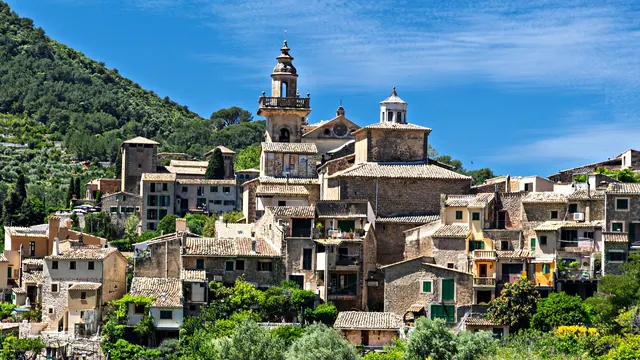
The islands offer pleasant outings but on a smaller scale: the wooden train to Sóller, the hill villages of Valldemossa and Deià, the walls of Alcúdia, or the ferry from Ibiza to Formentera. Because crossings between islands are long, you are mostly limited to the island you are staying on.
Good for families
Both are classic European family destinations, so the choice comes down to style. Mallorca's north, around Alcúdia, Muro and Pollença, has shallow sandy bays and resort hotels with kids' clubs, the Caves of Drach make a memorable outing, and Menorca suits families who want calm coves and small towns. The main thing to avoid is the party zones of Ibiza and Magaluf.
The Costa del Sol packs more attractions into one stretch: a zoo, an aquarium and marine park, water parks and a cable car between Torremolinos and Fuengirola, with a safari park above Estepona. The train links them, so it is easier to manage without a car.
Getting around
The Costa del Sol is easier to move around. A commuter train runs from Málaga through the airport to Torremolinos, Benalmádena and Fuengirola, and the high-speed station opens up inland Andalusia. Beyond Fuengirola you rely on slow coastal buses or a car.
On the islands, Palma's old town is walkable and Mallorca has buses and a few rail lines, but most visitors hire a car to reach coves and mountain villages, and parking at popular beaches in summer is hard. Changing islands means a ferry or a flight, so a two-island trip takes planning.
Shopping & style
Neither is a shopping destination, but the appeal differs. The islands are better for local craft: Mallorcan leather and shoes from around Inca, Menorca's avarca sandals, Manacor pearls and Ibiza's white cotton fashion and hippy markets at Es Canar and Las Dalias.
The Costa del Sol leans towards glamour and convenience, with luxury houses on the harbour at Puerto Banús, Spanish chains along Málaga's Calle Larios and big malls by the motorway. Its own crafts are limited to painted pottery and esparto work.
Affordability
The Costa del Sol is easier on the wallet. Torremolinos, Benalmádena and Fuengirola compete hard for package visitors, fish grills and tapas are fair almost everywhere, and the train and buses are cheap. Marbella and Puerto Banús are the expensive exception.
The islands are dear by Spanish standards in summer, with Ibiza and Formentera among the costliest places in the Mediterranean. Mallorca's big bays and inland set lunches give some relief, but car hire and ferries add up. On both, spring and autumn cost noticeably less.
Live music & performing arts
The Costa del Sol has the livelier stage, thanks to Málaga. The Teatro Cervantes hosts the city orchestra, opera and dance, and the flamenco peñas, members' clubs with weekend shows, give a more authentic evening than the resort dinner shows. Marbella adds big open-air pop and rock concerts in summer.
The islands' offer is smaller and more classical: opera at Palma's Teatre Principal, the Balearic Symphony Orchestra in winter, and summer festivals in the cloister at Pollença, Deià and Valldemossa, where Chopin is played in the town where he wintered.
Wellness & relaxation
Neither has a real bathing tradition, so both rely on where you stay. The islands offer stone agroturismos among almond and olive groves, spa hotels in the Tramuntana villages and northern Ibiza's yoga and meditation retreats, with Menorca and Formentera slow by nature.
The Costa del Sol is more clinical and resort-based, with Marbella's large spa hotels and residential fasting clinics, golf resorts with spas, and Arab-style bathhouses in Málaga. Its mild, sunny winters also suit long, quiet stays out of season.
When should you go?
Pick your month. The climate figures are measured averages, not a forecast.
Balearic Islands in July
Costa del Sol in July
Daytime high, °C
Rainfall in the month, mm
Temperature and rainfall are climate normals, averaged over the years shown. Balearic Islands: 1991-2020 normals, Palma De Mallorca / Son San Juan (0.3 km from centre). Costa del Sol: 1991-2020 normals, Malaga / Aeropuerto (5.4 km from centre).
Both are summer places with a similar run of heat: July and August reach about 31°C in both, too hot for long walks at midday, and the sea is warm enough to swim from June to October. The difference is in the water. Around the islands the sea reaches about 26°C in August and stays warm into September, while on the Andalusian coast it peaks nearer 23°C and can turn cool for a few days when the wind shifts.
The rain comes at different times. On the islands it arrives with autumn, with October the wettest month at about 67mm, so late September and October beach days can be broken by storms. On the Costa del Sol autumn stays drier for longer, and the rain falls mainly in winter, with December near 88mm. Its winters are also a little warmer and sunnier, which makes it the better choice from November to March. For walking, cycling and sightseeing, April, May and early October suit both.
Which traveller are you?
On a beach and sun trip, the Balearic Islands win. Menorca's white coves, Formentera's turquoise shallows and Mallorca's dune beach sit in warmer, clearer water than the long, coarse-grained resort strands of the Costa del Sol, which pack tightly in summer.
For a food and nightlife trip, the Balearic Islands come out ahead because of Ibiza, whose superclubs and sunset bars draw dancers from across the world. The eating is more even, and Málaga's barrel-wine taverns arguably beat Palma's tapas bars, so food lovers who go to bed early may prefer the coast.
On a trip on a tight budget, the Costa del Sol is the safer choice. Package hotels in Torremolinos and Fuengirola, cheap beach grills and an inexpensive train keep costs down, while the islands are dear in summer and need ferries or a hire car.
Before you go
| Measure | Balearic Islands | Costa del Sol |
|---|---|---|
| Official language | Spanish | Spanish |
| Currency | Euro (EUR) | Euro (EUR) |
| Sockets | CF230 V, 50 Hz | CF230 V, 50 Hz |
| Driving side | Right | Right |
| Time zone | UTC+1, UTC+2 in summer | UTC+1, UTC+2 in summer |
| Emergency number | 112 | 112 |
| Main airport | Palma de Mallorca Airport (PMI)201 non-stop destinations | Málaga-Costa del Sol Airport (AGP)165 non-stop destinations |
| Public holidays this year | 13 days | 12 days |
By the numbers
| Measure | Balearic Islands | Costa del Sol |
|---|---|---|
| Population | 1,221,403 | 1,364,837 |
| People per km² | 245 | - |
| Swim season, months above 21 °C | 5 months | 3 months |
Where else could you go?
Every comparison below shares a destination with this one, so you can follow Balearic Islands or Costa del Sol somewhere new.
- Costa Bravavs Balearic Islands
- Costa Blancavs Balearic Islands
- Algarvevs Costa del Sol
- Costa Blancavs Costa del Sol
- Formenteravs Costa del Sol
- Ibizavs Costa del Sol