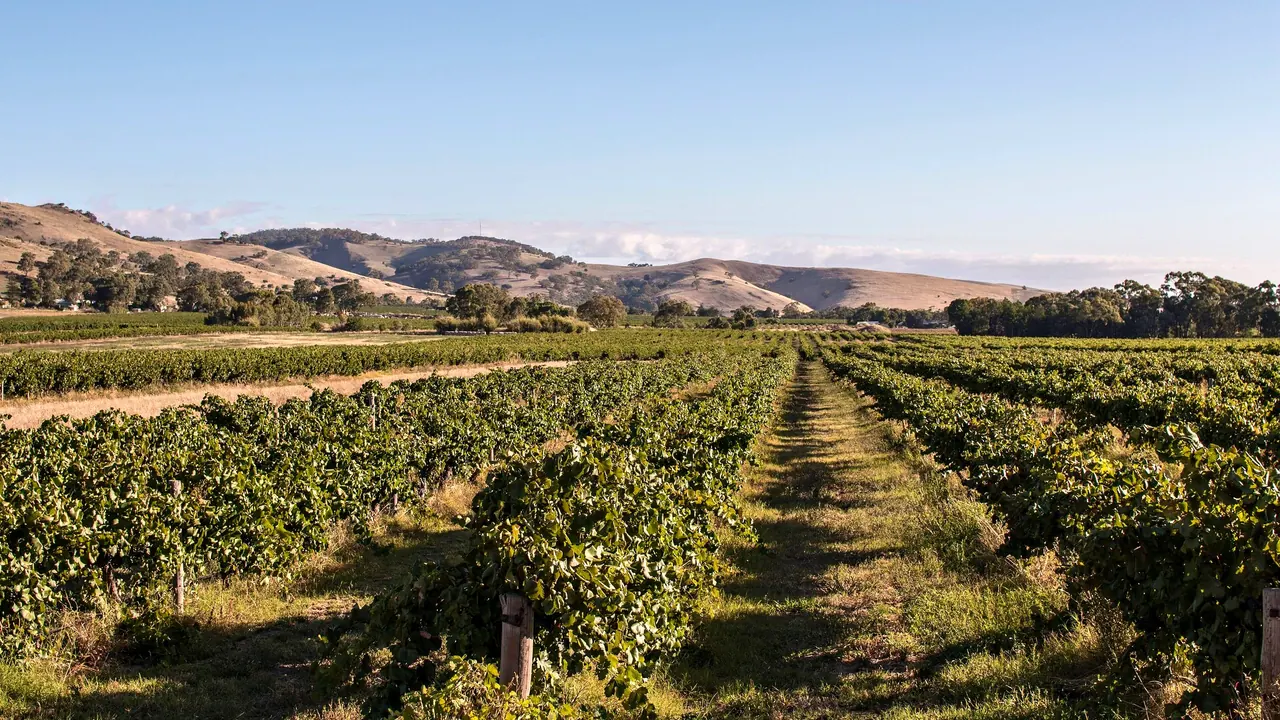
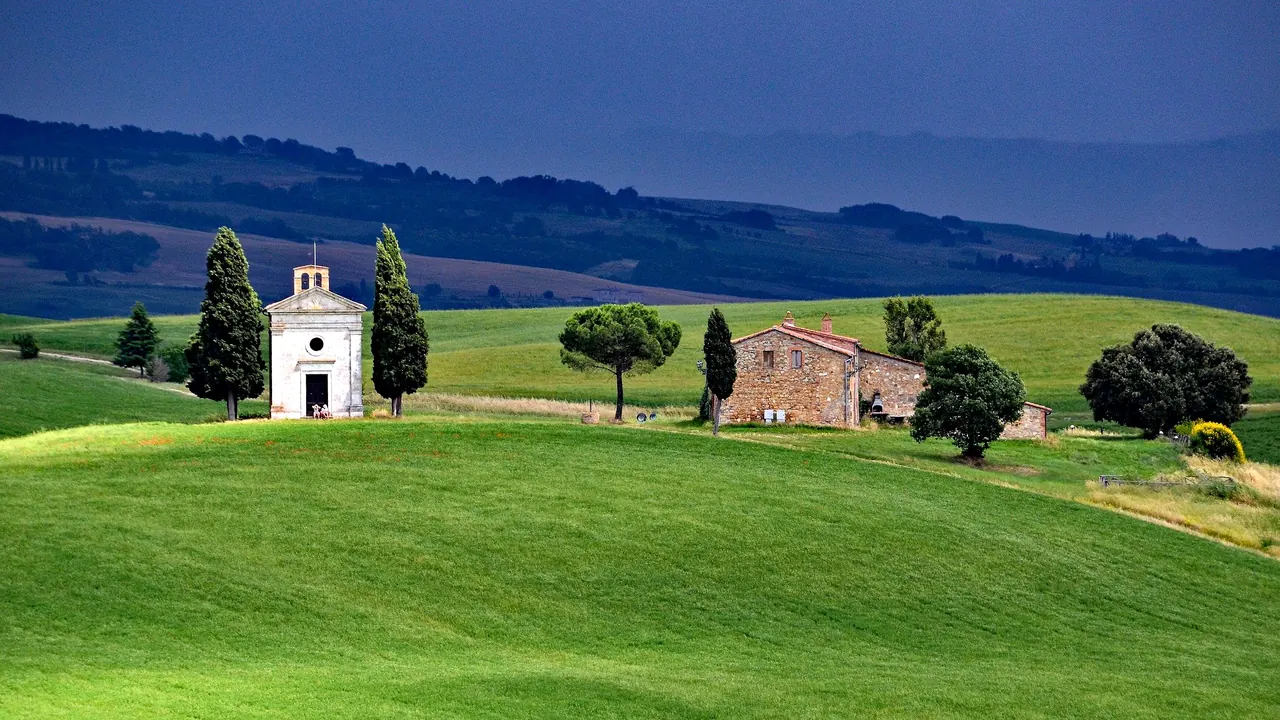
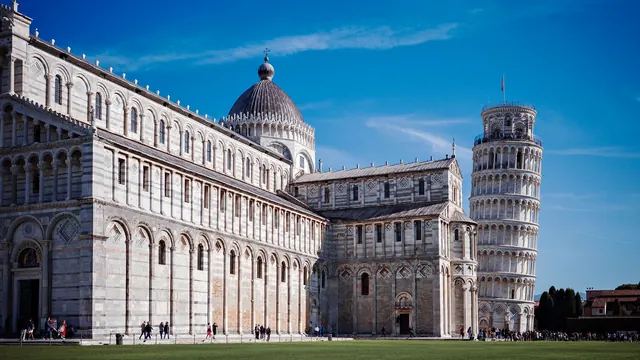
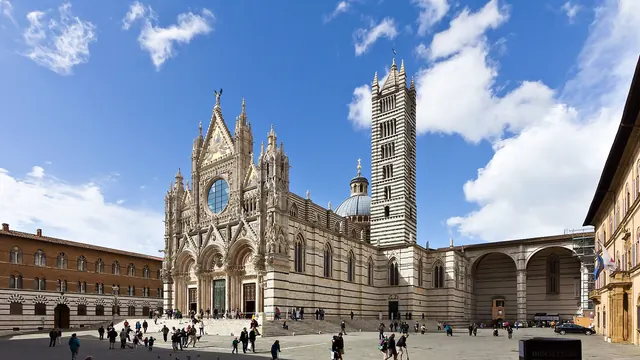
Photos: Barossa Valley by Olivier Lemoine, CC BY-SA 4.0, cropped; Tuscany by Hervé Simon, CC BY-SA 2.0, cropped.
Barossa Valley or Tuscany?
Our verdict in twelve categories, each scored against the same fixed benchmark cities, and the climate month by month, so you can choose for your trip.
Choose Barossa Valley for
Barossa Valley does not lead in any category we score.
The Barossa Valley suits couples who want a slow wine weekend and little else: old-vine Shiraz and Grenache at cellar doors along the back roads, village bakeries, a long lunch at a winery and a quiet cottage for the night. It works best as a short escape for travellers already in Adelaide or touring South Australia, rather than as a vacation in its own right.
Choose Tuscany for
- culture and sights
- beaches
- shopping
Tuscany is the stronger choice for nearly every other kind of trip. It combines Renaissance art cities, wine country at least as good, hot springs, hill-town walking and a real summer coast, and day trips run from Siena to the Cinque Terre. Anyone who wants variety, or a mix of culture and countryside in one stay, will find far more to do here.
Scoreboard
Twelve categories on one fixed scale from 0 to 100. The shaded stretch is the gap between the two.
Your match
Pick a travel style or drag the sliders, and both match scores follow your weighting.
Has no clear advantage with the weighting you have chosen.
Wins on culture and sights and beaches with your weighting.
What matters to you?
Category by category
What the scores mean for a trip.
Beaches & swimming
The Barossa has no coast at all. Swimming means a motel pool, and a beach day means driving more than an hour to Glenelg or Henley Beach on the Adelaide shore.
Tuscany has the real thing in summer: Elba's clear bays at Fetovaia and Cavoli, Cala Violina and the Maremma pine woods, and the long organised sands of Versilia. Base yourself on the coast, though, because from Florence or Chianti the sea is a long drive too.
Food & drink
Both are wine regions first. The Barossa's strength is very old Shiraz and Grenache vines, with Riesling up in Eden Valley, alongside the Silesian Lutheran food tradition of mettwurst, streusel cake and rye bread. It is excellent within a narrow range, and cheap or late meals are hard to find.
Tuscany goes broader and deeper. Chianti Classico, Brunello and Vino Nobile come with a whole cuisine: Florentine steak over coals, ribollita, lampredotto from street carts, Pienza pecorino and San Miniato truffles. The market halls of San Lorenzo and Sant'Ambrogio give everyday eating that the Barossa cannot match.
Culture & sights
This is the widest gap between the two. The Barossa's heritage is a nineteenth-century German farming settlement: Bethany's strip fields, Lutheran spires and the palm avenue to Seppeltsfield. It is pleasant to drive past but not a reason to make the trip.
Tuscany holds the birthplace of the Renaissance. Florence alone could fill a week, and Siena, Pisa, Lucca, Pienza, Arezzo's Piero della Francesca frescoes and the countryside abbeys of Sant'Antimo and San Galgano keep going well beyond that.
Nightlife
In the Barossa, the evening ends when dinner does, with perhaps a beer at an old country hotel in Tanunda. In Tuscany it mostly ends with a drink in the piazza after a long meal, but Florence has student crowds on the steps of Santo Spirito and wine bars in Oltrarno. In summer the Versilia beach clubs dance until dawn, which has no equivalent anywhere near the Barossa.
Nature & outdoors
The Barossa's landscape is gentle and farmed: vineyards and red gums seen from Mengler Hill, kangaroos among the granite of Kaiserstuhl, and dawn balloon flights over the valley floor. It is lovely in spring and autumn but small in scale.
Tuscany has a farmed landscape too, the cypress lanes of the Val d'Orcia and Crete Senesi, and adds wild country: ridge hikes in the Apuan Alps above Carrara, the beech forests of the Casentino, the Maremma's cliff paths and diving and sailing around Elba.
Day trips
From the Barossa, the outings are agreeable rather than essential: Adelaide's North Terrace museums and Central Market, the German village of Hahndorf, and the copper-mining stone cottages of Burra.
Tuscany has more outings than a single stay can use. Siena, Lucca, Pisa, Volterra and the Montalcino and Pienza loop are all close, and Bologna, Assisi, Orvieto and the Cinque Terre lie just over the border.
Good for families
Children have little of their own in the Barossa. The Whispering Wall, flat stretches of cycle trail and cellar-door lawns go only so far, and families usually head for Adelaide's zoo and beaches.
Tuscany gives a family much more to do: agriturismo pools and animals, shallow sandy lidos in Versilia and the Maremma, the Pinocchio park at Collodi and climbing the leaning tower. The catch is the summer heat and how heavy the Florence galleries are for small children.
Getting around
In the Barossa, the towns sit close together along one valley road, but there is almost no public transport, so it is a driving region where tasting and driving clash. A chauffeur, a tour or a bicycle on the sealed Barossa Trail solves that.
Tuscany is easier without a car than it first looks. Florence is walkable, and trains link it to Pisa, Lucca, Arezzo and Viareggio. Chianti, the Val d'Orcia and the Maremma still need a car, with parking outside the walls of each hill town.
Shopping & style
Barossa shopping amounts to wine from the cellar door, often in small lots, plus smallgoods, cheese and preserves, and a few gift and antique shops in Angaston and Tanunda.
Tuscany offers proper craft shopping: leather around Santa Croce, goldsmiths on the Ponte Vecchio and marbled paper in Oltrarno. Each town has its own speciality, from Volterra alabaster to Pietrasanta marble, and Via de' Tornabuoni and the Arno valley outlets cover luxury labels.
Affordability
Neither is a cheap trip, and the costs fall differently. In the Barossa the money goes on boutique cottages, winery restaurants, tasting fees and paying a driver. The savings come from motels and caravan parks around Nuriootpa, bakery lunches and cycling between cellar doors.
In Tuscany the expense is central Florence hotels, Chianti villas, Forte dei Marmi and car hire. Trattoria meals and cellar-door wine are fair, and basing yourself in Lucca, Arezzo or the Maremma, or travelling in spring or autumn, keeps the bill down more than any trick in the Barossa.
Live music & performing arts
The Barossa's music is a small-town affair: Lutheran choirs and brass bands, the occasional pipe-organ recital at the Tanunda gallery and concerts during the Vintage Festival. For anything more, you go to Adelaide.
Tuscany has a real stage life, mostly opera and chamber music. There is the Maggio Musicale Fiorentino with its own opera house, Puccini staged outdoors by the lake at Torre del Lago, the Accademia Chigiana's summer concerts in Siena, and big summer gigs inside Lucca's walls.
Wellness & relaxation
The Barossa relaxes you through its pace: unhurried tastings, empty villages outside vintage and a verandah over the vines. Its spa treatments are few and there is no thermal water.
Tuscany has both. A farmhouse in the Val d'Orcia is just as slow, and nearby you can bathe in the hot springs of Saturnia's Cascate del Mulino, the medieval pool at Bagno Vignoni, the white limestone basins of Bagni San Filippo or the grand halls of Montecatini Terme.
When should you go?
Pick your month. The climate figures are measured averages, not a forecast.
Barossa Valley in July
Tuscany in July
Daytime high, °C
Rainfall in the month, mm
Where the figures come from
Barossa Valley's sunshine is measured 68 km from the centre, at Adelaide Airport.
Tuscany has no rain gauge within 25 km of the centre, so its rainfall comes from a gridded climate dataset read at the destination rather than from a gauge further away.
Tuscany's sunshine is measured 71 km from the centre, at Pisa / S. Giusto.
Temperature and rainfall are climate normals, averaged over the years shown. Barossa Valley: 1991-2020 normals, Nuriootpa (4.5 km from centre). Tuscany: 1995-2020 (sunshine 1991-2020, rainfall 1991-2020) normals, Firenze / Peretola (5.6 km from centre).
The two sit in opposite hemispheres, so their seasons run in reverse. The Barossa is at its best in autumn, March and April, when the vintage is on and the vines turn gold, and again in spring, October and November, when they are green and the days are mild and very sunny. January and February are dry and hot, about 30°C on average and often much hotter, which makes tasting easier than walking. The calm gulf beaches near Adelaide, with the sea around 22°C, offer a way to cool off. Winter, June to September, is cool at about 14°C and is the wettest stretch, though the rain is modest.
Tuscany is best in May, June and September, when it is warm and sunny enough for both hill towns and the coast. July and August reach about 33°C, which suits the beaches but makes Florence's streets and galleries hard going. The rain arrives in autumn and peaks in November at about 124mm, and winter is cool, grey and much less sunny.
Which traveller are you?
For a culture and arts trip, the Barossa's Lutheran churches and German settlement heritage fill an afternoon between tastings. Tuscany can fill the whole vacation. Allow several days for Florence, then move to Siena or Lucca as a quieter base for the hill towns and walled cities.
On a beach and sun trip, the Barossa is the wrong choice, because reaching the sea takes most of a day. Tuscany works if you stay on the coast rather than in Florence. Choose Elba for clear water or Versilia for organised beach clubs.
On a family trip with children, the Barossa works only as a night or two added to a stay in Adelaide. In Tuscany, split the vacation between a farmhouse in the countryside and the coast, keep Florence's galleries brief and avoid the July and August heat.
Before you go
| Measure | Barossa Valley | Tuscany |
|---|---|---|
| Official language | English | Italian |
| Currency | Australian Dollar (AUD) | Euro (EUR) |
| Sockets | I230 V, 50 Hz | CFL230 V, 50 Hz |
| Driving side | Left | Right |
| Time zone | UTC+9:30, UTC+10:30 in summer | UTC+1, UTC+2 in summer |
| Emergency number | 000 | 112 |
| Main airport | Adelaide International Airport (ADL)35 non-stop destinations | Florence Airport, Peretola (FLR)46 non-stop destinations |
| Public holidays this year | 12 days | 13 days |
By the numbers
| Measure | Barossa Valley | Tuscany |
|---|---|---|
| Population | - | 3,729,641 |
| Swim season, months above 21 °C | 3 months | - |
Where else could you go?
Every comparison below shares a destination with this one, so you can follow Barossa Valley or Tuscany somewhere new.
- Umbriavs Tuscany
- Elbavs Tuscany
- Cinque Terrevs Tuscany
- Kangaroo Islandvs Barossa Valley
- Lake Gardavs Tuscany
- Istriavs Tuscany