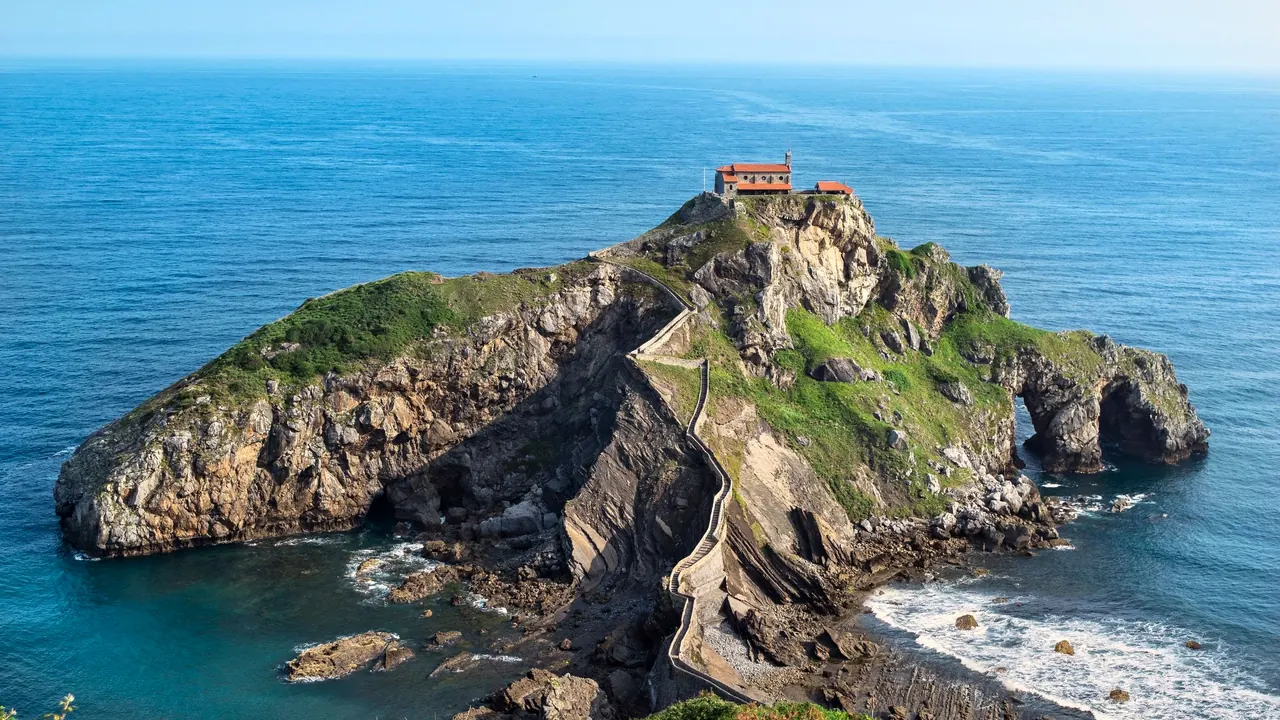
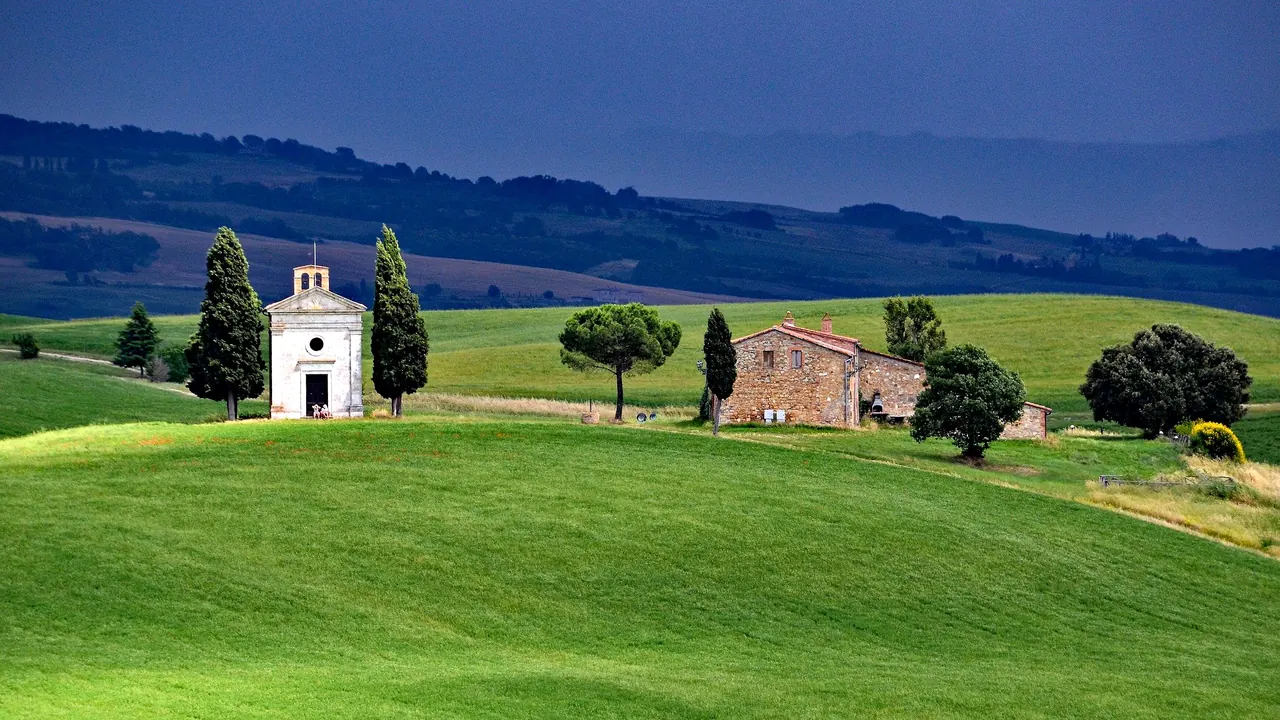
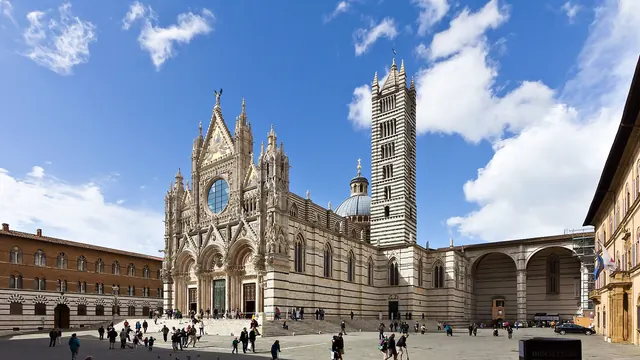
Photos: Basque Country by Enrique, Pexels License; Tuscany by Hervé Simon, CC BY-SA 2.0, cropped.
Basque Country or Tuscany?
Our verdict in twelve categories, each scored against the same fixed benchmark cities, and the climate month by month, so you can choose for your trip.
Choose Basque Country for
- nightlife
- getting around
- food and drink
Choose the Basque Country if eating well is the point of the trip. The evening round of pintxos bars in San Sebastián and Bilbao, the cider houses and the celebrated restaurants in the hills make it the stronger food destination, and its nights carry on later than Tuscany's. It also suits travellers who like mild summers, a wild green Atlantic coast to walk and surf, and three compact cities about an hour apart that you can explore without a car.
Choose Tuscany for
- wellness
- culture and sights
- shopping
Tuscany is the better pick for art, history and slow countryside. Florence, Siena, Pisa and a long run of hill towns give it a far deeper heritage and more outings than one stay can hold. Its hot springs and farmhouse stays make it a place to unwind properly. Summers are hot and dry, and the coast at Elba and the Maremma is better for swimming. Plan on hiring a car to reach most of it.
Scoreboard
Twelve categories on one fixed scale from 0 to 100. The shaded stretch is the gap between the two.
Your match
Pick a travel style or drag the sliders, and both match scores follow your weighting.
Wins on nightlife and getting around with your weighting.
Wins on wellness and culture and sights with your weighting.
What matters to you?
Category by category
What the scores mean for a trip.
Beaches & swimming
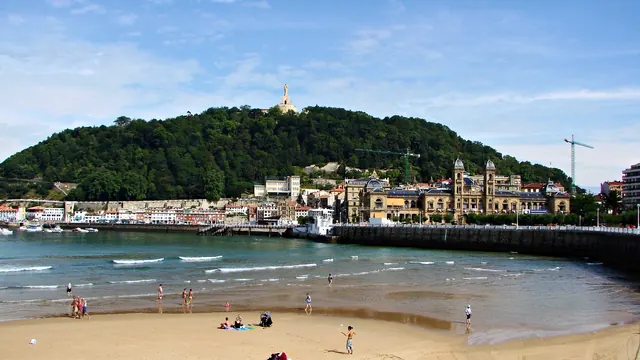
The Basque Country's great asset is La Concha, a sheltered town beach in the middle of San Sebastián, calm enough for long swims, with Zurriola and Zarautz taking the surf. But the Bay of Biscay is cool outside high summer and grey days are normal, so beach time is a part of a July or August stay rather than its purpose.
Tuscany is the better beach trip. Elba has clear water and sandy bays, the Maremma and Argentario have pine-backed strands and coves such as Cala Violina, and the swimming season runs from June to late September. The catch is that the coast is far from Florence and the hill towns, so you need to stay there for it.
Food & drink
Both are serious food regions, but the Basque Country has the edge. Its strength is variety at every level, from pintxos and hot dishes cooked to order in the bars of the Parte Vieja and Gros to grilled turbot in Getaria, cider-house menus in Astigarraga and a cluster of celebrated restaurants in the hills.
Tuscan cooking is plainer and more rustic, built on bread, olive oil, beans, wild boar and the Florentine steak. Where it can match the Basques is wine: tasting your way through Chianti, Montalcino and Montepulciano goes further than a trip into Rioja Alavesa.
Culture & sights
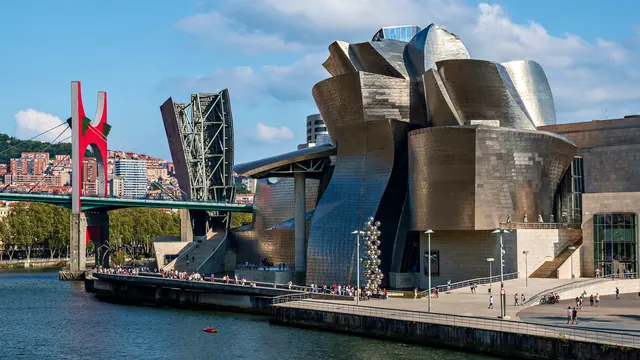
The Basque Country's heritage is varied but spread thin: the Guggenheim and the Fine Arts Museum in Bilbao, the Vizcaya transporter bridge, San Sebastián's Belle Époque seafront, Vitoria's ringed medieval centre and the symbolic oak at Gernika.
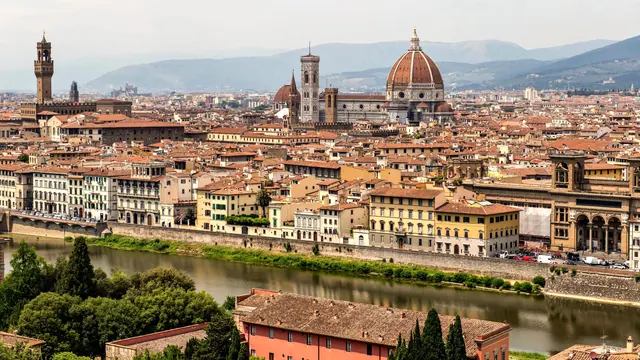
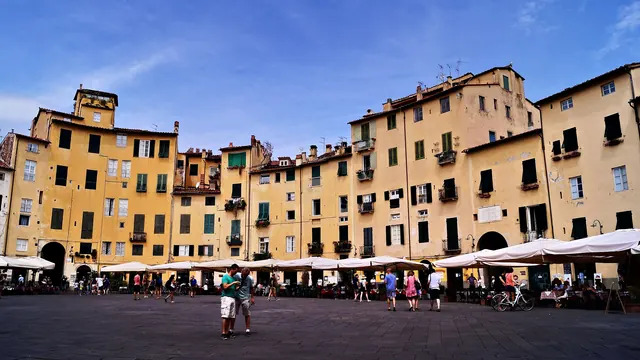
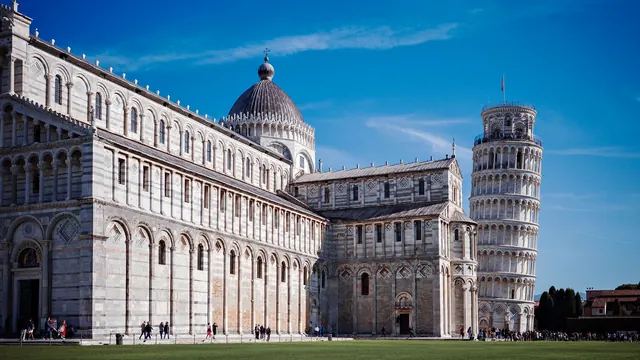
Tuscany is in another league. Florence alone has Brunelleschi's dome, the Uffizi, the David and the frescoed churches, all on foot, and Siena's Campo, Pisa's marble square, Lucca's walls and Piero della Francesca in Arezzo follow close behind. The price is heavy summer crowds in Florence.
Nightlife
Basque nights grow out of the bar round. The crowds in the old towns of San Sebastián and Bilbao move on after dinner to cocktail bars and late pubs, and a few clubs stay open until dawn at weekends. Bilbao has the widest range, and the August fiestas fill the streets.
Tuscany goes to bed earlier. Florence has the Santo Spirito steps and its Oltrarno wine bars, and Versilia's beach clubs dance until dawn in summer, but the hill towns go quiet soon after dinner.
Nature & outdoors
Both are excellent for the outdoors, but the landscapes are very different. The Basque Country is wild, wet and green, with the tilted flysch cliffs of the Geopark between Zumaia and Deba, the islet hermitage of Gaztelugatxe, beech-forest ridges at Gorbeia and Urkiola, and Mundaka's famous surf wave.
Tuscany's signature is a farmed landscape of cypress lanes and rolling Val d'Orcia fields, ideal for gentle cycling and walking between towns. For wilder ground, the Apuan Alps climb to almost 2,000m, and Elba is the place for diving and sailing.
Day trips
The Basque Country offers a good spread of outings: fishing ports such as Lekeitio and Hondarribia, French Basque Biarritz and Bayonne within an hour of San Sebastián, the Laguardia wine cellars, and Pamplona and Burgos further out.
Tuscany has far more within reach. Siena, Lucca, Pisa, Volterra and San Gimignano are each one day from Florence or Chianti, and Montalcino, Pienza and Montepulciano make a loop through the south. Bologna, Umbria's Assisi and the Cinque Terre are also within reach of a day trip.
Good for families
The two work about equally well for children, in different ways. The Basque Country makes it easy to base yourself in a city: San Sebastián has a calm beach, a flat promenade, an aquarium, a science museum and the old funicular up to Monte Igueldo's small fairground. Frequent rain means you need indoor plans.
Tuscany works better split between an agriturismo with a pool and animals and a shallow, lifeguarded beach in Versilia or the Maremma, with Collodi's Pinocchio park and cycling on Lucca's walls as outings. The heat and queues in July and August are the main drawback.
Getting around
The Basque Country is easier to manage without a car. Bilbao, San Sebastián and Vitoria are about an hour apart by frequent coach, each centre is compact, and Bilbao has its Foster-designed metro. You only need a car for the wine country and the hill villages.
In Tuscany, the train line linking Florence, Pisa, Lucca and Viareggio works well, but Chianti, the Val d'Orcia and the Maremma really need a car. Old centres are closed to visitors' cars, so you park outside the walls and walk in, and the ferries to Elba need planning.
Shopping & style
Tuscany gives you more reasons to shop. Florence has leather workshops around Santa Croce, goldsmiths on the Ponte Vecchio and marbled paper in Oltrarno. Each town has its own craft as well, such as alabaster in Volterra and ceramics in Montelupo, and there are big designer outlets in the Arno valley.
In the Basque Country you'll find fashion chains on Bilbao's Gran Vía and tidy boutiques in San Sebastián, but the best things to bring home are edible: Getaria anchovies, Idiazabal cheese and txakoli. Striped Basque linen and a txapela beret add something local.
Affordability
Neither is cheap, and the costs land in different places. In the Basque Country, San Sebastián's summer hotels are the big expense. Sleeping in Bilbao or Vitoria, eating at pintxos counters and using the inexpensive trains and buses keep the trip affordable.
In Tuscany the expense is central Florence, Chianti villas and the Versilia beach clubs, and car hire comes on top for the countryside. Lucca, Arezzo and the Maremma are cheaper bases, and spring or autumn costs less than high summer.
Live music & performing arts
The two are much alike for live performance, but in different genres. The Basque calendar is broader: jazz on the beach and in the Kursaal during San Sebastián's Jazzaldia, a long classical season in August, the BBK Live rock festival above Bilbao, and ABAO's opera season at the Euskalduna.
Tuscany centres on opera and chamber music. There is the Maggio Musicale in Florence, Puccini year-round in Lucca and staged outdoors by the lake at Torre del Lago, and the Accademia Chigiana's summer concerts in Siena's palaces.
Wellness & relaxation
Tuscany is the place for wellness. Its hot springs range from the grand pump rooms of Montecatini Terme to the free terraced pools at Saturnia and the steaming medieval square of Bagno Vignoni, and a quiet farmhouse stay in the Val d'Orcia completes the picture.
The Basque Country has the seawater pools of the old bathing pavilion on La Concha and the springs at Zestoa, but little more. Rest there comes from sea air, promenade walks and quiet evenings in a fishing town such as Lekeitio.
When should you go?
Pick your month. The climate figures are measured averages, not a forecast.
Basque Country in July
Tuscany in July
Daytime high, °C
Rainfall in the month, mm
Where the figures come from
Basque Country's station stands 253 m above the place it is measured for, so that place is likely a little warmer than the figures say.
Tuscany has no rain gauge within 25 km of the centre, so its rainfall comes from a gridded climate dataset read at the destination rather than from a gauge further away.
Tuscany's sunshine is measured 71 km from the centre, at Pisa / S. Giusto.
Temperature and rainfall are climate normals, averaged over the years shown. Basque Country: 1991-2020 normals, San Sebastian / Igueldo (10 km from centre). Tuscany: 1995-2020 (sunshine 1991-2020, rainfall 1991-2020) normals, Firenze / Peretola (5.6 km from centre).
The Basque Country never gets hot. Daytime highs peak at about 23°C in August, so walking the streets is comfortable all summer, and the sea warms to about 22°C, which makes July to early September the beach season. Rain falls in every month, with grey spells normal even in summer. From October the weather turns wetter, peaking at around 203mm in November, and winter is cool, damp and short on sunshine.
Tuscany has a much sharper summer, measured here in the interior. July and August are the driest and sunniest months, but highs of around 33°C make midday sightseeing in Florence or Siena hard work, so they suit the coast and a farmhouse pool better than the cities. April to June and September to early October are the best months for walking the towns and countryside. The rains arrive in October and November, though Tuscany stays drier than the Basque coast for most of the year.
Which traveller are you?
On a culture and arts trip, Tuscany is the clear choice. Florence's Uffizi, the Accademia and the Duomo, then Siena, Pisa, San Gimignano and Arezzo, give it a depth that the Guggenheim and Vitoria's old core cannot match, with more towns within a day's reach.
For a food and nightlife trip, the Basque Country comes out ahead. An evening means moving from counter to counter in San Sebastián's Parte Vieja or Bilbao's Casco Viejo, then on to cocktail bars and late pubs, while Tuscan evenings mostly end after dinner in the piazza.
On a relaxing and wellness trip, go to Tuscany. You can soak in warm springs at Saturnia, Bagno Vignoni and Bagni San Filippo, or take the grand spa at Montecatini, then rest at a Val d'Orcia farmhouse. The Basque side has a single thalassotherapy centre and some hotel spas.
Before you go
| Measure | Basque Country | Tuscany |
|---|---|---|
| Official language | Spanish | Italian |
| Currency | Euro (EUR) | Euro (EUR) |
| Sockets | CF230 V, 50 Hz | CFL230 V, 50 Hz |
| Driving side | Right | Right |
| Time zone | UTC+1, UTC+2 in summer | UTC+1, UTC+2 in summer |
| Emergency number | 112 | 112 |
| Main airport | Bilbao Airport (BIO)73 non-stop destinations | Florence Airport, Peretola (FLR)46 non-stop destinations |
| Public holidays this year | 13 days | 13 days |
By the numbers
| Measure | Basque Country | Tuscany |
|---|---|---|
| Population | 3,193,513 | 3,729,641 |
| Swim season, months above 21 °C | 2 months | - |
Where else could you go?
Every comparison below shares a destination with this one, so you can follow Basque Country or Tuscany somewhere new.
- Umbriavs Tuscany
- Elbavs Tuscany
- Cinque Terrevs Tuscany
- Lake Gardavs Tuscany
- Bordeauxvs Basque Country
- Istriavs Tuscany