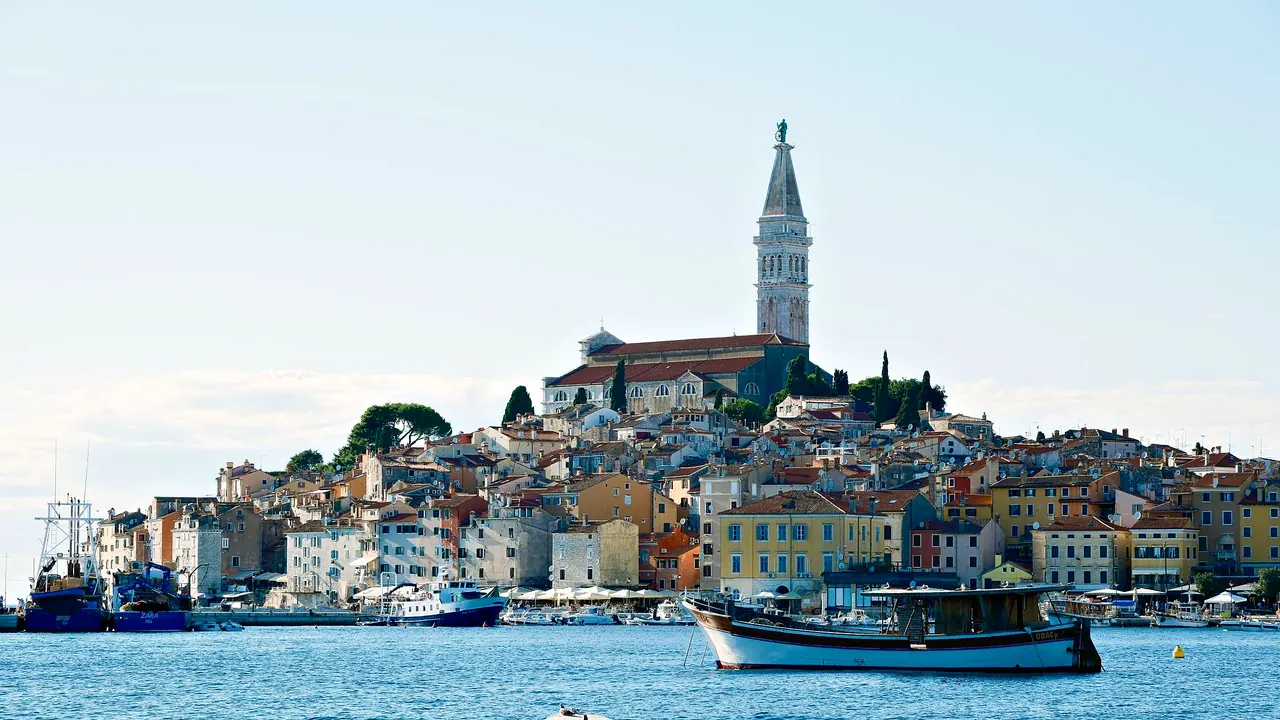
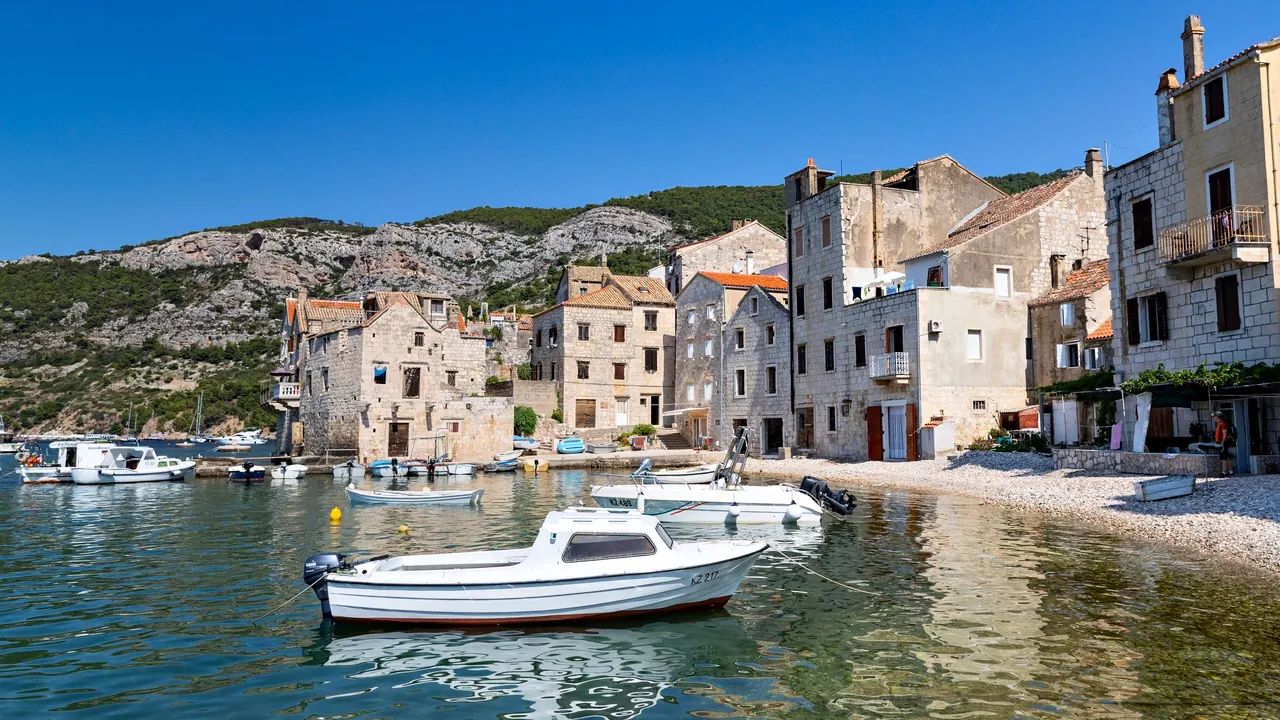
Photos: Istria by Ramon Karolan, Pexels License; Vis by dronepicr, CC BY 2.0, cropped.
Istria or Vis?
Our verdict in twelve categories, each scored against the same fixed benchmark cities, and the climate month by month, so you can choose for your trip.
Choose Istria for
- day trips
- culture and sights
- food and drink
Istria suits travellers who want plenty to do from one base: Roman Pula and Venetian Rovinj, truffle and wine country around the hill towns, resort beaches set up for children, and Piran or Trieste close by. It is the better choice for families, for food lovers and for anyone who would get restless after three days of only swimming. It works far better with a car.
Choose Vis for
- beaches
Vis is for people who want the sea and very little else. Stiniva and the boat-only bays of the south are wilder and emptier than Istria's resort shorelines, and being so far out at sea keeps days slow and evenings short. You give up variety, shopping and easy outings, and reaching the island takes a ferry from Split, but for many visitors that distance is the point.
Scoreboard
Twelve categories on one fixed scale from 0 to 100. The shaded stretch is the gap between the two.
Your match
Pick a travel style or drag the sliders, and both match scores follow your weighting.
Wins on day trips and culture and sights with your weighting.
Wins on beaches with your weighting.
What matters to you?
Category by category
What the scores mean for a trip.
Beaches & swimming
Both coasts are rock and pebble with very clear water, so on either you need water shoes more than a beach towel. Istria's swimming runs along a long and largely developed shoreline: concrete platforms and resort beaches at Poreč and Umag, wooded headlands near Rovinj, and wild coves only at Kamenjak at the southern tip.
Vis has the more memorable sea. Stiniva, Srebrna and the southern inlets feel remote in a way only Kamenjak matches in Istria, and boat trips to the outer islets find water with almost nobody in it. The price is effort and very little shade, since the best coves need a scooter or a taxi boat.
Food & drink
Istria is one of the great food regions of the Adriatic. It has black and white truffles from the forests around Motovun, boškarin beef, Lim Bay oysters, some of the finest olive oil anywhere, and cellars of Malvazija and Teran across the western hills. Rovinj and Novigrad also have fine dining.
Vis eats well, but in a narrow range. Konobas serve fish, lobster, peka and the anchovy pogaca of Komiza, with Vugava and Plavac from the island's own vineyards. That is the whole repertoire, and many places close outside summer.
Culture & sights
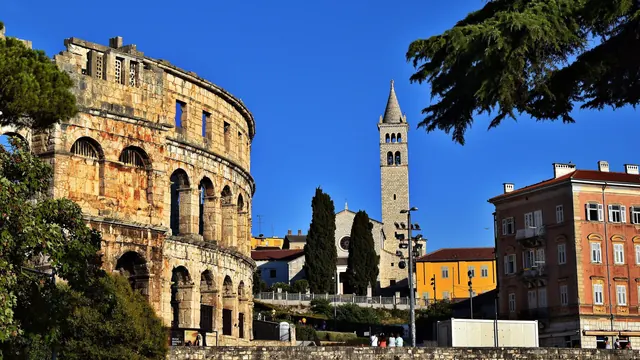
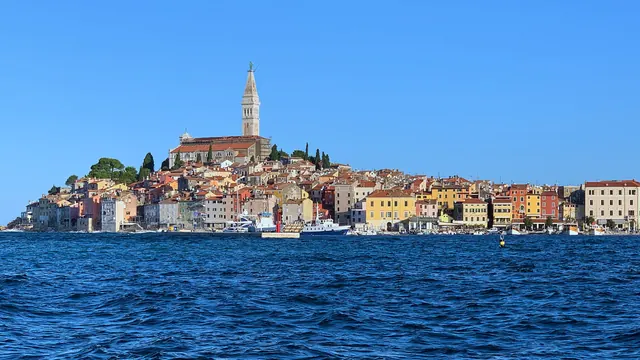
Istria has two major sights, Pula's Arena and the sixth-century mosaics of the Euphrasian Basilica, and around them Rovinj's hilltop old town, the Roman street grid of Poreč and walled hill towns such as Motovun and Hum. That is enough for several days of wandering through stone towns.
Vis has a smaller and odder history: the remains of Greek Issa and the bronze head in the harbour fortress museum, British forts from the Napoleonic wars, and Tito's cave and the military tunnels of an island that was long closed to visitors. They make a good morning or two, not a cultural trip.
Nightlife
Neither is a party destination, and in both, evenings centre on dinner by the water. Istria has more to stretch the night: Pula's student bars all year, cocktail terraces in Rovinj and Poreč, and seasonal beach clubs around Poreč and Medulin in high summer.
Vis has no clubs at all and only a handful of late bars in Vis town and Komiza in July and August. Well before dawn, the island is asleep.
Nature & outdoors
Both are at their best outdoors in spring and autumn, but the outdoor life is different. Istria is a cycling and walking region. The Parenzana rail trail crosses viaducts into the interior, signposted routes link the hill towns, and the ridge of Učka gives proper hiking above the Kvarner Gulf.
On Vis, outdoor days turn towards the sea. A geopark of volcanic islets and sea caves, diving on wrecks and walls, and kayaking under the southern cliffs give it a wilder feel. Walks across the dry plateau and up Hum are rewarding but shorter.
Day trips
Istria is an excellent base for day trips. The hill towns, Rovinj, the boat to Brijuni and the wine roads are all close by, and across the border lie Piran, Trieste, the Postojna and Škocjan caves and even Ljubljana.
On Vis, day trips mean boat trips: the Blue Cave on Biševo, the islets of Ravnik and Budikovac, and a visit to the island's other town. Split is too far for a day, so any mainland sights have to come before or after your stay on the island.
Good for families
Istria is the easier family destination by a wide margin, because so much of it was built with families in mind. The resort villages and campsites around Poreč, Umag and Medulin have pools and playgrounds on the doorstep, and there are attractions to fall back on when children tire of the sea. Medulin and Premantura have gentle bays for toddlers, and the boat out to the Brijuni islands and their small safari park makes a memorable day. The only real drawback is the high-summer heat on the old towns' slippery cobbles.
Vis suits families who are happy with the sea and little else. Stoncica and a few bays near Komiza are shallow enough for small swimmers, and the harbour towns are quiet enough to give children some freedom. Many of the better coves, though, are down steep paths or reached by boat, with pebbles and almost no shade, and there is nothing on the island built to entertain children.
Getting around
Istria is the far easier of the two, both to reach and to move around once there. Because it is a peninsula, you can simply drive in, and with a car everything is open to you: hill towns, wineries and beaches are all within about an hour of each other. Without a car you are mostly tied to the coastal towns on the bus routes. In high summer the cost is slow traffic around the resorts and car parks that fill early.
Vis asks more of you at every stage. Getting there means a boat from Split taking an hour and a half or more, with few sailings, and once you arrive the bus only links the two harbour towns. Where Istria needs one hire car, Vis needs a plan for each day: a scooter or car for the narrow roads inland, or a taxi boat round to Stiniva. The upside is that distances are tiny and both towns are easy on foot.
Shopping & style
Istria gives you clearly more to bring home, though nearly all of it is food and drink: truffle products from the hill towns, estate olive oil, and wine bought where it is made. Grožnjan's studios and Rovinj's old streets add some crafts and small galleries, but there is little for fashion or design.
Vis has almost nothing by comparison. Apart from a few growers' wines, oils and herbal brandies, its shops are for daily supplies, so any real shopping belongs to the mainland part of the trip.
Affordability
Both are expensive in July and August and both get noticeably cheaper in June and September, so the difference is where the money goes. In Istria it goes on rooms in Rovinj and along the best coast, and on seafood and truffle dishes. Campsites, farm stays and inland taverns bring the cost down.
On Vis, private apartments keep rooms manageable. The extras are what add up day by day: fish sold by weight, taxi boats, scooter hire, the ferry and the higher prices in island shops.
Live music & performing arts
Istria has the one stage in this pairing worth planning around. Pula's Roman Arena holds summer concerts and the long-running film festival, and in summer young musicians play in the squares and churches of Grožnjan. Pula's theatre keeps going for the rest of the year.
Vis has no theatre or concert life. All you will find are klapa singers in the harbours, the odd open-air concert and Komiza's fishermen's feast days, which are pleasant to come across but nothing to plan around.
Wellness & relaxation
Istria is the better choice if you want to be pampered. It has spas in the resort hotels of Rovinj, Poreč and Umag, and the sulphur springs of Istarske Toplice in the Mirna valley, used since Roman times. Its calmest corners are the stone farmhouses among the inland olive groves.
Vis offers stillness rather than treatments. There are a few massage rooms, but mostly little traffic, long lunches and early nights. For pure quiet the island is hard to beat, but that is all it offers.
When should you go?
Pick your month. The climate figures are measured averages, not a forecast.
Istria in July
Vis in July
Daytime high, °C
Rainfall in the month, mm
Where the figures come from
Istria's temperatures are measured 57 km from the centre, at Trieste.
Istria has no rain gauge within 25 km of the centre, so its rainfall comes from a gridded climate dataset read at the destination rather than from a gauge further away.
Vis's temperatures are measured 55 km from the centre, at Split / Marjan.
Vis has no rain gauge within 25 km of the centre, so its rainfall comes from a gridded climate dataset read at the destination rather than from a gauge further away.
Vis's sunshine is measured 55 km from the centre, at Split / Marjan.
Temperature and rainfall are climate normals, averaged over the years shown. Istria: 1991-2020 normals, Trieste (56.5 km from centre). Vis: 1991-2020 (sunshine 1971-2000) normals, Split / Marjan (54.8 km from centre).
Both are summer sea destinations, with swimming from June into September, but Vis is hotter, drier and sunnier. Its July and August highs reach 31°C, against 29°C in Istria, and the island gets almost no rain in high summer. Midday walking is hard going in both, harder on Vis. Istria has a little more summer rain, and its wet season starts sooner, building through autumn to its wettest month in November.
For sightseeing and walking, May, June and September suit both. Vis stays warm for longer: the sea there is swimmable into early October and its winters are milder. Istria is cool from December to February, at around 10°C. Those months are fine for its towns but not for the coast, while autumn, before the heaviest rain, is truffle season inland.
Which traveller are you?
For a beach and sun trip, Vis is the stronger pick. Coves like Stiniva and Srebrna, boat trips to empty water off the outer islets and a drier, sunnier summer make every day revolve around the sea, though you will need a scooter or taxi boat.
On a culture and arts trip, Istria wins easily. Pula's Roman Arena, the gold mosaics of Poreč, Rovinj's old town and the walled hill towns fill several days, and summer brings concerts in the Arena. Vis has interesting remains but little to fill a week.
On a family trip with young children, Istria is the easier choice. It has campsites with pools, water parks, a dinosaur park, Pula's aquarium and shallow bays near Medulin. Vis is safe and relaxed, but it has steep paths to its coves and nothing built for children.
Before you go
| Measure | Istria | Vis |
|---|---|---|
| Official language | Croatian | Croatian |
| Currency | Euro (EUR) | Euro (EUR) |
| Sockets | CF230 V, 50 Hz | CF230 V, 50 Hz |
| Driving side | Right | Right |
| Time zone | UTC+1, UTC+2 in summer | UTC+1, UTC+2 in summer |
| Emergency number | 112 | 112 |
| Main airport | Pula Airport (PUY)34 non-stop destinations | Split Saint Jerome Airport (SPU)69 non-stop destinations |
| Public holidays this year | 14 days | 14 days |
By the numbers
| Measure | Istria | Vis |
|---|---|---|
| Swim season, months above 21 °C | 4 months | 4 months |
Where else could you go?
Every comparison below shares a destination with this one, so you can follow Istria or Vis somewhere new.