Mexico
Acapulco
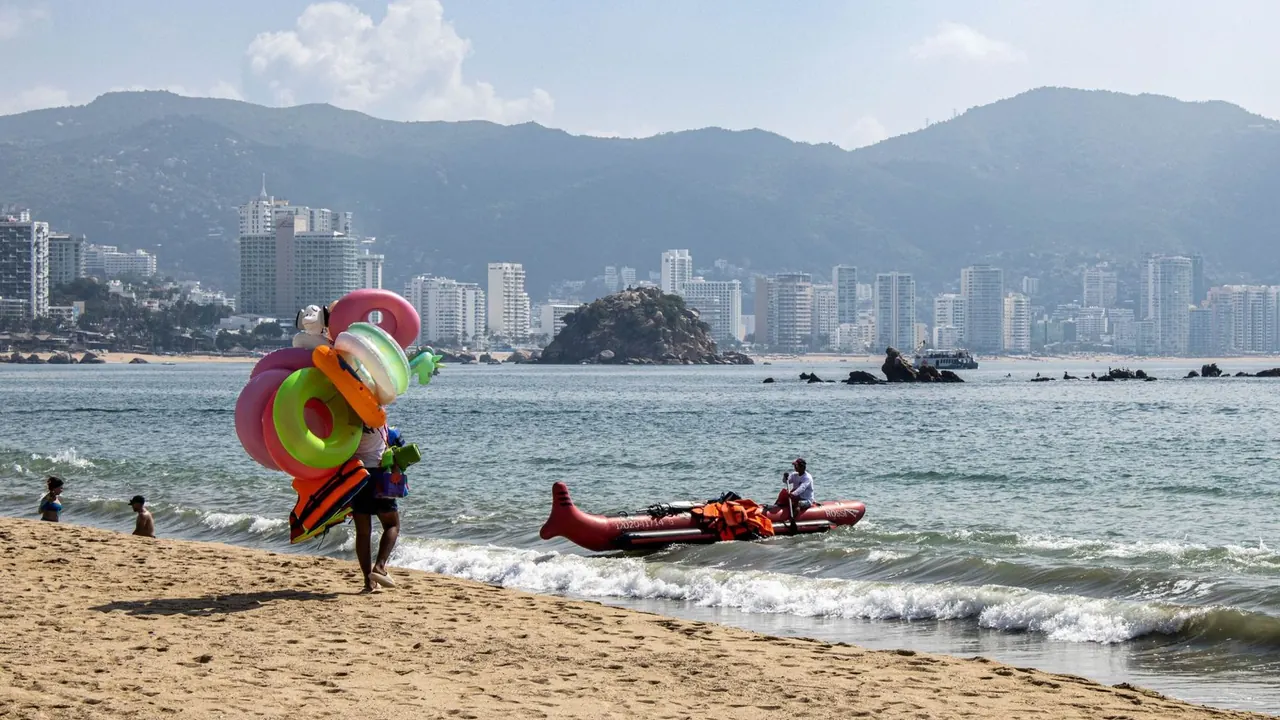
The beach with the bay and the skyline behind
- Beaches80
- Affordable cities74
- Nightlife64
Photo: Felicia Navarrete, Pexels License
Match
44
Every category weighted equally
- Beach & sun51
- Culture & arts38
- Food & nightlife45
- Family trip47
- Outdoors44
- Relax & unwind46
- Shopping & style41
- On a budget48
Acapulco in twelve categories
Our verdict on each, scored 0 to 100 against the same fixed benchmark cities, so a score means the same thing on every page.
Beaches & swimming. Scores 80 out of 100.
Food & drink. Scores 55 out of 100.
Culture & sights. Scores 28 out of 100.
Nightlife. Scores 64 out of 100.
Nature & outdoors. Scores 50 out of 100.
Day trips. Scores 15 out of 100.
Good for families. Scores 45 out of 100.
Getting around. Scores 30 out of 100.
Shopping & style. Scores 32 out of 100.
Affordability. Scores 74 out of 100.
Live music & performing arts. Scores 26 out of 100.
Wellness & relaxation. Scores 32 out of 100.
Acapulco category by category
Beaches & swimming
80Acapulco is built around its bay, and the beach is the reason to come. The Pacific here stays warm all year, around 28°C to 30°C, and a string of sandy beaches runs along the curve of the bay: Condesa and Icacos in front of the hotel strip, and the calmer, family-crowded coves of Caleta and Caletilla on the old peninsula, where boats cross to Roqueta Island. Puerto Marqués, in the next bay to the east, is sheltered and good for swimming.
The open-ocean beaches are another matter. Revolcadero and Pie de la Cuesta have long sand and fine sunsets, but heavy surf and strong currents make swimming risky. Water inside the main bay can be murky after rain, so swimmers often head for Puerto Marqués or Roqueta.
Food & drink
55The local cooking is coastal Guerrero, and it is worth seeking out. Pescado a la talla, a whole fish split, rubbed with chilli paste and grilled over wood, is a speciality of the palapa restaurants at Barra Vieja and along the lagoons. Acapulco-style ceviche comes in a tomato-based sauce, and on Thursdays the whole city eats pozole verde, a green hominy stew served with a spread of garnishes.
Away from those, the offer thins. The Costera is lined with chain restaurants and tourist seafood places, and fine dining is limited to a few hotel and clifftop restaurants with views of the bay. For simpler, cheaper food, try the market stalls and taquerías around the old centre.
Culture & sights
28Acapulco has a short list of sights. The best is the Fuerte de San Diego, a star-shaped fortress above the port that once guarded the Manila galleons and is now a good history museum. The cliff divers at La Quebrada are the city's best-known image. Near the old town, Diego Rivera's mosaic murals cover the outside of the Casa de los Vientos. The zócalo and its unusual cathedral, with domes that look almost Byzantine, take up a short walk.
Much of the city's appeal is its mid-century glamour as a jet-set resort, which shows more in the hillside villas and old hotels than in any museum. Visitors who want history should not expect to fill more than a day.
Nightlife
64Going out has been part of Acapulco's reputation for decades. The nightlife runs along the Costera Miguel Alemán, with beach bars, open-air terraces and big clubs, some of them set on the hillside above the bay, that fill up late and stay open until dawn. On long weekends and in Easter and Christmas weeks, crowds drive down from Mexico City and the whole strip turns into a party.
The scene is loud and mainstream, with little in the way of small cocktail bars or alternative venues. Midweek outside the peak seasons it can feel half empty. At night, take taxis between venues rather than walking long stretches of the Costera.
Nature & outdoors
50The setting is the main draw: a deep horseshoe bay ringed by green hills, best seen from the Scenic Highway towards Puerto Marqués. Boat trips go out around the bay. Snorkelling and diving are done around Roqueta Island, and deep-sea fishing for sailfish and marlin is a long tradition here. West of the city, Coyuca Lagoon has mangrove channels, birdlife and boat rides. To the east, Tres Palos Lagoon and Barra Vieja have nesting beaches where sea turtles are released.
Inland, the Sierra Madre del Sur is rough country with little in the way of marked trails. The heat and humidity make hiking hard work for most of the year.
Day trips
15Acapulco does not work well as a base for day trips. The nearby outings are coastal villages on the city's edge: Pie de la Cuesta for its sunsets and lagoon, and Barra Vieja for grilled fish under palm roofs. Both take half a day rather than a full day out.
The silver town of Taxco, with its colonial church and steep white streets, is the obvious cultural trip. It is around three hours away by the toll road, so it suits an overnight stay better than a day out. Zihuatanejo, further up the coast, is even further.
Good for families
45Mexican families have vacationed here for generations, and it shows in the calm, shallow coves of Caleta and Caletilla, the boat rides to Roqueta Island and the big all-inclusive hotels with pools and kids' clubs. The CICI water park on the Costera has slides and wave pools. Papagayo Park is a large green space in the middle of the hotel strip.
The downsides are practical. The heat is strong, the Costera is loud with traffic, and the open-ocean beaches have surf that is dangerous for children. Most families stay inside a resort and use taxis to get anywhere else, which keeps a stay easy but limited.
Getting around
30The city stretches along the Costera Miguel Alemán, the boulevard that follows the bay from the old town past the hotel zone. Cheap buses and plentiful taxis run its length, and short stretches near the beach are pleasant to walk.
There is no rail system. The hills behind the bay are steep, and the distances between the old town, the main strip and Diamante in the east are too long to cover on foot. Taxis are the usual way to get around after dark. A car helps for the lagoons and outlying beaches, but most visitors manage with taxis and tours.
Shopping & style
32Most shopping here is practical or for souvenirs. The large artisan market near the old town sells silver from Taxco, lacquerware from Olinalá, hammocks, masks and embroidered clothing from across Guerrero, though quality varies. Bargaining is normal.
In the Diamante zone to the east, open-air malls carry the usual Mexican and international chains. Elsewhere, the Costera is lined with beachwear shops and vendors. Nobody comes to Acapulco to shop, but a good piece of silver is worth hunting for.
Affordability
74Acapulco is mainly a resort for Mexicans rather than foreign visitors, and its prices show it. Beach-view rooms in the older hotels on the Costera, seafood lunches, market food and local buses all cost little by international standards. Even the large all-inclusive resorts are reasonably priced for what they offer.
Costs rise in the luxury resorts and restaurants of Diamante and on the hillsides of Las Brisas. Rooms also cost more during Easter week, Christmas and long weekends, when domestic demand peaks. The rest of the year, a comfortable stay is easy on the budget.
Live music & performing arts
26Live performance in Acapulco is mostly music, and mostly informal. Mariachi bands and guitar trios play for diners in the seafood restaurants and around the zócalo, and many hotels put on live bands and Mexican folk dance shows in the evenings. Touring Mexican and Latin pop stars play the large convention and concert venue in Diamante, especially around the peak seasons.
The Acapulco Philharmonic Orchestra plays occasional concerts in the city between tours around Guerrero. Beyond that, there is no regular theatre, opera or classical season. The cliff divers at La Quebrada are the city's most famous show, but they are better thought of as a sight than as a night out.
Wellness & relaxation
32There is no bathing tradition here, and wellness means the spas of the large resorts in Diamante and on the Las Brisas hillside, along with massages offered on the beach. A few of the clifftop hotels make calm retreats, with pools above the bay and little reason to leave.
The rest of the city does not slow down easily. The Costera is noisy with traffic and music, and on long weekends the beaches are packed. For rest, stay away from the main strip, at the east end of the bay or at Pie de la Cuesta, where the pace is slower.
When should you go?
Pick a month to see what it is like. The climate figures are measured averages, not a forecast.
Acapulco in July
Daytime high, °C
Rainfall in the month, mm
The whole year
Shaded against this city’s own year: the deepest cell is its best month for that figure and the palest its weakest.
Temperature and rainfall are climate normals, averaged over the years shown. Acapulco: 1991-2020 normals, Acapulco, Gro. (5.9 km from centre).
Before you go
| Measure | Acapulco |
|---|---|
| Official language | Spanish, Nahuatl, Yucatec Maya |
| Currency | Mexican Peso (MXN) |
| Sockets | AB127 V, 60 Hz |
| Driving side | Right |
| Time zone | UTC-6 |
| Emergency number | 911 |
| Elevation | 18 m |
| Main airport | General Juan N. Álvarez International Airport (ACA)18 km from centre10 non-stop destinations |
| Public holidays this year | 9 days |
By the numbers
| Measure | Acapulco |
|---|---|
| City population | 658,609 |
| People per km² | 350 |
| Museums within 10 km | 3 |
| UNESCO World Heritage sites within 50 km | 0 |
| Swim season, months above 21 °C | 12 months |
Compare Acapulco with
Every comparison with a written verdict behind it.