Romania
Bucharest
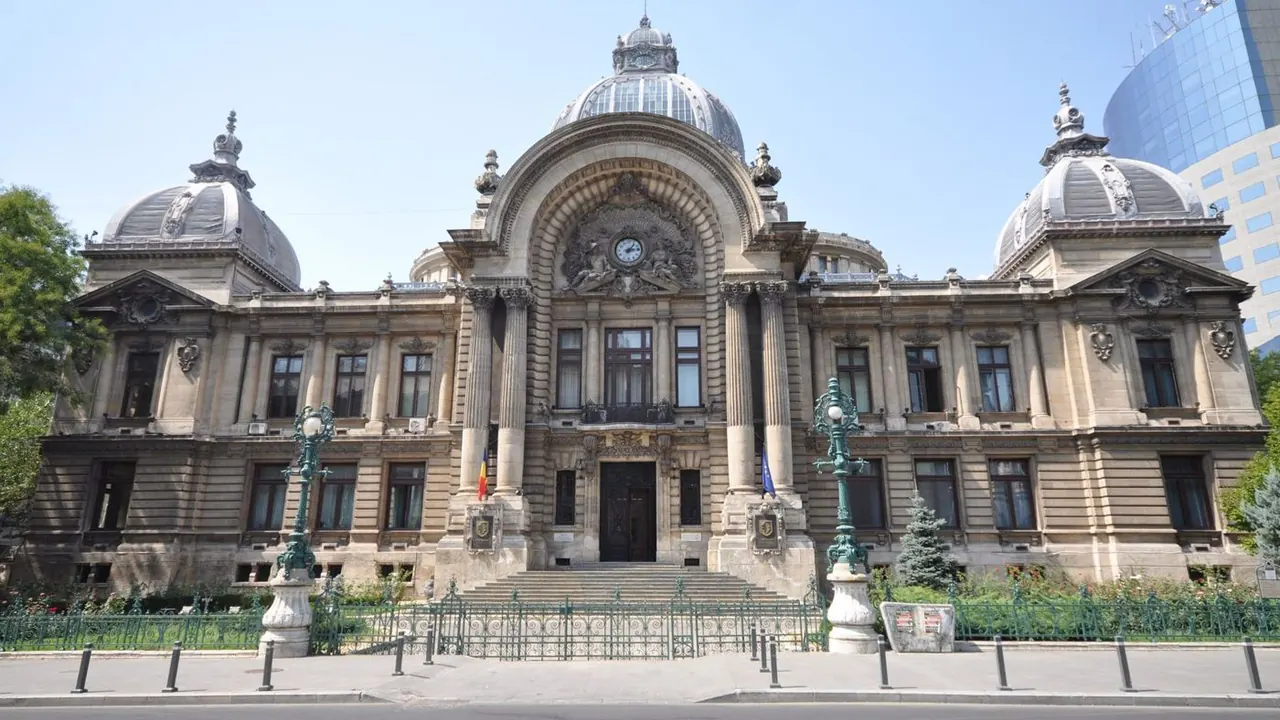
The CEC Palace on Calea Victoriei
- Nightlife70
- Affordable cities70
- Live music & the arts60
Photo: Jorge Láscar, CC BY 2.0, cropped
Match
51
Every category weighted equally
- Beach & sun47
- Culture & arts55
- Food & nightlife55
- Family trip48
- Outdoors49
- Relax & unwind47
- Shopping & style53
- On a budget53
Bucharest in twelve categories
Our verdict on each, scored 0 to 100 against the same fixed benchmark cities, so a score means the same thing on every page.
Beaches & swimming. Scores 8 out of 100.
Food & drink. Scores 55 out of 100.
Culture & sights. Scores 58 out of 100.
Nightlife. Scores 70 out of 100.
Nature & outdoors. Scores 45 out of 100.
Day trips. Scores 52 out of 100.
Good for families. Scores 52 out of 100.
Getting around. Scores 52 out of 100.
Shopping & style. Scores 45 out of 100.
Affordability. Scores 70 out of 100.
Live music & performing arts. Scores 60 out of 100.
Wellness & relaxation. Scores 47 out of 100.
Bucharest category by category
Beaches & swimming
8Bucharest sits on the Wallachian plain, well inland, and has no beach life of its own. The Black Sea resorts around Constanta are a long journey east, a separate trip rather than an outing. In summer some locals swim at Lake Snagov, north of the city, and the lakes inside Bucharest are for strolling and boating, not swimming. A visitor who wants water in the heat ends up at a hotel pool or one of the big pool complexes on the city's edge.
Food & drink
55Romanian cooking is hearty and rooted in the countryside: sour ciorba soups, sarmale cabbage rolls with polenta, grilled mici sausages with mustard and beer, and papanasi doughnuts with sour cream and jam to finish. Street food is simple, mostly warm covrigi pretzels sold from tiny windows and shawarma late at night. Piata Obor, the big market in the east of the city, shows how Bucharest really shops, with stalls of cheese, pickles and smoked meat.
Beyond the traditional taverns there is a solid layer of modern bistros, specialty coffee and wine bars pouring Romanian wine from the Dealu Mare hills and further afield, mostly around Calea Victoriei, Dorobanti and the streets off Piata Romana. Caru' cu Bere, the beer hall of the 1870s, is worth seeing for its painted interior. The Old Town is heavy with tourist terraces, so the better meals are usually a short walk outside it.
Culture & sights
58Bucharest's sights tell the story of a city that remade itself several times. Along Calea Victoriei stand the French-style mansions and the domed Romanian Athenaeum of its Belle Epoque years, when it was called the little Paris of the east. Small Orthodox churches such as Stavropoleos, with its carved stone courtyard, survive among the old streets of Lipscani. Then comes the Palace of the Parliament, one of the largest buildings in the world, reached along a monumental boulevard cut through the old city in the 1980s, and best seen on a guided tour.
The National Museum of Art in the former royal palace holds strong collections of Romanian and European painting, and the open-air Village Museum on Lake Herastrau gathers wooden houses, churches and windmills from across the country. It is a city of contrasts more than of set-piece beauty, and two or three days covers the main sights.
Nightlife
70Bucharest goes out late and with energy. The cobbled lanes of the Old Town fill every evening with packed terraces, cocktail bars and clubs, loud and crowded and popular with groups. For something with more local character, look to the bars around Piata Romana and the university, the garden bars tucked into courtyards of old villas, and the electronic music clubs where the city's well-regarded techno and minimal scene plays until well after sunrise.
Summer is the high season, when open-air venues and rooftops take over and nights stretch long. In winter the scene moves indoors but stays late. Weekends are the busiest by far, and the Old Town is noisy enough that light sleepers should stay elsewhere.
Nature & outdoors
45The city is flat, and its outdoor life centres on large parks and a chain of lakes. Herastrau, or King Michael I Park, wraps around a lake with rowing, cycling paths and long walks, and Cismigiu is the old central garden. Vacaresti Nature Park, a wetland reclaimed by reeds and birdlife inside the city, is an unusual place for birdwatching. Snagov lake and the forests of Comana to the south make easy half days.
Real landscape means going north to the Carpathians. The Prahova valley and the Bucegi mountains, with cable cars, hiking trails and winter skiing around Sinaia and Busteni, are about two hours by train, and better as an overnight than a rushed day.
Day trips
52The best day out is Sinaia, about an hour and a half by train, where Peles Castle, a richly carved royal palace of the late nineteenth century, sits in the forest above a mountain resort town with its own monastery. Closer to the city are the Brancovenesc palace at Mogosoaia, with its lakeside gardens, and the island monastery at Snagov, linked by legend to Vlad the Impaler.
Beyond those the choice narrows. Brasov, the medieval Saxon town in Transylvania, and the castle at Bran are a long day at best, around three hours each way, and most travellers give them a night. Targoviste, the old princely capital, is reachable but modest.
Good for families
52Children tend to enjoy Bucharest more than parents expect. The Grigore Antipa natural history museum is lively and well presented, the Village Museum lets them wander among old farmhouses and windmills, and the large parks have playgrounds, boat hire on the lakes and space to run. On the northern edge of the city a huge thermal water complex with slides and warm pools makes a full family day in any weather.
The harder side is the city itself: heavy traffic, broken pavements, parked cars on footpaths and wide boulevards that are tiring with a pushchair. Summers are hot and the zoo is small. Romanians are warm towards children, and restaurants are relaxed about them.
Getting around
52The centre between Piata Victoriei, Piata Romana, Universitate and the Old Town is walkable along Calea Victoriei and the main boulevards, though pavements are uneven and crossings are wide. The metro is simple, cheap and reliable, but it misses parts of the centre and much of the city, so trams and buses fill the gaps and slow down in traffic. Congestion is among the worst in Europe at rush hour. Most visitors mix walking and the metro with ride-hailing apps, which are widely used and easy. A car is a burden in the city and only helps for trips into the mountains.
Shopping & style
45Shopping in Bucharest is mostly about big malls on the edges and in the north of the city, where international chains gather under one roof. Calea Victoriei and the streets around Piata Victoriei carry a handful of luxury labels, and a small number of Romanian designers sell from boutiques and concept stores in the old villa districts. For something local, the shop at the Village Museum and the craft fairs held in the parks sell embroidered blouses, ceramics and painted eggs, and Piata Obor is a good market for food to take home. It is practical rather than inspiring.
Affordability
70Bucharest is one of the cheaper capitals in the European Union. Mid-range hotels are reasonably priced for a capital, the metro and buses cost very little, and ride-hailing across the city is cheap. Eating traditional food at a tavern or a lunch menu is good value, while the smarter restaurants and cocktail bars in the north of the city charge closer to Western European prices. Most museums are inexpensive, and the Palace of the Parliament tour is the main sight with a notable fee.
Live music & performing arts
60Classical music is the strength. The Romanian Athenaeum, a jewel of a concert hall with a frescoed dome, is home to the George Enescu Philharmonic, and the National Opera stages opera and ballet through the season. The George Enescu Festival was founded in 1958 and is held every other year. It brings leading orchestras and soloists to the city for several weeks in late summer and early autumn and is the high point of the calendar.
Theatre is lively and well regarded but almost entirely in Romanian, so for most visitors the National Theatre is more a building to see than a play to attend. Jazz clubs and small live-music venues around the centre offer good evenings, and summer brings open-air concerts in the parks.
Wellness & relaxation
47Bucharest has no historic bath culture in the centre, but just north of the city, about half an hour out, sits one of the largest thermal-water complexes in Europe, with warm pools under a glass dome, saunas and quiet areas filled with palms, which is easily a full day of unwinding. Hotel spas and massage studios fill in the rest.
The city itself is not restful: traffic is loud and the centre is busy. Calm comes from the parks, a slow morning by the lake in Herastrau or a coffee in a garden courtyard. For a true spa stay, Romanians head to the mountain and spa resorts further afield.
When should you go?
Pick a month to see what it is like. The climate figures are measured averages, not a forecast.
Bucharest in July
Daytime high, °C
Rainfall in the month, mm
The whole year
Shaded against this city’s own year: the deepest cell is its best month for that figure and the palest its weakest.
Temperature and rainfall are climate normals, averaged over the years shown. Bucharest: 1991-2020 normals, Bucuresti / Imh (10 km from centre).
Before you go
| Measure | Bucharest |
|---|---|
| Official language | Romanian |
| Currency | Romanian Leu (RON) |
| Sockets | CF230 V, 50 Hz |
| Driving side | Right |
| Time zone | UTC+2, UTC+3 in summer |
| Emergency number | 112 |
| Elevation | 70 m |
| Main airport | Bucharest Henri Coandă International Airport (OTP)18 km from centre121 non-stop destinations |
| Public holidays this year | 17 days |
By the numbers
| Measure | Bucharest |
|---|---|
| City population | 1,716,961 |
| People per km² | 7,597 |
| Museums within 10 km | 41 |
| UNESCO World Heritage sites within 50 km | 0 |
Compare Bucharest with
Every comparison with a written verdict behind it.