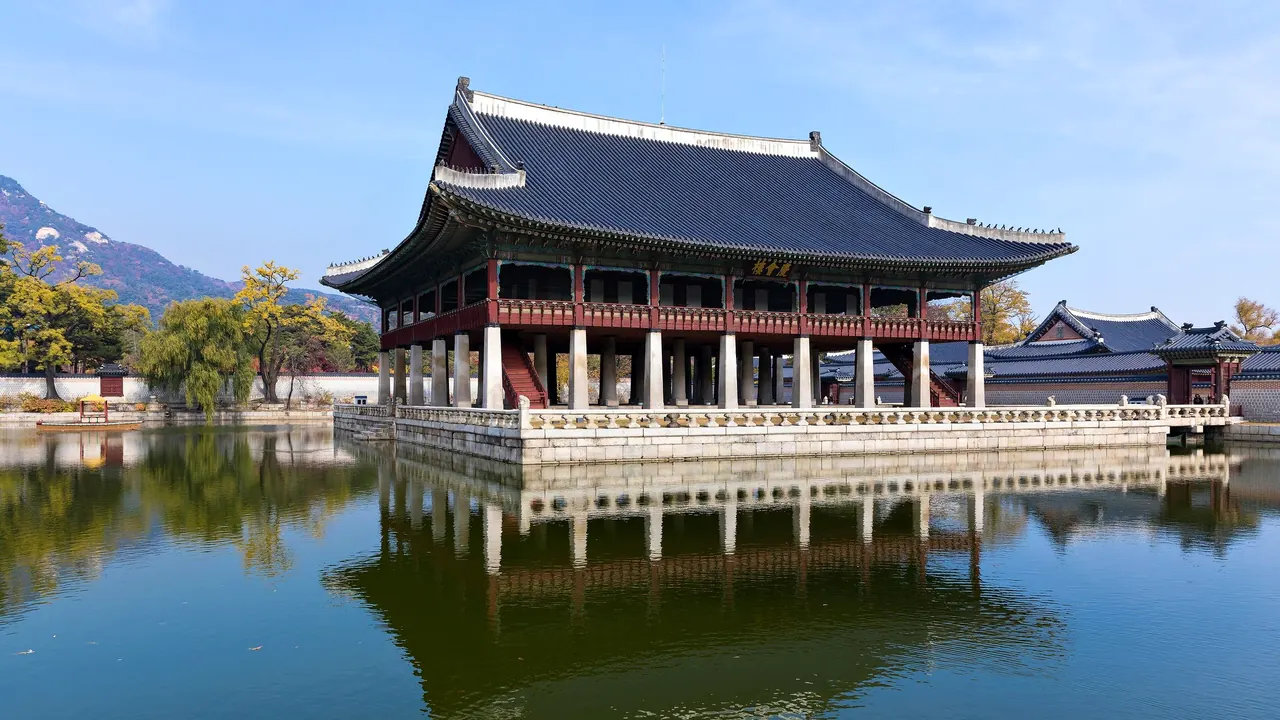
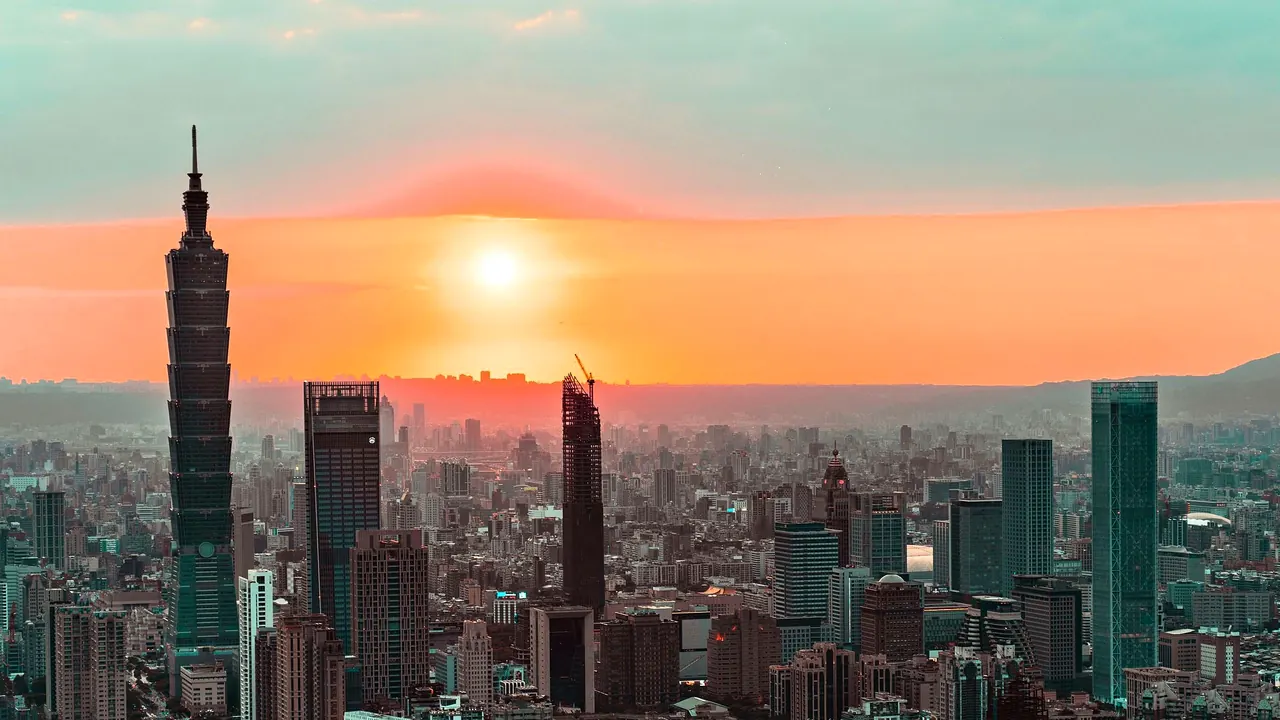
Photos: South Korea by Frank Schulenburg, CC BY-SA 4.0, cropped; Taiwan by Jimmy Liao, Pexels License.
South Korea or Taiwan?
Our verdict in twelve categories, each scored against the same fixed benchmark cities, and the climate month by month, so you can choose for your trip.
Choose South Korea for
- nightlife
- shopping
- culture and sights
South Korea suits the traveller who wants the cities to carry the trip. Seoul runs late into the night, ranks among Asia's great places to shop for fashion and skincare, and pairs its Joseon palaces with Gyeongju's royal tombs for a heritage trail that goes deeper. With theme parks and Jeju's family resorts as well, it is also the easier choice for parents planning around children.
Choose Taiwan for
- prices
- nature and the outdoors
- food and drink
Taiwan is the better pick if the landscape and the street food matter more than the bars. Its mountains are higher and wilder, from Taroko Gorge to the cloud forest of Alishan, and the island is made for cycling. Night markets feed you superbly for little money, a trip costs noticeably less overall, and the warm south makes it a real option in winter, when Seoul is freezing.
Scoreboard
Twelve categories on one fixed scale from 0 to 100. The shaded stretch is the gap between the two.
Your match
Pick a travel style or drag the sliders, and both match scores follow your weighting.
Wins on nightlife and shopping with your weighting.
Wins on prices and nature and the outdoors with your weighting.
What matters to you?
Category by category
What the scores mean for a trip.
Beaches & swimming
Both countries are only middling for a beach trip, but the beaches are very different. Korea's best known are urban: Haeundae and Gwangalli in Busan have tower blocks behind the sand and a lit bridge at night. Jeju has pale sand against black lava, and the pine-backed beaches of Gangwon fill with families. The season is short, though, and the water is cool outside July and August.
Taiwan has the warmer sea and a longer season, with Kenting's bays at the southern tip swimmable from May to October and turtles feeding off Xiaoliuqiu. Penghu has the finest sand, but like Jeju it is a separate journey, and typhoons and the steep, rough east coast keep the beach a side trip rather than the reason to come.
Where in South Korea: Busan, Jeju, Gangwon east coast
Where in Taiwan: Kenting, Penghu, Xiaoliuqiu, North Coast
Food & drink
Both are among Asia's best countries for eating, and the difference is in how you eat. In Korea a meal is a sit-down, shared affair: meat sizzling on a table grill, a spread of side dishes, Jeolla's deeply fermented cooking, Busan's raw fish at Jagalchi. Vegetarians will have a harder time.
Taiwan is a country for grazing. You walk a night market from oyster omelettes to pepper buns to shaved ice, start the day with soy milk and fried dough sticks, and drink tea everywhere from Alishan oolong to bubble tea in Taichung, where it began. Tainan's generations-old snack stalls are the pilgrimage, and all of it costs very little.
Culture & sights
Korea has the deeper heritage trail. Seoul's five Joseon palaces and the Jongmyo shrine would justify a trip on their own, and then there is Gyeongju with its grassy royal mounds, the Seokguram Buddha, Hahoe village and Suwon's fortress walls. Many mountain temples let you stay the night, though much of what stands has been rebuilt after wars.
Taiwan's trump card is a single museum: the National Palace Museum holds imperial Chinese treasures that few collections anywhere can match. Beyond it, the appeal is layered and small-scale, with smoky folk temples, Japanese-era stations, Dutch forts and the old lanes of Tainan and Lukang, rather than grand monuments.
Nightlife
This is where the two countries differ most. Seoul is one of Asia's great late-night cities. Hongdae fills with students and indie crowds until sunrise, Itaewon has the international and gay bars, Gangnam's clubs expect you to dress up, and karaoke rooms take the final hours. Busan's Seomyeon and Gwangalli waterfront add a second real scene.
In Taiwan, evenings revolve around eating, and outside Taipei the night usually ends after supper. The capital does have smart cocktail bars in Da'an and a few big Xinyi clubs, and it is friendly and safe, but it is neither late nor wild.
Nature & outdoors
Taiwan has the bigger outdoors. More than two hundred peaks rise above 3,000m, Taroko Gorge cuts through marble, and Alishan's cloud forest and tea terraces look out over a sea of cloud. There is a signed cycling route around the whole island, and Yilan and Taitung have surf, Hualien whale watching and Green Island diving.
Korea's mountains are lower but deeply woven into daily life, with well-built trails in every park. Seoraksan's granite spires blaze red in October, Jirisan offers ridge walks lasting several days, and Bukhansan can be reached by subway. Jeju's volcanic Hallasan and the Olle coastal paths add a different landscape, and Gangwon has modest skiing that Taiwan lacks.
Where in South Korea: Seoraksan National Park, Jeju, Jirisan National Park, Bukhansan National Park
Where in Taiwan: Taroko Gorge and Hualien, Alishan and Yushan, East Rift Valley, Sun Moon Lake
Day trips
Korea's day trips carry more historical weight. From Seoul you can stand at the Demilitarized Zone or walk Suwon's fortress walls, and from Busan Gyeongju's royal tombs are under an hour away, with Gimhae's Gaya burial mounds on the city's edge.
Taiwan's outings from Taipei are lighter and more picturesque: the lantern-hung stairways of Jiufen, sky lanterns along the old Pingxi line, sunsets at Tamsui and Sanxia's arcade of shophouses. The high-speed line even makes Tainan possible as a long day out.
Good for families
Korea does more to entertain children. Everland combines a theme park with a safari, Lotte World's indoor park takes the weather out of the equation, and Jeju is effectively a whole island of family attractions, with horse riding and the Manjanggul lava tube. Baby rooms and clean toilets are everywhere.
Taiwan is just as safe and warm towards children, and Taichung's natural science museum and the marine aquarium near Kenting are both excellent. What it lacks is the big theme-park pull, and scooter traffic and summer heat make the cities harder work with a pushchair.
Where in South Korea: Seoul, Jeju, Busan
Where in Taiwan: Taipei, Taichung, Kenting and Pingtung
Getting around
Korea's KTX network branches in several directions, reaching Gyeongju, Jeonju and Gangneung, and five cities have metros under one rechargeable card. You will need local navigation apps rather than global ones, and Jeju really calls for a hire car.
Taiwan offers the same one-card ease, and its high-speed line runs straight down the west coast in about two hours, though the Taichung and Tainan stations sit outside the centres. Buses up to Alishan and Taroko are infrequent, and in the East Rift Valley and around Kenting at the southern tip a scooter or driver helps.
Shopping & style
Korea wins this one easily. Seoul is a shopping destination in its own right: Myeongdong for Korean beauty, Dongdaemun's fashion markets trading through the night, Seongsu and Hannam for local design labels, and Insadong for ceramics and hanji paper. Busan's Centum City department stores are vast.
Shopping in Taiwan is pleasant but secondary. The Xinyi malls are much like any other big malls, so the real finds are smaller: Dihua Street's herb and fabric shophouses, late-night bookshops, Yingge pottery, oolong tea and pineapple cakes.
Where in South Korea: Seoul, Busan, Icheon
Where in Taiwan: Taipei, Yingge, Taichung
Affordability
Taiwan is clearly the cheaper country day to day, mainly because eating out costs so little: a night-market dinner in central Taipei is still a bargain. Rooms in Tainan and Kaohsiung are cheap too, and temples are mostly free.
Korea sits in the middle. Transport and market lunches are fair value, but barbecue dinners, coffee and hotels in central Seoul or on Jeju in summer add up quickly. Basing yourself in Gyeongju or Jeonju and staying in a hanok guesthouse eases the bill.
Where in South Korea: Gyeongju, Jeonju, Daegu
Live music & performing arts
Neither country is a natural choice for a theatre trip, and much of the programme in both is in the local language. Korea's stage life is concentrated in Seoul: court music at the National Gugak Center, the Daehangno theatre district, and long-running non-verbal percussion shows put on for visitors. K-pop concerts are hard to get into.
Taiwan spreads its venues across three cities, with Kaohsiung's wave-roofed Weiwuying and the cave-like Taichung theatre to visit for the buildings alone. The more memorable experience is often unplanned: glove puppets or Taiwanese opera on an open-air stage at a temple festival.
Wellness & relaxation
Korea bathes in the city. The jjimjilbang is a multi-storey bathhouse open all night, with saunas, heated sleeping floors and a vigorous body scrub, where families spend whole evenings. Busan's Dongnae springs and mountain temple stays offer quieter alternatives, and bathing is nude and separated by gender.
Taiwan's hot springs belong to the landscape. Beitou's sulphur valley is at the end of a Taipei metro line, Wulai sits beside a river, Jiaoxi has free foot baths in its streets, and on Green Island you soak in seawater pools at the shore. Cheap foot reflexology fills in the city days.
Where in South Korea: Busan, Seoul, Jeju
Where in Taiwan: Beitou, Jiaoxi, Zhiben, Wulai
When should you go?
Pick your month, and for a country the place in it. The climate figures are measured averages, not a forecast.
Where in South Korea
Where in Taiwan
Seoul (South Korea) in July
Taipei (Taiwan) in July
Daytime high, °C
Rainfall in the month, mm
Where the figures come from
Taipei (Taiwan) has no rain gauge within 25 km of the centre, so its rainfall comes from a gridded climate dataset read at the destination rather than from a gauge further away.
Temperature and rainfall are climate normals, averaged over the years shown. Seoul (South Korea): 1991-2020 normals, Seoul (2.2 km from centre). Taipei (Taiwan): 1992-2020 (rainfall 1991-2020) normals, Sungshan / Taipei (3.5 km from centre).
The two countries have their best seasons at different times. Korea is at its best in spring and autumn, with May and October the high points for walking cities and hiking trails. Winter in Seoul is properly cold, around 2°C by day in January, and July brings the monsoon at its heaviest, about 422mm in Seoul alone. The beach season is short. Busan's sea is warm enough for swimming in July and August, peaking near 26°C, and Jeju is similar, though cloudier in winter.
Taiwan runs warmer all year. Taipei is damp in every month and very hot in summer, reaching about 35°C in July, so spring and autumn are the comfortable times for the capital. The south is the winter answer: Kaohsiung stays dry from November to March, with highs around 24°C in January and sea warm enough to swim year-round. Summer rains and typhoons hit both north and south hard from June to September.
Which traveller are you?
For a food and nightlife trip, South Korea gives you both in one evening. A table-grill barbecue with soju leads straight on to Hongdae's clubs or Itaewon's bars until dawn, while Taiwan, for all its superb night markets, mostly winds down after supper.
On a shopping trip, South Korea is the clear pick. Cheongdam's luxury flagships, department stores with duty-free floors and Busan's Gukje market cover far more ground, while Taiwan's independent designers in Da'an and Zhongshan and its Yingge pottery are pleasant finds rather than a reason to travel.
On a trip on a tight budget, Taiwan makes the money go further. One stored-value card covers metros, buses and local trains that cost little, the high-speed line is fair value down the west coast, and Taichung has plenty of mid-range hotels near its night markets.
More comparisons
Each shares a side with South Korea or Taiwan.
Where else could you go?
Set South Korea or Taiwan against any other country.