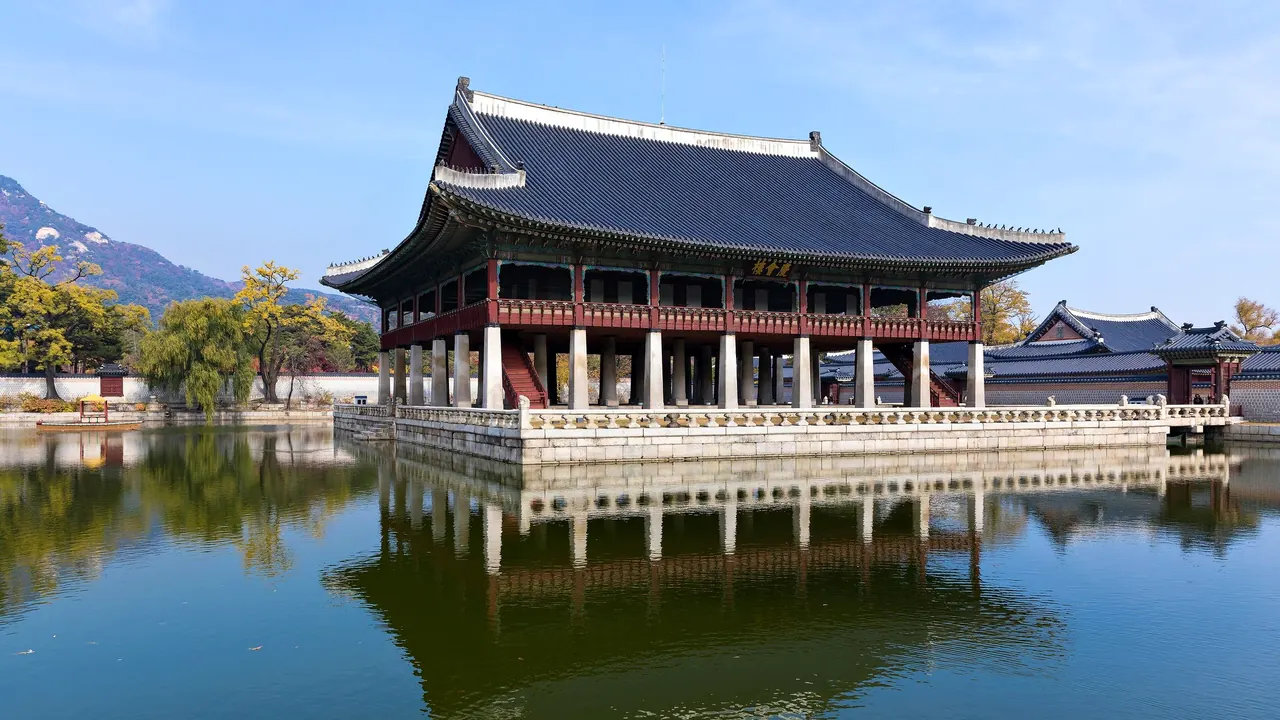
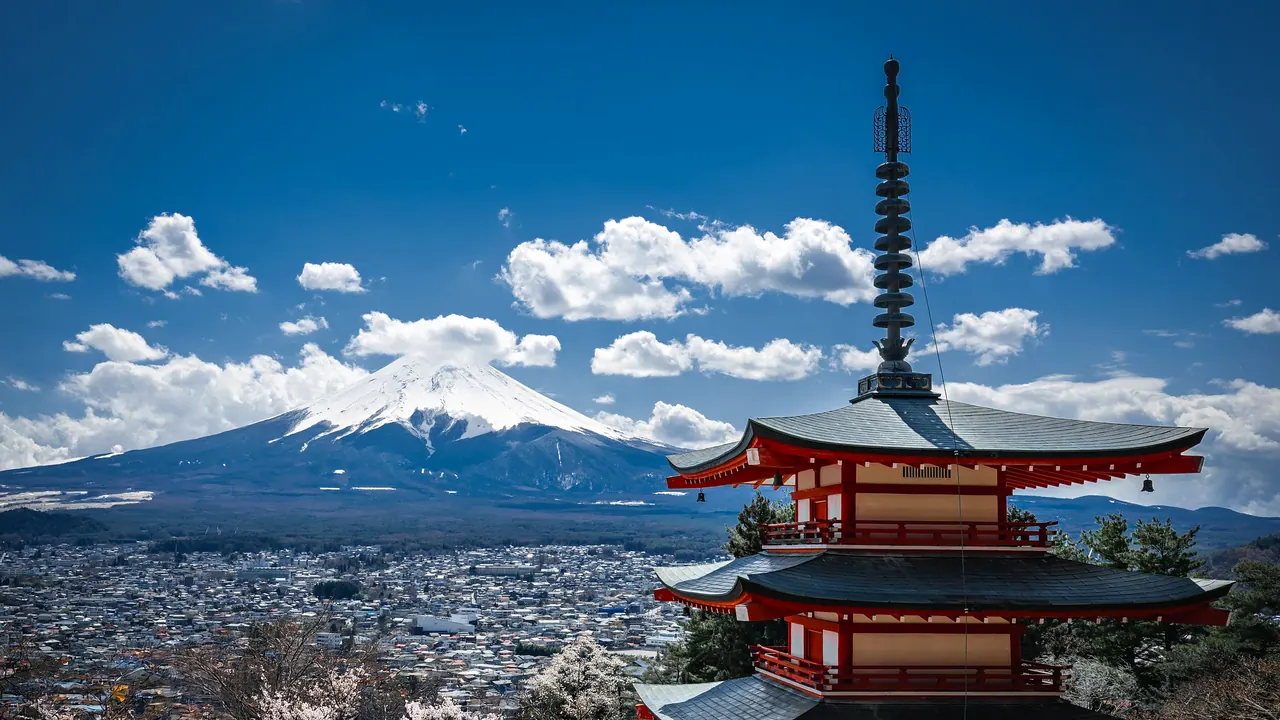
Photos: South Korea by Frank Schulenburg, CC BY-SA 4.0, cropped; Japan by Max Mishin, Pexels License.
South Korea or Japan?
Our verdict in twelve categories, each scored against the same fixed benchmark cities, and the climate month by month, so you can choose for your trip.
Choose South Korea for
South Korea does not lead in any category we score.
South Korea suits a focused trip built around Seoul and Busan, with a fast train between them, a lot of shared eating, late nights in Hongdae and a day among the Silla tombs of Gyeongju. Choose it if Korean food, Korean cosmetics and fashion, the all-night jjimjilbang bathhouses or a city beach at Haeundae with Busan's seafood behind it are what you are going for.
Choose Japan for
- live music and the arts
- day trips
- wellness
Japan is the stronger choice for most other trips, and by some distance for heritage, stage arts, hot springs and travelling with children. Kyoto and Nara go deeper than anything in Korea, a ryokan night in Hakone or Kinosaki is hard to match, and the rail network puts a long list of day trips within reach of every base. Overall costs are much the same, so the choice comes down to what you want to do rather than what you can spend.
Scoreboard
Twelve categories on one fixed scale from 0 to 100. The shaded stretch is the gap between the two.
Your match
Pick a travel style or drag the sliders, and both match scores follow your weighting.
Has no clear advantage with the weighting you have chosen.
Wins on live music and the arts and day trips with your weighting.
What matters to you?
Category by category
What the scores mean for a trip.
Beaches & swimming
Neither country is mainly a beach destination, and on the main coasts swimming in both is mostly a July and August affair. The difference is in kind. Busan's Haeundae and Gwangalli are true city beaches, with towers and the lit Gwangan Bridge behind them, so a swim fits into an ordinary city stay, and Jeju adds pale sand and turquoise shallows at Hyeopjae against black volcanic rock.
Japan's mainland beaches at Izu, Shonan and Shirahama are mostly used by local families, but Okinawa has coral reefs and white sand in the Kerama and Yaeyama islands, and the swimming season there runs from May to October. It means a separate flight and really a separate vacation.
Where in South Korea: Busan, Jeju, Gangwon east coast
Where in Japan: Okinawa, Izu Peninsula, Shirahama
Food & drink
Both are serious food countries with strong regional cooking, but Japan goes further. It runs from standing soba counters to some of the most refined sushi and kaiseki anywhere in Tokyo, with Osaka's street eating around Dotonbori, Kyoto's temple vegetarian cooking and Fukuoka's open-air yatai, and even the convenience-store food is good.
Korean eating is more communal: grills set into the table at Seoul barbecue houses, side dishes spread across every meal, mung bean pancakes at Gwangjang market, raw fish at Busan's Jagalchi and bibimbap in Jeonju. Vegetarians will find Kyoto easier than almost anywhere in Korea, where meat and fish stock run through the cooking.
Culture & sights
Japan has the richer heritage, and more of it is original. Kyoto's thousand-plus temples and shrines, the ancient wooden buildings of Horyu-ji at Nara and Himeji's castle could fill a trip on their own, and Hiroshima, Nikko and Kanazawa add more.
Korea's best is in Seoul's Joseon palaces and the National Museum, Gyeongju's royal tumuli and Seokguram grotto, and the hanok quarter of Jeonju, and its overnight mountain temple stays are a real draw. Wars destroyed a great deal, though, and much of what stands has been rebuilt.
Nightlife
Japan's nightlife has more depth and spreads across more cities. Tokyo alone runs from Golden Gai's six-seat bars to Shibuya's clubs and carefully made cocktails until the first trains, and Osaka's Namba, Fukuoka's Nakasu and Sapporo's Susukino each have a proper nightlife district of their own.
Going out in Korea centres on Seoul, where Hongdae stays busy until sunrise and Gangnam has the dress-up clubs, with Busan's Seomyeon and Gwangalli as the second scene. Drinking there is built around groups sharing soju and fried chicken, which suits friends travelling together more than someone on their own.
Nature & outdoors
Both are mountain countries where good walking is easy to reach, but Japan has more variety and more extremes. The Japanese Alps give high summer hiking, Hokkaido has wild parks with bears and some of the deepest powder snow anywhere at Niseko, and Yakushima and the Kumano Kodo add ancient forest and pilgrim paths.
Korea's walking is excellent on a smaller canvas: Seoraksan's granite spires in October colour, ridge walks over several days on Jirisan, and Bukhansan's summits reached by subway from Seoul. Its Gangwon ski areas are modest by comparison, and Jeju's volcano and Olle coastal trails are its one big change of landscape.
Where in South Korea: Seoraksan National Park, Jeju, Jirisan National Park, Bukhansan National Park
Where in Japan: Japanese Alps, Hokkaido, Mount Fuji, Yakushima
Day trips
This is one of the widest gaps between the two. Almost any Japanese base has a long list of outings within an hour or two by train: Nara, Himeji and Koyasan from Kyoto or Osaka; Nikko, Kamakura and Hakone from Tokyo; Miyajima from Hiroshima.
Korea's trains are fast too, but each base has fewer options. From Seoul, the Suwon fortress and the DMZ are the obvious outings, and Busan is the better second base, with Gyeongju under an hour away and the Gaya tombs of Gimhae on the city's edge.
Good for families
Both countries are safe, clean and full of baby rooms, so the difference lies in what there is to do. Japan has the bigger draws: the Disney resort and Ghibli Museum in Tokyo, Universal Studios in Osaka, the deer of Nara, bullet trains children love, and Okinawa's calm beaches with the Churaumi Aquarium.
Korea covers the basics well, with Everland's safari zone, Lotte World's indoor park for wet days, and Jeju, where Korean families go themselves for horse riding and the Manjanggul lava tube. In both countries, hot summers and crowded weekends are the main strain.
Getting around
Both are easy countries to move around, with fast trains, clean metros signed in English and tap-on cards. Japan's Shinkansen covers more ground, from Tokyo to Fukuoka, and sending luggage ahead between hotels takes the effort out of a long route.
Korea's KTX gets from Seoul to Busan in under three hours and one card works everywhere, but visitors need local navigation apps, as global maps show little detail. Jeju, like Okinawa, needs a flight, and most visitors hire a car once there.
Shopping & style
Seoul is a great shopping city, but Japan has the same depth in more places. Tokyo runs from Ginza's luxury houses to Harajuku street fashion, Akihabara's electronics and Kappabashi's kitchenware, Osaka matches it for fashion, and Kyoto and Kanazawa add crafts from tea utensils to gold leaf.
Korea's strengths are narrower: skincare shops on every corner in Myeongdong, Dongdaemun's all-night fashion markets and the design labels of Seongsu. Come for Korean cosmetics and fashion; for most other kinds of shopping, Japan has more to offer.
Affordability
The two cost about the same overall, so the difference is in where the money goes. In both, everyday meals and city transport are good value and many temples and museums charge little, while hotels in the main cities are the big expense.
In Korea, the dear parts are Seoul and summer on Jeju, along with barbecue dinners and coffee, and Gyeongju and Jeonju are cheaper. In Japan, the costs are long-distance trains, ryokan dinners and Kyoto during cherry blossom, and Osaka, Fukuoka and Shikoku are easier on the budget.
Where in South Korea: Gyeongju, Jeonju, Daegu
Live music & performing arts
Japan offers a visitor far more on stage, and much of it is unique to the country. There is kabuki at the Kabuki-za, noh, bunraku puppets in Osaka, the Takarazuka Revue and the seasonal geisha dances of Kyoto, and Tokyo also has fine concert halls and a deep jazz scene.
Korea's stage life is mostly in Seoul, with court music at the National Gugak Center and indie bands in Hongdae's small clubs. Its theatre district and big musicals are nearly all in Korean, and K-pop concert tickets are hard for visitors to get.
Wellness & relaxation
Bathing is a daily custom in both countries, but Japan's hot springs go further. In Hakone, Kusatsu with its steaming spring field, Kinosaki with its seven public baths, and Beppu, whole towns are given over to the water, and a ryokan night with an outdoor bath is the restful centre of many trips.
Korea's version is more urban and more social: jjimjilbang with saunas and heated floors that stay open all night, a body scrub as part of the ritual, and the hot-spring districts of Busan's Dongnae and Haeundae. For something quieter, its mountain temple stays offer early bells, meditation and vegetarian meals.
Where in South Korea: Busan, Seoul, Jeju
Where in Japan: Hakone, Beppu, Kinosaki, Kusatsu
When should you go?
Pick your month, and for a country the place in it. The climate figures are measured averages, not a forecast.
Where in South Korea
Where in Japan
Seoul (South Korea) in July
Tokyo (Japan) in July
Daytime high, °C
Rainfall in the month, mm
Temperature and rainfall are climate normals, averaged over the years shown. Seoul (South Korea): 1991-2020 normals, Seoul (2.2 km from centre). Tokyo (Japan): 1991-2020 normals, Tokyo (3.6 km from centre).
Both countries are at their best in spring and autumn. In Korea, a hard winter, with Seoul around 2°C by day in January, gives way to a heavy summer monsoon that peaks in July, when Seoul gets about 422mm of rain. October is the best month there: dry, sunny and mild in Seoul, with autumn colour in the mountains. Busan and Jeju are milder in winter, and Busan stays sunny through it. The beach season is July and August, when the sea off Busan reaches about 26°C.
Japan's main cities have gentler winters, with Tokyo near 10°C in January, but the rain is spread across more of the year. Tokyo is wettest in September and October, Kyoto in July and September, and Fukuoka in June and July. July and August are hot and humid in the lowlands, which sends walkers up to the Alps and Hokkaido, and Sapporo stays around freezing from December to February, which suits skiers. Okinawa is the exception, with the sea near 29°C in high summer and swimming from May to October.
Which traveller are you?
On a trip on a tight budget, the two cost much the same, but Korea is the cheaper country to tour. The distances are short, express buses are inexpensive and hanok guesthouses keep the nights modest. In Japan, long train journeys eat into the savings, so one base with set lunches works better.
For an outdoors trip, Japan has the wider range through the year. Summer brings high trails above Kamikochi and the climb up Mount Fuji, winter brings powder snow at Hakuba, and Shiretoko is truly wild country. Korea's hiking is excellent but has fewer parks to choose from.
More comparisons
Each shares a side with South Korea or Japan.
Where else could you go?
Set South Korea or Japan against any other country.