Japan
Hiroshima
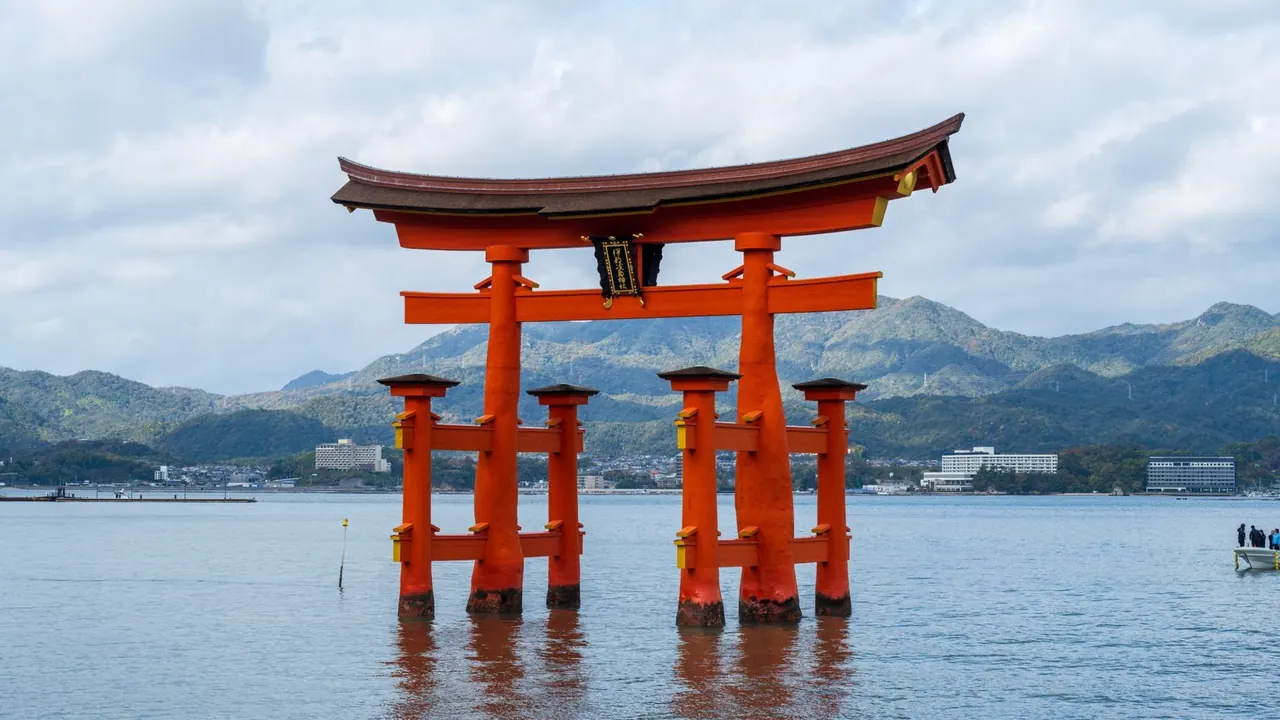
The floating torii of Itsukushima at Miyajima
- Day trips80
- Getting around74
- Food & drink66
Photo: Guohua Song, Pexels License
Match
56
Every category weighted equally
- Beach & sun54
- Culture & arts59
- Food & nightlife56
- Family trip58
- Outdoors60
- Relax & unwind55
- Shopping & style57
- On a budget56
Hiroshima in twelve categories
Our verdict on each, scored 0 to 100 against the same fixed benchmark cities, so a score means the same thing on every page.
Beaches & swimming. Scores 30 out of 100.
Food & drink. Scores 66 out of 100.
Culture & sights. Scores 60 out of 100.
Nightlife. Scores 45 out of 100.
Nature & outdoors. Scores 62 out of 100.
Day trips. Scores 80 out of 100.
Good for families. Scores 60 out of 100.
Getting around. Scores 74 out of 100.
Shopping & style. Scores 52 out of 100.
Affordability. Scores 58 out of 100.
Live music & performing arts. Scores 38 out of 100.
Wellness & relaxation. Scores 50 out of 100.
Hiroshima category by category
Beaches & swimming
30Hiroshima sits on the Seto Inland Sea, but it is a harbour city, not a beach city. The shore in town is all port and reclaimed land. Swimming means a ferry or a drive to the islands: small sandy beaches on Miyajima, Ninoshima and Etajima, or the long, shallow strands out towards Kure. In July and August the sea reaches about 26°C and is calm and sheltered, so it is pleasant for a family afternoon. The season is short, though, jellyfish come in towards its end, and the beaches are modest. Treat a swim as an extra on a summer island day, not a reason to come.
Food & drink
66Eating here centres on one dish. Hiroshima-style okonomiyaki is built in layers on a hot griddle: batter, a heap of cabbage, pork, noodles and egg. People eat it at counters straight off the plate, and whole buildings near the centre hold nothing but small okonomiyaki stalls. The other local speciality is oysters from the bay, served grilled, fried or raw. They are best in winter, when stands on Miyajima sell them by the shell. Conger eel on rice and fiery cold-dipped tsukemen noodles complete the local list.
The Nagarekawa and Hondori districts are full of izakaya serving fish from the Inland Sea. Saijo, one of Japan's best-known sake towns, is about 35 minutes away by train. Its breweries line one street, and several of them offer tastings. The cooking is careful even in cheap places, but the fine-dining tier and the range of cuisines from abroad are those of a regional city.
Culture & sights
60Most visitors come to Hiroshima for the Peace Memorial Park. The A-Bomb Dome is a gutted exhibition hall left standing as it was after the explosion of 6 August 1945, and it is a UNESCO World Heritage site. Across the river, the Peace Memorial Museum covers the bombing and its human cost in a way few museums anywhere can match. It is a visit that stays with people, and it needs half a day and some emotional room.
Beyond the park, the bombing left little older architecture. The castle is best seen as a setting: wide moats, original stone walls and quiet grounds with a shrine, overlooked by a postwar reconstruction of the keep that is mainly a sight from outside. Shukkeien is a finely kept Edo-period strolling garden, and there are respectable art museums near the castle. Otherwise the city is modern, low-rise and spread along its rivers. Two or three days cover its sights well.
Nightlife
45Nagarekawa, just east of the Hondori arcade, is the largest entertainment district in the Chugoku and Shikoku region. It is a grid of buildings stacked with tiny bars, izakaya, karaoke boxes and hostess clubs, and it stays busy well past midnight, especially on Fridays and after a home baseball game. For a visitor the best evenings are slow ones: an izakaya, then a small counter bar where the owner pours sake or whisky for a handful of regulars. There are a few clubs and some foreigner-friendly bars, but the scene is local and fairly modest. It is fun to explore, not a reason to visit.
Nature & outdoors
62The city spreads across a river delta, so the rivers, their tree-lined banks and the green hills that ring the city are always in view. The richest landscape is the Seto Inland Sea, a calm sea of forested islands with ferries between them. On Miyajima a ropeway and forest trails lead up Mount Misen, which looks out over dozens of islands. Wild deer wander the lower slopes.
Inland, Sandankyo Gorge has a long riverside walk through deep gorge scenery, at its best when the autumn colours come in. The Shimanami Kaido, a celebrated cycling route that crosses the islands to Shikoku by bridge, starts near Onomichi. It makes a long but rewarding day out. Spring and autumn are the seasons to come. Summers are hot and humid, and the hills are modest rather than mountainous.
Day trips
80Hiroshima is an excellent base. The best-known trip is Miyajima, under an hour by train and ferry. Itsukushima Shrine and its great vermilion torii appear to float on the water at high tide. Around them are temples, a small old shopping street, the island's deer and five-storey pagoda. Iwakuni's Kintaikyo, a wooden bridge of five arches, is a short train ride the other way.
Closer still, Kure has naval history museums, and Takehara has a preserved merchant quarter. Onomichi is a hillside temple town above the strait. Tomonoura is an old port on the sea, and Okunoshima is a small island overrun by tame rabbits. The shinkansen puts Okayama's Korakuen garden, Kurashiki's canal quarter and Himeji Castle within about an hour or so. A ferry across the Inland Sea to Matsuyama, with its castle and Dogo Onsen, makes a longer day.
Good for families
60Hiroshima is safe, clean and easy with children. Trams are simple to use, pavements are wide and flat, and the restaurants welcome families. Children love feeding the deer on Miyajima and taking the ropeway up Mount Misen, and Okunoshima's rabbits are a sure hit. In town there is a free children's science museum near the castle, Asa Zoo in the northern hills, and a summer evening of local baseball. The crowd's singing and chanting make that fun even for children who have never seen a game.
The Peace Memorial Museum is the hard part. It contains graphic material, so parents of young children should judge how much of it to see. There are no theme parks or large aquariums close by, and summers are hot.
Getting around
74The centre is flat and compact. The Peace Park, Hondori, Nagarekawa, the castle and Shukkeien are all within walking distance, along broad streets beside the rivers. The city's streetcars form the largest tram network in Japan. They link the station with the Peace Park and run on to Miyajimaguchi for the ferry, though they crawl at busy times. JR trains are faster for Miyajima and the towns along the coast, and the main station is a shinkansen stop on the line between Osaka and Fukuoka. Island ferries leave from the Ujina port. Visitors never need a car, apart from the more remote mountain gorges.
Shopping & style
52Shopping runs along Hondori, a long covered arcade, and the streets around it. They hold department stores, the Japanese chains, fashion and some independent shops and cafés. The station area adds its own malls and food halls, where boxed local snacks such as maple-leaf momiji manju cakes make standard gifts. The crafts are the distinctive part. Makeup and calligraphy brushes come from the nearby town of Kumano, and wooden rice paddles and carvings come from Miyajima. Saijo sake and Hiroshima lemon products are good to take home. It is pleasant browsing, but there is little luxury or cutting-edge design.
Affordability
58Hiroshima is one of the more reasonable stops in Japan. Business hotels near the station and the centre are plentiful and fairly priced, and they rarely reach the peak-season extremes of the biggest tourist cities. Eating well costs little: okonomiyaki, noodles and set lunches are filling and cheap, and the trams are inexpensive. The Peace Park is free to walk, and the museum charges very little. The costs that mount up are shinkansen tickets for day trips, oysters and sake in the evening, and island hotels on Miyajima, which charge more than those in the city.
Live music & performing arts
38The city's own tradition is kagura, a vigorous Shinto dance-drama from the surrounding mountains. It is performed with spectacular costumes, masks, demons and drumming. Regular evening performances in the centre are staged with visitors in mind, and village shrines hold festival performances in autumn. Beyond that, Hiroshima has a resident symphony orchestra, a couple of large concert halls that host touring productions, and a cluster of small live houses for local bands. It is a solid regional programme, but most theatre is in Japanese, and few visitors plan their stay around it.
Wellness & relaxation
50Hiroshima has no hot springs of its own, but Japan's bathing habit is everywhere. Neighbourhood sento and large suburban super-sento offer hot pools, saunas and outdoor baths, and many business hotels have a communal bath on the top floor. For a true onsen, the small spa villages in the hills and a few seaside resorts are about an hour away. A ryokan night on Miyajima is a quiet way to stay after the day-trippers leave. The city's pace helps: it is unhurried by Japanese standards, with riverside walks, Shukkeien's ponds and quiet evenings by the water.
When should you go?
Pick a month to see what it is like. The climate figures are measured averages, not a forecast.
Hiroshima in July
Daytime high, °C
Rainfall in the month, mm
The whole year
Shaded against this city’s own year: the deepest cell is its best month for that figure and the palest its weakest.
Temperature and rainfall are climate normals, averaged over the years shown. Hiroshima: 1991-2020 normals, Hiroshima (1.7 km from centre).
Before you go
| Measure | Hiroshima |
|---|---|
| Official language | Japanese |
| Currency | Yen (JPY) |
| Sockets | AB100 V, 50 and 60 Hz depending on the region |
| Driving side | Left |
| Time zone | UTC+9 |
| Emergency number | Police 110, fire 119 |
| Elevation | 3 m |
| Main airport | Hiroshima Airport (HIJ)43 km from centre10 non-stop destinations |
| Public holidays this year | 16 days |
By the numbers
| Measure | Hiroshima |
|---|---|
| City population | 1,198,021 |
| People per km² | 1,324 |
| Museums within 10 km | 18 |
| UNESCO World Heritage sites within 50 km | 2 |
| Swim season, months above 21 °C | 4 months |
Compare Hiroshima with
Every comparison with a written verdict behind it.