Japan
Fukuoka
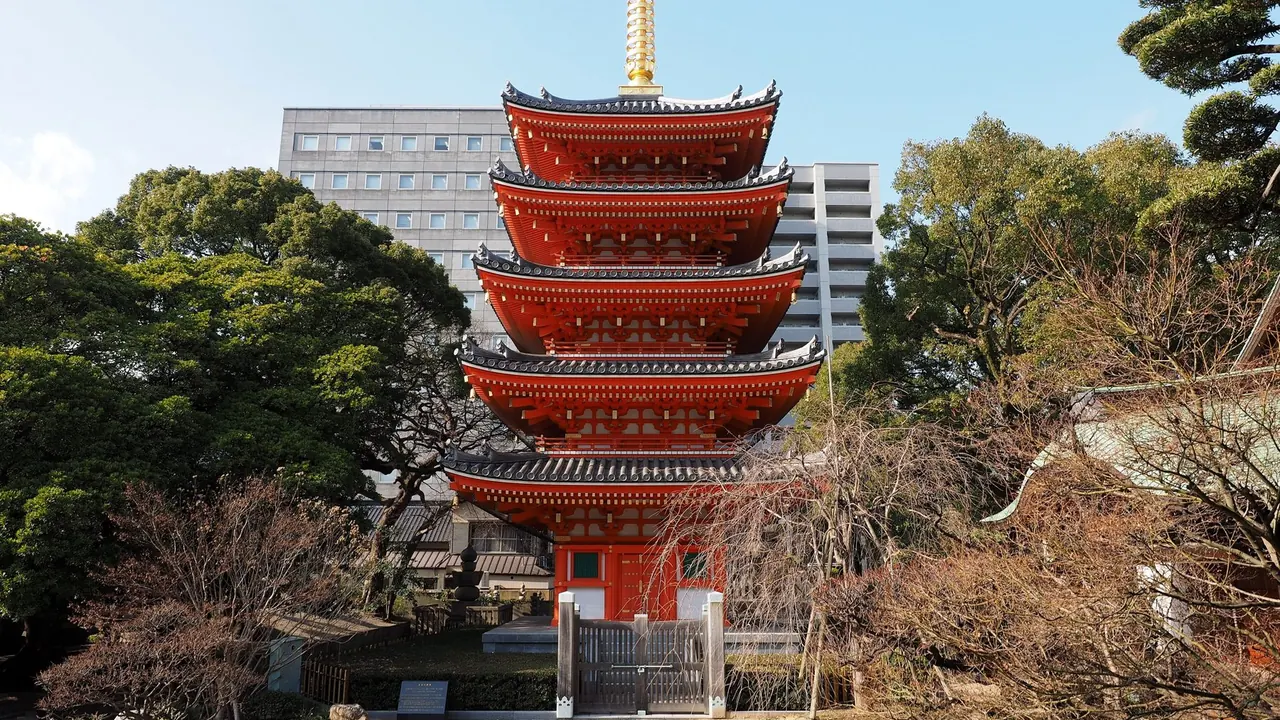
The red five-storey pagoda of Tocho-ji
- Day trips84
- Food & drink82
- Getting around82
Photo: Nick-D, CC BY-SA 4.0, cropped
Match
65
Every category weighted equally
- Beach & sun64
- Culture & arts65
- Food & nightlife65
- Family trip67
- Outdoors67
- Relax & unwind64
- Shopping & style66
- On a budget64
Fukuoka in twelve categories
Our verdict on each, scored 0 to 100 against the same fixed benchmark cities, so a score means the same thing on every page.
Beaches & swimming. Scores 50 out of 100.
Food & drink. Scores 82 out of 100.
Culture & sights. Scores 50 out of 100.
Nightlife. Scores 60 out of 100.
Nature & outdoors. Scores 62 out of 100.
Day trips. Scores 84 out of 100.
Good for families. Scores 78 out of 100.
Getting around. Scores 82 out of 100.
Shopping & style. Scores 65 out of 100.
Affordability. Scores 58 out of 100.
Live music & performing arts. Scores 45 out of 100.
Wellness & relaxation. Scores 60 out of 100.
Fukuoka category by category
Beaches & swimming
50Fukuoka sits on Hakata Bay, and the sea is warm enough for proper swimming in July and August, when the Genkai Sea reaches about 26°C. The city's own beach is Momochi Seaside Park, a long man-made strand below the Fukuoka Tower, pleasant for an evening paddle but backed by apartment blocks and a convention centre.
The better beaches lie to the west on the Itoshima peninsula, under an hour away, where clear water, white sand and surf-shack cafés make a good summer day out. Shikanoshima and Nokonoshima island add quieter options. The Japanese bathing season is short, roughly July to the end of August, and jellyfish arrive late in summer, so beach life is a seasonal extra rather than the reason to come.
Food & drink
82Fukuoka is one of Japan's great eating cities and the home of tonkotsu ramen, the rich, cloudy pork-bone broth with thin noodles served in counters across Hakata and Nagahama. Its open-air yatai, small food stalls that set up along the river in Nakasu and on Tenjin's pavements in the evening, are the closest thing in Japan to a street-food culture: a few stools, ramen, oden, grilled skewers and beer with strangers.
Beyond ramen come mentaiko (spicy cod roe), motsunabe offal hotpot, mizutaki chicken stew, gyoza bite-sized and crisp, and very fresh fish from the Genkai Sea, eaten as sashimi or squid served still translucent. Yanagibashi market supplies the city's kitchens, izakaya fill every block, and the range runs from cheap noodle counters to serious sushi. What it lacks is the international depth of a capital.
Culture & sights
50Fukuoka is a modern, largely rebuilt city, and its sights are pleasant rather than famous. The most rewarding area is the old temple quarter of Hakata, where Shofukuji, said to be Japan's first Zen temple, Tochoji with its great wooden Buddha, and the Kushida Shrine sit within a short walk of each other. The stone walls and turrets of Fukuoka Castle survive on a hill above Ohori Park, though the keep is gone.
The Fukuoka City Museum holds the gold seal sent from China nearly two thousand years ago, the Asian Art Museum shows contemporary work from across the continent, and the Fukuoka Art Museum overlooks the Ohori pond. Two or three days cover it comfortably; the region's grander heritage lies outside the city.
Nightlife
60Fukuoka has a reputation inside Japan as a city that likes to drink. Nakasu, the island between two rivers, is the most famous entertainment district in western Japan, its neon reflected in the water; much of it is hostess clubs and snack bars aimed at locals, but its riverside yatai stalls are the easiest place to start an evening.
The more useful nights out for visitors are in Tenjin and Daimyo, where small standing bars, craft beer and whisky bars, izakaya and a few clubs fill the backstreets, and around Oyafuko-dori, the student strip. Evenings run late and feel friendly and safe, but the club scene is small and the city is a place for long dinners and bar-hopping rather than dancing until dawn.
Nature & outdoors
62Green space starts in the city: Ohori Park's large pond with its walking and running loop, and the long sandbar of Uminonakamichi, a seaside park of flower fields and cycling paths across the bay. Ferries cross in minutes to Nokonoshima, a small island known for its seasonal flower slopes and views back to the skyline.
Further out, the Itoshima peninsula has a rugged coastline of rocky capes, rice terraces and good cycling roads, and wooded hills such as Mount Homan and the Sefuri range give half-day and full-day hikes with views over the bay. The volcanic scenery of Aso and Kuju is central Kyushu's real highlight, but it is a long day from here. Summers are hot and humid, so spring and autumn are the seasons for walking.
Day trips
84Fukuoka is the gateway to Kyushu, and fast trains make it a strong base. Dazaifu, with its great Tenmangu shrine and the Kyushu National Museum, is about half an hour away, and the canal town of Yanagawa, explored by punt, is under an hour. The shinkansen reaches Kumamoto and its great castle in well under an hour, and Hiroshima, with the Peace Memorial and the floating torii of Miyajima, in about an hour.
Nagasaki, with its harbour, Dejima trading post and layered Chinese, Dutch and Christian history, is under two hours. Closer to home are Kokura castle and the old port of Mojiko, the castle town of Karatsu and the porcelain villages of Arita and Imari. The hot-spring towns of Beppu and Yufuin sit at the edge of a day's reach.
Good for families
78Fukuoka is an easy city with children: safe, clean, compact and calm, with spotless facilities, nursing rooms in stations and department stores, and a short hop from the airport to the centre. Marine World on the Uminonakamichi peninsula is a fine aquarium with a dolphin show, next to a large seaside park with playgrounds, a small zoo and flower fields.
The city zoo and botanical garden sit on a hill in the south, the Anpanman Children's Museum delights toddlers, and the science museum and Fukuoka Tower fill a rainy day. Ohori Park and the ferry to Nokonoshima are good half-days outdoors. There is no big theme-park resort, and summer heat and humidity are hard on small children.
Getting around
82Few cities are as easy to arrive in: the airport sits on the subway, a few minutes from Hakata Station and not much more from Tenjin. The centre is compact and flat, and Hakata, Nakasu, Tenjin and Daimyo are linked by walks of a quarter of an hour or so, with the river walk through Nakasu in between.
The three subway lines cover the main axis cleanly, and a dense network of city buses reaches the waterfront, Fukuoka Tower and the suburbs, though routes take some reading. Hakata Station is a major rail hub for all of Kyushu and the shinkansen. Prepaid IC cards work everywhere and no car is needed in the city, though one helps on the Itoshima coast.
Shopping & style
65Tenjin is the shopping heart of Kyushu: department stores including the long-established Iwataya and branches of Mitsukoshi and Daimaru stand above a long underground shopping arcade, and the side streets of Daimyo and Imaizumi hold independent fashion, vintage and select shops. Around Hakata Station a large station complex and Canal City, a canal-threaded mall, cover the mainstream brands.
Local crafts are worth seeking out: Hakata-ori woven silk, painted Hakata dolls, and porcelain from nearby Arita and Imari, as well as boxed mentaiko, the city's favourite gift. Japanese department-store food halls are a pleasure in themselves. Luxury and flagship fashion are thinner than in Japan's biggest cities.
Affordability
58Fukuoka is one of the more affordable major cities in Japan. Business hotels near Hakata and Tenjin are compact but good value, ramen, set lunches and convenience-store meals cost little, and public transport is cheap, with the airport subway ride an especially easy saving.
Costs rise for larger or design hotels, sushi and kaiseki dinners, and evenings in Nakasu, and rooms tighten during big events and festival weeks. Most sights in the city are free or low-cost, as are the temples and parks.
Live music & performing arts
45Fukuoka has a respectable regional stage. Hakataza is the city's large traditional theatre, hosting touring kabuki, musicals and popular shows, and the Fukuoka Symphony Hall in the Acros building is home to the Kyushu Symphony Orchestra and visiting performers. Small live houses around Tenjin and Daimyo host local bands and jazz.
The most memorable performance is the city's own calendar: the Hakata Gion Yamakasa in July, when teams race huge floats through the streets at dawn, and the Hakata Dontaku parade in early May. For most visitors, though, a concert or show is an occasional evening rather than a reason to come.
Wellness & relaxation
60Fukuoka shares Japan's bathing habits rather than being a spa destination in itself. Neighbourhood sento and large hot-spring bath complexes on the city's edge offer indoor and outdoor pools, saunas and massage, and Futsukaichi Onsen, one of Kyushu's oldest hot-spring towns, lies about half an hour south, close to Dazaifu.
The great onsen towns of Beppu and Yufuin are around two hours away and make a long day out. The city's own pace is unusually relaxed for its size, with sea air, a riverside walk and the calm of Ohori Park in the centre, and temple gardens such as those in old Hakata are good places to slow down.
When should you go?
Pick a month to see what it is like. The climate figures are measured averages, not a forecast.
Fukuoka in July
Daytime high, °C
Rainfall in the month, mm
The whole year
Shaded against this city’s own year: the deepest cell is its best month for that figure and the palest its weakest.
Temperature and rainfall are climate normals, averaged over the years shown. Fukuoka: 1991-2020 normals, Fukuoka (1.9 km from centre).
Before you go
| Measure | Fukuoka |
|---|---|
| Official language | Japanese |
| Currency | Yen (JPY) |
| Sockets | AB100 V, 50 and 60 Hz depending on the region |
| Driving side | Left |
| Time zone | UTC+9 |
| Emergency number | Police 110, fire 119 |
| Elevation | 8 m |
| Main airport | Fukuoka Airport (FUK)5 km from centre46 non-stop destinations |
| Public holidays this year | 16 days |
By the numbers
| Measure | Fukuoka |
|---|---|
| City population | 1,603,043 |
| People per km² | 4,715 |
| Museums within 10 km | 23 |
| UNESCO World Heritage sites within 50 km | 2 |
| Swim season, months above 21 °C | 4 months |
Compare Fukuoka with
Every comparison with a written verdict behind it.