Japan
Kanazawa
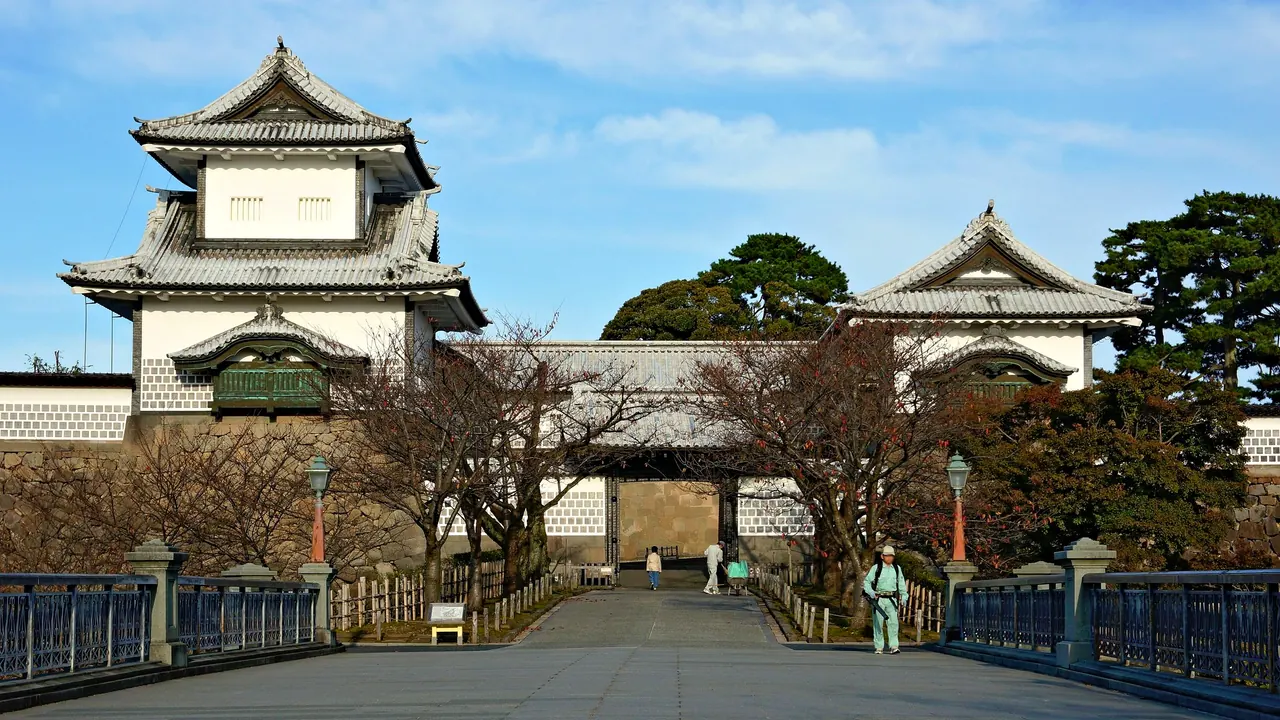
Kanazawa Castle's Ishikawa Gate from the Ishikawa Bridge
- Day trips75
- Culture & sights73
- Food & drink71
Photo: 663highland, CC BY 2.5, cropped
Match
57
Every category weighted equally
- Beach & sun55
- Culture & arts60
- Food & nightlife56
- Family trip58
- Outdoors59
- Relax & unwind59
- Shopping & style58
- On a budget57
Kanazawa in twelve categories
Our verdict on each, scored 0 to 100 against the same fixed benchmark cities, so a score means the same thing on every page.
Beaches & swimming. Scores 33 out of 100.
Food & drink. Scores 71 out of 100.
Culture & sights. Scores 73 out of 100.
Nightlife. Scores 30 out of 100.
Nature & outdoors. Scores 55 out of 100.
Day trips. Scores 75 out of 100.
Good for families. Scores 55 out of 100.
Getting around. Scores 62 out of 100.
Shopping & style. Scores 58 out of 100.
Affordability. Scores 57 out of 100.
Live music & performing arts. Scores 44 out of 100.
Wellness & relaxation. Scores 68 out of 100.
Kanazawa category by category
Beaches & swimming
33Kanazawa lies a few kilometres from the Sea of Japan, and long, plain sandy beaches run north and south of the port. Uchinada is the nearest of them, and the Chirihama coast, where cars can drive along the hard sand, is under an hour away. In July and August the water is warm, around 26°C. Local families come on summer weekends, and the beaches have showers and seasonal beach huts.
Outside those two months the coast is windswept and grey, and winter brings heavy surf and snow. The sea is a pleasant half-day break on a summer visit, but beach life plays no real part in a stay here.
Food & drink
71This is one of Japan's great regional food cities, built on the cold, rich waters of the Sea of Japan. Omicho Market is the centre of it: a covered maze of fish stalls and small counters serving seafood rice bowls, sweet shrimp, oysters and, in winter, snow crab. Kaga cuisine is the old local cooking, with jibuni, a thickened duck stew, and nodoguro, the prized blackthroat seaperch. You can eat it at refined kaiseki tables or at plain counters near the station.
Kanazawa was once a castle town of tea ceremony, and it eats more wagashi than almost anywhere in Japan. Teahouses in the chaya districts serve matcha with seasonal sweets, and some come dusted with local gold leaf. The surrounding Kaga plain produces a lot of serious sake. Katamachi is the area for izakaya and conveyor-belt sushi. The food is excellent but not endless: a few days covers the core of it.
Culture & sights
73The Allied bombing raids of the war missed Kanazawa, so it kept more of its Edo-period townscape than almost any Japanese city of its size. Kenroku-en is counted among the country's three great gardens, with ponds, stone lanterns and pine trees roped against snow in winter. It sits beside the castle park, with its rebuilt turrets and long white walls. Higashi Chaya is the finest of the three old geisha districts, a few streets of latticed wooden teahouses. In Nagamachi, earthen samurai walls line narrow canals.
The modern side is just as distinctive. The circular 21st Century Museum of Contemporary Art and the quiet D.T. Suzuki Museum both draw visitors in their own right. Myoryu-ji, the so-called ninja temple, is full of trap doors and hidden stairs, and the city has several small craft museums. Everything fits into two or three unhurried days.
Nightlife
30Going out here means Katamachi and the lanes of Kigura-machi beside it. The area is a dense grid of izakaya, sake bars, tiny snack bars and a few cocktail and whisky bars, and it stays busy with office workers late on weekend nights. The riverside chaya districts add a few quiet bars in old wooden houses. There is little in the way of clubs, and the late scene is mostly locals. The best evening is a long dinner followed by a sake bar or two, not a big night out.
Nature & outdoors
55The city sits between the Sea of Japan and the mountains, cut by two rivers, the Sai and the Asano, whose banks make easy walking and cycling routes. Low wooded hills rise at its eastern edge. The real outdoors is further out. Mount Hakusan, one of Japan's three sacred peaks, is about two hours away, with alpine hiking and wildflowers in summer and ski areas in winter. The Noto Peninsula to the north has rugged coast and terraced rice fields by the sea.
Winters are long, grey and very snowy, which suits skiers more than walkers. Spring and autumn bring cherry blossom and red maples to the gardens and hills, and are the best seasons to be outside. Without a car, most of this is hard to reach.
Day trips
75The best-known outing is to Shirakawa-go, a UNESCO-listed village of steep thatched gassho farmhouses in a mountain valley, about an hour and a quarter away by bus. It is especially striking under winter snow. Nearby Gokayama has smaller, quieter villages of the same kind. Takayama's old merchant streets are further, around two hours, but worth the long day.
The Shinkansen puts Toyama and Takaoka within half an hour, and Takaoka's Zuiryu-ji is a grand Zen temple and national treasure. To the south lie the Kaga hot-spring towns, Kutani pottery villages and Natadera temple. Further on in Fukui are the great Zen monastery of Eihei-ji and the dinosaur museum at Katsuyama, both about an hour or more away. Wajima, the lacquer town on the Noto Peninsula, is the longest of these trips.
Good for families
55Kanazawa is easy with children in the way Japanese cities are: very safe, spotless, with good public toilets and calm streets. The 21st Century Museum is the favourite with children, thanks to its playful installations and the pool you can stand beneath. Kenroku-en and the castle park give space to run, and the trick doors of the ninja temple go down well with older children.
Beyond that, the attractions made for children are outside the city. The prefectural zoo and the summer beaches are a short drive away, and the dinosaur museum in Fukui is a good full day out. The core sights are gardens, teahouses and crafts, which young children can find slow.
Getting around
62The main sights lie in a compact band about 2km from the station: Omicho, the chaya districts, the castle, Kenroku-en and Nagamachi. It is pleasant to walk, with level streets and riverside paths. There is no metro or tram, so the city depends on buses. Loop lines run past all the main sights, but they can be crowded and slow at busy times. A public bike-share scheme is a good alternative outside winter.
The Shinkansen makes arriving easy, and buses to Shirakawa-go leave from the station. Snow and slush make winter walking harder. A car only helps for the mountains and the Noto coast.
Shopping & style
58Kanazawa is a craft city, and shopping here is mostly about its traditional crafts. It produces nearly all of Japan's gold leaf, and the chaya districts are full of shops selling gilded lacquerware, cosmetics and sweets. Other local specialities are Kutani porcelain with bold overglaze colours, hand-painted Kaga yuzen silk, Ohi tea bowls and Wajima lacquer. Several shops and the prefectural craft centre sell work by serious makers alongside souvenirs.
For mainstream shopping, Korinbo and Katamachi have department stores, and Tatemachi is a pedestrian street of fashion and casual boutiques. The station complex covers food gifts and souvenirs. Luxury and flagship fashion are limited, so come for the crafts.
Affordability
57Kanazawa is mid-priced, and it costs less than Japan's biggest tourist cities. Clean, compact business hotels near the station are plentiful and fairly priced. Set lunches, noodle shops and conveyor-belt sushi keep everyday eating reasonable, and the main sights charge modest entry fees. What adds up is the local speciality food: kaiseki dinners, winter snow crab and the best Omicho seafood are expensive. Ryokan stays in the nearby hot-spring towns cost more again. Shirakawa-go bus fares and Shinkansen tickets also add to a trip.
Live music & performing arts
44For a city of its size, Kanazawa has unusually rich traditional arts. Noh is performed regularly at the prefectural Noh theatre. In the chaya districts, geisha still train and perform, and some teahouses hold dance and shamisen performances open to visitors. The Orchestra Ensemble Kanazawa is one of Japan's leading chamber orchestras and plays a regular season at the Ishikawa Prefectural Concert Hall beside the station.
Beyond these there is little: a handful of small live houses and jazz bars, touring shows, and almost no theatre for non-Japanese speakers. Check the programme before you go and build an evening around it.
Wellness & relaxation
68Japan's bathing culture is close at hand. Yuwaku Onsen is a small hot-spring village in the hills south-east of the city, about half an hour away, with ryokan beside a stream. The Kaga hot-spring towns of Yamanaka, Yamashiro and Awazu are about an hour away and make an excellent overnight stay. In town, public bathhouses and the hot-spring baths in many hotels make a daily soak easy.
The city's own pace helps too. Mornings in Kenroku-en, matcha in a quiet teahouse and evening walks by the Asano River feel unhurried, and Kanazawa never has the crush of the biggest Japanese cities. Spas in the international sense are few, so come for hot water, gardens and calm, not treatments.
When should you go?
Pick a month to see what it is like. The climate figures are measured averages, not a forecast.
Kanazawa in July
Daytime high, °C
Rainfall in the month, mm
The whole year
Shaded against this city’s own year: the deepest cell is its best month for that figure and the palest its weakest.
Temperature and rainfall are climate normals, averaged over the years shown. Kanazawa: 1991-2020 normals, Kanazawa (3.2 km from centre).
Before you go
| Measure | Kanazawa |
|---|---|
| Official language | Japanese |
| Currency | Yen (JPY) |
| Sockets | AB100 V, 50 and 60 Hz depending on the region |
| Driving side | Left |
| Time zone | UTC+9 |
| Emergency number | Police 110, fire 119 |
| Elevation | 28 m |
| Main airport | Komatsu Airport / JASDF Komatsu Air Base (KMQ)29 km from centre7 non-stop destinations |
| Public holidays this year | 16 days |
By the numbers
| Measure | Kanazawa |
|---|---|
| City population | 462,479 |
| People per km² | 989 |
| Museums within 10 km | 27 |
| UNESCO World Heritage sites within 50 km | 1 |
| Swim season, months above 21 °C | 4 months |
Compare Kanazawa with
Every comparison with a written verdict behind it.