Japan
Kamakura
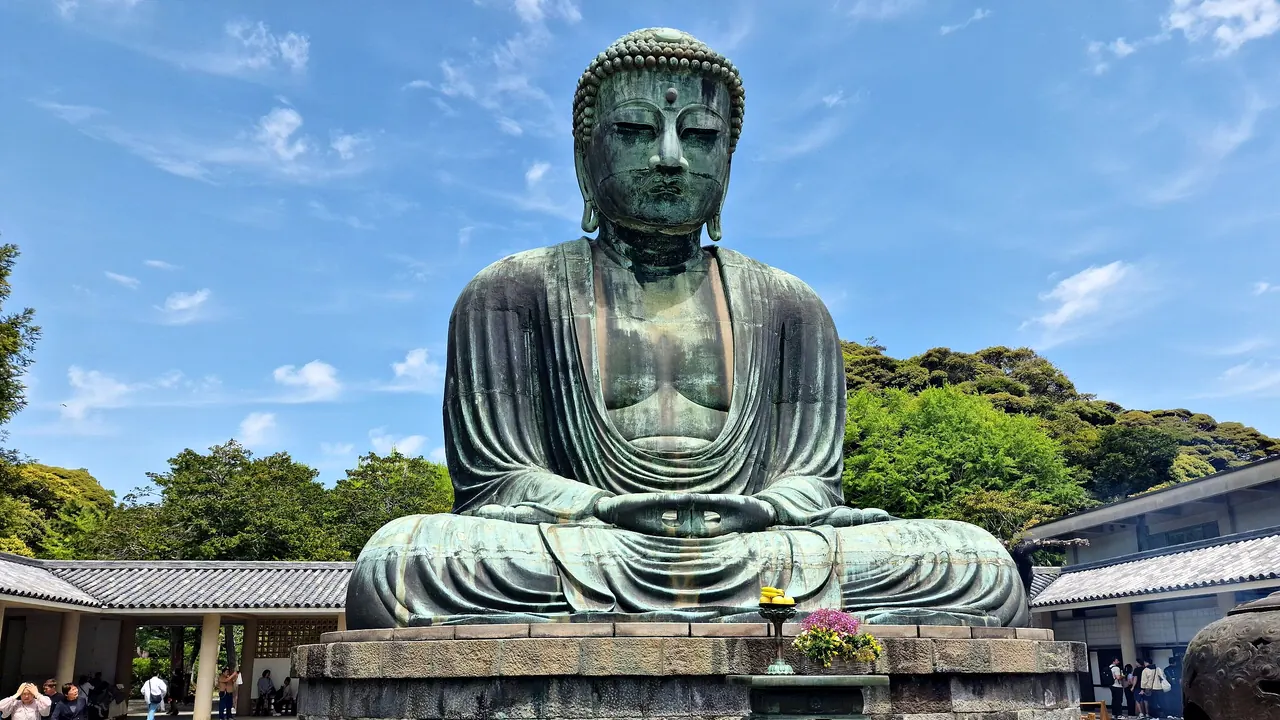
The Great Buddha of Kotoku-in
- Day trips85
- Getting around74
- Culture & sights72
Photo: Anagoria, CC BY-SA 4.0, cropped
Match
53
Every category weighted equally
- Beach & sun53
- Culture & arts54
- Food & nightlife46
- Family trip60
- Outdoors61
- Relax & unwind55
- Shopping & style50
- On a budget52
Kamakura in twelve categories
Our verdict on each, scored 0 to 100 against the same fixed benchmark cities, so a score means the same thing on every page.
Beaches & swimming. Scores 58 out of 100.
Food & drink. Scores 47 out of 100.
Culture & sights. Scores 72 out of 100.
Nightlife. Scores 15 out of 100.
Nature & outdoors. Scores 68 out of 100.
Day trips. Scores 85 out of 100.
Good for families. Scores 66 out of 100.
Getting around. Scores 74 out of 100.
Shopping & style. Scores 38 out of 100.
Affordability. Scores 42 out of 100.
Live music & performing arts. Scores 20 out of 100.
Wellness & relaxation. Scores 48 out of 100.
Kamakura category by category
Beaches & swimming
58Kamakura is a seaside town as well as a temple town. Yuigahama and Zaimokuza form a long curve of dark grey sand about fifteen minutes' walk from the station. In high summer the water of Sagami Bay reaches about 26°C, and the shore fills with wooden beach houses, families and weekend crowds from Tokyo. Further west, Koshigoe and the beaches at Katase facing Enoshima are a short ride on the Enoden line. Zushi and Hayama to the east are calmer and a little cleaner.
The proper swimming season is high summer only. Outside it the beaches belong to walkers and surfers. The water is fine for swimming but rarely clear, and the sand is volcanic rather than white. It is a good add-on to a temple stay, not a beach vacation in itself.
Food & drink
47Eating in Kamakura follows the coast and the temples. Shirasu, the tiny whitebait of Sagami Bay, is the local speciality, served raw or boiled over rice in small places near the beach. Around the Zen temples you can try shojin ryori, the vegetarian Buddhist cuisine of tofu, seasonal vegetables and sesame, at its most refined. Komachi-dori is lined with snacks such as grilled rice crackers, matcha sweets and croquettes. The Renbai farmers' market by the station sells the much-prized Kamakura vegetables.
There are good soba shops, quiet coffee houses in old wooden houses, and sweet shops selling the dove-shaped butter biscuits the town is known for. What it lacks is range and evening depth. For serious sushi, ramen or izakaya hopping, most visitors go to Yokohama or Tokyo.
Culture & sights
72For about a century and a half from 1192, Kamakura was the seat of Japan's first warrior government. The town still carries that heritage in its temples. The bronze Great Buddha at Kotoku-in sits in the open air, 11m high. Tsurugaoka Hachimangu, the shrine of the Minamoto clan, stands at the end of a long avenue that runs down to the sea. Engaku-ji and Kencho-ji in Kita-Kamakura are among the most important Zen temples in the country, with their great gates, halls and rock gardens.
Smaller sights make up the rest of a visit: Hase-dera with its hillside of hydrangeas and its view over the bay, the bamboo grove at Hokoku-ji, Meigetsu-in's round window, and the cave shrine of Zeniarai Benten. The museums are modest, the best being the Kamakura Museum of National Treasures. Two or three days covers the town well.
Nightlife
15Kamakura empties when the day-trippers leave. A few izakaya and small bars around Kamakura station and down towards the beach stay open for a drink after dinner, and summer evenings on the beach are a little livelier. Nothing runs late. Anyone wanting a real night out takes the train to Yokohama or Tokyo, about an hour away.
Nature & outdoors
68Kamakura sits in a bowl of low, wooded hills open to the sea on one side, and this setting is a large part of its appeal. Hiking trails follow the ridges between the temples. The Daibutsu trail and the Tenen route take a few hours through forest and past cave tombs, with glimpses of the bay. On clear winter days Mount Fuji stands across the water, seen best from Inamuragasaki or Enoshima.
The coast is popular for watersports. Shichirigahama and Kugenuma draw surfers, and the calm bay suits stand-up paddling and windsurfing at Zaimokuza. The Miura Peninsula to the south offers coastal walks and rocky headlands. For real mountain hiking, Hakone and the Tanzawa range lie roughly an hour and a half away. Spring cherry blossom, early-summer hydrangeas and autumn maples set the rhythm of the year.
Day trips
85Kamakura is unusually well placed. Tokyo is about an hour away by direct train, so a day in Asakusa, Ginza or Ueno is entirely realistic. Yokohama is under half an hour away, with Chinatown, the waterfront and the Sankeien garden. Closer still, the Enoden line runs to Enoshima, a small island with shrines, caves, steep lanes and a lighthouse garden.
Further west, Odawara has its reconstructed castle, and Hakone is about an hour and a half away, with hot-spring villages, the open-air museum and Lake Ashi. South along the Miura Peninsula, Yokosuka's naval history and the fishing port of Misaki make quieter outings. Few small towns have such a varied list within easy reach by train.
Good for families
66Japan's safety and cleanliness make Kamakura easy with children, and the town has more for them than its temples suggest. Children can climb inside the Great Buddha. The little Enoden train rattles past houses and along the sea, and the beaches have gentle summer swimming. Enoshima has caves and an escalator up the hill. The large aquarium at Katase, opposite the island, focuses on the sea life of Sagami Bay, and Yokohama's attractions are a short train ride away.
The effort is in the details. Temples mean long stone staircases, Komachi-dori and the Enoden are packed at weekends and in hydrangea season, and hotel rooms are small. A stroller is a struggle on the hill trails. Weekdays outside the school vacations and blossom seasons are much easier.
Getting around
74Kamakura is small enough to walk. From Kamakura station, Tsurugaoka Hachimangu and Komachi-dori are a few minutes away. Kita-Kamakura's temples are one stop up the JR line or a pleasant walk, and the Great Buddha and Hase-dera are a short ride on the Enoden. That little line continues along the coast to Enoshima, and JR trains run straight to Yokohama and Tokyo, so a car is never needed.
The drawbacks are crowds and terrain. The narrow roads are often gridlocked at weekends, which makes buses slow. The Enoden can be packed to standing in high season, and many temples sit up valleys or flights of steps. Renting a bicycle helps on the flat stretch to the beach.
Shopping & style
38Shopping centres on Komachi-dori, the crowded lane from the station towards the shrine. Its shops sell sweets, pickles, chopsticks, tenugui cloths and temple souvenirs. Wakamiya-oji, the avenue parallel to it, and the side streets have quieter craft shops. Kamakura-bori, the local carved and lacquered woodwork that dates back to the Zen temples, is the one craft worth seeking out, along with ceramics and good knives.
The town is pleasant for an afternoon of browsing but has no fashion streets or department stores. Serious shopping is a train ride away in Yokohama or Tokyo.
Affordability
42Kamakura costs a little more than most Japanese towns of its size, mainly because of where you sleep. There are few hotels, and the ones near the sea or in old houses are in demand from Tokyo weekenders, especially in spring, summer and autumn. Day-to-day costs are more reasonable. Temple fees are small, train fares are modest, and set lunches of soba or whitebait on rice are fair value. Many visitors keep costs down by staying in Yokohama or Fujisawa and visiting from there.
Live music & performing arts
20There is little to attend on an ordinary evening. Kamakura has a small private Noh theatre that holds occasional performances and introductions to the art, and a municipal arts hall in Ofuna hosts touring concerts. The real performances belong to the shrine calendar: the Kamakura Festival in spring with its traditional dance at Tsurugaoka Hachimangu, and yabusame horseback archery at the autumn festival. For opera, orchestras or theatre, go to Yokohama or Tokyo.
Wellness & relaxation
48Kamakura has no hot springs of its own, so its calm comes from the temples rather than from bathing. Engaku-ji and Kencho-ji hold zazen meditation sessions open to the public. In the valleys of Kita-Kamakura and around Jomyo-ji and Zuisen-ji, a morning can be spent among moss gardens and tea pavilions in near silence.
That calm depends on timing. Weekends and blossom seasons bring dense crowds to the main sights, while early mornings and weekdays are peaceful. For proper onsen bathing, visitors take the train to Hakone, about an hour and a half away.
When should you go?
Pick a month to see what it is like. The climate figures are measured averages, not a forecast.
Kamakura in July
Daytime high, °C
Rainfall in the month, mm
The whole year
Shaded against this city’s own year: the deepest cell is its best month for that figure and the palest its weakest.
Where the figures come from
Kamakura's sunshine is measured 45 km from the centre, at Tokyo.
Temperature and rainfall are climate normals, averaged over the years shown. Kamakura: 1991-2020 normals, Yokosuka Fwf (11.6 km from centre).
Before you go
| Measure | Kamakura |
|---|---|
| Official language | Japanese |
| Currency | Yen (JPY) |
| Sockets | AB100 V, 50 and 60 Hz depending on the region |
| Driving side | Left |
| Time zone | UTC+9 |
| Emergency number | Police 110, fire 119 |
| Elevation | 17 m |
| Main airport | Tokyo Haneda International Airport (HND)34 km from centre98 non-stop destinations |
| Public holidays this year | 16 days |
By the numbers
| Measure | Kamakura |
|---|---|
| City population | 172,929 |
| People per km² | 4,356 |
| Museums within 10 km | 18 |
| UNESCO World Heritage sites within 50 km | 1 |
| Swim season, months above 21 °C | 5 months |
Compare Kamakura with
Every comparison with a written verdict behind it.