Japan
Nara
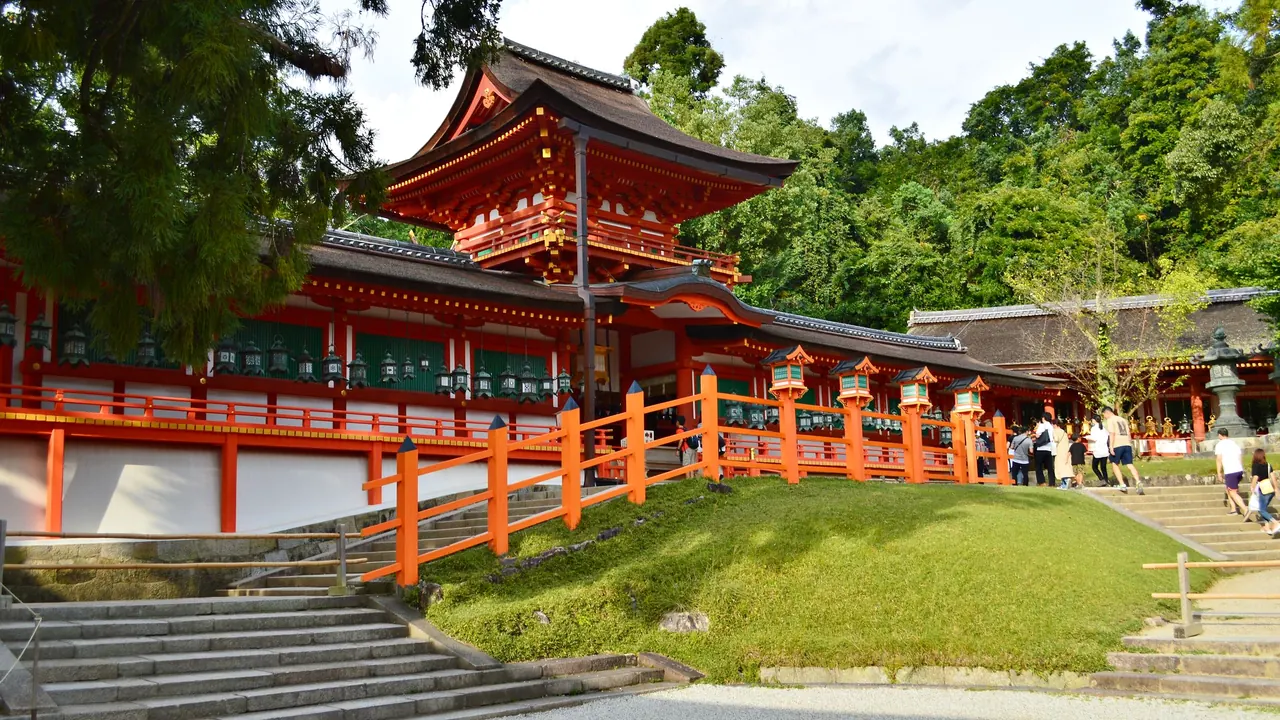
The red Chūmon gate of Kasuga Taisha
- Day trips95
- Culture & sights86
- Getting around77
Photo: Saigen Jiro, CC0
Match
49
Every category weighted equally
- Beach & sun44
- Culture & arts56
- Food & nightlife44
- Family trip54
- Outdoors57
- Relax & unwind47
- Shopping & style48
- On a budget50
Nara in twelve categories
Our verdict on each, scored 0 to 100 against the same fixed benchmark cities, so a score means the same thing on every page.
Beaches & swimming. Scores 7 out of 100.
Food & drink. Scores 40 out of 100.
Culture & sights. Scores 86 out of 100.
Nightlife. Scores 12 out of 100.
Nature & outdoors. Scores 62 out of 100.
Day trips. Scores 95 out of 100.
Good for families. Scores 50 out of 100.
Getting around. Scores 77 out of 100.
Shopping & style. Scores 35 out of 100.
Affordability. Scores 60 out of 100.
Live music & performing arts. Scores 24 out of 100.
Wellness & relaxation. Scores 40 out of 100.
Nara category by category
Beaches & swimming
7Nara sits in an inland basin ringed by low hills, and the sea plays no part in a stay here. The closest beaches are on the industrial Osaka Bay shore, well over an hour away by train, and the clear water and white sand of the Kii Peninsula take most of a day to reach. Swimming in summer means a hotel pool or a public pool. If you want beach days, plan them somewhere else.
Food & drink
40Nara has a small but distinctive table. Kakinoha-zushi, mackerel or salmon pressed onto rice and wrapped in persimmon leaves, is the local classic, along with narazuke, vegetables pickled in sake lees, and fine Miwa somen noodles from the hills to the south. The region claims a founding role in Japanese sake brewing, and tasting counters and brewery shops around Naramachi pour local bottles. Shaved-ice kakigori is taken seriously in summer, and there are tea houses near the temples.
The range is narrow, though. Much of the food near the park is quick lunches for day visitors, many kitchens close early, and serious eating mostly means the short train ride to Osaka or Kyoto.
Culture & sights
86Nara was Japan's capital in the eighth century, and the temples and shrines of that time still define the city. Todai-ji houses the Great Buddha in one of the largest wooden halls in the world, and its gates, bell and Nigatsu-do hall look out over the town. Kofuku-ji's five-storey pagoda rises above the park, and Kasuga Taisha is reached along paths lined with thousands of stone and bronze lanterns. The Nara National Museum holds one of the country's finest collections of Buddhist sculpture.
West of the centre, Toshodai-ji and Yakushiji keep the calm and proportions of Tang-era temple building, and the open ground of the Heijo Palace site shows the scale of the old capital. Naramachi, the old merchant quarter, has narrow lanes of wooden townhouses and Gango-ji, one of Japan's oldest temples. The set is compact and of the first rank, best seen over two or three unhurried days.
Nightlife
12Evenings in Nara are quiet. Once the day visitors head back to Osaka and Kyoto, the streets around the park empty, and going out means a meal at an izakaya near Kintetsu Nara station, a few drinks at a sake counter or a small bar in the covered shopping arcades. There are no clubs to speak of, and most places close early. For a proper night out, the bar districts of Osaka are under an hour away by train, but the last trains back set the limit.
Nature & outdoors
62Green space starts in the middle of town. Nara Park spreads over lawns, ponds and woodland where more than a thousand semi-wild sika deer wander freely, and behind it the Kasugayama Primeval Forest has been protected from hunting and logging for more than a thousand years. The grassy slopes of Mount Wakakusa give an easy climb with views over the whole basin.
Further out, the Yamanobe-no-michi follows an ancient route along the eastern foothills past shrines, orchards and rice fields, and the flat basin suits gentle cycling. Yoshino's hills, famous for cherry blossom in spring and maple colour in autumn, are reachable in under two hours, with the steep forested Omine mountains beyond. Summers are hot and humid, so spring and autumn are the seasons for walking.
Day trips
95Few places have so much within easy reach. Kyoto is well under an hour away by train and Osaka about 40 minutes, so two of Japan's great cities can each fill a day out. Closer still, Horyu-ji in Ikaruga holds the oldest surviving wooden buildings in the world and is a short train ride from the centre.
To the south, the Asuka area was the seat of power before Nara, with burial mounds, stone monuments and early temples best seen by bicycle. Hase-dera and Muro-ji are mountain temples, lovely in peony and maple season. Uji brings green tea and the Byodo-in, and Kobe and the white castle at Himeji are reachable in a longer day.
Good for families
50Feeding the deer in Nara Park is a memory most children keep. They buy a stack of crackers, a deer bows for one, and the wide lawns and ponds around it give them room to run. The Great Buddha at Todai-ji impresses even young visitors, and so does the wooden pillar with a hole at its base that children queue to squeeze through. The centre is safe, clean and compact, and Japanese public life makes travelling with children easy, from tidy toilets to calm trains.
Beyond the deer and a few temples there is little made for children: no zoo, aquarium or theme park in the city. Small children need watching around the deer, which nip or butt when they want food, and summer heat makes long temple walks hard going. Most families treat Nara as one or two good days and head into Osaka for an aquarium or a theme park.
Getting around
77Most of what visitors come for is walkable. Kintetsu Nara station sits at the edge of the park, and Todai-ji, Kofuku-ji, Kasuga Taisha, the National Museum and Naramachi all lie within a gentle walk of it, though the distances add up over a day. JR Nara station is a little further west.
The temples of the western side, Toshodai-ji and Yakushiji, and the Heijo Palace site are reached by local train or bus, and Horyu-ji is a short JR ride. City buses are easy to use but fill up at weekends and in blossom season. Rental bicycles suit the flat basin well. A car is never needed.
Shopping & style
35Shopping in Nara is small and centred on traditional crafts. The city has made sumi ink and calligraphy brushes for centuries, and specialist shops in Naramachi and the old streets also sell Nara-zarashi hand-woven linen, Akahada pottery, carved Ittobori dolls and lacquerware. The covered Higashimuki and Mochiidono arcades near Kintetsu Nara station mix sweet shops, sake sellers and deer-themed souvenirs.
There is a department store and the usual station shops, but no fashion streets or design districts. Anyone who wants serious shopping goes to Osaka.
Affordability
60Nara is moderately priced for a city with this much to see. Because many visitors come only for the day, there are plenty of business hotels and guesthouses near the two main stations, and they are reasonably priced. Set lunches, noodle counters and convenience-store food keep daily spending down. The park and the deer are free, and the temples charge modest entry fees hall by hall, so a full day of sights stays affordable.
The costs are elsewhere. Traditional ryokan with dinner and the better restaurants are expensive, and rail fares add up if you use Nara as a base for day trips, so it is worth working out regional rail passes before you go.
Live music & performing arts
24Nara's performing arts are bound up with its shrines and temples rather than a theatre district. The city is one of the birthplaces of Noh, and Kasuga Taisha keeps alive gagaku court music and bugaku dance, performed at shrine ceremonies and above all at the Kasuga Wakamiya On-matsuri, a winter festival held for close to nine centuries. The Omizutori fire rites at Todai-ji in early spring are ritual rather than performance, but they are the most dramatic thing in the city's calendar.
Away from those occasions there is little to attend. A concert hall and a few small venues host touring shows, and for opera, theatre or regular live music, Osaka is the place to go.
Wellness & relaxation
40Nara is a calm city rather than a spa city. There are no notable hot springs in town, though old neighbourhood bathhouses and a few large modern bathing complexes on the outskirts offer the ritual of a Japanese soak, and some ryokan have their own baths. The deep mountain onsen of southern Nara Prefecture are too far for an easy evening.
What the city does offer is pace. Early mornings in the park before the crowds arrive, a tea house near a temple garden, and the quiet that settles over the old town once day visitors leave make it a good place to slow down between the busier cities nearby.
When should you go?
Pick a month to see what it is like. The climate figures are measured averages, not a forecast.
Nara in July
Daytime high, °C
Rainfall in the month, mm
The whole year
Shaded against this city’s own year: the deepest cell is its best month for that figure and the palest its weakest.
Where the figures come from
Nara's sunshine is measured 26 km from the centre, at Osaka.
Temperature and rainfall are climate normals, averaged over the years shown. Nara: 1971-2000 (sunshine 1991-2020, rainfall 1991-2020) normals, Nara (2.6 km from centre).
Before you go
| Measure | Nara |
|---|---|
| Official language | Japanese |
| Currency | Yen (JPY) |
| Sockets | AB100 V, 50 and 60 Hz depending on the region |
| Driving side | Left |
| Time zone | UTC+9 |
| Emergency number | Police 110, fire 119 |
| Elevation | 70 m |
| Main airport | Kansai International Airport (KIX)59 km from centre62 non-stop destinations |
| Public holidays this year | 16 days |
By the numbers
| Measure | Nara |
|---|---|
| City population | 352,377 |
| People per km² | 1,273 |
| Museums within 10 km | 31 |
| UNESCO World Heritage sites within 50 km | 6 |
| Swim season, months above 21 °C | 5 months |
Compare Nara with
Every comparison with a written verdict behind it.