Türkiye
Antalya
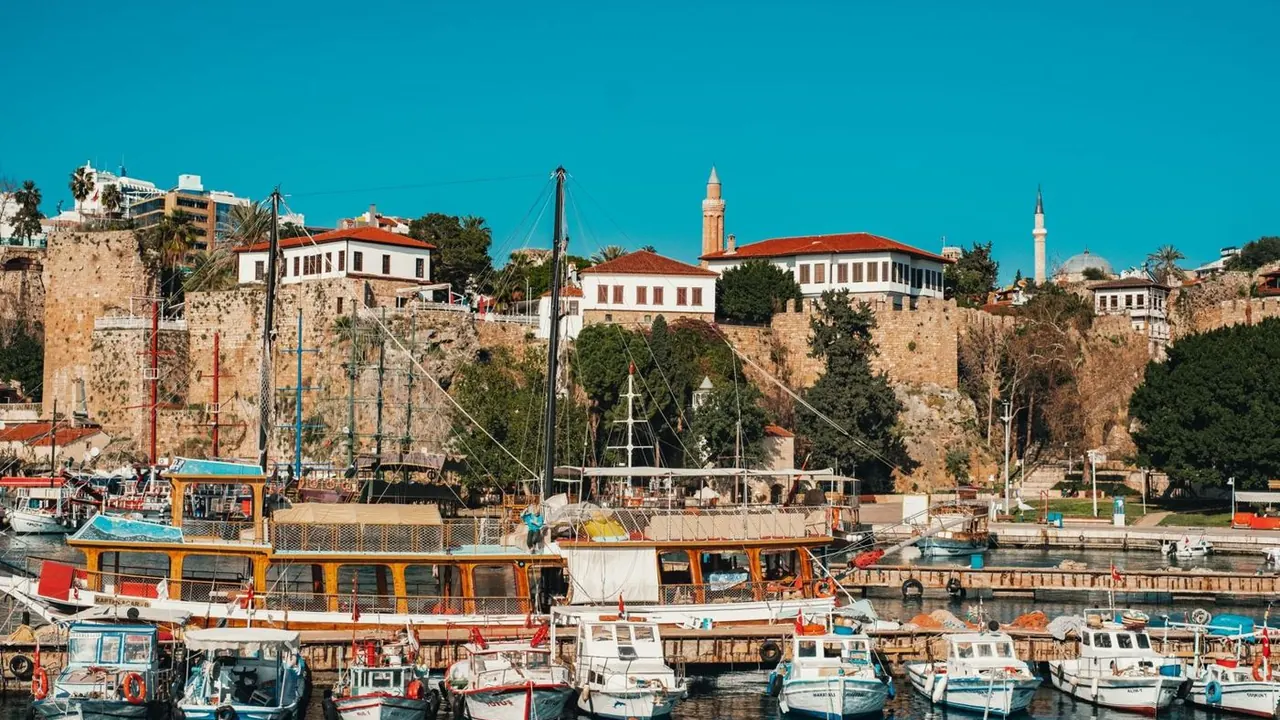
The old harbour in Kaleiçi
- Nature & outdoors83
- Beaches82
- Day trips78
Photo: Furkan Tumer, Pexels License
Match
61
Every category weighted equally
- Beach & sun65
- Culture & arts57
- Food & nightlife55
- Family trip66
- Outdoors68
- Relax & unwind65
- Shopping & style56
- On a budget61
Antalya in twelve categories
Our verdict on each, scored 0 to 100 against the same fixed benchmark cities, so a score means the same thing on every page.
Beaches & swimming. Scores 82 out of 100.
Food & drink. Scores 57 out of 100.
Culture & sights. Scores 55 out of 100.
Nightlife. Scores 48 out of 100.
Nature & outdoors. Scores 83 out of 100.
Day trips. Scores 78 out of 100.
Good for families. Scores 74 out of 100.
Getting around. Scores 50 out of 100.
Shopping & style. Scores 44 out of 100.
Affordability. Scores 62 out of 100.
Live music & performing arts. Scores 40 out of 100.
Wellness & relaxation. Scores 62 out of 100.
Antalya category by category
Beaches & swimming
82Beach life is a big part of why people come to Antalya. Konyaaltı runs for several kilometres west of the centre under the Taurus mountains. It is coarse pebble, and the water is clear and deepens quickly. East of town, Lara has the sand, backed by large resort hotels. In high summer the sea reaches about 27°C, and it stays swimmable from late spring well into autumn.
Within an hour you have more choice. Kemer and the coves towards Phaselis have pine-fringed bays, and Belek has long sandy shores lined with resorts. In the old harbour below Kaleiçi, people swim off the rocks and boats leave for short trips along the cliffs. The main beaches get crowded in July and August.
Food & drink
57Antalya eats well if you leave the hotel buffet behind. The local signatures are piyaz made with a tahini dressing and served beside grilled şiş köfte, slow-cooked tandır lamb, and fresh fish from the Gulf. Breakfasts are long and generous. The plain around the city grows citrus, tomatoes and pomegranates, and weekly neighbourhood markets pile them high.
The most rewarding places are the plain köfte and kebab houses in the modern city and the fish restaurants along the coast. Kaleiçi's restaurants are mostly aimed at visitors, so menus there are broader but shallower. Fine dining exists, mainly in the resort zones, but it is not a city that people visit for its restaurants.
Culture & sights
55The historic heart is Kaleiçi, the walled old town above the Roman harbour. Its lanes are lined with restored Ottoman houses with wooden bay windows. You enter through Hadrian's Gate, a triple-arched Roman gateway, and the fluted Yivli Minare, a Seljuk landmark, rises over the quarter. The Hıdırlık Tower and the broken minaret of the Kesik Minare complete a short, pleasant walk.
The Antalya Museum is the city's strongest sight. Its marble statues from Perge and its sarcophagi make it one of the better archaeological collections in the country. Beyond these, the modern city has little architecture to seek out. Most of the region's great ruins lie outside town.
Nightlife
48Going out in Antalya follows the season. On summer nights the bars in Kaleiçi's lanes and around the harbour fill up, with terraces and courtyard bars playing music until late. Along Konyaaltı and Lara there are beach clubs and large open-air venues. The resort strips also have their own discos and hotel entertainment, aimed at package visitors.
It is fun rather than distinctive, and much of it is spread out, so you need a taxi between areas. In winter the scene shrinks to a handful of bars that mostly serve locals and students.
Nature & outdoors
83Antalya sits where the Taurus mountains drop into the sea, and the setting is spectacular. The Beydağları range rises across the bay from Konyaaltı. A cable car near Kemer climbs Tahtalı Dağı to about 2,365m. The Lycian Way starts in this area, with trails over cliffs and through pine forest past Phaselis and Olympos. In the city itself, the Düden waterfalls pour off a cliff straight into the sea, and the Kurşunlu falls lie in shaded woodland just outside town.
Köprülü Canyon is good for rafting, and the coast is good for diving, sailing and paragliding. Saklıkent has skiing in winter. Spring and autumn are the seasons for walking, because the high summer heat makes inland hiking hard work.
Day trips
78The countryside around Antalya is full of ancient cities. Perge, with its colonnaded street and stadium, is a short drive from town. Aspendos has one of the best-preserved Roman theatres anywhere. Side combines its temple of Apollo and its ruins with a lively seaside town. Up in the mountains, Termessos is a remote, atmospheric city set high on a peak.
To the west, Phaselis and Olympos pair ruins with pine woods and the sea. Kemer works as an easy resort outing. To the east, Alanya's castle sits on its headland about two hours away. Demre, with ancient Myra and the church of St Nicholas, and the boat trips over Kekova's sunken city make a long but rewarding day. Most of these are easier with a car or a tour than by bus.
Good for families
74Antalya works well for families, mostly because so much of the coast is built for them. The resorts in Lara, Belek and Kemer have pools, water slides and kids' clubs. Belek also has a large theme and water park. In the city, a big aquarium with a long walk-through tunnel is a reliable rainy-day or midday outing. Lara has shallow, sandy water that suits small children.
Turkish culture is warm towards children, and waiters and shopkeepers fuss over them. The hard parts are July and August heat, which makes sightseeing difficult, and Kaleiçi's steep, uneven lanes, which are awkward with a pushchair.
Getting around
50The centre is manageable. Kaleiçi and the streets around it are walkable, though hilly near the harbour. The tram lines link the airport, the bus station, the old town and the Konyaaltı side, and city buses fill in the gaps on a single card. Taxis are plentiful.
Once you go further out it gets harder. Lara, Belek and Kemer stretch for tens of kilometres along the coast, and most resort guests move by hotel transfer. The ancient sites and mountain trails are poorly served by public transport, so visitors who want to explore usually hire a car or book tours.
Shopping & style
44Shopping in Antalya is practical rather than stylish. Kaleiçi's lanes sell carpets, ceramics, Turkish delight, spices and leather, with plenty of repetition and a lot of haggling. The modern city has several large malls with Turkish and international chains, and they are useful in the summer heat.
The weekly neighbourhood markets are more interesting. They sell fruit, olives, cheese, textiles and household goods to locals, and they are a good place for spices and dried fruit to take home. Beware the factory-outlet stops on organised tours. There is little luxury or independent design shopping.
Affordability
62Antalya can be good value, but where you eat and stay makes a big difference. Local köfte houses, bakeries, markets and city transport are cheap, and all-inclusive resort packages can be good value for a family. Kaleiçi's restaurants, beach clubs, boat trips and summer rooms near the sea are priced for foreigners and cost noticeably more. Spring and autumn bring lower room rates and fewer crowds.
Live music & performing arts
40Antalya has more formal culture than its resort image suggests. A state opera and ballet company and a state theatre perform through the winter season, mostly in Turkish but with ballet and opera that any visitor can follow. The highlight of the calendar is the summer opera and ballet festival in the ancient theatre at Aspendos, where performances under the stars use the Roman stage.
Outside that, live music means bands in the Kaleiçi bars and the evening entertainment in resort hotels. There is no real jazz or concert-hall scene to plan a trip around.
Wellness & relaxation
62Wellness in Antalya comes mainly from two traditions. Kaleiçi has several old hammams where you can have the full scrub and foam massage on a warm marble slab. Almost every large resort in Lara, Belek and Kemer has its own hammam, sauna and spa, some of them very extensive.
The pace helps too: long breakfasts, afternoons in the shade, and evenings by the sea once the heat breaks. There are no historic baths of great fame, and the summer crowds in the centre are not restful. Spring and autumn are the calmest seasons.
When should you go?
Pick a month to see what it is like. The climate figures are measured averages, not a forecast.
Antalya in July
Daytime high, °C
Rainfall in the month, mm
The whole year
Shaded against this city’s own year: the deepest cell is its best month for that figure and the palest its weakest.
Temperature and rainfall are climate normals, averaged over the years shown. Antalya: 1991-2020 normals, Antalya (23.4 km from centre).
Before you go
| Measure | Antalya |
|---|---|
| Official language | Turkish |
| Currency | Turkish Lira (TRY) |
| Sockets | CF230 V, 50 Hz |
| Driving side | Right |
| Time zone | UTC+3 |
| Emergency number | 112 |
| Elevation | 30 m |
| Main airport | Antalya International Airport (AYT)9 km from centre172 non-stop destinations |
| Public holidays this year | 14 days |
By the numbers
| Measure | Antalya |
|---|---|
| City population | 2,426,356 |
| People per km² | 1,712 |
| Museums within 10 km | 5 |
| UNESCO World Heritage sites within 50 km | 0 |
| Swim season, months above 21 °C | 7 months |
Compare Antalya with
Every comparison with a written verdict behind it.