Türkiye
Bodrum
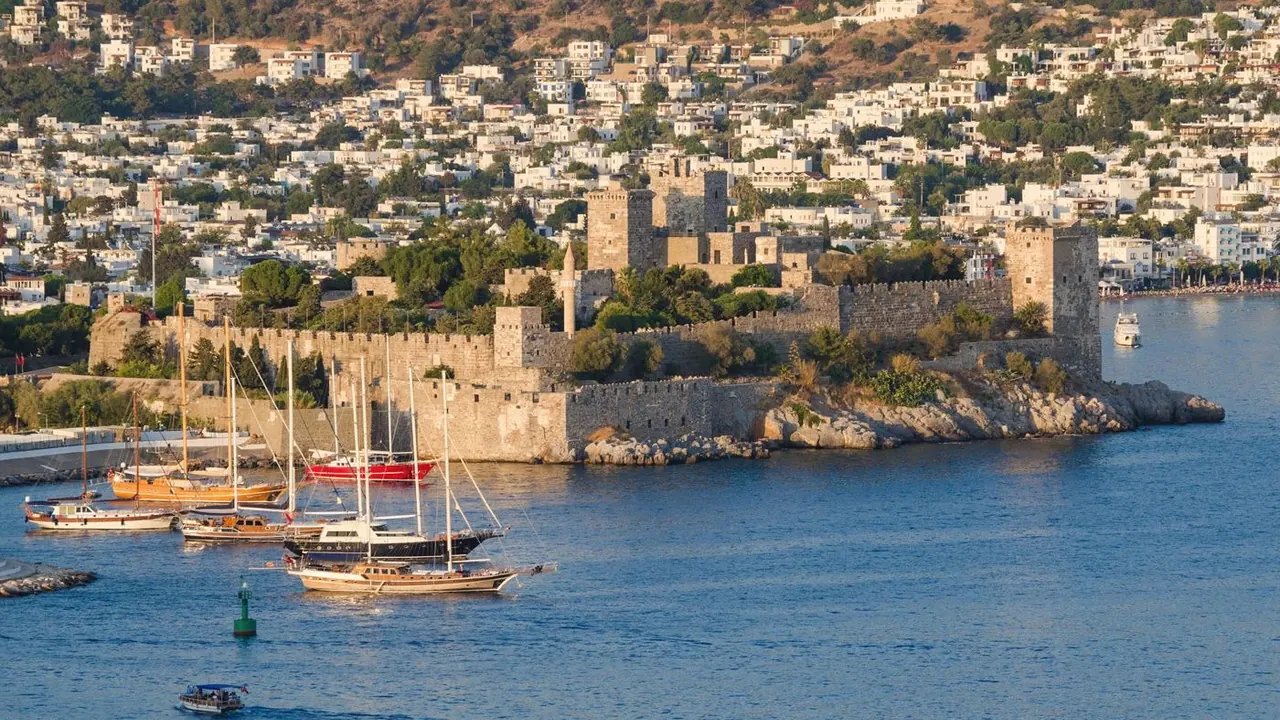
Bodrum Castle and gulets in the harbour
- Beaches80
- Day trips72
- Families66
Photo: Serhio Magpie, CC BY 4.0, cropped
Match
55
Every category weighted equally
- Beach & sun59
- Culture & arts50
- Food & nightlife52
- Family trip57
- Outdoors58
- Relax & unwind57
- Shopping & style52
- On a budget53
Bodrum in twelve categories
Our verdict on each, scored 0 to 100 against the same fixed benchmark cities, so a score means the same thing on every page.
Beaches & swimming. Scores 80 out of 100.
Food & drink. Scores 60 out of 100.
Culture & sights. Scores 45 out of 100.
Nightlife. Scores 65 out of 100.
Nature & outdoors. Scores 60 out of 100.
Day trips. Scores 72 out of 100.
Good for families. Scores 66 out of 100.
Getting around. Scores 42 out of 100.
Shopping & style. Scores 45 out of 100.
Affordability. Scores 38 out of 100.
Live music & performing arts. Scores 32 out of 100.
Wellness & relaxation. Scores 52 out of 100.
Bodrum category by category
Beaches & swimming
80The Bodrum peninsula is ringed with bays, and most visitors spend their days moving between them. Bitez and Ortakent have long, shallow shores on the south side. Gümbet is the busy package-resort strip next to town. On the north coast, Türkbükü, Gölköy and Yalıkavak swim off wooden jetties and decks rather than wide sand. Westward, Akyarlar, Turgutreis and Camel Beach are quieter and more open to the wind. The water is clear and reaches about 24°C to 25°C in August, and swimming stays pleasant from June into October.
Many beaches are small and coarse-grained, and the best stretches belong to sunbed-and-lounge beach clubs. Families and strong swimmers will want different bays. The summer meltem keeps the western shore breezy and the water cooler. Boat days to Kara Ada and the coves you can only reach from the water add swimming stops the road never gets to.
Food & drink
60Eating here is Aegean Turkish: olive-oil vegetable dishes, wild greens, octopus, grilled fish and long meze evenings with rakı. In the town centre, visitors pick fish at the fish market and have it cooked at the tables around it, which is a local ritual. Village breakfasts in the hills are spread across a whole table, and Bodrum's small mandarins turn up in juice and preserves.
On the north coast, Yalıkavak and Türkbükü have polished seafood and modern Turkish restaurants aimed at a wealthy summer crowd. Gümüşlük's waterfront fish tables are the slowest and most scenic meal on the peninsula. Gümbet and the harbour lanes are mostly menus written for tourists. Out of season the choice thins a lot.
Culture & sights
45Bodrum stands on ancient Halicarnassus, but little of the old city is left above ground. The main sight is the Castle of St Peter, built by the Knights Hospitaller on the harbour's headland, which partly reused stone from the Mausoleum. Inside is the Museum of Underwater Archaeology, with Bronze Age and medieval shipwrecks raised from the coast. It is the one sight here of real international weight.
The site of the Mausoleum, one of the Seven Wonders of the Ancient World, is now a low excavation with foundations and scattered stones. The hillside ancient theatre and the Myndos Gate are worth an hour. The whitewashed old town and the ruined windmills on the ridge add atmosphere. Two days is enough for the town's own sights.
Nightlife
65In summer Bodrum is Türkiye's best-known resort for going out. In town, the waterfront bar street behind the harbour fills from late evening, with music spilling out of every door and crowds moving from one bar to the next. Gümbet runs louder and cheaper, with bars and clubs aimed at young package tourists. Türkbükü and Yalıkavak are the glamorous end of the peninsula: beach clubs that turn into parties after sunset, a dressed-up crowd and high prices.
Nights run late, often until the sun comes up, from June to early September. The season is the catch. In spring the scene is only starting, and from late autumn to Easter most clubs close and the town goes quiet.
Nature & outdoors
60Most of the landscape here is the coast itself: a jagged peninsula of dry hills, scrub, olive groves and pine, with islands offshore and inlets everywhere. The best way to see it is from the water. Gulet trips and day cruises run around the bays and out to Kara Ada and Orak Island, and longer sailing heads east into the Gulf of Gökova, which is greener. The water is clear, so diving and snorkelling are good. The steady summer meltem makes Bitez and the western bays good for windsurfing and sailing.
On land there is less. Village paths through the hills and stretches of the long-distance Carian Trail inland give good walking in spring and autumn. Midsummer heat makes most hiking hard going.
Day trips
72Bodrum is a good base for the ancient sites of Caria and Ionia. The great Temple of Apollo at Didyma is about an hour and a half by road. Miletus, with its huge theatre, and hillside Priene can be added the same day. Closer in are the Temple of Zeus at Euromos, the waterside ruins of Iasos, the old town of Milas, and Herakleia on Lake Bafa, where village houses stand among ancient walls.
One trip feels different: Kos, under an hour by ferry. It is a Greek island town with a Knights' castle, the Asklepion and a lively harbour. Ferries also cross to the Datça peninsula. Ephesus is reachable on a long organised day, but it is really an overnight trip from here.
Good for families
66Bodrum works best for families as a beach-and-resort stay. Bitez and Ortakent have shallow, calm water. Many hotels are built for families, with pools, kids' clubs and water slides, and the peninsula has large water parks. Turkish culture is openly fond of children, so restaurants and staff welcome them easily, late dinners included.
Beyond the beach there is little made for children. The castle and its shipwrecks are the main outing that will hold their interest. July and August are hot, the town's lanes are steep, and nights in Gümbet and the bar district are loud, so families usually do better in the quieter bays.
Getting around
42The town centre is compact, and the harbour, the castle and the bazaar are all close enough to walk to, though some lanes climb steeply. Beyond that you need a vehicle. Dolmuş minibuses leave from the central bus station for nearly every bay and village on the peninsula, and they are simple to use. Getting from one bay to another usually means going back through town first, and the service thins late at night.
In high summer the roads clog, taxis are costly, and the north coast feels further away than it looks on a map. Many visitors who want to explore hire a car or a scooter. Water taxis and boats link some of the bays.
Shopping & style
45Bodrum's own craft is the handmade leather sandal, made to measure in small workshops in the town's lanes. The covered bazaar behind the harbour mixes these with textiles, ceramics, spices and a lot of copied branded goods. The large weekly markets are the liveliest shopping: textiles in town, plus village produce markets in Turgutreis and other villages.
At the other end, the marina at Yalıkavak has international luxury boutiques for the yachting crowd, and Türkbükü has resortwear shops. There is little in between, and very little that you couldn't find elsewhere in Türkiye.
Affordability
38Bodrum is the most expensive resort area in Türkiye, and in midsummer it doesn't feel like a cheap country. Yalıkavak, Türkbükü and Gölköy are the costliest, with boutique hotels, beach clubs and seafood dinners priced for a wealthy crowd. Taxis and sunbed fees add up fast.
There is a cheaper Bodrum too. Package hotels in Gümbet and Turgutreis, dolmuş fares, simple pide and kebab places, and market produce keep a careful budget workable. Prices also drop sharply in May, June and late September.
Live music & performing arts
32Live performance in Bodrum belongs to summer and to open-air settings. The restored ancient theatre above the town and the courtyards of the castle host concerts by Turkish pop and jazz performers. A long-running ballet festival uses the castle as its stage. In the village of Gümüşlük, a classical music festival puts chamber concerts in an old stone quarry.
On summer evenings, meyhane taverns and bars have live Turkish music. Outside the season there is almost no regular theatre or concert life.
Wellness & relaxation
52Most wellness here happens in hotels. The larger resorts on the peninsula have spas with a Turkish hammam, scrub and foam massage, and the luxury hotels around Türkbükü and Yalıkavak have elaborate spa floors. In town there are a few simple hammams, but no historic bathhouse tradition of its own.
The pace depends on where and when you stay. Gümüşlük, the western villages and the hills behind the bays are quiet, and in May, June and late September the whole peninsula slows down. In August the centre, Gümbet and the north-coast party bays are crowded and loud, so a restful stay means picking a quieter corner.
When should you go?
Pick a month to see what it is like. The climate figures are measured averages, not a forecast.
Bodrum in July
Daytime high, °C
Rainfall in the month, mm
The whole year
Shaded against this city’s own year: the deepest cell is its best month for that figure and the palest its weakest.
Where the figures come from
Bodrum's temperatures are measured 43 km from the centre, at Kos Airport.
Bodrum has no rain gauge within 25 km of the centre, so its rainfall comes from a gridded climate dataset read at the city rather than from a gauge further away.
Temperature and rainfall are climate normals, averaged over the years shown. Bodrum: 1993-2020 (rainfall 1991-2020) normals, Kos Airport (42.7 km from centre).
Before you go
| Measure | Bodrum |
|---|---|
| Official language | Turkish |
| Currency | Turkish Lira (TRY) |
| Sockets | CF230 V, 50 Hz |
| Driving side | Right |
| Time zone | UTC+3 |
| Emergency number | 112 |
| Elevation | 10 m |
| Main airport | Milas Bodrum International Airport (BJV)32 km from centre83 non-stop destinations |
| Public holidays this year | 14 days |
By the numbers
| Measure | Bodrum |
|---|---|
| City population | 175,000 |
| People per km² | 314 |
| Museums within 10 km | 4 |
| UNESCO World Heritage sites within 50 km | 0 |
| Swim season, months above 21 °C | 5 months |
Compare Bodrum with
Every comparison with a written verdict behind it.