Türkiye
Izmir
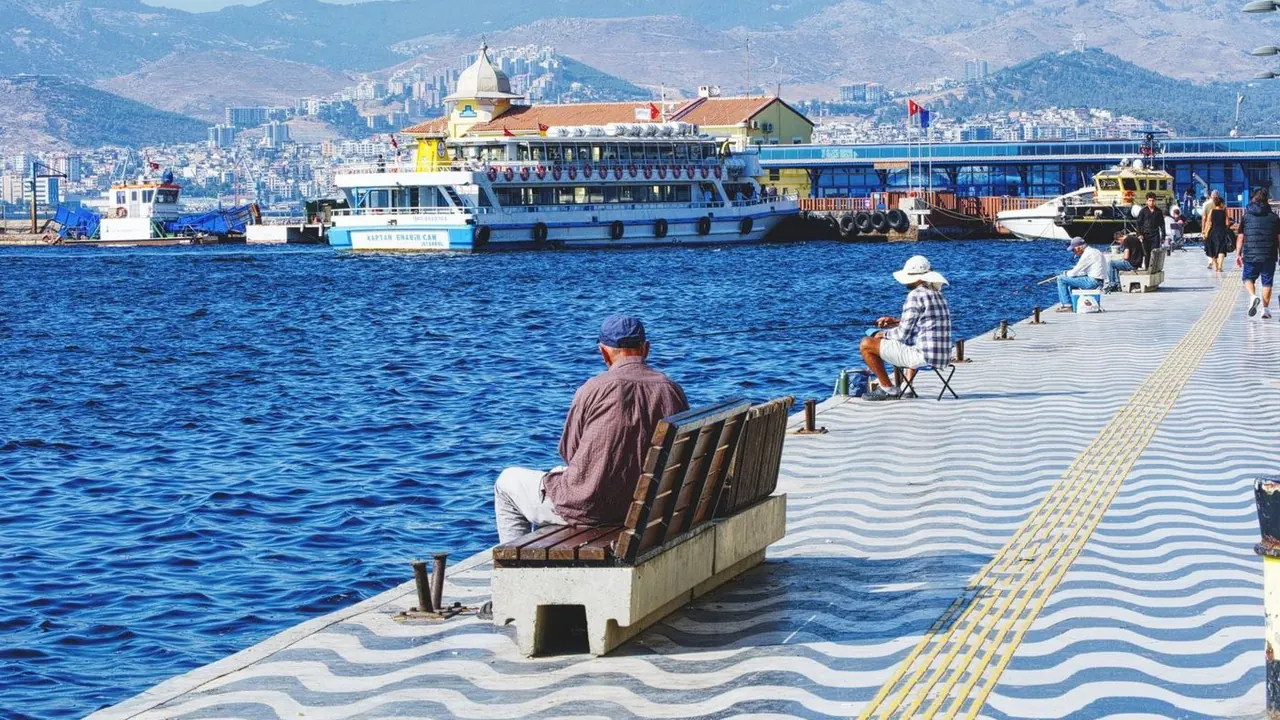
Ferries off the Kordon promenade
- Day trips86
- Food & drink72
- Nature & outdoors66
Photo: Toygar Par, Pexels License
Match
62
Every category weighted equally
- Beach & sun63
- Culture & arts62
- Food & nightlife62
- Family trip63
- Outdoors66
- Relax & unwind63
- Shopping & style61
- On a budget63
Izmir in twelve categories
Our verdict on each, scored 0 to 100 against the same fixed benchmark cities, so a score means the same thing on every page.
Beaches & swimming. Scores 62 out of 100.
Food & drink. Scores 72 out of 100.
Culture & sights. Scores 55 out of 100.
Nightlife. Scores 60 out of 100.
Nature & outdoors. Scores 66 out of 100.
Day trips. Scores 86 out of 100.
Good for families. Scores 55 out of 100.
Getting around. Scores 63 out of 100.
Shopping & style. Scores 55 out of 100.
Affordability. Scores 66 out of 100.
Live music & performing arts. Scores 48 out of 100.
Wellness & relaxation. Scores 57 out of 100.
Izmir category by category
Beaches & swimming
62Izmir sits on a long, sheltered gulf, but the water off the city waterfront is not for swimming. Beach life starts about an hour west on the Cesme peninsula, where Ilica has shallow, sandy water and the coves around Altinkum and Ciftlikkoy are clearer and wilder. Nearer the city, Urla and Seferihisar have smaller pebble and sand beaches, and to the south Gumuldur and Ozdere have long sandy strips favoured by local families.
From late June to September the sea is around 23°C to 25°C, though the northerly winds that make the peninsula famous for windsurfing can make it feel cooler. Locals treat the coast as a weekend escape, so a visitor staying in the city treats beaches as day outings rather than the heart of the stay.
Food & drink
72Izmir eats differently from the rest of the country. Aegean cooking leans on olive oil, wild greens and herbs, and a meyhane table here means a long spread of cold meze, grilled fish and raki by the water. The city has its own street classics too: boyoz, a flaky pastry eaten for breakfast with a boiled egg, the sesame-crusted gevrek sold from carts, and the kumru sandwich.
Kemeraltı's market lanes are the place for fish, olives, spices and old-fashioned dessert shops, while Alsancak and the waterfront fill with seafood restaurants and modern bistros. Vineyards around Urla supply local wine. International cuisine and high-end dining are thinner than in a bigger capital.
Culture & sights
55Ancient Smyrna lies under the modern city, and the excavated Roman Agora in the centre is its most rewarding sight. Above it, the walls of Kadifekale crown Mount Pagos with views over the whole gulf. Konak Square has the ornate Clock Tower of 1901 and the small tiled Konak Mosque. The Kemeraltı bazaar quarter keeps Ottoman caravanserais such as Kızlarağası Han, along with old synagogues and mosques. The Archaeology Museum and the Ethnography Museum reward a few hours.
The fire of 1922 destroyed much of the old city, so central Izmir is mostly modern and it is better to visit than to admire. The Asansör lift in the old Jewish quarter of Karataş and the Levantine houses of Bornova and Buca add character rather than headline sights.
Nightlife
60Izmir is the most relaxed city in the country about going out, and evenings start outdoors. People drink on the Kordon seafront at sunset, then move into the back streets of Alsancak, where the lanes around Kıbrıs Şehitleri Caddesi are packed with small bars, pubs and rock bars, and the crowd spills into the street until late. Karşıyaka across the bay has a quieter local scene, and Bornova has student bars.
The city's own club scene is modest. In summer the bigger nights move about an hour west to Alaçatı and Çeşme, whose beach clubs and late bars draw crowds from all over the country.
Nature & outdoors
66Most of Izmir's outdoor life involves the water. A long seafront promenade runs round the gulf for walking and cycling. Just north of the city, the Gediz Delta's salt pans and wetlands hold large flamingo flocks for much of the year. The Karaburun and Cesme peninsulas give rugged coastal scenery of olive groves, scrub and cliffs. The steady summer winds at Alaçatı make it one of the Mediterranean's best places for windsurfing and kitesurfing.
Inland, Spil Mountain National Park above Manisa has pine forest and hiking about an hour away. Bozdağ, about two hours away, rises to over 2,000m and has winter skiing and summer plateau walks. July and August are hot for hiking, so spring and autumn suit it best.
Day trips
86Izmir is the natural base for the ancient Aegean. Ephesus is about an hour away by train to Selçuk, which also has the Basilica of St John and the hillside village of Şirince with its old stone houses and fruit wines. Pergamon, with its steep acropolis theatre and Asklepion, is about two hours north at Bergama. Sardis, the Lydian capital, is a similar distance east. To the south, Priene, Miletus and the Temple of Apollo at Didyma make a full day by car.
West of the city lie Alaçatı's windmills and stone streets, the Genoese castle at Cesme, the vineyards and olive mills of Urla, and ancient Teos. Old Foça to the north is a harbour town. Trains reach Selçuk and Manisa. For most of the rest, a hire car or a tour is easier.
Good for families
55Turkish culture is openly fond of children, and Izmir is an easy-going place to bring them. The flat Kordon promenade and the big lawns along the gulf are good for scooters and evening walks. The Wildlife Park at Sasalı keeps a large collection of animals in spacious enclosures, Kültürpark has shade and a small fun fair, and the ferries across the bay make a cheap outing children enjoy.
There is no theme park or major aquarium of note. July and August are very hot, so families tend to split the day between sightseeing in the morning and the shallow, sandy beaches of Ilica on the Cesme peninsula, which suit small children well.
Getting around
63The centre is easy on foot: from Konak along the seafront to Alsancak is a flat, pleasant walk, and Kemeraltı is best explored on foot. Longer journeys use a metro line, the İZBAN suburban railway that runs the length of the gulf, trams in Konak and Karşıyaka, and city buses, all paid with one card. The ferries criss-crossing the bay are the most pleasant way to reach Karşıyaka and Bostanlı.
The city stretches a long way round the water, and traffic on the coastal roads is heavy at rush hour. İZBAN and trains reach Selçuk and the airport, but the Cesme peninsula, Pergamon and the southern ruins are far easier with a hire car or a tour.
Shopping & style
55Kemeraltı is the heart of it: a large bazaar quarter of lanes, old hans and courtyards where locals buy everything from fabrics, copperware and leather to spices, olive oil soaps and evil eye beads, with far fewer souvenir sellers than tourist-facing markets. Kızlarağası Han is the most atmospheric corner.
For fashion and Turkish chains, Alsancak's streets have boutiques and the city has several large malls. Olive oil, Aegean herbs, local wine and handmade soaps are the characteristic things to take home. International luxury shopping is limited.
Affordability
66Izmir is good value for most of what a visitor spends money on. Street breakfasts, simple lokanta meals and transport cost little, and the bay ferries are among the cheapest scenic rides anywhere. Mid-range hotels are reasonably priced. The bills climb at seafood restaurants and meyhanes, where alcohol is heavily taxed, and in summer on the Cesme peninsula, which prices itself as a resort. Entry fees to Ephesus and the other major ancient sites also add up.
Live music & performing arts
48Izmir has a full set of state companies. The Izmir State Opera and Ballet performs in the historic Elhamra theatre and other stages, the Izmir State Symphony plays in the Ahmed Adnan Saygun Arts Centre, and the state and municipal theatres stage drama in Turkish. The International Izmir Festival, running since 1987, brings concerts to the ancient theatre at Ephesus and other historic settings each summer.
Outside the festival, the programme is mostly local. Alsancak has some bars with live rock, jazz and Turkish music, but a visitor who doesn't speak Turkish will find limited theatre and few big touring productions.
Wellness & relaxation
57Bathing has a long history here. The hot springs at Balçova, on the city's western edge, were known in antiquity as the Baths of Agamemnon and feed thermal hotels and pools. On the Cesme peninsula, Ilıca takes its name from warm springs that bubble up near the shore. In Kemeraltı a few old neighbourhood hammams still offer a traditional scrub and steam.
The city's pace helps too. Evenings on the Kordon, tea by the water and long, unhurried meze dinners give Izmir an unforced calm. Spas are mostly hotel-based, and nothing here is a destination in itself.
When should you go?
Pick a month to see what it is like. The climate figures are measured averages, not a forecast.
Izmir in July
Daytime high, °C
Rainfall in the month, mm
The whole year
Shaded against this city’s own year: the deepest cell is its best month for that figure and the palest its weakest.
Temperature and rainfall are climate normals, averaged over the years shown. Izmir: 1991-2020 normals, Izmir (3.4 km from centre).
Before you go
| Measure | Izmir |
|---|---|
| Official language | Turkish |
| Currency | Turkish Lira (TRY) |
| Sockets | CF230 V, 50 Hz |
| Driving side | Right |
| Time zone | UTC+3 |
| Emergency number | 112 |
| Elevation | 2 m |
| Main airport | Adnan Menderes International Airport (ADB)13 km from centre120 non-stop destinations |
| Public holidays this year | 14 days |
By the numbers
| Measure | Izmir |
|---|---|
| City population | 4,493,242 |
| People per km² | 4,760 |
| Museums within 10 km | 29 |
| UNESCO World Heritage sites within 50 km | 0 |
| Swim season, months above 21 °C | 5 months |
Compare Izmir with
Every comparison with a written verdict behind it.