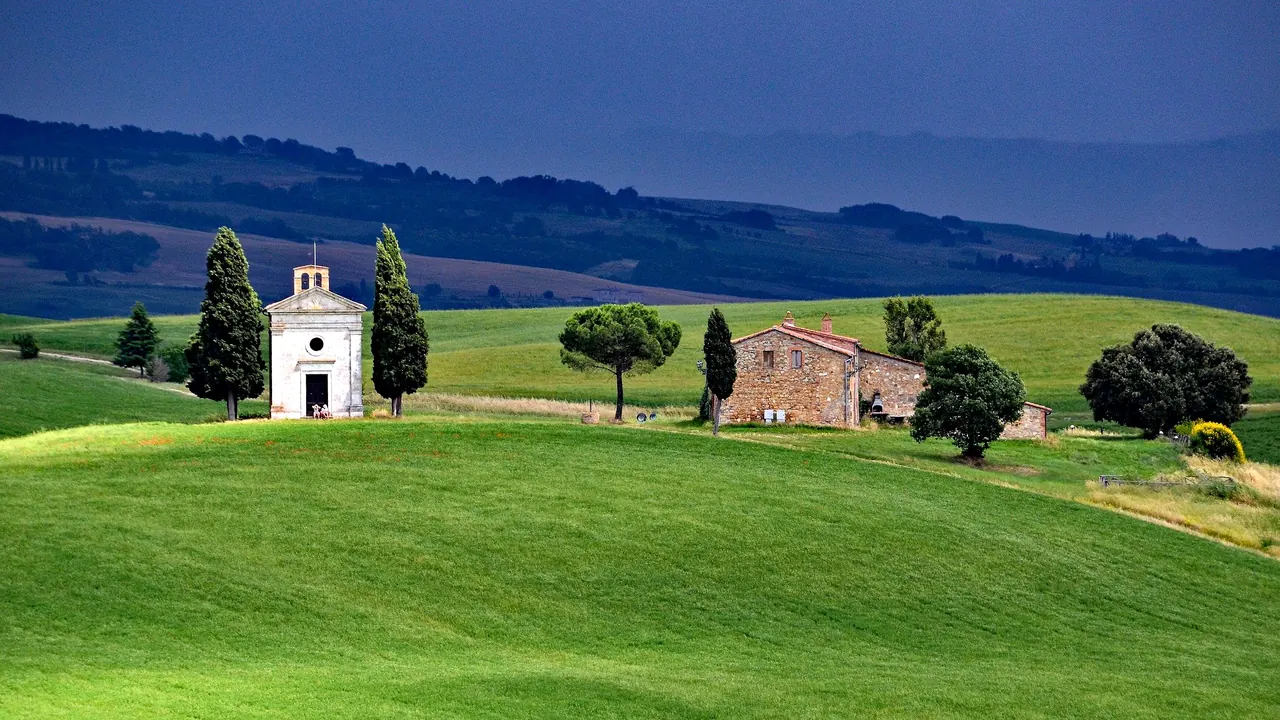
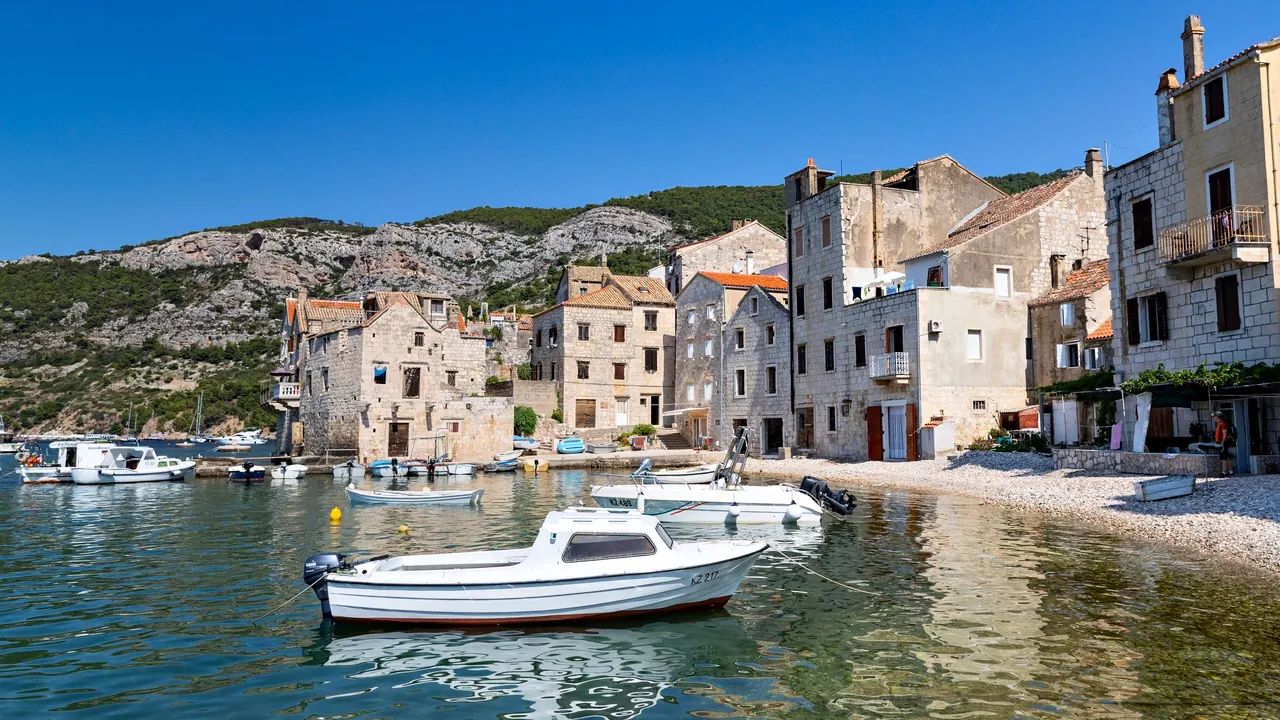
Photos: Tuscany by Hervé Simon, CC BY-SA 2.0, cropped; Vis by dronepicr, CC BY 2.0, cropped.
Tuscany or Vis?
Our verdict in twelve categories, each scored against the same fixed benchmark cities, and the climate month by month, so you can choose for your trip.
Choose Tuscany for
- day trips
- culture and sights
- shopping
Tuscany suits a trip with a full itinerary. Renaissance Florence, Siena and the hill towns, cellar visits in Chianti and Montalcino, an afternoon in the hot springs at Saturnia and a few days on Elba or the Maremma coast can all fit into one stay. It is for travellers who enjoy moving between places, eating seriously and seeing great art. What it lacks is the simple pleasure of waking up a short walk from clear water every day, unless you base yourself on the coast.
Choose Vis for
- beaches
Vis is the choice if the sea is the whole point. It has clear coves like Stiniva, boat days out to Bisevo and the outer islets, and fish suppers at harbour konobas in Komiza. It takes effort to reach and offers little in sights, shopping or evening life, and that is exactly why people who want to switch off for a week go there.
Scoreboard
Twelve categories on one fixed scale from 0 to 100. The shaded stretch is the gap between the two.
Your match
Pick a travel style or drag the sliders, and both match scores follow your weighting.
Wins on day trips and culture and sights with your weighting.
Wins on beaches with your weighting.
What matters to you?
Category by category
What the scores mean for a trip.
Beaches & swimming
Vis has the edge for swimming. Its coves have exceptionally clear water, from the cliff-enclosed bay at Stiniva to Srebrna, Milna and shallow Stoncica, and boats carry you to emptier water around the outer islets. Expect pebble and rock rather than sand, little shade, and a scooter or taxi boat to reach the best spots.
Tuscany's coast offers more variety and more sand: Elba's bays at Fetovaia and Biodola, the pine-backed strands of the Maremma, and the long Versilia shore lined with private beach clubs. But you have to choose it as a base. From Florence or the hill towns it is a long drive.
Food & drink
Tuscany is one of Italy's great food regions, and Vis cannot match its range. You can eat lampredotto from Florence's carts, wild boar pappardelle and Florentine steak in Oltrarno trattorias, pecorino in Pienza, and drink Chianti Classico, Brunello and Vino Nobile at the estates that make them.
Vis does one thing well: fresh fish and lobster in family konobas, peka dishes, the anchovy pogaca of Komiza, and Vugava and Plavac from small island vineyards. Beyond the harbour tables there are no markets or street food, and many kitchens close once summer ends.
Culture & sights
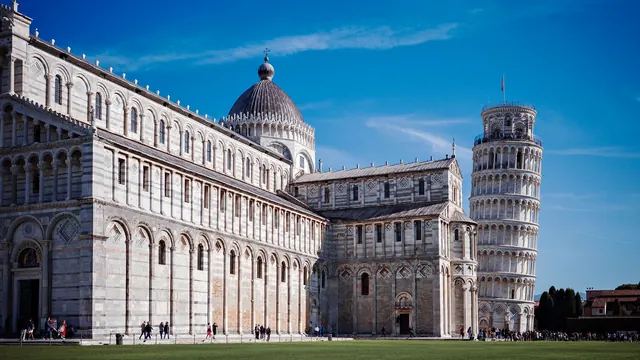
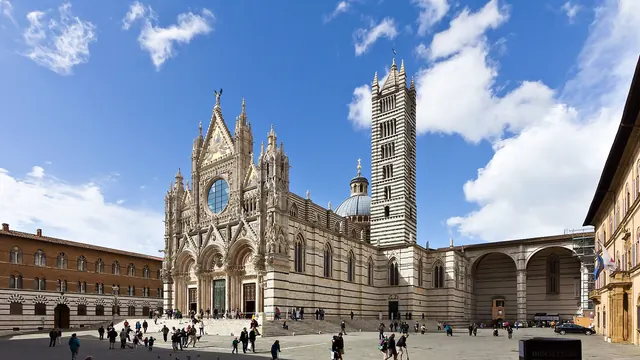
Here the gap is enormous. Tuscany is where the Renaissance began, from the galleries and churches of Florence to Siena's Campo, Pisa's marble square, Lucca's walls and the frescoes of Arezzo, with abbeys like San Galgano standing in open country. You could spend weeks and not run out.
Vis has a small, unusual history rather than great monuments. There are the remains of Greek Issa and a bronze head in the harbour fortress museum, the British forts, Tito's cave on Hum and the tunnels left from its decades as a closed military zone. They are interesting, but a morning or two covers them.
Nightlife
Tuscany offers more of a night out, though mostly in two places. Florence has students on the steps of Santo Spirito, wine bars in Oltrarno and a few late weekend clubs, and in summer the Versilia beach clubs around Viareggio and Forte dei Marmi stay open until dawn.
Vis has no clubs at all. Evenings mean harbour tables in Vis town and Komiza, a few bars open late in high summer and the occasional beach party, and the island is asleep long before morning.
Nature & outdoors
Tuscany's outdoors is broader and more varied. Walkers and cyclists can follow the cypress lanes and white roads of Chianti and the Val d'Orcia, climb ridges in the Apuan Alps, find shade in the Casentino beech forests, and walk the wild coast of the Maremma park. Elba adds sailing and diving.
Vis is mostly about the sea. Its geopark of volcanic islets and sea caves, including the Green Cave on Ravnik, and its excellent wreck and wall diving are the highlights. The dry interior plateau and Hum are pleasant to walk in spring or autumn, but too hot in midsummer.
Day trips
Tuscany is made for day trips. From Florence or a Chianti farmhouse you can reach Siena, Lucca, Pisa or Volterra. The south has its own wine-town loop through Montepulciano, Montalcino and Pienza, and Bologna, Umbria and the Cinque Terre are all close enough to add.
Vis works the other way round. Outings are boat trips to the Blue Cave on Bisevo and the islets nearby, plus a day in the island's other town, while Split and the neighbouring islands are too far by ferry to manage in a day.
Good for families
Tuscany is easier with children. An agriturismo with a pool and animals pairs well with a few days on the shallow, lifeguarded sands of Versilia or the Maremma, and there are child-sized outings like the Pinocchio park at Collodi and cycling on Lucca's walls.
Vis gives children freedom in its safe, quiet harbour towns and gentle water at Stoncica. But steep paths to the coves, pebble without shade and the lack of anything built for children make it best for families happy with simple sea days.
Getting around
The railway does much of the work in Tuscany. Florence is compact enough to walk, and regional trains run to Pisa, Lucca, Arezzo and the coast at Viareggio, so a car-free stay along that line is simple. Chianti, the Val d'Orcia and the Maremma are another matter, and there you will want a car.
Vis takes effort before you even land. The crossing from Split is over two hours by car ferry or about an hour and a half by catamaran, and there are few sailings a day. Once you are there, a bus covers the 10km between Vis town and Komiza. For the coves you hire a scooter on narrow roads or take a taxi boat.
Shopping & style
Tuscany is a real shopping destination for craft. There are leather workshops around Santa Croce, goldsmiths on the Ponte Vecchio, marbled paper in Oltrarno, and a speciality in each town, from alabaster in Volterra to marble in Pietrasanta, as well as the designer outlets in the Arno valley.
On Vis, shopping means groceries and a few souvenir stalls. The best things to take home are local wine, olive oil, carob and herbal brandy bought from the producers.
Affordability
Neither is cheap in summer, and the costs come from different places. In Tuscany it is rooms in central Florence, Chianti villas, car hire and resorts like Forte dei Marmi. Trattoria meals and cellar-door wine help, and Lucca, Arezzo and the Maremma cost less than Florence and Siena.
On Vis, private apartments keep the room bill reasonable, but fish sold by weight, taxi boats, scooter hire and the ferry add up. In both places, avoiding July and August saves the most.
Live music & performing arts
Tuscany has a real musical life, built on opera and chamber music. Florence has the Maggio Musicale Fiorentino and the Teatro della Pergola, Lucca holds Puccini recitals all year, his operas are staged outdoors by the lake at Torre del Lago each summer, and Siena's Accademia Chigiana fills palaces with concerts.
On Vis, music is something you come across by chance: klapa groups singing in the harbours, a summer open-air concert, the fishermen's feast days in Komiza.
Wellness & relaxation
Tuscany is built on hot springs. You can bathe in the warm terraced falls at Saturnia, the steaming medieval pool at Bagno Vignoni and the white limestone basins of Bagni San Filippo, or take the waters in Montecatini's grand pump rooms. A countryside farmhouse adds the calm.
Vis offers stillness rather than treatment: no spa tradition, a few massage rooms, but empty roads, quiet harbours and evenings that end early.
When should you go?
Pick your month. The climate figures are measured averages, not a forecast.
Tuscany in July
Vis in July
Daytime high, °C
Rainfall in the month, mm
Where the figures come from
Tuscany has no rain gauge within 25 km of the centre, so its rainfall comes from a gridded climate dataset read at the destination rather than from a gauge further away.
Tuscany's sunshine is measured 71 km from the centre, at Pisa / S. Giusto.
Vis's temperatures are measured 55 km from the centre, at Split / Marjan.
Vis has no rain gauge within 25 km of the centre, so its rainfall comes from a gridded climate dataset read at the destination rather than from a gauge further away.
Vis's sunshine is measured 55 km from the centre, at Split / Marjan.
Temperature and rainfall are climate normals, averaged over the years shown. Tuscany: 1995-2020 (sunshine 1991-2020, rainfall 1991-2020) normals, Firenze / Peretola (5.6 km from centre). Vis: 1991-2020 (sunshine 1971-2000) normals, Split / Marjan (54.8 km from centre).
The two share a Mediterranean pattern, but they suit different months. Inland Tuscany, where most visitors stay, is best for walking in May, June and from September into early October. In July and August highs reach about 33°C, which makes Florence's streets and the hill-town climbs hard going at midday. Autumn turns wet in October and November, with November the rainiest month at about 124mm. Winter is mild but grey, around 11°C.
On Vis the sea sets the calendar. The water is warm enough for swimming from June to September, at its warmest at about 25°C in August, and July is almost dry at about 14mm of rain. The island also gets more sunshine than Tuscany in every month. Like Tuscany, it gets its rain from October onwards, and since much of the island closes outside summer, the shoulder months of June and September are the sweet spot there too.
Which traveller are you?
On a culture and arts trip, Tuscany is the clear choice. You can stay a week in Florence, walk to a gallery or church each morning and take a train or short drive to a different walled town each afternoon. On Vis, the past is a pleasant detour between swims.
For a beach and sun trip, Vis is the better fit. In Tuscany you pick one stretch of coast and the rest of the region lies inland. On Vis, the days begin and end at the water: a morning swim, a boat to a cove, fish by the harbour.
On a relaxing and wellness trip, Tuscany gives the calm more shape. If you stay in the south of the region, a warm outdoor spring is a short drive away, and days can be built around bathing, long lunches and siestas. Vis offers stillness, but no baths or treatments.
Before you go
| Measure | Tuscany | Vis |
|---|---|---|
| Official language | Italian | Croatian |
| Currency | Euro (EUR) | Euro (EUR) |
| Sockets | CFL230 V, 50 Hz | CF230 V, 50 Hz |
| Driving side | Right | Right |
| Time zone | UTC+1, UTC+2 in summer | UTC+1, UTC+2 in summer |
| Emergency number | 112 | 112 |
| Main airport | Florence Airport, Peretola (FLR)46 non-stop destinations | Split Saint Jerome Airport (SPU)69 non-stop destinations |
| Public holidays this year | 13 days | 14 days |
By the numbers
| Measure | Tuscany | Vis |
|---|---|---|
| Population | 3,729,641 | - |
| Swim season, months above 21 °C | - | 4 months |
Where else could you go?
Every comparison below shares a destination with this one, so you can follow Tuscany or Vis somewhere new.