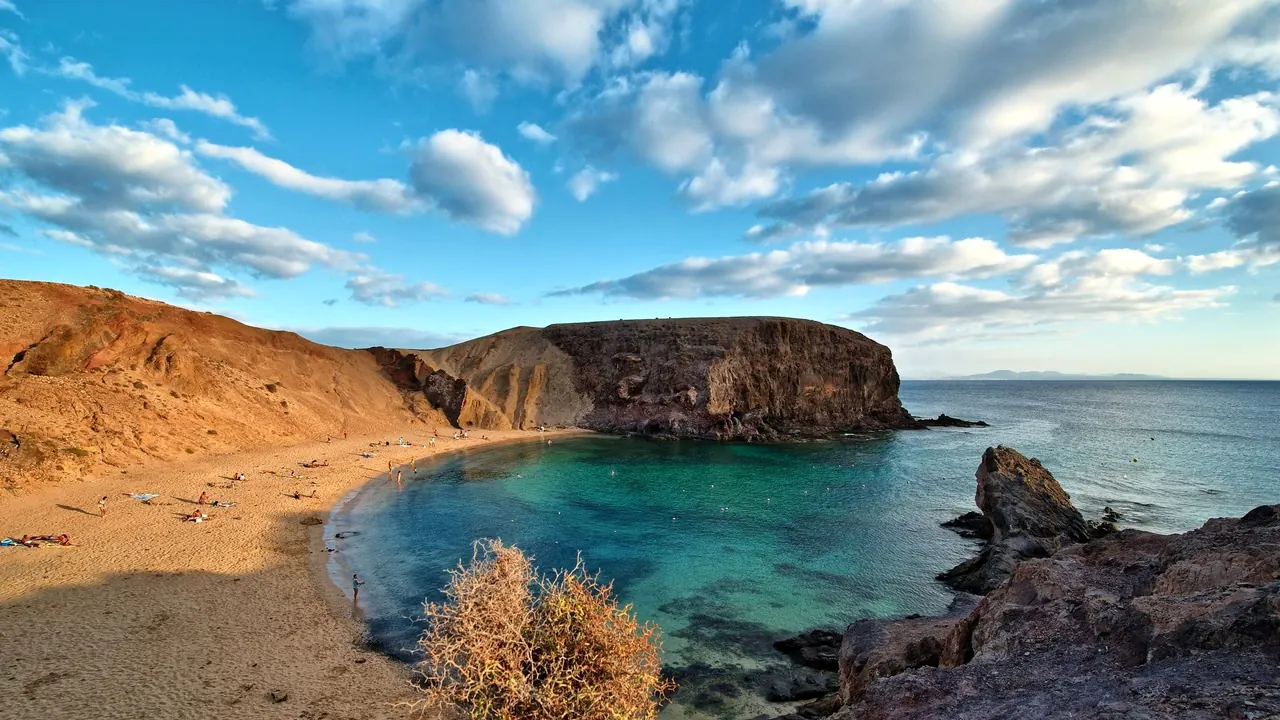
Photos: Lanzarote by Lviatour, CC BY-SA 3.0, cropped.
Andalusia or Lanzarote?
Our verdict in twelve categories, each scored against the same fixed benchmark cities, and the climate month by month, so you can choose for your trip.
Choose Andalusia for
- live music and the arts
- day trips
- culture and sights
Andalusia suits travellers who want to see a lot. The Alhambra, the Mezquita, and Seville's cathedral and Alcázar sit within reach of each other, and tapas counters, sherry bodegas and flamenco fill the evenings. It asks more of you: you move between cities by high-speed train, hire a car for the white villages and the Costa de la Luz, and plan around fierce inland summers. In return, a longer trip gets far more variety.
Choose Lanzarote for
Lanzarote does not lead in any category we score.
Pick Lanzarote for a simpler, slower week, especially in winter, when the mainland turns cool and wet and the island stays dry and mild. You get sheltered sand at Papagayo, the lava fields of Timanfaya and César Manrique's distinctive buildings, all on an island small enough that nothing is far. It is quiet by design, so anyone after great monuments, late nights or serious eating will run out of things to do.
Scoreboard
Twelve categories on one fixed scale from 0 to 100. The shaded stretch is the gap between the two.
Your match
Pick a travel style or drag the sliders, and both match scores follow your weighting.
Wins on live music and the arts and day trips with your weighting.
Has no clear advantage with the weighting you have chosen.
What matters to you?
Category by category
What the scores mean for a trip.
Beaches & swimming
Andalusia gives you two coasts to choose from. The calm, warm Mediterranean runs from the Costa del Sol to the volcanic coves of Cabo de Gata, and on the Atlantic the wide, dune-backed sand of Bolonia, Zahara and Conil rivals anything in Spain. In summer, that range and the warmer water put it ahead.
Lanzarote has fewer good beaches. Most of the best sand is at the Papagayo coves and the town beaches of Playa Blanca and Puerto del Carmen, and the Atlantic around the island stays cool. Its advantage is the calendar: in January you can lie on a beach there, while on the mainland a winter day by the sea means a walk along the promenade.
Food & drink
Andalusia is one of Spain's great eating regions, built around the tapas counter. There are free tapas in Granada, oxtail in Córdoba, fried fish along the coast and jamón from the oak pastures of Huelva, all washed down with fino from the sherry triangle. You can eat well in almost any town.
Lanzarote's cooking is honest but narrow: wrinkled potatoes with mojo, grilled fish and goat's cheese. The good meals are in fishing villages such as El Golfo and Arrieta rather than in the resorts. Its real draw is the malvasía wine of La Geria, grown in pits of black ash, which is worth a tasting but not a whole food trip.
Culture & sights
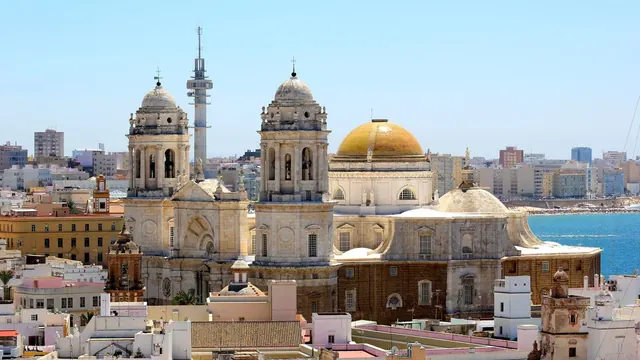
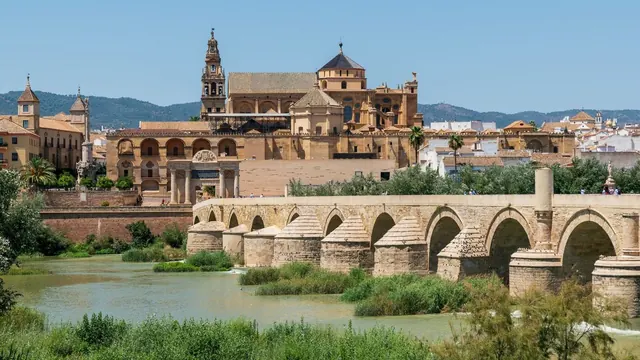
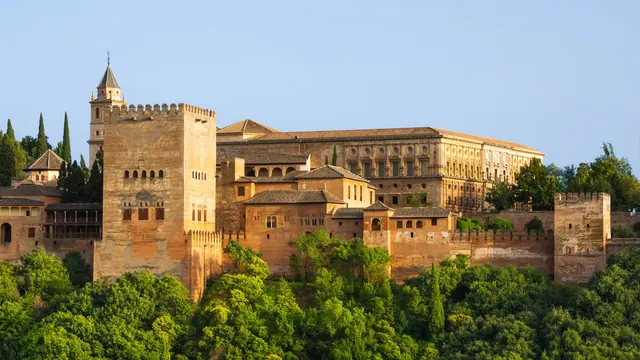
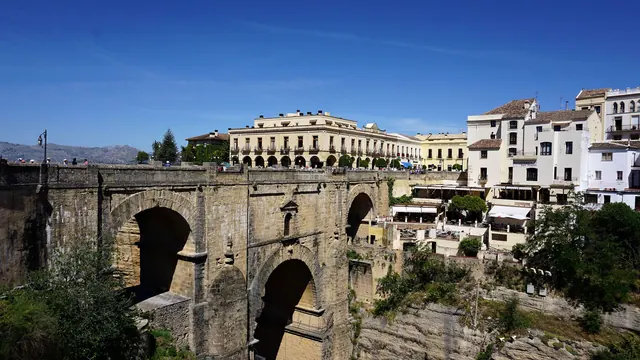
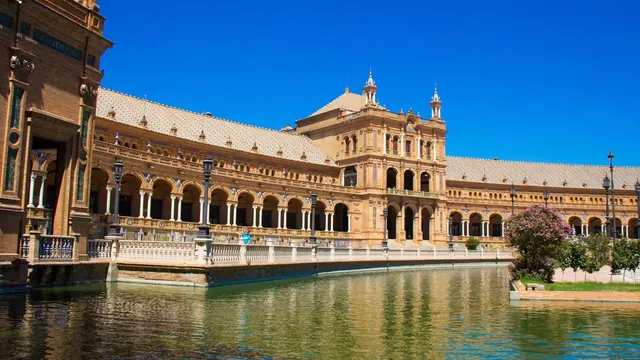
Andalusia has some of Europe's greatest monuments: the Alhambra, the Mezquita, and Seville's cathedral and Alcázar. Beyond those come Úbeda, Baeza, Ronda and Cádiz, with enough Roman, Moorish and Christian heritage to fill weeks spread across several cities.
Lanzarote's culture is largely one artist's vision. César Manrique's Jameos del Agua, the Mirador del Río and his lava-bubble house at Tahíche are original and worth a day or two, and Teguise has some old streets and convents. Nothing on the island compares in scale or age with what the mainland offers.
Nightlife
Andalusian nights are long and spent outdoors. There are terraces in Triana and around Seville's Alameda, cheap student bars below the Albaicín, and in summer the beach clubs of Marbella and Puerto Banús and the gay scene of Torremolinos.
Lanzarote has one real strip for going out: the pubs, karaoke bars and handful of clubs in Puerto del Carmen. Everywhere else, the island is quiet soon after dinner.
Nature & outdoors
Andalusia has more kinds of landscape. The Sierra Nevada rises to nearly 3,500m with skiing in winter, and below it lie the Alpujarras villages, the Caminito del Rey gorge, the limestone towers of El Torcal and the Doñana wetlands. Tarifa adds world-class kitesurfing and whale-watching in the Strait.
Lanzarote offers one landscape, but a dramatic one: the lava fields and cones of Timanfaya, the Famara cliffs and the green lagoon at El Golfo. It is very good for surfing, windsurfing and diving. Inside the national park, though, you mostly see it from a coach, and there is almost no shade anywhere.
Day trips
From any base in Andalusia the options keep going: Itálica and Carmona from Seville, Ronda and Antequera from Málaga, the white villages of the Cádiz hills, Gibraltar, and even a ferry to Tangier.
On Lanzarote itself, Teguise, Haría and La Geria fit into a single loop. The two short ferry crossings are what make the island's day trips worthwhile: one goes to car-free La Graciosa, the other to the dunes beyond Corralejo on Fuerteventura.
Good for families
Both work well with children, and Andalusia has more to fill the days: water parks, a zoo and an aquarium on the Costa del Sol, Seville's theme park, Granada's hands-on science museum and the Western film sets near Almería. The catch is heat, which rules out inland sightseeing with small children in July and August.
Lanzarote is simpler and gentler. It has shallow beaches at Playa Dorada and Playa Grande, resort kids' clubs, short drives, and mild weather in every school vacation, with the geysers at Timanfaya as the highlight. There are few built attractions, and Famara is no place for paddling.
Getting around
Andalusia's main cities are linked by fast trains, so you can see Seville, Córdoba and Málaga without a car. The villages, the mountains and the Costa de la Luz really do need one, though.
Lanzarote is much smaller, about 60km from end to end, but its buses barely reach the interior and the north. Almost everyone hires a car. The drives are short, but you depend on the car more.
Shopping & style
Andalusia has proper shopping streets in Seville and Málaga, plus things made in the region: Triana ceramics, flamenco dresses and fans bought for real use, Ubrique leather, and luxury boutiques in Marbella.
Lanzarote's shopping comes down mainly to the Sunday market at Teguise, along with aloe vera, olivine jewellery and Manrique designs. Beyond that, it is beachwear in the resorts and a mall in Arrecife.
Affordability
Andalusia is the cheaper of the two day to day, especially for eating out, where free tapas in Granada and Jaén and set lunch menus keep costs low. Rooms only get expensive during Seville's festival weeks and on the Costa del Sol in summer.
On Lanzarote, package apartments, cheap car hire and low local taxes help. Costs rise in the winter high season, though, and the admission charges at Timanfaya and each of the Manrique sites add up over a week.
Live music & performing arts
Flamenco is a reason to visit Andalusia in its own right. There are nightly shows in Santa Cruz and Triana, the peñas of Jerez, zambra in the cave houses of Sacromonte and Seville's Bienal, and the Maestranza adds opera.
Lanzarote has little on in an ordinary week. The one thing worth seeking out is a concert in the lava-tube auditoriums of Jameos del Agua or Cueva de los Verdes, if one falls during your stay.
Wellness & relaxation
Neither is really a spa destination, and the two help you relax in different ways. Andalusia has a little more to book: Moorish-style bathhouses in Granada, Córdoba and Seville, old-fashioned spa towns such as Lanjarón, and the large resort spas around Marbella.
Lanzarote offers hotel thalasso pools and yoga retreats. Its real help is the calm of Haría, Uga and La Graciosa and an island with no high-rises.
When should you go?
Pick your month. The climate figures are measured averages, not a forecast.
Andalusia in July
Lanzarote in July
Daytime high, °C
Rainfall in the month, mm
Temperature and rainfall are climate normals, averaged over the years shown. Andalusia: 1991-2020 (sunshine 1981-2010, rainfall 1981-2010) normals, Sevilla / San Pablo (8.1 km from centre). Lanzarote: 1991-2020 normals, Lanzarote / Aeropuerto (7.1 km from centre).
Andalusia is at its best in spring and autumn. April, May and October are warm without being harsh and have plenty of sun, which makes them ideal for walking Seville or Granada. In July and August the inland cities reach 36°C, too hot for afternoon sightseeing, so that is the time to be on the coast, and June and September are also warm enough for the beach. The rain comes between October and January and is heaviest in November, at 122mm, so winter is mild but often grey and wet.
Lanzarote barely changes through the year. Highs run from 21°C in January to 30°C in August, and rain is scarce even in winter. The sea is cool rather than warm, but you can swim in any month, and it is at its warmest, about 23°C, in September and October. The two differ most from November to February, when the island is drier, sunnier and several degrees warmer than the mainland. In high summer it is also the milder of the two for being out and about, though the lava fields give little shade.
Which traveller are you?
On a culture and arts trip, Andalusia is the clear choice. The Alhambra, the Mezquita and Seville's Alcázar are monuments of the first rank, and flamenco in Triana, Jerez or Sacromonte fills evenings in a way Lanzarote, beyond Manrique's sites, cannot.
For a food and nightlife trip, Andalusia again. Tapas rounds in Triana and Granada, sherry in the bodegas of Jerez and late terraces around the Alameda fill whole evenings, while Lanzarote's resorts serve international menus and go to bed early.
On a beach and sun trip, the month decides. From June to October, Andalusia's coasts win, with the golden sand of Bolonia and the warmer Mediterranean. In winter, Lanzarote is the one still warm and dry enough for days on Papagayo's coves.
Before you go
| Measure | Andalusia | Lanzarote |
|---|---|---|
| Official language | Spanish | Spanish |
| Currency | Euro (EUR) | Euro (EUR) |
| Sockets | CF230 V, 50 Hz | CF230 V, 50 Hz |
| Driving side | Right | Right |
| Time zone | UTC+1, UTC+2 in summer | UTC, UTC+1 in summer |
| Emergency number | 112 | 112 |
| Main airport | Seville Airport (SVQ)96 non-stop destinations | César Manrique-Lanzarote Airport (ACE)80 non-stop destinations |
| Public holidays this year | 12 days | 12 days |
By the numbers
| Measure | Andalusia | Lanzarote |
|---|---|---|
| Population | 8,619,616 | 163,467 |
| People per km² | - | 207 |
| Swim season, months above 21 °C | - | 5 months |
Where else could you go?
Every comparison below shares a destination with this one, so you can follow Andalusia or Lanzarote somewhere new.
- Fuerteventuravs Lanzarote
- Algarvevs Andalusia
- Gran Canariavs Lanzarote
- Tenerifevs Lanzarote
- La Gomeravs Lanzarote
- La Palmavs Lanzarote