Brittany or French Riviera?
Our verdict in twelve categories, each scored against the same fixed benchmark cities, and the climate month by month, so you can choose for your trip.
Choose Brittany for
- prices
- wellness
- families
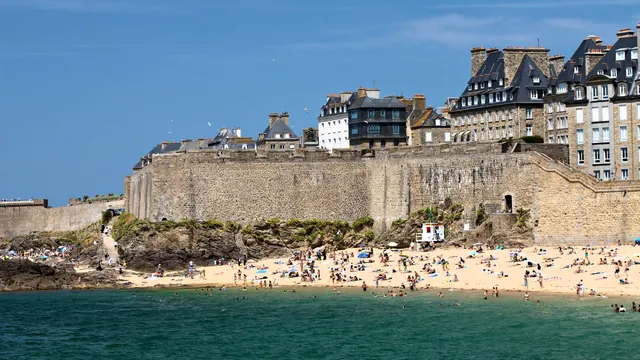
Brittany suits a slower, cheaper seaside vacation built around children, fresh air and old stone. You get sandy bays with rock pools, the standing stones of Carnac, walled towns such as Dinan and Saint-Malo, and islands a ferry ride away, all from a cottage or campsite with a car. In return you accept a cool sea, changeable skies and quiet evenings.
Choose French Riviera for
- nightlife
- shopping
- beaches
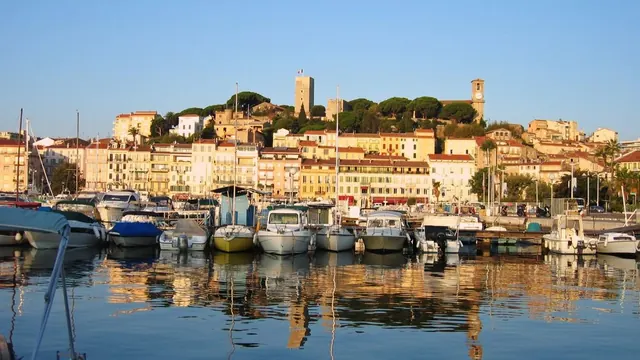
Pick the French Riviera for warm swimming, steady sunshine and nights out. The sea is properly warm, and Nice and the hill villages hold Matisse, Chagall and Picasso in the places where they worked. The coastal railway links Antibes, Monaco and Menton without a car. It costs a great deal more, and in high summer the beaches and roads are crowded.
Scoreboard
Twelve categories on one fixed scale from 0 to 100. The shaded stretch is the gap between the two.
Your match
Pick a travel style or drag the sliders, and both match scores follow your weighting.
Wins on prices and wellness with your weighting.
Wins on nightlife and shopping with your weighting.
What matters to you?
Category by category
What the scores mean for a trip.
Beaches & swimming
Both have plenty of shore, but swimming feels very different. Brittany has wide sandy bays around Carnac and Quiberon, pink granite coves on the north coast and huge tidal flats at Saint-Malo. Even in August the sea is only in the high teens, and the season is short.
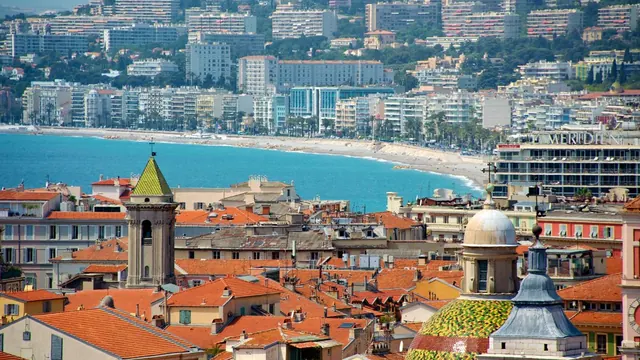
The Riviera wins on water you want to stay in. It is warm from June into October, with sand at Cannes, Juan-les-Pins and Pampelonne, pebbles at Nice and clear coves under the Esterel. The catch is private concessions and packed public stretches in high summer, where Brittany's low tides leave far more room on the sand.
Food & drink
Brittany cooks from the sea and the dairy: oysters at Cancale, shellfish platters in the harbour towns, buckwheat galettes with cider, and salted butter in almost everything. It does these very well, but there is little choice beyond Breton and classic French cooking outside Rennes.
The Riviera has more range. Niçois dishes such as socca and pissaladière, the Cours Saleya market, rosé and the Bellet wines, and a dense run of serious restaurants from Menton to Cannes give you more to explore. Its weak spot is the tourist set menus on the seafront, so eat a street or two inland.
Culture & sights
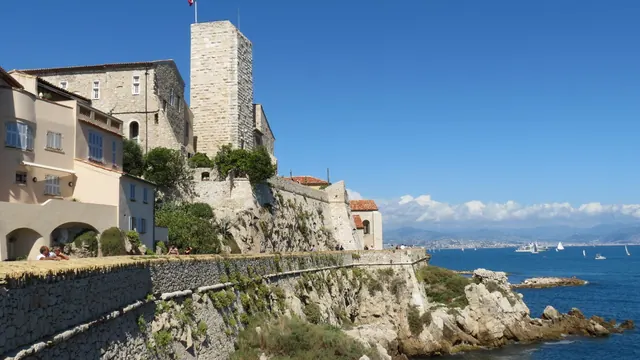
The Riviera's strength is twentieth-century art shown where it was made: Matisse and Chagall in Nice, Picasso at Antibes, Matisse's chapel at Vence and the Fondation Maeght. Around them sit Monaco's palace, Belle Epoque Nice and Roman La Turbie.
Brittany's heritage is older and spread more thinly. It has the stone rows of Carnac, the parish closes of Finistère and half-timbered, walled towns such as Dinan, Vitré and Concarneau, but its museums are modest. Go to the Riviera for galleries and Brittany for prehistory and small historic towns.
Nightlife
For going out, the Riviera is the clear choice. There are beach clubs in Saint-Tropez and Monaco and late bars on the Croisette and in Juan-les-Pins, while the old town and port of Nice offer something less showy. All of it is expensive, and much of it goes quiet out of season.
Brittany's evenings mostly end early, and the student bars around Rue Saint-Michel in Rennes are the main exception. What it has instead is the fest-noz, a village dance night to traditional music, which has no equivalent on the Riviera.
Nature & outdoors
Brittany's outdoors is a long Atlantic shoreline. The Riviera's is mountains dropping into a warm sea. In Brittany you follow the GR34 past Cap Fréhel and Pointe du Raz, watch puffins and gannets at Sept-Îles, surf in Finistère and kayak among the islands of the Gulf of Morbihan. Inland there is little height, just low moors and canal towpaths.
The Riviera gives you elevation instead. You can walk the red rock of the Esterel and the cape paths round Cap Ferrat and Cap Martin, drive up into the Mercantour's high trails from Nice, or dive off the Lérins islands. Summer heat and wildfire closures shut some of those hills, while Brittany's mild summers leave its coast path open all season.
Day trips
Brittany has the stronger outings. Mont-Saint-Michel is about an hour from Saint-Malo, and the islands add real variety: Belle-Île, car-free Bréhat, remote Ouessant and the islands of the Gulf of Morbihan. Most of these need a car or a ferry, so plan the base with care.
The Riviera's trips are shorter and more numerous. Villefranche, Monaco and Menton are a quick train ride from Nice, and Sanremo and Dolceacqua lie just over the Italian border. Many days, though, are variations on a perched village, with no single headline excursion.
Good for families
Brittany is the easier place for families. It has rock pools at low tide, sailing schools, campsites and gîtes, short distances between sights, and Océanopolis in Brest or the Saint-Malo aquarium for wet days. Watch young swimmers, though, because of the cool water and strong tides.
The Riviera gives children a warmer, calmer sea on the gently shelving sand of Juan-les-Pins and Fréjus, plus the aquarium in Monaco. Against that, family rooms are expensive, summer brings heat and traffic, and the cobbled hill villages are impossible with a pushchair.
Getting around
The Riviera is simpler without a car. The coastal railway links Cannes, Antibes, Nice, Monaco and Menton, and Nice has a tram from the airport. Getting inland or to Saint-Tropez is slower, and parking in the resorts is scarce.
Brittany has fast trains from Paris to Rennes and regional lines to Saint-Malo, Vannes and Quimper. Its beaches, megaliths and villages really need a car, though, and the toll-free dual carriageways make that easy outside the summer jams.
Shopping & style
The Riviera has real shopping: luxury boutiques in Cannes, Monte-Carlo and Saint-Tropez, department stores in Nice, and crafts with a story, from Grasse perfume to Biot glass and Vallauris pottery. Brittany is for edible and practical souvenirs such as Quimper faience, striped sailor tops, salted caramels and fleur de sel, and the Saturday market at Place des Lices in Rennes is the highlight.
Affordability
Brittany is clearly the cheaper of the two. Campsites, gîtes, crêperies and markets keep costs down, and bills climb only in the busiest summer resorts and over seafood platters.
In high season the Riviera is one of the most expensive coasts in Europe, especially Saint-Tropez, Monaco and Cannes. Nice is the sensible base, and cheap regional trains and free public beaches help the budget.
Live music & performing arts
The two are close on live music and performance, but the style differs. Brittany's music is Celtic and communal: bagad pipe bands, fest-noz dances and big summer festivals at Lorient, Carhaix and Quimper, with the opera house and national theatre in Rennes for the rest of the year.
The Riviera is more classical and polished. Monte-Carlo has its gilded opera house, and its ballet company and orchestra perform through the winter. Nice has its own opera, and in summer there is jazz in the pine grove at Juan-les-Pins and on Place Masséna.
Wellness & relaxation
For a restful stay, Brittany is the stronger choice. Thalassotherapy began here, at Roscoff, and seawater spas sit right on the front at Quiberon, Carnac, Dinard and Perros-Guirec. Around them, the calm granite villages and car-free islands keep the whole stay slow, especially in spring and autumn.
The Riviera's treatments are concentrated in Monaco and in the grand hotel spas on the capes, so they feel more like a luxury add-on than the point of the trip. Rest there means long lunches in the hill villages out of season, because in July and August the resorts are too loud for it.
When should you go?
Pick your month. The climate figures are measured averages, not a forecast.
Brittany in July
French Riviera in July
Daytime high, °C
Rainfall in the month, mm
Where the figures come from
Brittany has no rain gauge within 25 km of the centre, so its rainfall comes from a gridded climate dataset read at the destination rather than from a gauge further away.
Brittany's sunshine is measured 89 km from the centre, at Rennes.
Temperature and rainfall are climate normals, averaged over the years shown. Brittany: 2004-2020 (sunshine 1991-2020, rainfall 1991-2020) normals, Vannes-Meucon (8.1 km from centre). French Riviera: 1991-2020 normals, Nice (9.8 km from centre).
Brittany has a short, mild summer. Around the main resorts, July and August reach about 24°C, which is comfortable for walking. The sea stays near 18°C, so swimming is brisk, and June and September are calmer either side of the peak. Rain falls all year but gets heavier from October, and winter is cool, grey and wet. Spring and early autumn are the best times for the coast path.
The Riviera is warmer and much sunnier in every month. You can swim from June to early October, and the sea reaches about 25°C in August. In July and August highs of 28°C and almost no rain make midday walks up to the hill villages hard work. October and November bring heavy downpours, but winter stays mild and bright enough for sightseeing.
Which traveller are you?
On a beach and sun trip, Brittany's sandy bays are lovely to walk but bracing to swim from. The French Riviera wins outright, with a week of reliably clear skies and water warm enough to stay in for an hour at a time.
On a family trip with young children, Brittany makes life easier. Days run at a child's pace, rock pools make the sea something to explore, and nothing is far away. The Riviera's warmer water tempts, but its high summer tests patience and wallet.
On a trip on a tight budget, Brittany is the safer bet, because the usual vacation there, a gîte or campsite and simple crêperie meals, is already the cheap one. The Riviera needs discipline: a modest base in Nice, with Monaco and Saint-Tropez kept for day visits.
Before you go
| Measure | Brittany | French Riviera |
|---|---|---|
| Official language | French | French |
| Currency | Euro (EUR) | Euro (EUR) |
| Sockets | CE230 V, 50 Hz | CE230 V, 50 Hz |
| Driving side | Right | Right |
| Time zone | UTC+1, UTC+2 in summer | UTC+1, UTC+2 in summer |
| Emergency number | 112 | 112 |
| Main airport | Nantes Atlantique Airport (NTE)97 non-stop destinations | Nice-Côte d'Azur Airport (NCE)130 non-stop destinations |
| Public holidays this year | 11 days | 11 days |
By the numbers
| Measure | Brittany | French Riviera |
|---|---|---|
| Population | 4,687,381 | - |
| Swim season, months above 21 °C | None | 4 months |
Where else could you go?
Every comparison below shares a destination with this one, so you can follow Brittany or French Riviera somewhere new.
- Provencevs French Riviera
- Cinque Terrevs French Riviera
- Corsicavs French Riviera
- Normandyvs Brittany
- French Alpsvs French Riviera
- Loire Valleyvs Brittany