Dolomites or Tuscany?
Our verdict in twelve categories, each scored against the same fixed benchmark cities, and the climate month by month, so you can choose for your trip.
Choose Dolomites for
- nature and the outdoors
- families
The Dolomites are the place for a trip built around the mountains. Lifts carry walkers and skiers from almost every village up among pale limestone towers and high pasture, families get gentle trails and quiet villages, and the day ends with dinner and an early night. In return you give up beaches, great art collections and any real night out.
Choose Tuscany for
- beaches
- culture and sights
- shopping
Tuscany suits travellers who want art, food and variety in one trip. Florence, Siena and a long string of hill towns hold more Renaissance and medieval heritage than a week can cover, wine country runs between them, and Elba or the Maremma adds a summer coast. Its landscape is farmed hills rather than high peaks, and high summer brings heat and crowds to the cities.
Scoreboard
Twelve categories on one fixed scale from 0 to 100. The shaded stretch is the gap between the two.
Your match
Pick a travel style or drag the sliders, and both match scores follow your weighting.
Wins on nature and the outdoors and families with your weighting.
Wins on beaches and culture and sights with your weighting.
What matters to you?
Category by category
What the scores mean for a trip.
Beaches & swimming
The Dolomites have no coast, and the famous high lakes such as Braies are too cold for most swimmers. Bathing means valley lidos at Lake Caldaro, village pools, or a drive down to the top of Lake Garda from Trento.
Tuscany has a real summer sea. Elba has the clearest water and sandy bays, the Maremma and Argentario have quieter beaches backed by pines, and Versilia offers miles of sand lined with beach clubs. The catch is distance: from Florence or the hill towns the coast is a separate trip.
Food & drink
Both eat very well, but Tuscany makes food and wine the reason for the trip. Its plain, ingredient-led cooking runs from Florentine steak and street-cart lampredotto to Pienza pecorino and autumn truffles in San Miniato. Chianti, Montalcino and Montepulciano turn a drive into a run of cellar visits.
The Dolomites offer something different: Alpine dishes such as speck, canederli and strudel sit beside Italian espresso and Ladin specialities. The best meals are often hut lunches at altitude, or a surprisingly refined dinner in Alta Badia, with Lagrein and Gewürztraminer from the slopes near Bolzano.
Culture & sights
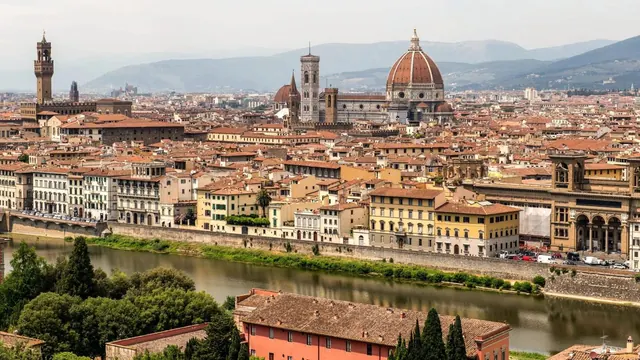
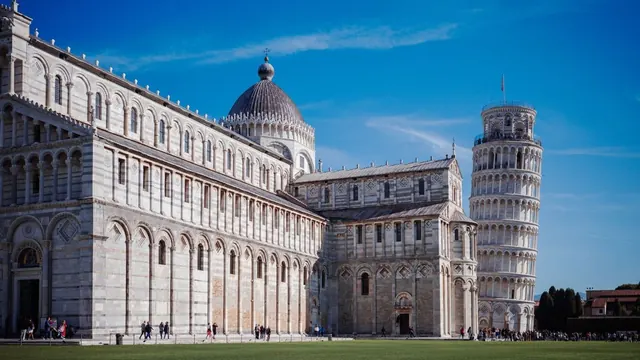
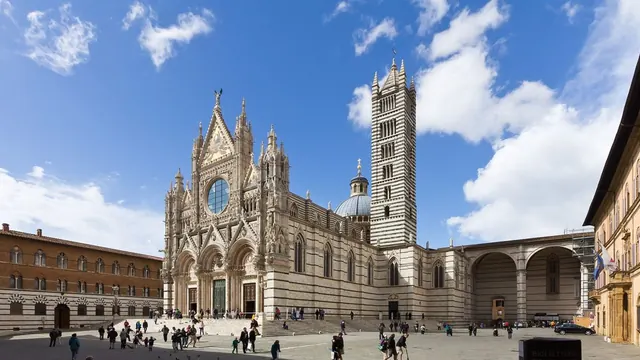
Here the gap is wide. Tuscany is where the Renaissance began. Florence packs the Uffizi, the Accademia, the Bargello and the great frescoed churches into a centre you can walk. Siena's Campo, Pisa's marble square, San Gimignano's towers and the abbeys in open country follow close behind.
The Dolomites are listed by UNESCO for their landscape rather than their buildings. Ötzi in Bolzano's archaeology museum, Trento's Buonconsiglio castle, Bressanone's cloister and the First World War tunnels on the passes are worthwhile, but they mostly fill the rainy days.
Nightlife
Neither is a party destination, but Tuscany gives you more to do after dark. Florence has students and visitors gathering on the steps of Santo Spirito and wine bars in Oltrarno. In summer the Versilia coast keeps its beach clubs and dance halls going until dawn.
In the Dolomites the evening revolves around dinner. Winter brings après-ski in Selva, Canazei and Cortina, but it winds down early, and in summer most villages are quiet by eleven.
Nature & outdoors
The Dolomites have some of the finest mountain scenery in Europe. Limestone towers such as the Tre Cime and Sassolungo rise straight out of meadows, lifts start in nearly every village, and hut-to-hut routes such as the Alta Via 1 cross the range. Via ferrata cables, road-cycling passes and a huge linked ski area fill both seasons.
Tuscany's beauty is gentler and shaped by farming: cypress lanes, the Val d'Orcia and the Crete Senesi, best seen by bike or on foot between hill towns. For wilder country there are the ridges of the Apuan Alps, the Maremma park and the waters around Elba.
Day trips
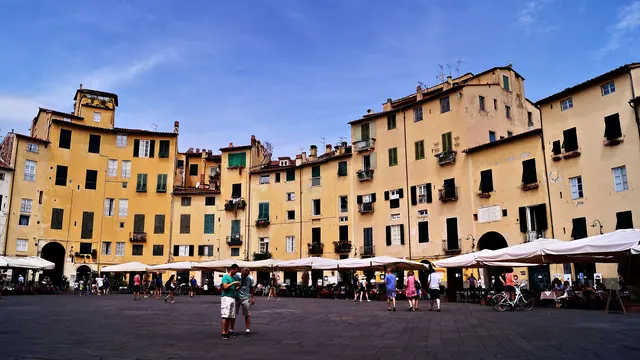
Tuscany has more outings than one stay can hold. From Florence or Chianti, Siena, Lucca, Pisa, Volterra and San Gimignano are all close. Bologna, the Umbrian towns and the Cinque Terre lie just past the border.
The Dolomites have good trips too, mainly from the Adige valley: Merano, Bressanone, the wine route, Verona by train and Innsbruck over the Brenner. From the high villages, though, every outing starts on a slow pass road, so trips take more effort.
Good for families
In summer the Dolomites have the edge for young children. Lifts reach wide, nearly flat paths on the Alpe di Siusi and the Armentara meadows, huts have playgrounds and animals, and many hotels are built around children's clubs and pools. Winter ski schools and nursery slopes are well run.
Tuscany works best for families who split the stay between a farmhouse with a pool and a shallow, lifeguarded beach. Collodi's Pinocchio park and cycling on Lucca's walls help, but the Florence galleries and the July heat are hard work for small children.
Getting around
Both are manageable without a car only if you keep to one corridor. In the Dolomites that means trains along the Adige and Puster valleys, buses up to the resorts, and lifts once you arrive. Crossing between valleys means hairpin pass roads, and Cortina has no station at all.
In Tuscany the easy line is Florence, which is best on foot, with trains to Pisa, Lucca and the coast. Chianti, the Val d'Orcia and the Maremma need a car, old centres are closed to visitors' traffic, and Elba needs a ferry.
Shopping & style
Tuscany has the stronger shopping. Florence has leather workshops around Santa Croce, goldsmiths on the Ponte Vecchio, marbled paper in Oltrarno and the luxury houses of Via de' Tornabuoni. Other towns add their own crafts, from alabaster in Volterra to ceramics in Montelupo, and there are large designer outlets in the Arno valley.
In the Dolomites the shopping is narrower and more local: carved wood from Ortisei, loden in Bolzano's arcades, the Advent markets, and speck, cheese and grappa to take home.
Affordability
Lift passes, guided climbs and resort hotels in Cortina, Alta Badia or Val Gardena make the Dolomites the dearer of the two in winter and in July and August. Val di Fassa, Val di Fiemme and the valley towns of Bolzano and Trento cost less, and June or September bring the same mountains at lower room rates.
Tuscany is expensive too, especially central Florence and Forte dei Marmi, but trattoria meals, market lunches and wine bought at the cellar door keep the daily bill down. Lucca, Arezzo, Pistoia and the Maremma towns are noticeably cheaper, and car hire is the extra cost to plan for.
Live music & performing arts
Tuscany offers far more to see on stage. The Maggio Musicale Fiorentino has its own opera house in Florence. Puccini is performed year-round in Lucca and outdoors by the lake at Torre del Lago each summer, and the Accademia Chigiana fills Siena's palaces with chamber music.
The Dolomites have a regional orchestra and a piano competition in Bolzano and an autumn festival in Merano. Their most memorable performances are the summer concerts on alpine meadows and hut terraces. Outside the festivals there is little on.
Wellness & relaxation
Tuscany's wellness comes from its hot springs, and much of it is open to anyone. You can bathe in the warm terraced pools at Saturnia, see the medieval steaming square of Bagno Vignoni and the grand pump rooms of Montecatini. A farmhouse stay in the Val d'Orcia adds the slow pace.
In the Dolomites, wellness mostly means the hotel spa: saunas facing rock walls, outdoor pools in the snow and the old hay bath near Völs. Merano's thermal baths are the main public option, so choose the hotel with care.
When should you go?
Pick your month. The climate figures are measured averages, not a forecast.
Dolomites in July
Tuscany in July
Daytime high, °C
Rainfall in the month, mm
Where the figures come from
Tuscany has no rain gauge within 25 km of the centre, so its rainfall comes from a gridded climate dataset read at the destination rather than from a gauge further away.
Tuscany's sunshine is measured 71 km from the centre, at Pisa / S. Giusto.
Temperature and rainfall are climate normals, averaged over the years shown. Dolomites: 1991-2020 normals, Dobbiaco (22.3 km from centre). Tuscany: 1995-2020 (sunshine 1991-2020, rainfall 1991-2020) normals, Firenze / Peretola (5.6 km from centre).
The Dolomites have a short warm season. From June to September the valleys where most visitors stay reach about 22°C at best, which is right for hiking and cycling, but summer is also the wettest time, with July bringing around 130mm. Winters are cold and fairly dry, with highs close to freezing from December to February, which suits skiing. Spring is a slow thaw, and October is cool, with less rain than high summer.
Tuscany is far warmer. Inland, where its figures are taken, July and August reach 33°C under long, sunny skies. That is fine for a beach stay but tiring for walking Florence or Siena. April, May and late September are the best months for towns and countryside, warm and fairly dry. By October the weather is turning wet, the rain peaks in November at around 124mm, and winter is cool but rarely cold.
Which traveller are you?
For an outdoors trip, choose the Dolomites. Lifts open up the Tre Cime, the Sella and the Alpe di Siusi to ordinary walkers, via ferrata routes reach the high rock, and in winter one ski area links a dozen valleys.
On a culture and arts trip, Tuscany is far ahead. Florence alone holds the Uffizi, Brunelleschi's dome and Michelangelo's David, and Siena, Pisa, Lucca and Arezzo are each an easy day out from it, with opera in Florence and Puccini at Torre del Lago.
For a beach and sun trip, choose Tuscany. Elba's sandy bays, the pine-backed Maremma strands and the long Versilia shore give weeks of swimming under hot, sunny skies. The Dolomites offer only valley lakes and pools, and their summers are cooler and stormier.
Before you go
| Measure | Dolomites | Tuscany |
|---|---|---|
| Official language | Italian | Italian |
| Currency | Euro (EUR) | Euro (EUR) |
| Sockets | CFL230 V, 50 Hz | CFL230 V, 50 Hz |
| Driving side | Right | Right |
| Time zone | UTC+1, UTC+2 in summer | UTC+1, UTC+2 in summer |
| Emergency number | 112 | 112 |
| Main airport | Venice Marco Polo Airport (VCE)103 non-stop destinations | Florence Airport, Peretola (FLR)46 non-stop destinations |
| Public holidays this year | 13 days | 13 days |
By the numbers
| Measure | Dolomites | Tuscany |
|---|---|---|
| Population | - | 3,729,641 |
Where else could you go?
Every comparison below shares a destination with this one, so you can follow Dolomites or Tuscany somewhere new.
- Austrian Alpsvs Dolomites
- Umbriavs Tuscany
- Cinque Terrevs Tuscany
- Lake Gardavs Dolomites
- Bavariavs Dolomites
- Lake Gardavs Tuscany