France
Val d'Isère
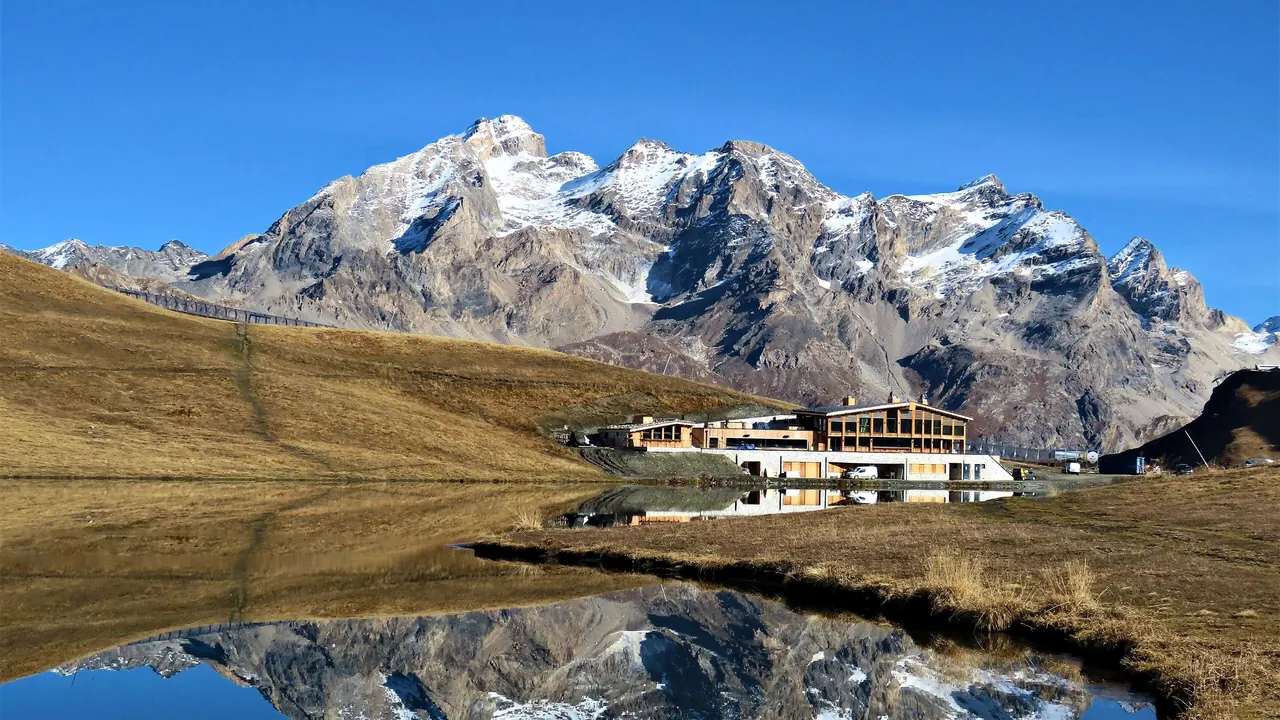
The Lac de l'Ouillette below the Tsanteleina
- Nature & outdoors92
- Getting around62
- Families50
Photo: Rémih, CC BY-SA 4.0, cropped
Val d'Isère lies in French Alps, which has its own page.
Match
33
Every category weighted equally
- Beach & sun32
- Culture & arts29
- Food & nightlife30
- Family trip35
- Outdoors39
- Relax & unwind35
- Shopping & style32
- On a budget30
Val d'Isère in twelve categories
Our verdict on each, scored 0 to 100 against the same fixed benchmark cities, so a score means the same thing on every page.
Beaches & swimming. Scores 7 out of 100.
Food & drink. Scores 38 out of 100.
Culture & sights. Scores 9 out of 100.
Nightlife. Scores 40 out of 100.
Nature & outdoors. Scores 92 out of 100.
Day trips. Scores 22 out of 100.
Good for families. Scores 50 out of 100.
Getting around. Scores 62 out of 100.
Shopping & style. Scores 18 out of 100.
Affordability. Scores 8 out of 100.
Live music & performing arts. Scores 6 out of 100.
Wellness & relaxation. Scores 42 out of 100.
Val d'Isère category by category
Beaches & swimming
7There is no beach life here. Val d'Isère is a high Alpine village at about 1,850m, and the sea is many hours away. In midsummer some people swim in Lac de Tignes, over the ridge, and in small mountain lakes, but the water is snowmelt and rarely gets above 15°C. If you want proper swimming, use the indoor pool in the village sports centre.
Food & drink
38Most meals here are Savoyard mountain food: fondue, raclette, tartiflette, croziflette and plates of local charcuterie, with Beaufort, the region's great hard cheese, in almost everything. On the slopes there are plenty of mountain restaurants, from self-service huts to sit-down terraces where a long lunch takes up half the ski day. In the evening the village has a handful of ambitious kitchens, including some of the most celebrated in the French Alps, alongside wine bars with good Savoie whites.
Range is limited, though. Outside the cheese-and-meat repertoire and the top tables there is not much variety. Almost everything opens for the winter season and a shorter summer one, and in between the village is close to shut.
Culture & sights
9Sightseeing is not what Val d'Isère is for. The main sight is the church of Saint-Bernard-de-Menthon, with its stone bell tower and gilded Baroque altarpiece. Around it are a few lanes of the old village, and further up the valley the stone and larch-wood hamlets of Le Fornet and Le Joseray show how the valley looked before skiing. The resort's ski history matters to enthusiasts: the Bellevarde face hosted the Olympic downhill in 1992. Beyond that there is very little, so plan on an hour of looking around, not a day.
Nightlife
40In winter Val d'Isère is one of the liveliest resorts in the Alps for going out. Après-ski starts mid-afternoon at the party restaurants up on the slopes, where people dance on tables in ski boots. Then it moves down to the packed bars in the village. A couple of basement clubs keep going into the early hours. The crowd is a mix of seasonal workers, British and Scandinavian groups and well-off chalet guests.
It is all seasonal and all on a small scale. The busiest weeks are Christmas, New Year and the February school break. In summer there are just a few terrace bars, and between the seasons there is nothing.
Nature & outdoors
92This is the whole point of Val d'Isère. The village sits at the head of the Isère valley under peaks well above 3,000m, and together with Tignes it forms one of the great ski areas of the world. There is a lot of high, snow-sure terrain, steep pistes such as the Olympic Face de Bellevarde, big off-piste descents and ski touring routes. The season usually runs from late November into early May, and the Pissaillas glacier and the Grande Motte keep the top of the area wintry long after the valley thaws.
In summer the meadows open onto the Vanoise National Park, France's oldest, with marmots, ibex and chamois, high lakes and huts. Cyclists climb the Col de l'Iseran, at 2,764m one of the highest paved passes in the Alps. There is also mountain biking, paragliding and via ferrata.
Day trips
22Val d'Isère sits at the end of a long valley, and in winter, when you are most likely to be here, the high passes are closed and the only way out is back down the valley. The usual outings are to Bourg-Saint-Maurice, the market town at the bottom, and the old villages of the Tarentaise on the way down.
Summer opens more doors. Over the Col de l'Iseran, in under an hour, is Bonneval-sur-Arc, a well-preserved stone village. The Little St Bernard Pass leads to Italy and the Aosta valley, about two hours away, with Roman remains in Aosta itself. The Beaufortain, with its cheese cooperatives, is reachable too. Annecy and Chambéry are mostly beyond an easy day.
Good for families
50For a family that skis, Val d'Isère works well. Ski schools in several languages run classes from preschool age, there are fenced snow gardens and gentle nursery slopes in the village, and many chalet and hotel stays include childcare. The village is compact and car-free on the slopes, and the free shuttle buses make the school run easy. The sports centre adds a pool, a climbing wall and an ice rink.
Outside skiing there is not much made for children: sledging, the rink, horse-drawn sleigh rides, and in summer easy walks to see marmots. Very young children and non-skiing parents can find a week long, and the cold and altitude take some getting used to.
Getting around
62Once you are here, it is easy. The village stretches a few kilometres along the valley floor, from La Daille through the centre to Le Fornet, and free shuttle buses run its length through the day. Lifts start from several points, so most visitors ski out and walk to dinner and never need a car.
Reaching it is harder. The nearest railway station is Bourg-Saint-Maurice, about an hour away by bus or taxi up a winding road. The airports at Geneva, Lyon and Chambéry are several hours off, and the road can be slow on Saturday changeover days in winter. Anything outside the valley really needs a car.
Shopping & style
18Shopping here means kit. The main street is lined with ski and outdoor shops and rental and boot-fitting specialists. There are also a few upmarket mountain-wear boutiques aimed at the chalet crowd. The best things to take home come from the delicatessens, which sell Beaufort, charcuterie and Savoie wine. There are no markets or department stores, and little beyond what a skier needs, so nobody plans a visit around the shops.
Affordability
8This is one of the most expensive places in the Alps to spend a winter week. Chalets and hotels cost a great deal, especially at Christmas, New Year and in the February school break. On top of that come lift passes, equipment hire and ski lessons. Meals on the mountain and drinks in the village are priced for a well-off international crowd. Self-catered apartments and the quieter weeks in January and late in the season bring the cost down somewhat. Summer is noticeably cheaper, but it is still not a budget destination.
Live music & performing arts
6There is almost no performing arts life here. Live music means cover bands and DJs in the après-ski bars, plus occasional open-air concerts and events in the village during the season. There is no theatre, concert hall or regular programme, and visitors who want one have to go a long way down the valley.
Wellness & relaxation
42Wellness here belongs to the hotels and chalets, not to any local bathing culture. Many of the upmarket hotels and catered chalets have their own pool, sauna, hammam and massage rooms, and an end-of-day soak is part of the ski routine. For everyone else, the village sports centre has a pool and a public spa area with saunas and steam rooms.
The pace depends on when you come. A winter week is active and social, with early lifts and late après-ski. Early summer and September are much quieter, and mountain air and empty trails make it a calm place to rest, though there are no thermal springs.
When should you go?
Pick a month to see what it is like. The climate figures are measured averages, not a forecast.
Val d'Isère in July
Daytime high, °C
Rainfall in the month, mm
The whole year
Shaded against this destination’s own year: the deepest cell is its best month for that figure and the palest its weakest.
Where the figures come from
Val d'Isère has no weather station within reach, so its figures come from a gridded climate model rather than a measured record, and read a broad area rather than one spot.
Temperature and rainfall are climate normals, averaged over the years shown. Val d'Isère: 2001-2020 normals, NASA POWER reanalysis grid, no weather station within 90 km.
Before you go
| Measure | Val d'Isère |
|---|---|
| Official language | French |
| Currency | Euro (EUR) |
| Sockets | CE230 V, 50 Hz |
| Driving side | Right |
| Time zone | UTC+1, UTC+2 in summer |
| Emergency number | 112 |
| Elevation | 1,785 m |
| Main airport | Geneva International Airport (GVA)111 km from centre150 non-stop destinations |
| Public holidays this year | 11 days |
By the numbers
| Measure | Val d'Isère |
|---|---|
| Population | 1,567 |
| People per km² | 17 |
| Museums within 10 km | 0 |
| UNESCO World Heritage sites within 50 km | 0 |
Compare Val d'Isère with
Every comparison with a written verdict behind it.
- Adelboden
- Alpe d'Huez
- Andermatt
- Arosa
- Avoriaz
- Chamonix
- Châtel
- Courchevel
- Crans-Montana
- Davos
- Engelberg
- Flaine
- Grindelwald
- Gstaad
- Jackson Hole
- Klosters
- La Clusaz
- La Plagne
- La Rosière
- Laax
- Le Grand-Bornand
- Lenzerheide
- Les Arcs
- Les Deux Alpes
- Les Gets
- Les Menuires
- Leukerbad
- Megève
- Méribel
- Montgenèvre
- Morzine
- Mürren
- Saas-Fee
- Saint-Gervais-les-Bains
- Samnaun
- Samoëns
- Serre Chevalier
- St. Moritz
- Tignes
- Val Cenis
- Val Thorens
- Verbier
- Wengen
- Whistler
- Zermatt