French Riviera or Umbria?
Our verdict in twelve categories, each scored against the same fixed benchmark cities, and the climate month by month, so you can choose for your trip.
Choose French Riviera for
- beaches
- nightlife
- shopping
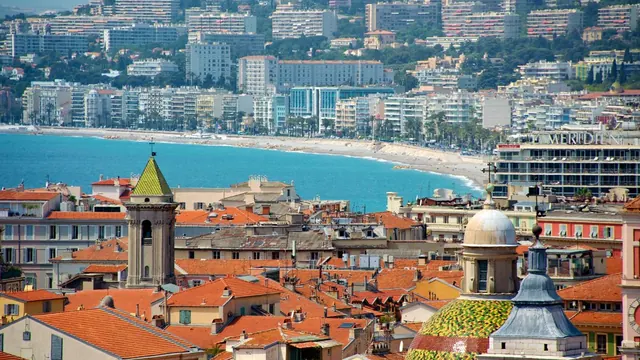
The French Riviera suits travellers who want the sea at the centre of the trip: sandy swimming at Cannes or Pampelonne, paths round the capes, and evenings in the old town of Nice or the summer clubs of Saint-Tropez and Monaco. The coastal railway reaches Monaco, Menton and Villefranche without a car, and the modern art of Matisse, Chagall and Picasso fills the cooler hours. You pay for all of it, especially in July and August.
Choose Umbria for
- prices
- day trips
- culture and sights
Umbria rewards a slower, cheaper trip inland, where each day brings another hill town: Giotto's frescoes in Assisi, the cathedral at Orvieto, then Gubbio, Spello and Todi, with Tuscany and even Rome close enough for a day out. Evenings end after dinner, swimming means a farmhouse pool or Lake Trasimeno, and you will want a car. In return, farmhouse rooms, set lunches in village trattorie and the local wine all cost noticeably less than on the coast.
Scoreboard
Twelve categories on one fixed scale from 0 to 100. The shaded stretch is the gap between the two.
Your match
Pick a travel style or drag the sliders, and both match scores follow your weighting.
Wins on beaches and nightlife with your weighting.
Wins on prices and day trips with your weighting.
What matters to you?
Category by category
What the scores mean for a trip.
Beaches & swimming
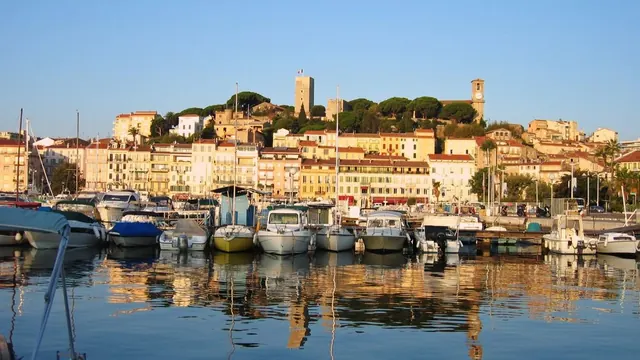
On beaches the two are as far apart as they can be. The Riviera gives a real choice of shore, from the pebbles of Nice and Menton to the sand of Cannes, Juan-les-Pins and Pampelonne, with clear coves in the Esterel. Private concessions take much of the best sand, though, and the public stretches are packed in July and August.
Umbria has no coast at all. The lidos on Lake Trasimeno give warm, shallow water for paddling, but it is often cloudy over a soft bottom. Most visitors swim in a farmhouse pool, and the sea is a drive of two hours or more.
Food & drink
Both cook from local produce, but the Riviera offers more range. Nice has a cuisine of its own, with socca, pissaladière and stuffed vegetables, and the markets of the Cours Saleya, Antibes and Menton supply it. A dense run of serious restaurants stretches from Menton to Cannes. Just steer clear of the set menus on the seafront.
Umbria does fewer things, and does them very well: black truffle over strangozzi, Norcia pork, porchetta from market vans, and Sagrantino tasted at estates around Montefalco. Seafood and international cooking are thin, so a long stay can feel narrow next to the coast.
Culture & sights
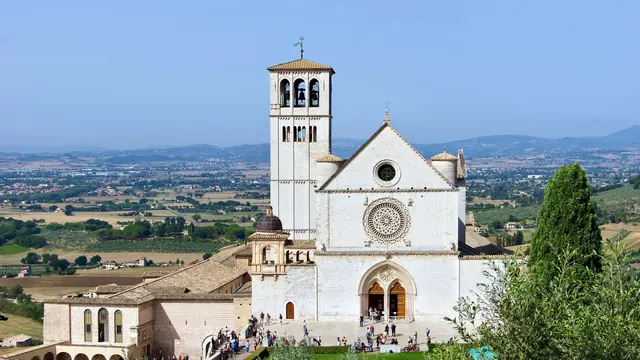
Umbria has the deeper heritage, and an older one. The frescoes by Giotto and Cimabue in the Basilica of St Francis, Signorelli's Last Judgement in Orvieto and the Perugino paintings in Perugia's national gallery are art of the first rank. Gubbio, Spello and Todi are each a complete medieval set piece.
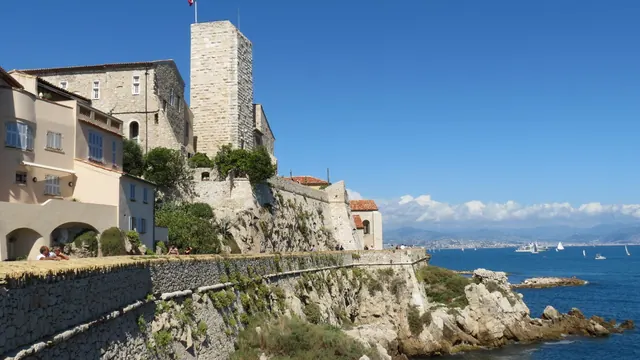
The Riviera's strength is the twentieth century: Matisse and Chagall in Nice, Picasso in the Grimaldi castle at Antibes, and the Fondation Maeght and Matisse's chapel at Vence. Add Monaco's palace and the Belle Epoque front of Nice, and it makes the better choice for modern art. Umbria is the one for frescoes and hill towns.
Nightlife
The Riviera has real nights out, at least from June to September. There are beach clubs and table-service clubs in Saint-Tropez and Monaco, late bars on the Croisette and the Juan-les-Pins strip, and wine and cocktail bars in the lanes of old Nice, which stays lively out of season.
In Umbria the evening is a long dinner and a stroll. Only Perugia breaks the pattern: its students fill the main street and the cathedral steps, and a few late bars cater to them. There are no clubs.
Nature & outdoors
The Riviera's landscape is more dramatic, with mountains dropping into the sea. Paths circle Cap Ferrat and Cap d'Antibes, the red rock of the Esterel suits walking and kayaking, and the Mercantour's high trails are about one and a half hours from Nice. The sea adds sailing and diving.
Umbria is gentler, all olive groves and oak woods, until the Monti Sibillini, where the Castelluccio plain flowers in early summer. The Marmore Falls, rafting in the Valnerina and the old railway path from Spoleto to Norcia give plenty to do on land. In both, spring and autumn suit walkers better than the summer heat.
Day trips
Umbria is made for day trips. From Perugia or Spoleto you can spend a different day in each of Gubbio, Todi, Spello, Bevagna and Norcia. Cortona and Montepulciano lie just over the Tuscan border, and Rome is a little over an hour from Orvieto by train.
The Riviera's outings are short and easy but more alike. The coastal train reaches Monaco, Menton and Villefranche, there are hill villages such as Eze and Saint-Paul-de-Vence, and boats cross to the Lérins islands. What the coast lacks is one great heritage excursion, so many days become another pretty village.
Good for families
The sea gives the Riviera the edge with children. The sandy, gently shelving beaches at Juan-les-Pins, Cannes and Fréjus, the aquarium in Monaco and the water parks near Antibes fill the days easily. The drawbacks are midsummer heat, crowds and expensive family rooms.
Umbria suits a quieter stay at a farmhouse with a pool and animals. Lake Trasimeno is good for paddling and the Marmore Falls make an outing, but little else is aimed at children. The steep, cobbled hill towns are hard going with a pushchair.
Getting around
Between Cannes and the Italian border you can do without a car. The coastal railway links Antibes, Nice, Monaco and Menton, and Nice has a tram and a walkable centre. The hill villages and Saint-Tropez are harder to reach, by slow bus or the summer ferry.
Umbria more or less needs a car, though the roads are good and quiet. The rail line through Perugia, Assisi, Spello and Spoleto covers the main valley, but buses to Gubbio or Todi run rarely and the countryside is out of reach. The hill towns close their centres to visitors' cars, so you park below the walls and ride up by escalator or funicular.
Shopping & style
For fashion and luxury, the Riviera is the clear choice. Boutiques line the Croisette, the streets around the Monte-Carlo casino and the lanes behind the port in Saint-Tropez, and Avenue Jean-Médecin in Nice has the department stores. Grasse perfume, Biot glass and Vallauris pottery add crafts you can take home.
Umbria's shopping is craft and food: Deruta majolica, hand-loomed linen from Montefalco and Bevagna, cashmere outlets near Perugia, and hams and truffles in Norcia. It has no luxury streets or large department stores.
Affordability
Umbria costs clearly less. Farmhouse stays and small hotels undercut the Tuscan hills next door, set lunches in trattorie and local wine are good value, and most of the sights are churches. The main extra cost is a hire car, along with summer rooms in Assisi and Orvieto.
On the Riviera, rooms in Saint-Tropez, Monaco and Cannes in high season match the dearest in Europe, and private beaches add up fast. Basing yourself in Nice, using the cheap regional trains and travelling in May, June or September all help.
Live music & performing arts
The Riviera has more stage life spread across the year. In winter, Monaco's gilded opera house hosts the Monte-Carlo Philharmonic and the Ballets de Monte-Carlo, and Nice has its own opera and orchestra. Summer brings jazz in the pine grove at Juan-les-Pins and on Place Masséna.
Umbria packs its best into early summer: Umbria Jazz in Perugia in July, with free bands in the streets, and the Festival dei Due Mondi filling Spoleto in late June and July. Outside those weeks, performances are occasional.
Wellness & relaxation
The two are broadly level here, but rest takes a different form in each. The Riviera offers thalassotherapy in Monaco and on the capes, and large hotel spas set in gardens on Cap Ferrat and Cap d'Antibes. Its resorts are loud in July and August.
Umbria's calm comes from its pace: slow days at a country house with a pool, yoga or massage, and the silence of Assisi and the hermitages on Monte Subasio. Its spa towns, such as San Gemini and Nocera Umbra, are modest.
When should you go?
Pick your month. The climate figures are measured averages, not a forecast.
French Riviera in July
Umbria in July
Daytime high, °C
Rainfall in the month, mm
Where the figures come from
Umbria's temperatures are measured 53 km from the centre, at Frontone.
Umbria has no rain gauge within 25 km of the centre, so its rainfall comes from a gridded climate dataset read at the destination rather than from a gauge further away.
Temperature and rainfall are climate normals, averaged over the years shown. French Riviera: 1991-2020 normals, Nice (9.8 km from centre). Umbria: 1991-2020 normals, Frontone (52.9 km from centre).
The Riviera has the longer beach season. June to August is dry, very sunny and warm, with highs around 28°C in July and August and the sea reaching 25°C. September stays warm, and the sea is good for swimming into early October, but September is also when the rain returns. October and November are the wettest months, with about 138mm in November. Winter stays mild enough for walking the promenades and old towns.
Umbria's figures, taken inland where most visitors stay, swing further. Midsummer days reach about 30°C, too hot for climbing through hill towns at midday, and January highs fall to around 7°C, which makes sightseeing cold. Its best months for walking and touring are late April to early June and September into early October, before the wetter late autumn.
Which traveller are you?
On a beach and sun trip, the French Riviera wins outright. It has sandy swimming at Cannes, Juan-les-Pins and Pampelonne, clear coves in the Esterel and a sea warm enough until early October. Landlocked Umbria has only lakes and pools.
For a culture and arts trip, Umbria is the richer choice. Giotto in Assisi, Signorelli in Orvieto and Perugino in Perugia hang in hill towns that each fill a day, and Siena is within reach. Admirers of Matisse and Picasso may still prefer the coast.
On a tight budget, Umbria makes the money go further. Farmhouse rooms, set lunches in trattorie and local wine cost less, and most of the sights are churches. The Riviera only becomes manageable with a base in Nice and travel outside high summer.
Before you go
| Measure | French Riviera | Umbria |
|---|---|---|
| Official language | French | Italian |
| Currency | Euro (EUR) | Euro (EUR) |
| Sockets | CE230 V, 50 Hz | CFL230 V, 50 Hz |
| Driving side | Right | Right |
| Time zone | UTC+1, UTC+2 in summer | UTC+1, UTC+2 in summer |
| Emergency number | 112 | 112 |
| Main airport | Nice-Côte d'Azur Airport (NCE)130 non-stop destinations | Perugia San Francesco d'Assisi – Umbria International Airport (PEG)17 non-stop destinations |
| Public holidays this year | 11 days | 13 days |
By the numbers
| Measure | French Riviera | Umbria |
|---|---|---|
| Population | - | 852,085 |
| People per km² | - | 101 |
| Swim season, months above 21 °C | 4 months | - |
Where else could you go?
Every comparison below shares a destination with this one, so you can follow French Riviera or Umbria somewhere new.
- Tuscanyvs Umbria
- Provencevs French Riviera
- Cinque Terrevs French Riviera
- Corsicavs French Riviera
- Cinque Terrevs Umbria
- French Alpsvs French Riviera