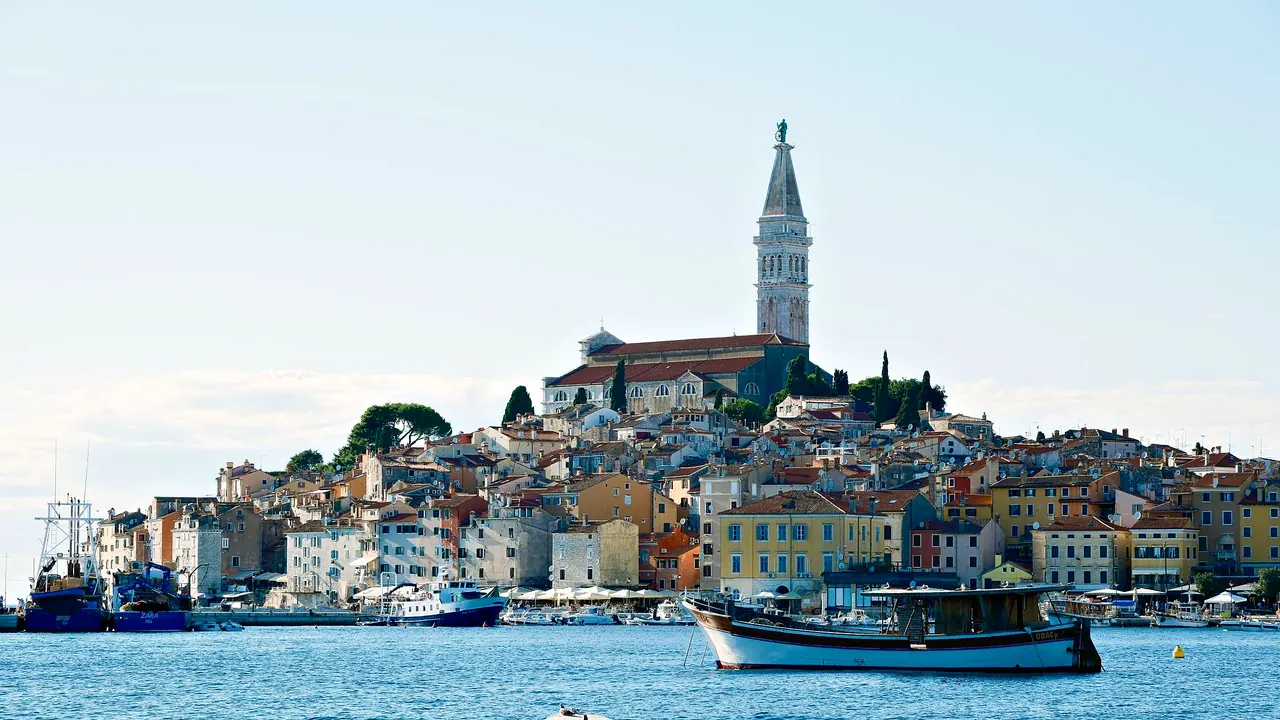
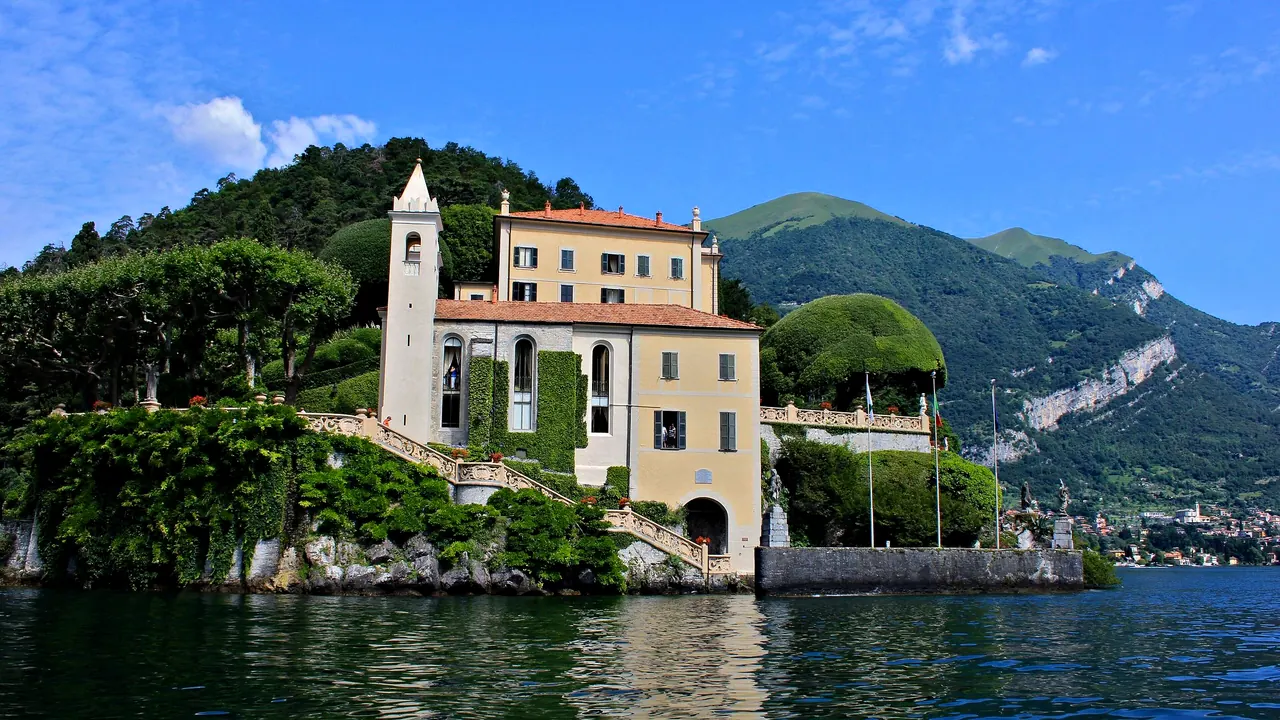
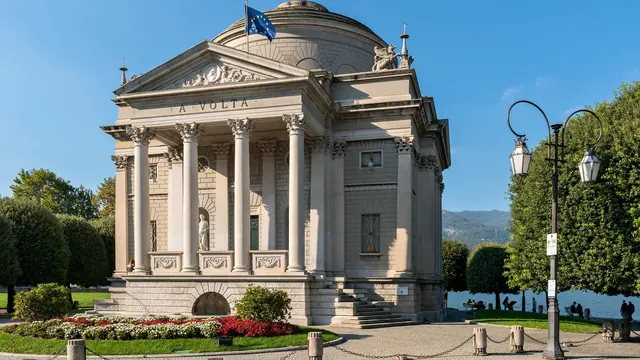
Photos: Istria by Ramon Karolan, Pexels License; Lake Como by Navin75, CC BY-SA 2.0, cropped.
Istria or Lake Como?
Our verdict in twelve categories, each scored against the same fixed benchmark cities, and the climate month by month, so you can choose for your trip.
Choose Istria for
- beaches
- families
- nightlife
Choose Istria for a sea vacation that also feeds you well. Its clear Adriatic coves give you swimming all summer, and inland there are truffles, olive oil and wine cellars in the hill towns, with Roman Pula and the mosaics of Poreč close by. It suits families and anyone happy to drive, and it costs less to stay than the Italian lake.
Choose Lake Como for
- nature and the outdoors
- shopping
- wellness
Lake Como is the better pick when the scenery is the point. Here mountains rise straight out of deep water, villa gardens are reached by ferry, and there are proper walks along the old mule tracks above the shore. Expect a quieter, slower and more expensive stay. Swimming is a pleasant extra rather than the reason to go, and Milan is close enough for a day of art or an evening out.
Scoreboard
Twelve categories on one fixed scale from 0 to 100. The shaded stretch is the gap between the two.
Your match
Pick a travel style or drag the sliders, and both match scores follow your weighting.
Wins on beaches and families with your weighting.
Wins on nature and the outdoors and shopping with your weighting.
What matters to you?
Category by category
What the scores mean for a trip.
Beaches & swimming
Both have stone rather than sand, but Istria offers proper sea swimming. Clear Adriatic water laps dozens of wild coves at the Kamenjak cape, there are gently shelving bays around Medulin, and pine-shaded rocks lie a short walk from Rovinj's old town. The season also runs longer, into late September.
On Lake Como, swimming means a lido at Bellagio or Lenno, or a jetty between ferries. The water shelves steeply and is cooler below the surface. It is a lovely way to break up a summer day, but you would not plan a vacation around it.
Food & drink
Istria is the stronger food destination. The inland forests around Motovun and Buzet give black and white truffles for fuži pasta, and the Lim Bay supplies oysters. Small cellars pour Malvazija and Teran for tastings, so a meal can mean anything from a farm tavern to fine dining on the coast.
Lake Como's cooking is narrower and plainer: perch in butter and sage on risotto, salted missoltini, and polenta and cheese from the Valtellina. The best of it is in the hill-village trattorias and crotti, while the lakefront terraces often charge for the view more than the food.
Culture & sights
Istria has more to see, and older. Pula's Roman Arena still stands to its full height, and Poreč's Euphrasian Basilica keeps its sixth-century gold mosaics. Add the walled hill towns of Motovun and Hum and the Dance of Death fresco at Beram, and you have Roman, Byzantine and Venetian layers to walk through.
Lake Como's heritage is of another kind: aristocratic villas and gardens, from Villa Carlotta to Balbianello on its point at Lenno, mostly reached by boat. Como town adds its marble cathedral and a rare group of 1930s rationalist buildings. Neither region has major museums.
Nightlife
Neither is a party destination, but Istria has more going on after dark. Pula's students keep bars open in the old centre all year. Rovinj and Poreč fill their harbour terraces on summer nights, and the Medulin and Poreč coasts add beach bars and a few seasonal clubs.
On Lake Como, Bellagio and Varenna go quiet once the last ferry has left. Como town has a few wine and cocktail bars, and for a real night out people take the train to Milan.
Nature & outdoors
Lake Como has the more dramatic landscape: a deep glacial lake with peaks above 2,000m rising straight from the water and snow on the northern summits into spring. Hikers have the Sentiero del Viandante and the Grigna massif. Sailors and kitesurfers come for the steady afternoon breva wind at Domaso and Colico.
Istria is softer country of vineyards, olive groves and oak valleys, and is better explored by bicycle than on foot. The Parenzana railway path crosses viaducts into the interior. Učka gives the one real mountain hike, and Kamenjak and the Brijuni islands round out the coast.
Day trips
Both are excellent bases for day trips, but the outings differ. From Istria you mostly visit small places: hill towns, wine roads and the Brijuni boat. Just over the border are Venetian-Gothic Piran, Trieste and the Postojna and Škocjan caves.
From Lake Como the pull is towards big cities and great art. Milan's Duomo and Last Supper are an hour away by train, and Bergamo's upper town and Lugano are just as easy. On the lake itself, a ferry hop between the central villages fills a day with no planning.
Good for families
Istria is built for families in a way Lake Como is not. Resort villages around Poreč, Umag and Medulin have pools and playgrounds. Water parks, a dinosaur park near Funtana and Pula's aquarium in an old fort fill the days between swims, and the shallow bays near Premantura suit small children.
Lake Como offers gentler pleasures: boat rides, the Brunate funicular and gelato by the water. Steep stepped lanes, narrow roads without pavements and hotels aimed at couples make it harder work, and the flatter upper lake is the easiest base.
Getting around
In Istria you will want a car, while at Lake Como you are better off without one. A good motorway runs down Istria's west side, and no two main towns are much more than an hour apart. The buses only link the coastal towns, though, so the hill towns, wineries and most beaches are out of reach without your own transport.
On the lake, the boats do the work. Ferries cross between Bellagio, Varenna and Menaggio in minutes, and trains run up the eastern shore from Milan. Driving is a chore because the shore roads are narrow and winding and parking in the villages is scarce. In both places the roads slow down in July and August.
Shopping & style
Lake Como gives shoppers more to do, thanks to its centuries of silk. Mills and outlets around Como sell scarves, ties and fabric, and the old centre mixes Italian fashion with independent shops. Milan is on hand for anything more serious.
In Istria you mostly shop for things to eat and drink: truffle products in Motovun, olive oil and wine bought from the producer, and pršut from farm stalls. Grožnjan's galleries add some crafts, but there is little fashion.
Affordability
Neither is cheap in summer, but Istria is easier on the wallet. Campsites, private apartments and inland farm stays keep costs down, and simple tavern meals and wine bought from the cellar are reasonable.
Lake Como's central villages around Bellagio and Tremezzo are lined with grand villa hotels, and even modest rooms fill early. To spend less, stay in Como town, Lecco or the campsites of the upper lake, and travel by ferry rather than boat taxi.
Live music & performing arts
Istria's performances happen outdoors and in summer. There are concerts and the long-running film festival in Pula's Roman Arena, and young musicians play in the squares and churches of Grožnjan. Out of season, Pula's theatre is about all there is.
Lake Como has an indoor season that carries on after the summer, at Como's Teatro Sociale, an early nineteenth-century opera house. In summer, concerts are added in villas, gardens and churches around the shore. La Scala in Milan is close enough for a night at the opera.
Wellness & relaxation
Lake Como is the more restful choice. Once the day-trippers leave, the smaller villages fall very quiet, and the villa hotels near Cernobbio and Tremezzo have serious spas, some with pools set right on the water.
Istria relaxes you through slow days in a stone farmhouse among olive groves. It also has what the lake lacks, a thermal spring: Istarske Toplice, below a cliff in the Mirna valley, has been in use since Roman times. Its coast is busy in high summer.
When should you go?
Pick your month. The climate figures are measured averages, not a forecast.
Istria in July
Lake Como in July
Daytime high, °C
Rainfall in the month, mm
Where the figures come from
Istria's temperatures are measured 57 km from the centre, at Trieste.
Istria has no rain gauge within 25 km of the centre, so its rainfall comes from a gridded climate dataset read at the destination rather than from a gauge further away.
Temperature and rainfall are climate normals, averaged over the years shown. Istria: 1991-2020 normals, Trieste (56.5 km from centre). Lake Como: 1991-2020 normals, Lugano (22.8 km from centre).
Istria has the longer and drier beach season. From June to September the coast is reliably warm, with highs around 29°C in July and August, the sea at about 26°C and the most sunshine of the year. The rain arrives in autumn, from late September through November. Spring and early autumn are the best times for the inland hill towns, because midsummer is hot for walking. Winters are cool and grey, but rarely harsh.
Lake Como is a little cooler in summer, with highs around 27°C, and much wetter for most of the year. From April to November rain is frequent, peaking in May at about 178mm, so expect showers or storms even in high summer. Only from late June to early September is the lake warm enough to swim. Spring brings the azaleas in the villa gardens and good walking between showers, and September is pleasant for hiking. From December to February it is the colder of the two and quiet.
Which traveller are you?
For a beach and sun trip, choose Istria. It has the open Adriatic, a swimming season that runs into late September and dry, sunny summers, so you can plan whole days around the water. At the lake, a swim is a pleasant extra rather than the main event.
For an outdoors trip, Lake Como is the stronger base. You can set off on a serious mountain walk from the village where you are staying, and the water is busy with sailors and kitesurfers. Istria's gentler hills suit unhurried days more than demanding ones.
On a family trip with children, pick Istria. The region has been built around family seaside vacations for a long time. Drives are short, the sea is calm, and there is plenty to do when children tire of swimming. Lake Como welcomes children, but little there is made for them.
Before you go
| Measure | Istria | Lake Como |
|---|---|---|
| Official language | Croatian | Italian |
| Currency | Euro (EUR) | Euro (EUR) |
| Sockets | CF230 V, 50 Hz | CFL230 V, 50 Hz |
| Driving side | Right | Right |
| Time zone | UTC+1, UTC+2 in summer | UTC+1, UTC+2 in summer |
| Emergency number | 112 | 112 |
| Main airport | Pula Airport (PUY)34 non-stop destinations | Milan Malpensa International Airport (MXP)208 non-stop destinations |
| Public holidays this year | 14 days | 13 days |
By the numbers
| Measure | Istria | Lake Como |
|---|---|---|
| Swim season, months above 21 °C | 4 months | - |
Where else could you go?
Every comparison below shares a destination with this one, so you can follow Istria or Lake Como somewhere new.
- Lake Maggiorevs Lake Como
- Lake Gardavs Lake Como
- Swiss Alpsvs Lake Como
- Plitvice Lakesvs Istria
- French Alpsvs Lake Como
- Dolomitesvs Istria