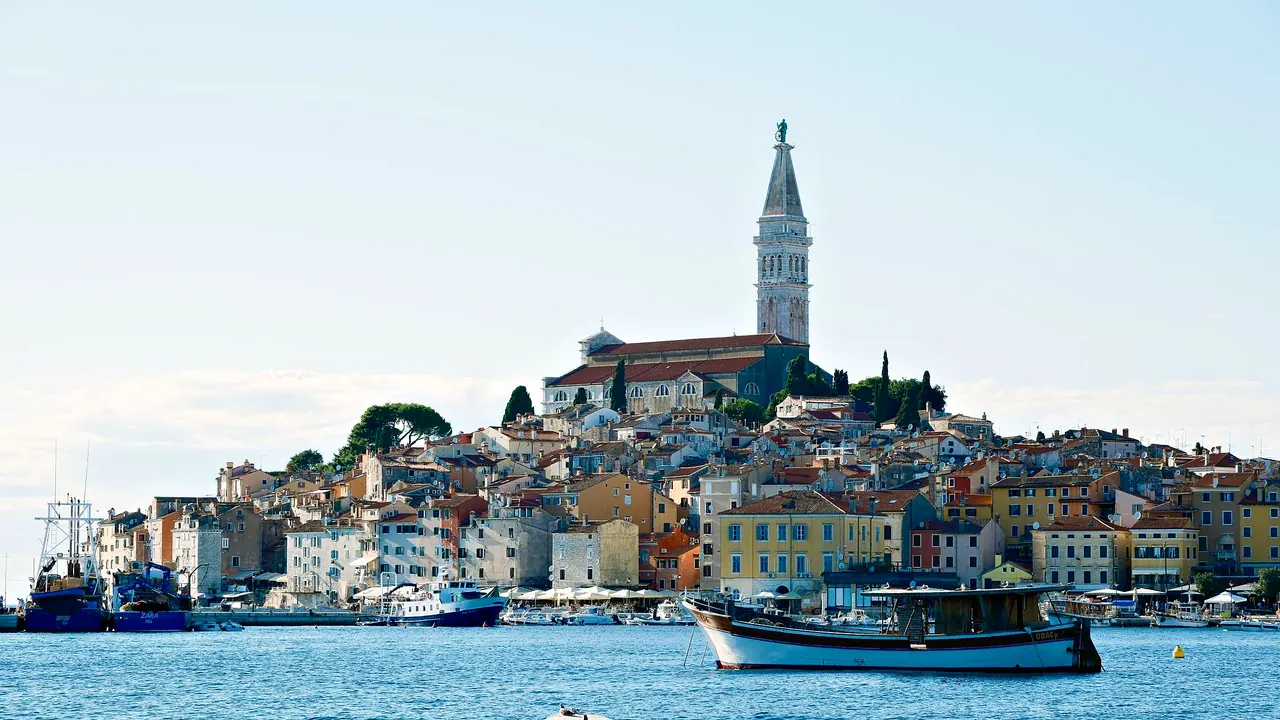
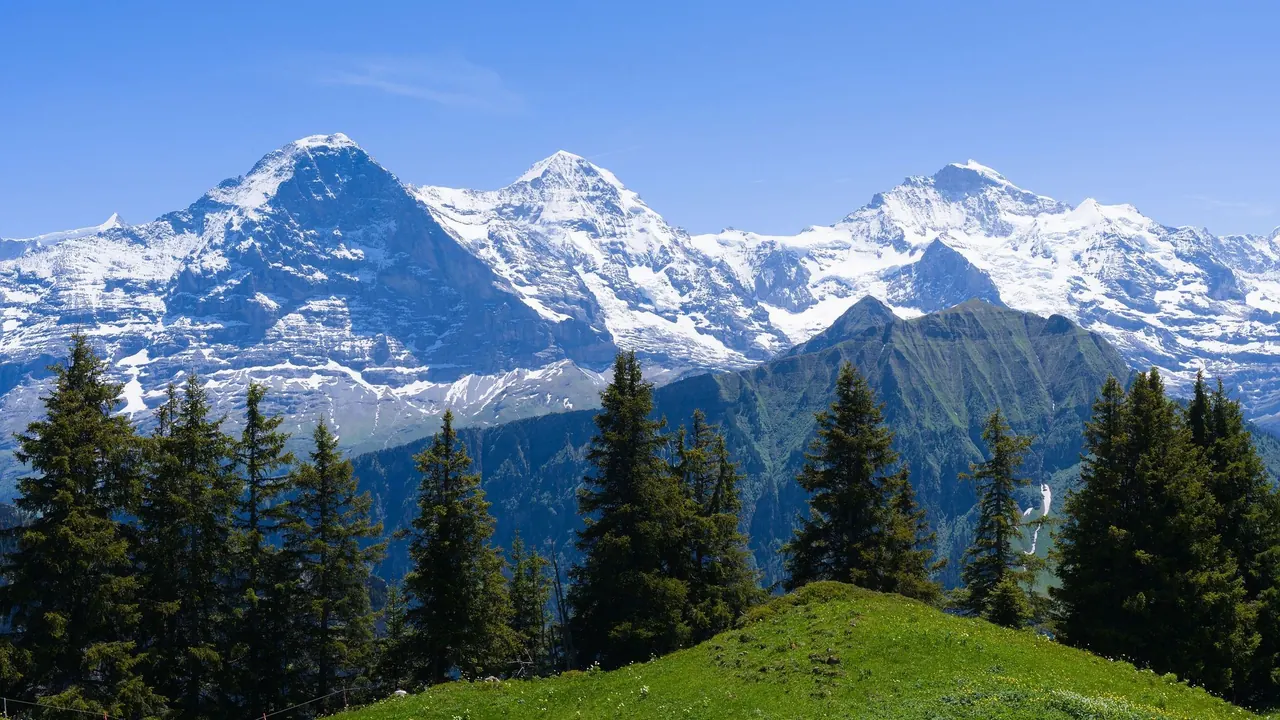
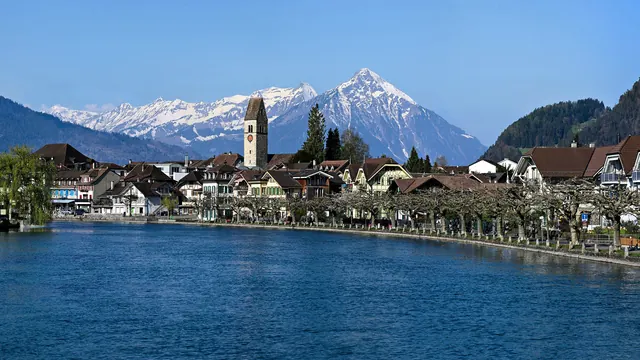
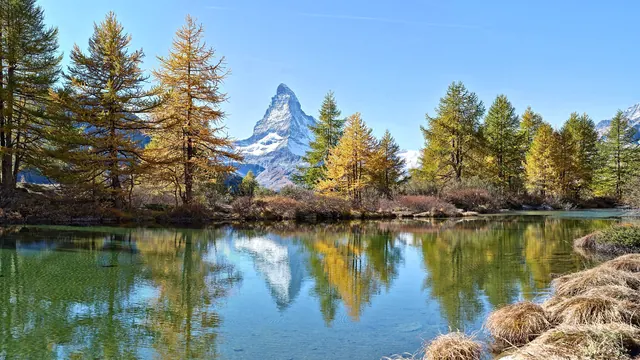
Photos: Istria by Ramon Karolan, Pexels License; Swiss Alps by Jean-Paul Wettstein, Pexels License.
Istria or Swiss Alps?
Our verdict in twelve categories, each scored against the same fixed benchmark cities, and the climate month by month, so you can choose for your trip.
Choose Istria for
- beaches
- prices
- culture and sights
Istria suits a summer vacation by the sea with food at its centre: clear water off rocky coves, truffles and Malvazija in the hill towns, and Roman Pula and Venetian Rovinj within an hour of each other. It costs far less than the Alps, though you will want a car, and you give up the big mountain scenery.
Choose Swiss Alps for
- wellness
- nature and the outdoors
- getting around
Choose the Swiss Alps for the mountains themselves. Hikers, skiers and anyone who wants to soak in the hot pools of Leukerbad or Vals and slow right down will find landscapes few places can match, all reached by train and cable car without driving. The cost is the main drawback, and you also lose warm-sea swimming and the depth of Istrian cooking.
Scoreboard
Twelve categories on one fixed scale from 0 to 100. The shaded stretch is the gap between the two.
Your match
Pick a travel style or drag the sliders, and both match scores follow your weighting.
Too close to call, 1 point apart
Wins on beaches and prices with your weighting.
Wins on wellness and nature and the outdoors with your weighting.
What matters to you?
Category by category
What the scores mean for a trip.
Beaches & swimming
Istria has a real coast, with clear Adriatic water off pebbles, rock ledges and concrete platforms. The wildest coves are at Kamenjak, and the few gently shelving bays are around Medulin. Sand is scarce, but the sea is warm enough for a proper beach vacation all summer.
The Swiss Alps offer lake bathing instead, from lidos on Lake Thun and Lake Brienz or at the Caumasee near Flims, and the water stays cool. The lakes in Ticino are warmer, but even there a swim is something you fit between hikes rather than a day in itself.
Food & drink
Istria has much the richer table. There are white truffles in autumn around Motovun and Buzet, oysters from the Lim Bay, fish in Rovinj and Novigrad, fine olive oil from the western hills and small cellars pouring Malvazija and Teran. The cooking leans towards Venice and ranges from family taverns to fine dining.
Alpine food is narrower and built around cheese: fondue, raclette and rösti eaten on hut terraces at the top of the lifts. The Valais wines are a real discovery and the smart resorts cook ambitiously, but most villages offer only a handful of hotel dining rooms.
Culture & sights
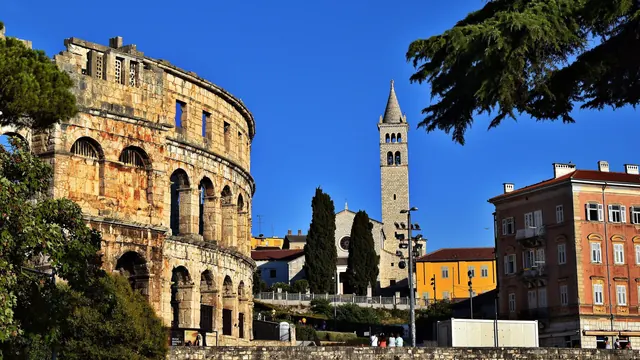
Istria has two sights of real weight: Pula's Roman Arena and the gold mosaics of the Euphrasian Basilica in Poreč. Around them are Venetian old towns and walled hill towns such as Motovun and Hum. The museums are small, but the layers of history make every walk worthwhile.
In the Alps the heritage is quieter and spread through the landscape: sgraffito houses in Guarda, the castles of Sion and Bellinzona, the Carolingian frescoes at Müstair and the Albula railway. It adds to a mountain trip but would not bring you there on its own.
Nightlife
Neither is a place to plan a trip around going out, and the two come alive in opposite seasons. Istria's evenings belong to summer: long dinners and cocktails on the harbour fronts of Rovinj and Poreč, beach bars around Medulin, and Pula's student bars as the only year-round option.
The Alps go out in winter, at the après-ski terraces of Verbier and Zermatt or the hotel bars of St Moritz, and the villages are asleep early through the summer hiking season.
Nature & outdoors
The Alps are in another league. You have the Eiger and Jungfrau above the Lauterbrunnen valley, the Matterhorn, the Aletsch glacier and ibex in the Swiss National Park. Trails start right at the cable-car stations, and in winter the skiing is world-class.
Istria's outdoors is gentler and best seen by bicycle, along the old Parenzana railway route between the hill towns or through the vineyards and olive groves. Učka offers the one proper hike and Kamenjak adds kayaking and windsurfing, but the midsummer heat makes walking inland hard.
Day trips
Both are good bases for days out, and Istria has a slight edge because everything is so close. The hill towns, Rovinj, Poreč and the boat to Brijuni are easy from any base, and Piran, Trieste and the Škocjan caves lie just over the border, though you will mostly be driving.
From the Bernese Oberland, trains reach Bern, Thun and Lucerne, with Gruyères and Chillon further west and Lugano from the southern side. These outings are pleasant rather than famous, but none of them needs a car.
Good for families
Both work well with children, in different ways. Istria is a seaside family vacation, with campsites and pools around Poreč, Umag and Medulin, water parks, a dinosaur park and Pula's aquarium in an old fort. The beaches are rocky, though, and the July heat is tiring.
The Alps have ski schools in winter and, in summer, toboggan runs, adventure playgrounds and cable cars, while car-free Wengen and Zermatt let children walk freely. There are no theme parks, and altitude needs some care with very young children.
Getting around
Here the Alps are much easier. Trains, postbuses, lake steamers and lifts run on connected timetables, nearly every village can be reached without a car, and several resorts ban cars outright. The catch is that crossing between regions, say from the Oberland to the Engadine, takes a long day.
Istria is compact, but the hill towns, wineries and most beaches really need a car, and in summer the coastal roads are slow and car parks fill early.
Shopping & style
Neither is a shopping destination, though the Alps offer a little more: luxury boutiques in St Moritz and Gstaad, and watches and serious mountain gear in Zermatt and Interlaken.
Istria's best buys are edible: truffle products from Motovun, olive oil and wine bought at the cellar door, plus the craft studios of Grožnjan. The Alpine equivalents are cheese from the dairy, Valais wine and woodcarving from Brienz.
Affordability
Istria costs far less than the Alps, although rooms in Rovinj and the best coastal spots are expensive in July and August. Campsites, private apartments, inland farm stays, simple tavern meals and wine bought from the producer keep a trip within reason, especially in June or September.
In the Alps, costs are on a different level. A winter room in Zermatt or St Moritz, a plain lunch on a hut terrace and a few cable-car rides up to the high country will each cost noticeably more than the Istrian equivalent. Self-catering, supermarket picnics, multi-day travel passes and quieter valleys such as Goms or the Ticino side bring the bill down, but none of them makes the Alps cheap.
Live music & performing arts
The Alps have the stronger summer programme because of their classical festivals. The Verbier Festival brings top soloists in July, and the Menuhin Festival fills the churches of the Saanenland around Gstaad.
Istria's highlight is an open-air concert or a Pula Film Festival screening in the Roman Arena, along with young musicians playing in Grožnjan's squares. Out of season both go quiet, and Pula's theatre is the only regular stage in either.
Wellness & relaxation
The Alps are made for slowing down. There are Leukerbad's open-air hot pools beneath the cliffs, the stone baths at Vals, the springs of Bad Ragaz and Scuol, and grand hotel spas in St Moritz and Gstaad, all with clean air and quiet car-free villages around them.
Istria's calm comes mostly from its pace: farmhouse stays among olive groves and long lunches inland. Its one historic spa, Istarske Toplice in the Mirna valley, and the resort-hotel spas on the coast are pleasant, but the coast is far from restful in high summer.
When should you go?
Pick your month. The climate figures are measured averages, not a forecast.
Istria in July
Swiss Alps in July
Daytime high, °C
Rainfall in the month, mm
Where the figures come from
Istria's temperatures are measured 57 km from the centre, at Trieste.
Istria has no rain gauge within 25 km of the centre, so its rainfall comes from a gridded climate dataset read at the destination rather than from a gauge further away.
Swiss Alps has no rain gauge within 25 km of the centre, so its rainfall comes from a gridded climate dataset read at the destination rather than from a gauge further away.
Swiss Alps's sunshine is measured 66 km from the centre, at Sion.
Temperature and rainfall are climate normals, averaged over the years shown. Istria: 1991-2020 normals, Trieste (56.5 km from centre). Swiss Alps: 2005-2020 (sunshine 1961-1990, rainfall 1991-2020) normals, Meiringen / Unterbach (19.5 km from centre).
Istria's coast is at its best from June to September, when it is warm enough for the beach every day. Highs reach 29°C in July and August, the sea warms to 26°C in August, and July is the sunniest month. May and early October suit walking the hill towns better, as the days are mild and pleasant without the midsummer heat. The rain builds through September and October and is heaviest in November. Winter on the coast is cool and quiet, and far too cold for swimming.
The Alpine figures are a single lower, valley-level reference, and conditions vary a great deal with altitude and across the region. The Ticino lakes are milder, and high resorts such as Zermatt are much colder. At valley level, summer is mild rather than hot, around 24°C in July, which is good weather for walking. May to August is also the wettest part of the year, so the drier days of September are often better for hiking. Winter is cold, about 3°C in January even in the valleys, and colder higher up. That is ski season, while Istria offers little by the sea.
Which traveller are you?
On a beach and sun trip, Istria is the clear choice. Its clear Adriatic sea is warm enough for daily swimming all summer, from the wild coves of Kamenjak to the shallow bays near Medulin, while the Alps offer only cool lakes between hikes.
For an outdoors trip, the Swiss Alps win easily. Marked trails start from cable-car stations below the Eiger and the Matterhorn, and the winter skiing at Zermatt or Verbier is among the best anywhere. Istria's gentler strength is cycling between its hill towns.
On a relaxing and wellness trip, choose the Swiss Alps. Thermal villages such as Leukerbad and Vals, serious hotel spas and quiet car-free resorts make rest easy, whereas Istria has one historic spa and a calm you only find away from the summer coast.
Before you go
| Measure | Istria | Swiss Alps |
|---|---|---|
| Official language | Croatian | French, German, Italian, Romansh |
| Currency | Euro (EUR) | Swiss Franc (CHF) |
| Sockets | CF230 V, 50 Hz | CJ230 V, 50 Hz |
| Driving side | Right | Right |
| Time zone | UTC+1, UTC+2 in summer | UTC+1, UTC+2 in summer |
| Emergency number | 112 | 112 |
| Main airport | Pula Airport (PUY)34 non-stop destinations | Zürich Airport (ZRH)226 non-stop destinations |
| Public holidays this year | 14 days | 10 days |
By the numbers
| Measure | Istria | Swiss Alps |
|---|---|---|
| Swim season, months above 21 °C | 4 months | - |
Where else could you go?
Every comparison below shares a destination with this one, so you can follow Istria or Swiss Alps somewhere new.
- Lake Maggiorevs Swiss Alps
- French Alpsvs Swiss Alps
- Lake Comovs Swiss Alps
- Black Forestvs Swiss Alps
- Plitvice Lakesvs Istria
- Dolomitesvs Istria