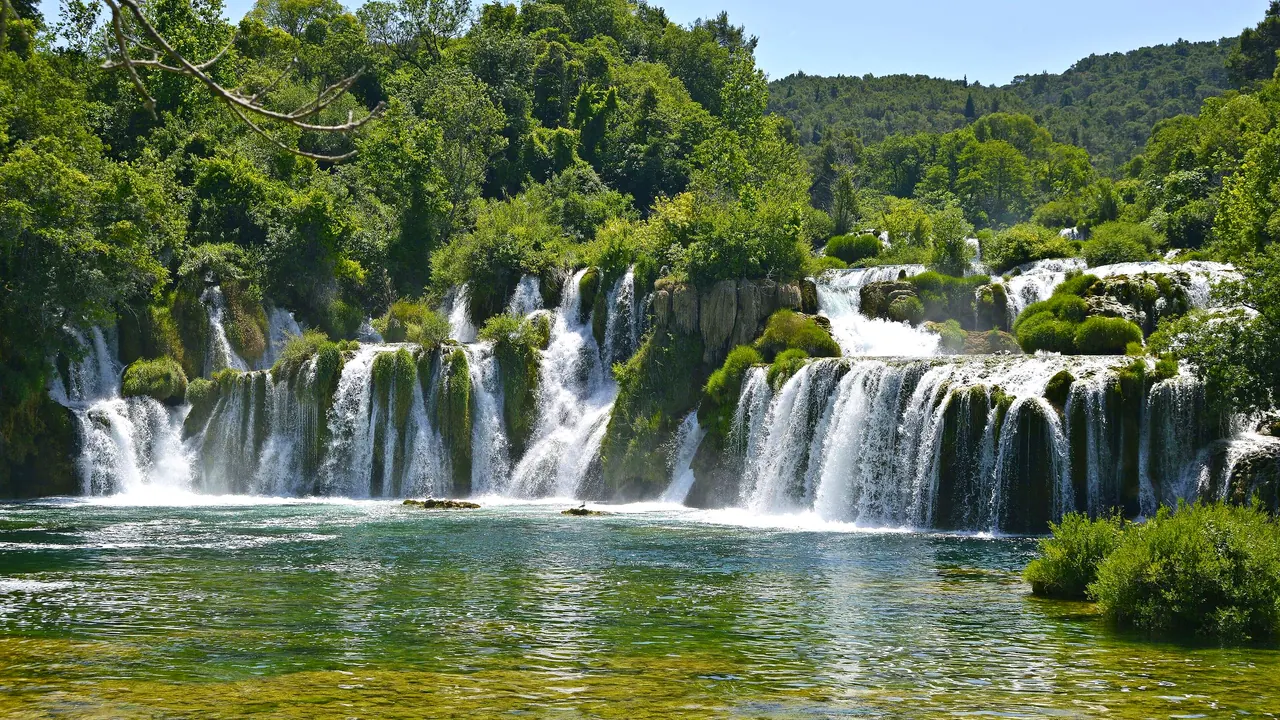
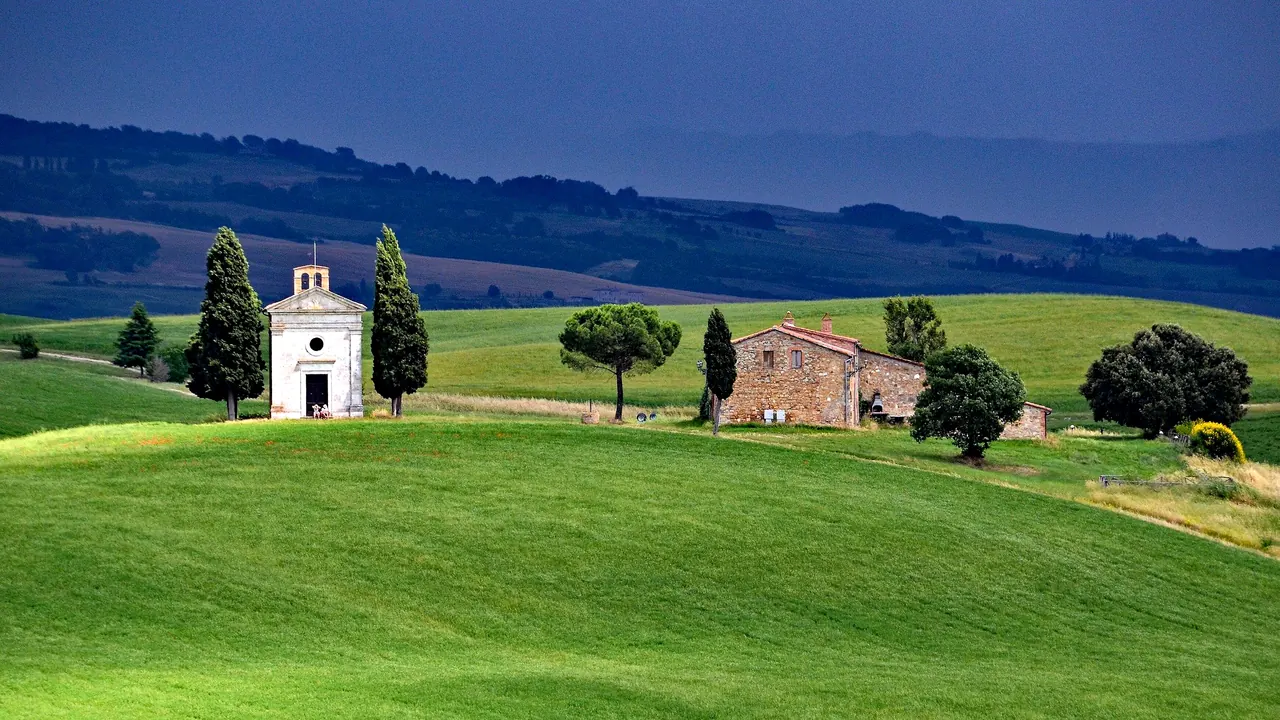
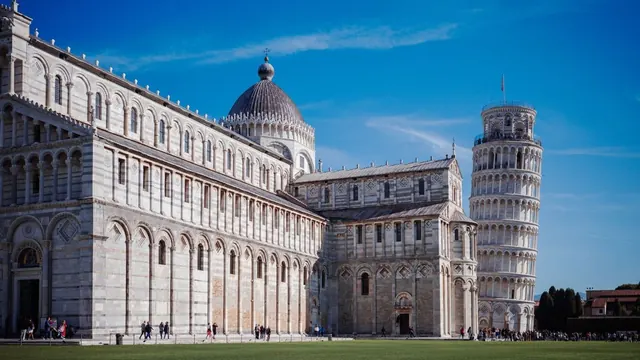
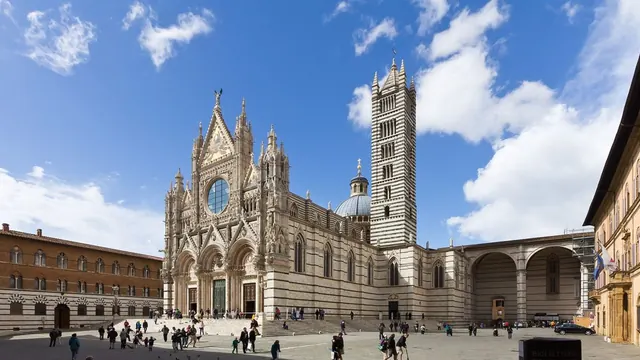
Photos: Krka by Alberto-g-rovi, CC BY 4.0, cropped; Tuscany by Hervé Simon, CC BY-SA 2.0, cropped.
Krka or Tuscany?
Our verdict in twelve categories, each scored against the same fixed benchmark cities, and the climate month by month, so you can choose for your trip.
Choose Krka for
- prices
Krka is for travellers who want one striking landscape and a calm trip around it. The falls at Skradinski Buk, the boat ride to the monastery islet of Visovac and evenings on Skradin's harbour fill a few unhurried days, and the Dalmatian coast is close enough to add Šibenik, Trogir or an island ferry. It works as a short nature break or as one leg of a longer Croatian coastal trip, and it costs a little less than Tuscany.
Choose Tuscany for
- shopping
- wellness
- culture and sights
Tuscany gives you far more to fill a trip. Florence, Siena and a dozen hill towns hold some of Europe's greatest art, and the food and wine are reason enough to go. Add hot springs at Saturnia and Bagno Vignoni, sandy coast on Elba and in the Maremma, and real craft shopping. If you want a vacation with variety, or a longer stay with a different outing every day, this is the stronger choice, as long as you budget for it and hire a car.
Scoreboard
Twelve categories on one fixed scale from 0 to 100. The shaded stretch is the gap between the two.
Your match
Pick a travel style or drag the sliders, and both match scores follow your weighting.
Wins on prices with your weighting.
Wins on shopping and wellness with your weighting.
What matters to you?
Category by category
What the scores mean for a trip.
Beaches & swimming
Krka itself has nowhere to swim: you look at the falls and boat on the river, but you don't bathe in them. The sea means a trip down the estuary to the pebble coves of Šibenik, to the bays near Primošten, or by ferry to the rocky shores of Zlarin and Prvić. The water is clear, but the beach fills an afternoon rather than a whole trip.
Tuscany has a proper coast and a wider choice of beaches. Elba has sandy bays such as Fetovaia and Cavoli, the Maremma has wild pine-backed beaches, and Versilia has miles of fine sand lined with beach clubs. If you want sand rather than pebbles, Tuscany wins, but only if you base yourself near the sea and not in Florence.
Food & drink
At Krka you eat simple Dalmatian food in a small number of places: lamb cooked under the iron bell, Skradin's slow-cooked veal risotto, and mussels and oysters from the estuary where river and sea water meet. Away from Šibenik's old town, the choice soon comes down to a few family taverns.
In Tuscany, food and wine can carry the whole trip. Florentine steak, lampredotto from the street carts and the San Lorenzo market are in the city, and the countryside adds cellar visits for Chianti Classico, Brunello and Vino Nobile, pecorino in Pienza and autumn truffles in San Miniato. Krka's dark Babić red is worth trying, but it doesn't compare with Tuscany's wine country.
Culture & sights
Krka's history is spread along the river: the Franciscan monastery on the Visovac islet, the Orthodox monastery with its catacombs, the Roman arches at Burnum and the old water mills by the falls. Its most important sights are in Šibenik, where the Cathedral of St James and the St Nicholas fortress are both UNESCO-listed.
Tuscany is in another league entirely. Florence alone, with the Uffizi, David, the Bargello and the frescoed churches, could fill a week. Then come Siena, Pisa's cathedral square, San Gimignano's towers, Lucca's walls and Piero della Francesca in Arezzo. Krka's sights make good stops on a nature trip, but in Tuscany the art and buildings are the main reason to go.
Nightlife
A night out at Krka means a long dinner and a drink by the yachts in Skradin harbour, and perhaps a few bars in Šibenik's old lanes in summer. There are no clubs to speak of.
Tuscany is livelier, though it is no party destination either. Florence's students fill the steps of Santo Spirito and the wine bars of Oltrarno, and in summer the Versilia coast has beach clubs and dance halls that stay open until dawn. Its hill towns, though, are as quiet after dinner as Skradin.
Nature & outdoors
Both are strong for the outdoors, but in different ways. Krka is one dramatic landscape: a limestone canyon with travertine falls, best seen from the boardwalks at Skradinski Buk, the cascades at Roški Slap and the park boats on Visovac lake. The walking is mostly gentle, with some kayaking and canyon-rim trails, and boats out to the bare islands of the Kornati.
Tuscany's countryside is mostly farmland: Chianti vineyards and the cypress-lined lanes of the Val d'Orcia, ideal for cycling from one hill town to the next. For wilder country and real hiking, it also has the Apuan Alps at nearly 2,000m, the Casentino beech forests and the coastal Maremma park, which Krka can't match.
Day trips
From Krka, central Dalmatia is within easy reach: walled Trogir and Split's Diocletian's Palace to the south, Roman Zadar to the north, and ferries from Šibenik to car-free Zlarin and Prvić. It is a good base, though Plitvice is too far for a comfortable day.
Tuscany has more outings than any one trip can use. Siena, Lucca, Pisa, Volterra and San Gimignano are all close to Florence or Chianti, and the Montalcino and Pienza loop fills a day in wine country. Bologna, Assisi, Orvieto and the Cinque Terre are just beyond the region's borders.
Good for families
Children enjoy a day at Krka: the boardwalks pass right over rushing water and pools full of fish, and the boats to Visovac feel like an adventure. That day is most of what there is for them, though, and families usually stay at resort hotels near Šibenik and drive in.
Tuscany suits a longer family stay. Farmhouse agriturismi have pools and animals, the beaches in Versilia and the Maremma are sandy and shallow with lifeguards, and there are outings for children such as the Pinocchio park at Collodi, cycling on Lucca's walls and climbing the leaning tower. Florence's galleries are the hard part with young children.
Getting around
You'll want a car for both, but Tuscany offers more options without one. At Krka the distances are short and the motorway runs close to the Lozovac entrance. Inside the park, buses and boats link the main sights, but the upper falls and monasteries are hard to reach without a car or a tour.
In Tuscany you can explore Florence on foot, and trains run along the line to Pisa, Lucca, Arezzo and Viareggio, so a car-free trip there is easy. Chianti, the Val d'Orcia and the Maremma still need a car, and in the old towns you park outside the walls and walk in.
Shopping & style
Shopping barely features on a Krka trip, while in Tuscany it can fill whole afternoons. Along the river you buy olive oil, honey, dried figs and local wine from stalls and small producers, and the one craft worth seeking out is the coral work of Zlarin, a short ferry ride from Šibenik.
Tuscany's strength is craft, and most of it is in Florence: leather workshops around Santa Croce, goldsmiths on the Ponte Vecchio and bookbinders working in Oltrarno's back rooms. Around the region you'll find alabaster in Volterra, ceramics in Montelupo and marble in Pietrasanta, plus large designer outlets in the Arno valley.
Affordability
Neither is a bargain, but Krka is somewhat cheaper. Rooms and meals cost about the same as elsewhere in Western Europe, inland apartments near Lozovac cost less than Skradin's harbour, and the park entrance is the biggest single expense.
Tuscany costs more, especially central Florence, villas in Chianti and the beach clubs of Forte dei Marmi. Car hire is another cost on top. You can save by staying in Lucca, Arezzo or the Maremma rather than Florence, and trattoria meals and wine bought from the cellar are good value in both places.
Live music & performing arts
Summer is the only season for live performance around Krka, and almost all of it happens in Šibenik: concerts in the fortresses above the town, the long-running International Children's Festival, and klapa singing at village festivities. Along the river itself there is next to nothing on.
Tuscany's music is mostly opera and chamber music, and there is much more of it. Florence has the Maggio Musicale with its own opera house and orchestra, Lucca holds Puccini recitals year-round, and every summer his operas are staged outdoors by the lake at Torre del Lago. Siena's Accademia Chigiana adds chamber concerts in palaces and churches.
Wellness & relaxation
Krka's appeal is quiet rather than pampering: Skradin harbour at dusk, the river early in the morning and silent stone houses inland. The only spas are a few resort hotels on the coast.
Tuscany is built on hot springs. There is the grand spa town of Montecatini, the free terraced pools at Saturnia, the medieval bath that serves as Bagno Vignoni's square, and the white pools in the woods at Bagni San Filippo. Combine one of them with a farmhouse stay in the Val d'Orcia and you have a properly restful trip.
When should you go?
Pick your month. The climate figures are measured averages, not a forecast.
Krka in July
Tuscany in July
Daytime high, °C
Rainfall in the month, mm
Where the figures come from
Krka's temperatures are measured 53 km from the centre, at Split / Marjan.
Krka has no rain gauge within 25 km of the centre, so its rainfall comes from a gridded climate dataset read at the destination rather than from a gauge further away.
Krka's sunshine is measured 53 km from the centre, at Split / Marjan.
Tuscany has no rain gauge within 25 km of the centre, so its rainfall comes from a gridded climate dataset read at the destination rather than from a gauge further away.
Tuscany's sunshine is measured 71 km from the centre, at Pisa / S. Giusto.
Temperature and rainfall are climate normals, averaged over the years shown. Krka: 1991-2020 (sunshine 1971-2000) normals, Split / Marjan (52.9 km from centre). Tuscany: 1995-2020 (sunshine 1991-2020, rainfall 1991-2020) normals, Firenze / Peretola (5.6 km from centre).
The two share a Mediterranean pattern, but Krka is a shade sunnier and milder at the height of summer, while inland Tuscany gets hotter, around 33°C in August. That makes July and August hard work for walking Florence or Siena, and the boardwalks at Krka are hot and crowded then too. Around Krka the sea is warm enough to swim from June to September and reaches about 24°C in high summer, so a trip that mixes the falls with the coast works best in those months. Spring is the time to see the falls at their fullest.
For Tuscany's towns and countryside, May, June and September are the best months: warm and long-lit, without the worst of the heat. Both turn wet from late autumn, and Tuscany more so, with October and November the rainiest months and around 124mm in November. Winter in both is cool, with daytime highs near 11°C, which suits Florence's museums much better than a river park.
Which traveller are you?
On a culture and arts trip, choose Tuscany. Florence's Uffizi, the Accademia and Brunelleschi's dome, Siena's Campo and the hill towns go much deeper than Krka's monasteries and Šibenik's cathedral, and opera at Torre del Lago adds summer evenings.
For a relaxing and wellness trip, Tuscany is again the answer. It has a real spa tradition, from Montecatini's pump rooms to the open thermal pools at Saturnia and Bagno Vignoni, and farmhouse stays in the Val d'Orcia. Krka gives you quiet, but no spas worth the name.
On a tight budget, Krka is the easier fit. Apartments in the inland villages near Lozovac and generous konoba meals keep costs down, while Tuscany's Florence hotels, Chianti villas and car hire add up fast. Visit Krka outside July and August, when the park entrance costs less.
Before you go
| Measure | Krka | Tuscany |
|---|---|---|
| Official language | Croatian | Italian |
| Currency | Euro (EUR) | Euro (EUR) |
| Sockets | CF230 V, 50 Hz | CFL230 V, 50 Hz |
| Driving side | Right | Right |
| Time zone | UTC+1, UTC+2 in summer | UTC+1, UTC+2 in summer |
| Emergency number | 112 | 112 |
| Main airport | Split Saint Jerome Airport (SPU)69 non-stop destinations | Florence Airport, Peretola (FLR)46 non-stop destinations |
| Public holidays this year | 14 days | 13 days |
By the numbers
| Measure | Krka | Tuscany |
|---|---|---|
| Population | - | 3,729,641 |
| Swim season, months above 21 °C | 4 months | - |
Where else could you go?
Every comparison below shares a destination with this one, so you can follow Krka or Tuscany somewhere new.